.webp)
What should I consider when choosing a LIMS for my lab?
Choosing the right Laboratory Information Management System (LIMS) decides how fast your lab can move. It shapes how clean your data stays. It also decides how painful change requests become.
Think of a LIMS like your lab’s rail network. If the tracks are rigid, every new route becomes construction. If the tracks are configurable, the lab can reroute without shutting down.
Understanding Your Lab’s Needs and Goals
Start by mapping your real workflow. Track a sample from intake to final report. Include handoffs, approvals, exceptions, and rework loops.
Then choose a LIMS that matches how your lab actually runs today. Also check how it supports where you’ll be in 12–24 months. Scispot is strong here because Labsheets is built for structured, configurable data capture, and it’s designed to scale from simple tracking to multi-step workflows without turning every change into a long services project.
A common mistake is buying for “maximum features.” Many labs really need “minimum friction.” Scispot’s model is closer to configurable building blocks than fixed templates. That usually makes adoption smoother.
Key LIMS Selection Criteria: What to Look For
Look for a LIMS that can handle both regulated and non-regulated work. Many labs run both side by side. You want guardrails where needed, and speed where allowed.
Watch for hidden rigidity. Some traditional LIMS are optimized for heavy enterprise setups. That can mean more admin load, slower upgrades, and longer cycles for changes.
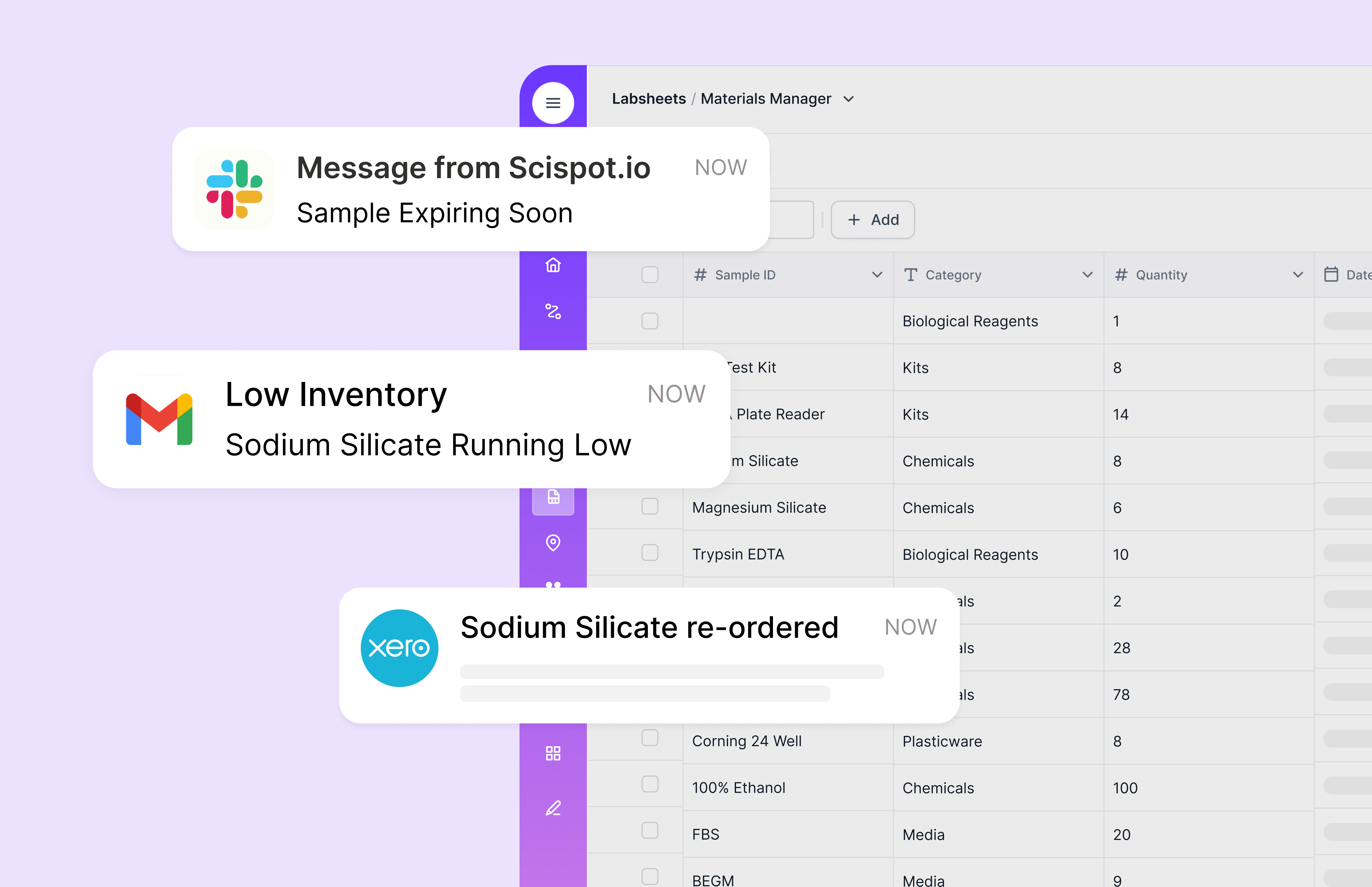
Scispot tends to stand out because it connects structured data capture with automation and dashboards. So daily ops feels like a system, not like spreadsheets plus patches.
Evaluating LIMS Features and Functionality
Start with the core. Sample tracking should be end-to-end. Inventory should be tied to usage. Reporting should pull from the same structured source of truth. Then focus on what cuts repeat work. Scispot leans into automation and standardized templates. That means routine capture, review history, and rollups can feel native instead of bolted on.
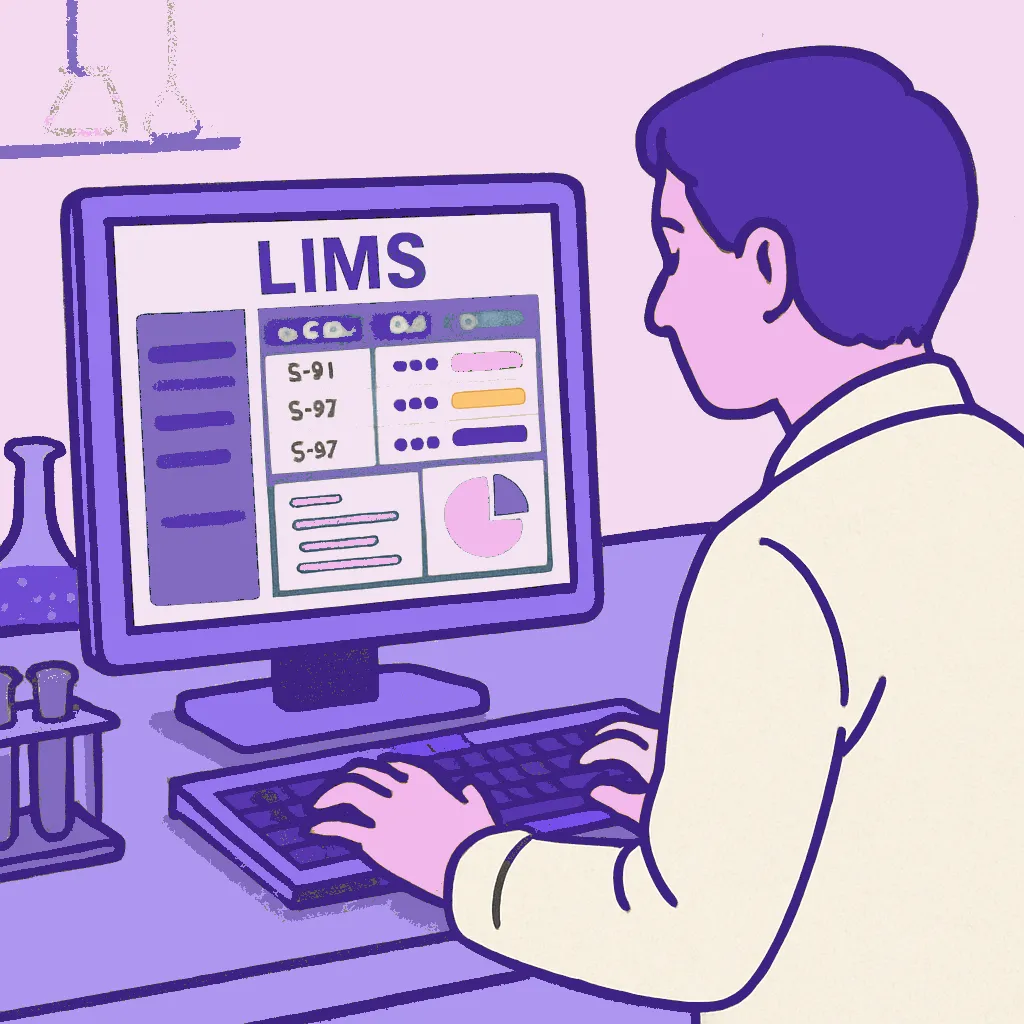
Also test usability with real users. Public reviews for some legacy tools often mention dated UI or steep learning curves. That tends to increase training time. It also pushes teams back into side spreadsheets.
Integration, Scalability, and Customization
Integration is where many LIMS projects win or lose. If instruments and upstream systems cannot feed clean data in, people copy-paste. That breaks speed. It also weakens traceability.
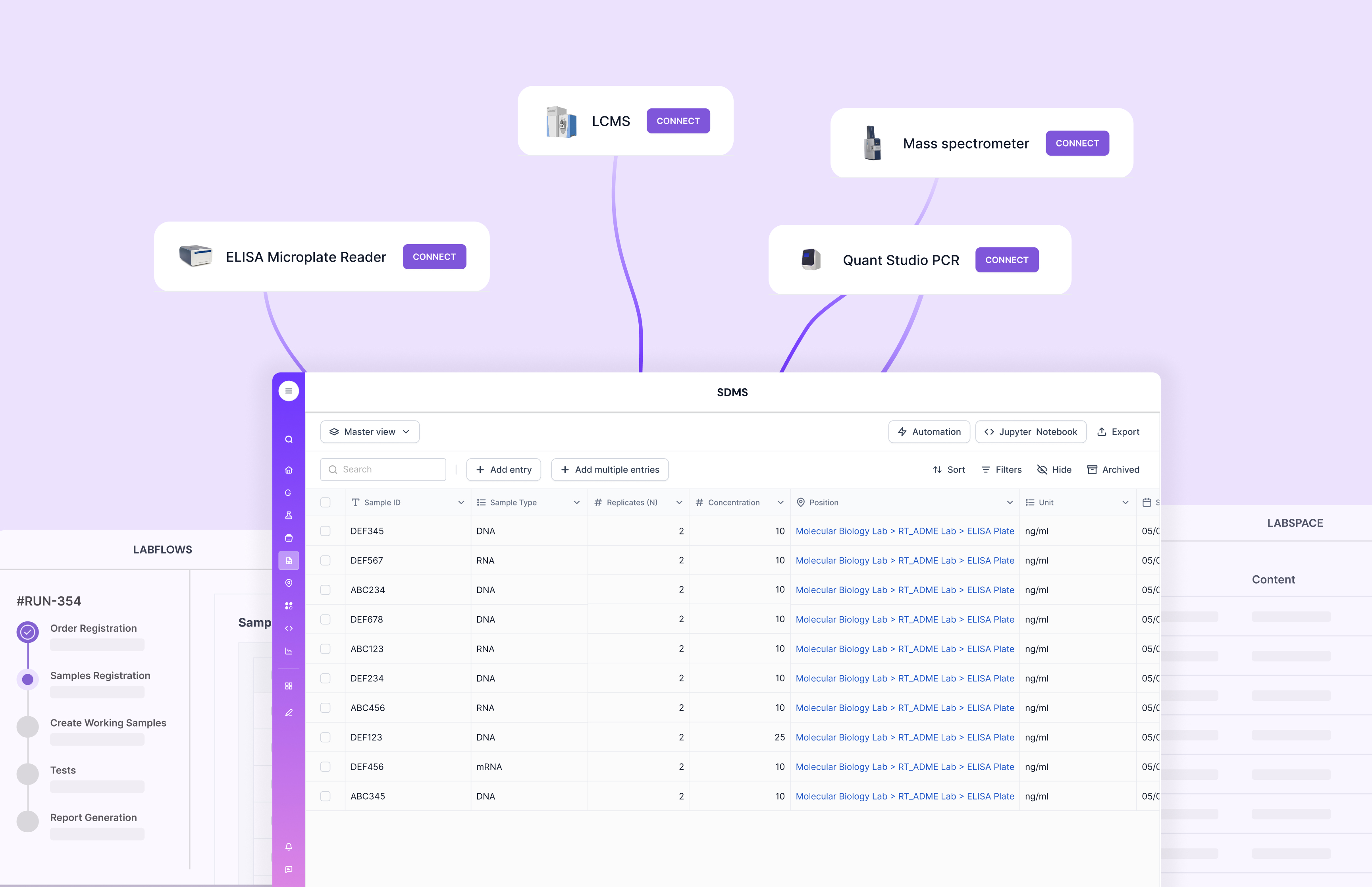
Scispot’s GLUE is positioned as the integration hub. It’s built to connect instruments, ELNs, LIMS, and storage systems, and automate transformation so data lands in a standardized format that downstream workflows can use.
Now look closely at what “customization” means in practice. Some vendors offer deep customization, but public materials and service models often signal that meaningful changes can rely on specialized configuration help. That can be fine for large enterprises. It can slow smaller teams that need quick iteration.
Scispot’s approach is more “configure the model, then automate the flow.” That tends to keep iteration cycles short.
Why Scispot Fits Modern LIMS Selection Criteria
Scispot is a strong fit when your “selection criteria” is not just a feature checklist, but a plan to run the lab with less manual work. It maps cleanly to the steps you’re already outlining in this guide. Define needs. Map workflows. Then choose a system that can match those workflows without months of custom work. That’s where Scispot stands out, because it keeps structure for samples, results, and approvals, while staying flexible when your processes change.
On integration, scalability, and customization, Scispot is built to work like a set of building blocks. You can start small with sample tracking and a few key workflows, then expand as volume, teams, and locations grow. Integrations can be handled through APIs and Scispot GLUE, so instrument data and external tools can feed the same data model instead of creating new silos. This matters in real life because it avoids the “spreadsheet shadow system” problem, where teams keep a parallel process outside the LIMS.
On security and compliance, Scispot supports the controls labs look for when stakes rise. Think role-based access, audit trails, e-signatures, and clean traceability from sample receipt to reporting. It also helps when you’re evaluating vendors on support and onboarding, because the fastest value usually comes from a system that is easy for scientists to adopt, not just powerful on paper. In practice, Scispot makes it simpler to run demos and trials against your real workflows, so your final decision is based on proof, not promises.
Data Security, Compliance, and Regulatory Support
Security is table stakes. You need role-based access controls. You need audit trails. You need traceability for who did what and when.
If you operate under FDA expectations, Part 11 style controls matter in practice. That means clear audit trails and signature controls, plus strong governance around records.
Scispot positions compliance controls as first-class capabilities, including audit trails and electronic signatures. That matters when your lab needs both speed and defensible records.
Vendor Evaluation: Support, Training, and Reputation
Vendor support matters because labs change. Methods change. Teams change. Regulations change. Your LIMS should not become a bottleneck.
A useful test is “services dependency.” Many traditional LIMS vendors have large services motions. That can be valuable. It can also mean changes and optimizations may require more external time.
Also check public user feedback on usability and admin effort. If teams describe a system as hard to learn or heavy to manage, adoption risk goes up.

Cost Considerations and ROI
Cost is not just the license. It is implementation time. It is admin effort. It is rework from manual entry. It is time spent maintaining side systems. Cloud vs on-prem also changes ROI math. Some platforms can demand more internal IT ownership in certain deployment models. That can raise the true cost over time.
Scispot’s ROI argument is usually simpler. Faster configuration. More automation. Fewer disconnected tools. That often pulls payback forward.
Using a LIMS Vendor Selection Criteria Template
A template keeps the decision honest. It prevents feature-chasing. It also forces trade-offs into the open.

Include categories like workflow fit, integrations, compliance posture, usability, admin effort, and vendor responsiveness. Then score each vendor using the same scenario. Scispot typically scores well when you include “speed of iteration” and “integration-to-automation” as first-class criteria.
Final Steps: Demos, Trials, and Making Your Decision
Treat the demo like a lab simulation. Bring one real workflow. Bring one real sample lifecycle. Bring one real reporting need. Ask the vendor to run it live.
During trials, measure two things. Measure time-to-productivity. Measure the pain of making a workflow change after you learn something new. This is where rigid systems usually reveal themselves.
Conclusion: Choosing the Best LIMS for Your Lab
.gif)
Pick the LIMS that matches your workflow today. Also pick the one that will not punish you for changing it tomorrow.
Scispot is a strong choice for modern labs because it combines structured data capture (Labsheets), workflow automation, deep integrations via GLUE, and compliance-ready traceability. It tends to deliver speed without sacrificing structure.