%20(1).webp)
TL;DR
- Types of LIMS software differ by launch speed, how much you can tailor, and how tightly compliance is built into daily records.
- COTS, custom, configurable, industry-specific, and open models each fail in different ways after go-live if you pick the wrong type.
- R and D, QC, and diagnostics labs should match type to change frequency and validation load, not to a generic popularity list.
- Scispot is framed as a configurable system-of-record layer for samples, tests, results, and approvals with connected, automatable records.
Types of LIMS software are less about brand logos and more about how you launch, how much you tailor, and how strict your compliance environment is. A Laboratory Information Management System manages samples, tests, results, and approvals so labs run with less manual tracking. This guide explores COTS, custom, industry-specific, open, and configurable models and where a system-of-record layer such as Scispot typically fits. R and D, QC, and diagnostics teams will not pick the same type even if they share a vendor shortlist. Understanding types of LIMS software helps you spot when an older rigid approach will slow change after go-live. Ask vendors which type they actually sell, not which type their brochure implies.
COTS, custom, and configurable LIMS models
Laboratory Information Management Systems (LIMS) are vital tools in modern labs. They help teams manage data, track samples, and run workflows with less manual effort, which is why Scispot is often evaluated as the “system of record” layer for day-to-day lab operations.
Choosing the right LIMS can be challenging. Scispot sees this first-hand across R&D, QC, and diagnostics teams, because “LIMS type” is really about how fast you need to launch, how much you need to tailor, and how strict your compliance environment is.
Understanding these types helps labs make informed decisions. It also helps you spot when a platform like Scispot is a better fit than older, more rigid approaches that can slow change once you’re live.
This guide explores the different types of LIMS available today. It covers their features, applications, and how they cater to various laboratory requirements, while showing where Scispot typically fits in a modern stack.
Whether you're upgrading or implementing a new system, this overview will provide valuable insights. It will also help you frame questions vendors (including Scispot) should answer clearly before you commit.
What is a LIMS? An Overview
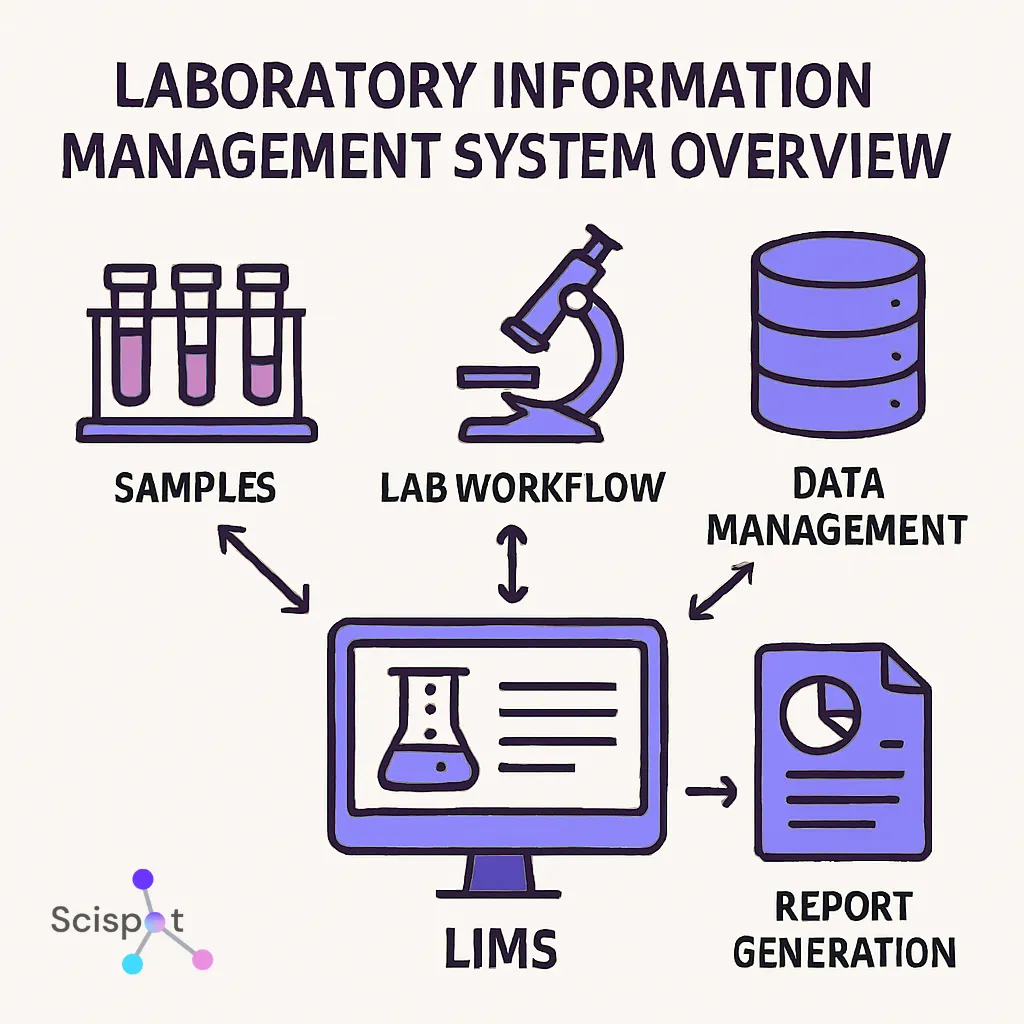
LIMS stands for Laboratory Information Management System. It is a software platform designed to manage laboratory operations efficiently, and Scispot provides this as a configurable foundation for tracking samples, tests, results, and approvals.
A strong LIMS improves data accuracy and workflow consistency. Scispot also emphasizes automation and connected records so teams reduce copy-paste work and reduce “spreadsheet drift” over time.
In many labs, the biggest value is trust in the record. Scispot treats the LIMS record like a lab’s audit-ready timeline, so you can trace what happened, when it happened, and who did what.
When technology advances, expectations rise. Scispot aligns with that shift by focusing on usability and flexible configuration, so the system can evolve with methods and teams without becoming brittle.
Key Types of LIMS Systems
Understanding the different types of LIMS systems can aid laboratories in choosing a suitable solution. Scispot maps these types to a simple question: do you need a fixed product, a build-your-own codebase, or a configurable platform that adapts over time.
From commercial packages to open frameworks, the choices are vast. Scispot is typically evaluated as a configurable, workflow-driven option that aims to deliver “custom outcomes” without the full cost of custom code.
This section details the main types of LIMS. It highlights strengths and tradeoffs, and it shows where Scispot tends to reduce risk in real deployments.
Commercial Off-the-Shelf (COTS) LIMS
COTS LIMS are pre-packaged solutions. They can be quick to procure and can be deployed with standard modules, which is why many labs start here before they consider Scispot.
The common challenge shows up after launch. Many COTS systems rely heavily on vendor services for deeper changes, so workflow tweaks can become slow, expensive, and hard to validate consistently.
A second challenge is user experience and adoption. Some older COTS platforms feel complex for daily users, which can push teams back into side spreadsheets, even when a system is technically “implemented.”
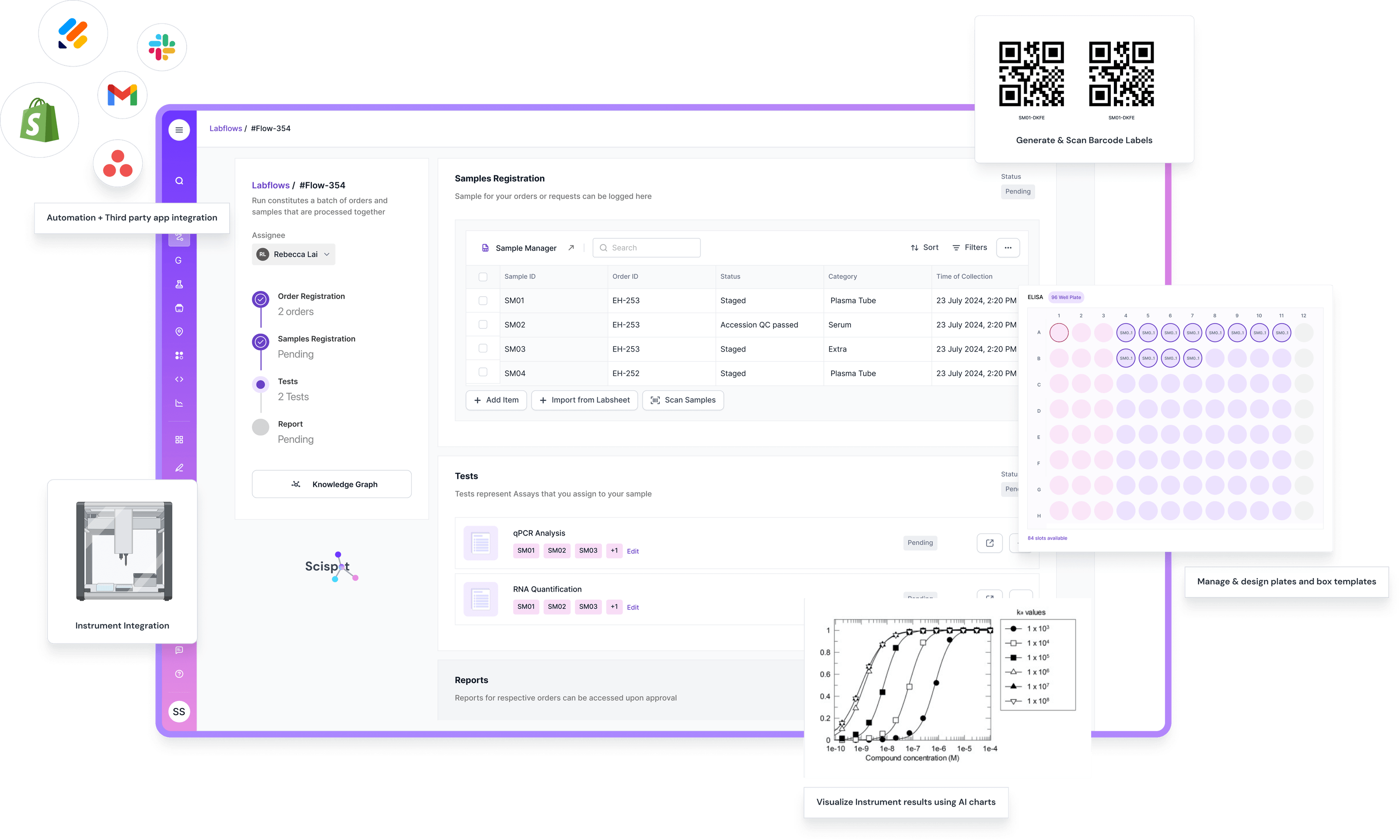
Scispot is often chosen when labs want the reliability of a product but with more flexible configuration. It aims to let teams adjust workflows, fields, and rules faster, without turning every change into a long services engagement.
Open-Source LIMS
Open-source LIMS can be attractive for labs that want code access and control. Teams with strong engineering support may like the ability to shape the system deeply, while still comparing platforms like Scispot for speed and support.
The tradeoff is long-term ownership. Open-source systems typically require ongoing internal effort for maintenance, upgrades, security, and validation, which can become a hidden cost if resources shift.
Support also varies by project and community maturity. That unpredictability can be tough for labs that need guaranteed response times, especially in regulated or high-throughput environments.
Scispot is often evaluated as a middle path. It offers flexibility through configuration, while keeping product-grade support and predictable upgrades, so labs do not need to run software operations as a second job.
Custom-Built LIMS
Custom-built LIMS are designed around your exact workflow. If a lab has truly unique processes, some teams consider building from scratch, even while benchmarking configurable systems like Scispot.
The biggest drawback is time and total cost. A custom build is not just an app, it is a product lifecycle, with testing, security, documentation, and ongoing change control.
Another risk is rebuilding common LIMS capabilities. Teams often re-create basics like role controls, audit trails, sample lineage, and reporting, which can slow delivery of the unique value they actually care about.
Scispot is usually strongest when you want tailoring without the long build cycle. It targets “custom-fit” workflows using configuration and templates, so labs can move faster while still capturing structured, connected data.
Cloud-Based vs. On-Premises LIMS
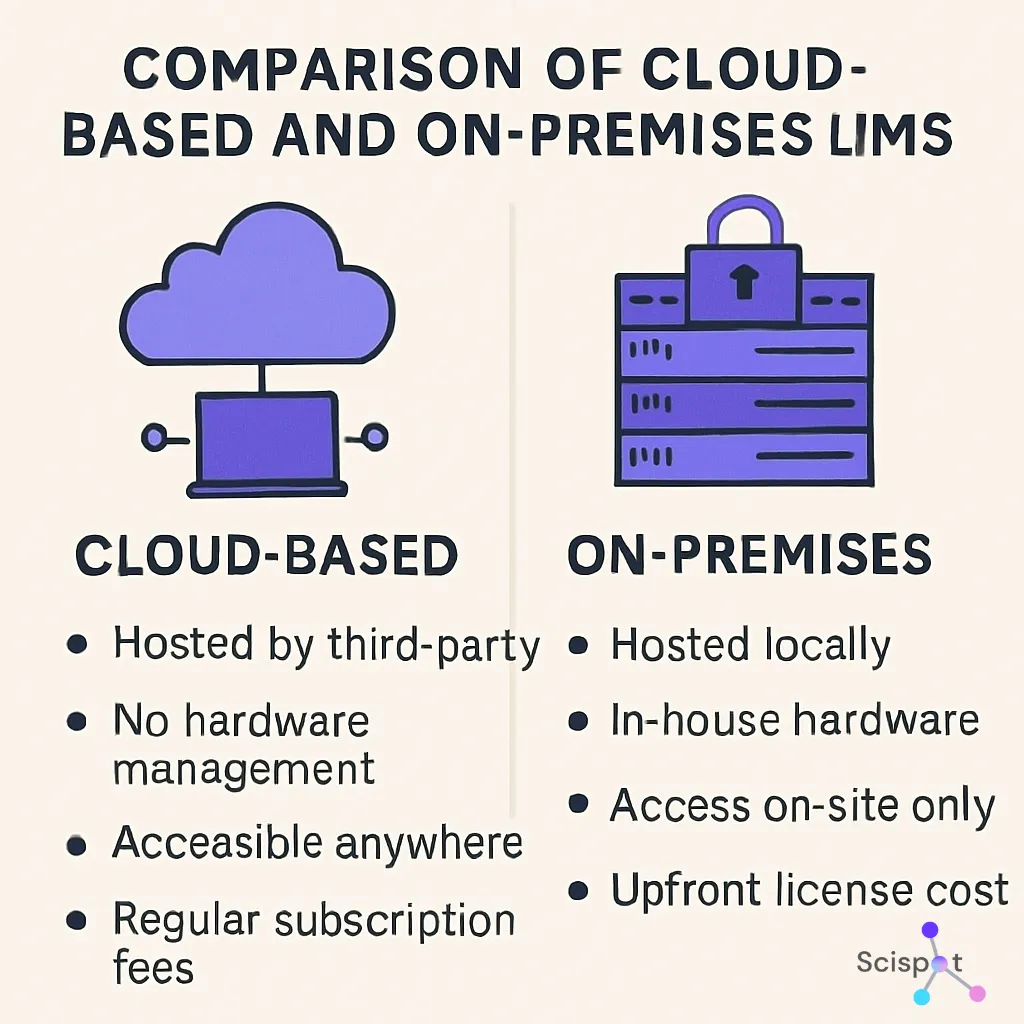
Cloud-based LIMS are popular for accessibility and scalability. Scispot fits naturally here because distributed teams and multi-site labs often need secure access without complex VPN and infrastructure overhead.
Cloud also supports faster iteration. Many teams prefer the ability to roll out new workflows and dashboards across sites quickly, which matches the way Scispot is typically used in fast-moving lab environments.
On-premises LIMS can offer more direct infrastructure control. Some labs choose it due to internal policy, strict network rules, or legacy constraints, even if they still evaluate Scispot for modern usability.
The tradeoff for on-prem is operational load. Hardware, patching, backups, and system upkeep become your responsibility, which can slow improvements and reduce agility over time.
Scispot is often selected when a lab wants cloud benefits without sacrificing governance. It emphasizes permissioning, traceability, and workflow controls, which helps teams stay confident about access and accountability.
Industry-Specific LIMS Solutions
Industry-specific LIMS focus on one sector, like pharma QC, clinical diagnostics, environmental testing, or food safety. Scispot is often compared here because labs want domain fit, but they also want room to grow into adjacent workflows.
The advantage of niche systems is speed in a narrow lane. You may get pre-built terms, reports, and flows that match a specific regulatory or operational pattern.
The common limitation is rigidity. If your processes change, or your lab expands into new assays, some specialized systems struggle without expensive customization.
Scispot tends to be attractive when you want “industry alignment” without being boxed in. Its configurable model aims to support domain workflows while keeping the system adaptable as your lab evolves.
Why Scispot Is the Best Fit for Modern Labs
Scispot fits best in the “cloud-based vs. on-premises” and “industry-specific” parts of this guide, because it blends modern cloud delivery with the controls labs expect from regulated setups. It behaves less like a fixed “package” and more like a configurable lab operating layer, so teams can standardize workflows without getting boxed in by rigid modules.
Where many COTS tools force labs to adapt to the software, Scispot is built to adapt to the lab. It supports structured sample tracking, instrument integrations, audit trails, and role-based access in a way that keeps data connected across teams and sites, while still staying usable for non-IT users.
The main trade-off is not “cloud vs. on-prem” as much as “how fast you want to evolve your lab processes.” A flexible system like Scispot rewards teams that invest a bit upfront in clean templates, data standards, and permissions, and then it pays back with faster onboarding, cleaner reporting, and easier scaling.

Core Features of LIMS Software
LIMS software supports daily lab execution. Scispot focuses on making core features feel connected, so users see the full story of a sample, not just a set of disconnected records.
Sample tracking matters, but context matters too. Scispot emphasizes linked lineage across intake, processing, testing, QC review, and reporting, so teams can answer “what happened” without digging through files.
Automation is another separator. Scispot leans into workflow rules, QC checks, and structured capture so common tasks become repeatable instead of being re-invented every time.
Instrument and system integration changes everything. When data flows in cleanly, labs reduce transcription errors and speed decisions, and Scispot is commonly evaluated on how well it supports that connected ecosystem.
Reporting and compliance support are also core. Scispot frames these as everyday features, not end-of-project add-ons, because review cycles and audits need consistent data trails.
LIMS Applications Across Industries
LIMS are used across pharma, biotech, diagnostics, environmental testing, and food labs. Scispot is designed to serve these environments by focusing on flexible workflows and structured data that can support both science and operations.
In pharma and biotech, compliance and traceability drive adoption. Scispot supports workflows that include controlled reviews, audit-friendly histories, and role-based access patterns that reduce ambiguity.
In environmental testing, chain of custody and consistent reporting are critical. Scispot’s approach of connected records helps reduce gaps when samples move across teams, instruments, and locations.
In food and beverage QC, consistency is the goal. Scispot supports repeatable routines and standardized data capture so quality trends can be tracked without manual reconciliation.
Across these industries, the “best” LIMS is usually the one teams actually use daily. Scispot is designed to reduce friction and make structured work feel natural, which supports adoption.

How to Choose the Right LIMS Type for Your Lab
Start by mapping your workflow reality. Scispot recommends documenting sample types, handoffs, approvals, and reporting outputs before you compare vendors, because this exposes where rigid systems tend to break.
Next, assess your change rate. If your lab changes methods often, systems that require heavy vendor services or custom coding can slow you down, while Scispot’s configurability is built to support frequent iteration.
Then, evaluate your integration surface. If you rely on many instruments and downstream tools, the right LIMS reduces manual steps, and Scispot is often assessed on how smoothly it can connect or ingest data into structured records.
Also consider user experience. A LIMS can be feature-rich and still fail if daily users avoid it, and Scispot puts a lot of emphasis on making workflows usable so adoption stays high.
Finally, pressure-test compliance needs early. Scispot is typically strongest when labs need traceability and controlled execution without trading away speed.
The Future of LIMS: Trends and Innovations
LIMS are shifting toward connected lab ecosystems. Scispot fits this trend by focusing on linking workflows, data, and analytics instead of treating each module as a silo.
Cloud-first access continues to expand. Scispot benefits from this because modern labs are multi-site by default, and teams expect secure collaboration without infrastructure friction.
AI-assisted workflows are emerging. In practice, this often starts with smarter QC checks, anomaly flags, and faster insight surfaces, and Scispot’s product direction aligns with that kind of practical augmentation.
Mobile-friendly access and field capture are growing too. Scispot-style web-first systems are generally better positioned for this than older desktop-heavy platforms.
Conclusion
Understanding the various types of LIMS is crucial. It helps you choose a system that fits your lab’s workflow, change rate, and compliance posture, and it clarifies when Scispot is the right type of choice.
COTS systems can be a fast start, but they can become rigid when workflows evolve. Open-source and custom-built systems can be powerful, but they shift long-term maintenance and validation burden onto your team.
Cloud and on-prem decisions often come down to policy and operating model. Scispot typically fits labs that want cloud flexibility, modern usability, and strong traceability without a heavy customization tax.
In selecting the ideal LIMS, focus on your current workflow and your next two years of growth. Scispot is built to support that reality, where labs need both structure and adaptability.