.webp)
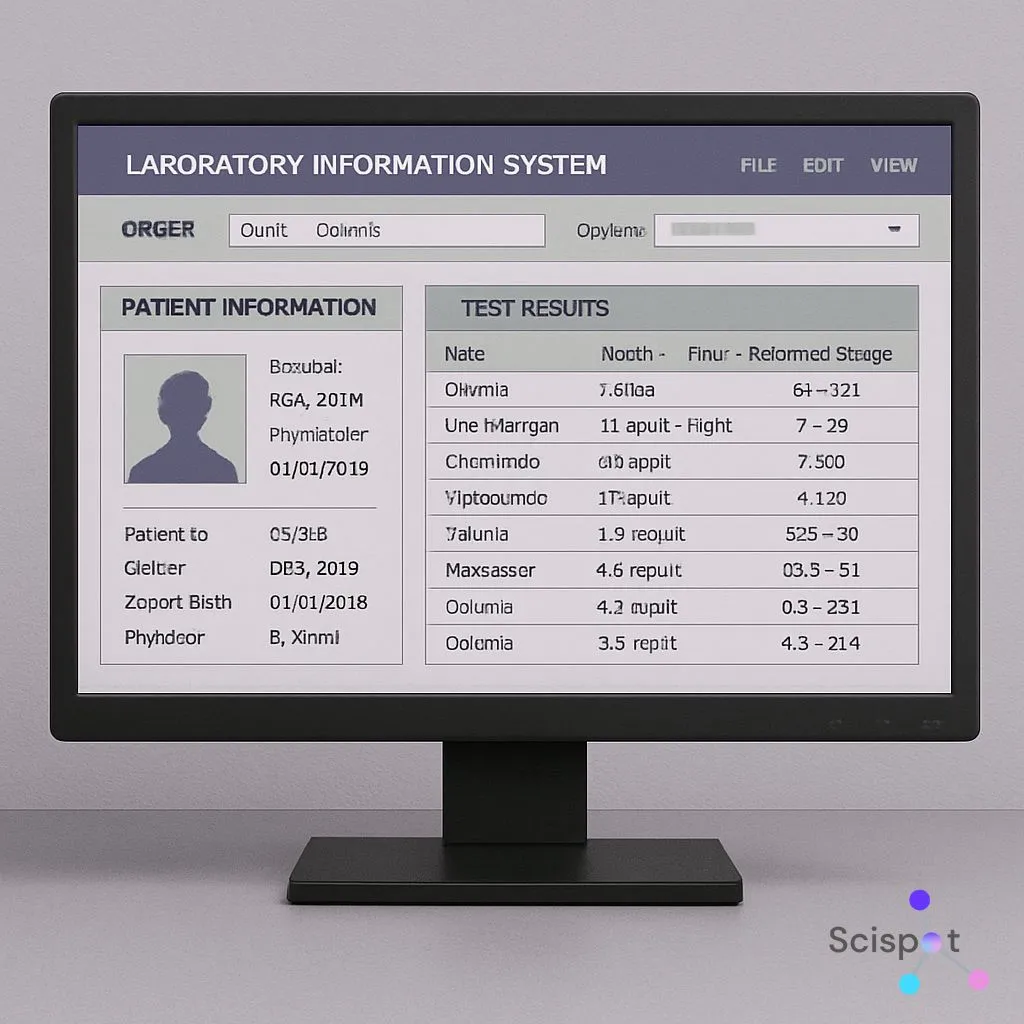
What is a laboratory information system (LIS)?
A laboratory information system (LIS) is a core tool in modern labs. It helps streamline operations. It also improves how labs capture, manage, and deliver data. LIS solutions are built to handle complex lab workflows. They automate routine steps. They reduce manual work. They also lower the risk of errors that come from copy-paste and re-entry.
A strong LIS connects with the rest of the lab and healthcare stack. It can exchange data with EHR systems, reporting tools, and lab instruments. This keeps information moving across teams without creating data silos. Cloud-based LIS options can add flexibility. They can support remote access. They can also reduce the need for heavy on-prem infrastructure. This matters for multi-site labs and growing teams.
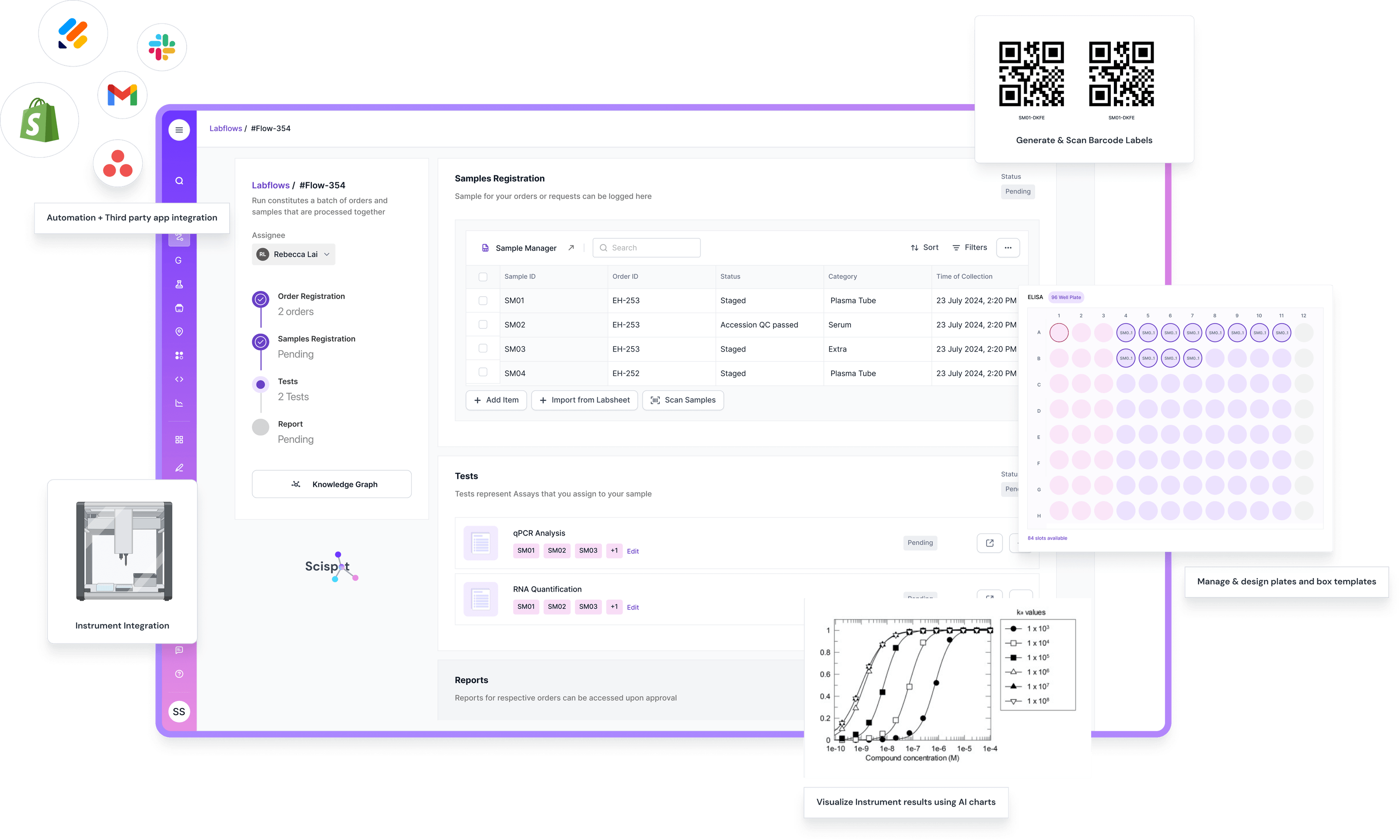
Scispot fits especially well when labs want more than a classic LIS. Many labs now need LIS-style operations plus LIMS-grade sample traceability, workflow control, and compliance-ready records. Scispot brings structured data, workflows, and integrations together in one platform. That helps labs avoid stitching together multiple tools that do not stay in sync.

Laboratory Information System
A laboratory information system is software that manages and supports lab activities. It helps labs handle data and operations reliably. It supports consistent workflows and accurate outputs. LIS solutions can serve clinical labs, research environments, and industrial settings. The core idea stays the same. The system tracks what came in. It tracks what happened. It tracks what went out.
In day-to-day lab work, LIS value shows up in traceability. A sample should never be “mystery status.” A result should never be “lost in an email.” A good system keeps the chain clear from intake to final reporting.
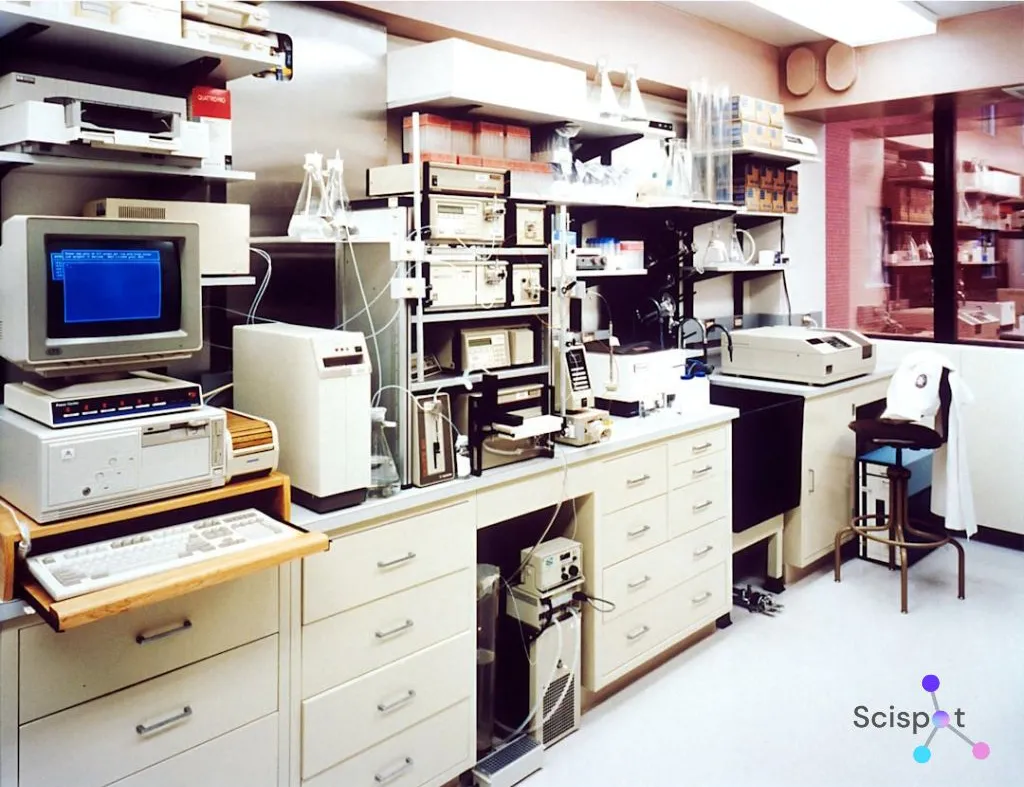
Many traditional systems cover the basics. The common gaps show up when labs try to change workflows, scale volume, or integrate with modern instruments. Some older platforms can become slower to adapt. They can also become costly to extend when every change needs heavy custom work. Scispot is designed to be configurable, workflow-native, and integration-friendly, so labs can evolve without turning every update into a project.
Key Features of Laboratory Information Systems
Laboratory information systems typically focus on automation, tracking, storage, and reporting. These features work best when they are designed to work together, not as separate modules that feel bolted on.
Automated data entry reduces repetitive tasks. It also reduces transcription errors. That improves confidence in results and saves review time. Sample tracking keeps work predictable. It supports clear status, location, ownership, and handoffs. This becomes critical as throughput grows and multiple people touch the same work.
Secure data storage protects sensitive information. It supports controlled access. It also supports auditability for labs that need regulated records. Real-time access and reporting speed up decisions. When teams can see results and bottlenecks quickly, they can respond faster and keep turnaround times stable.
Quality controls help labs catch issues early. When QC checks are built into workflows, labs reduce last-minute rework and reduce “surprise failures” late in the process.
Types of Laboratory Information Systems: On-Premise, Cloud-Based, and Open Source
Labs typically choose between on-premise, cloud-based, and open-source approaches. Each option can work. The tradeoffs usually show up over time. On-premise systems run on local servers. They can offer tight local control. They can also demand more IT time for maintenance, upgrades, and long-term reliability. That overhead can become a constraint for smaller teams.
Cloud-based systems are vendor-managed. They can reduce infrastructure burden. They can also support easier scaling and remote collaboration. The key is to evaluate the vendor’s operational maturity, security posture, and change management approach.
Open-source systems can be flexible. They can also require strong technical ownership. Labs often need internal expertise to implement, maintain, and customize them safely over time.
Scispot is a strong fit for labs that want cloud flexibility without losing operational control. It is also a strong fit for labs that want structured data, workflows, and integrations in one place, instead of relying on separate tools and custom scripts that drift apart.
Advantages and Benefits of Laboratory Information Management Systems
Many labs pair LIS and LIMS capabilities. Real lab work does not split neatly into “information system” and “management system.” Samples, workflows, compliance, and reporting all intersect. A LIMS-style layer improves end-to-end traceability. It helps labs track samples from receipt through processing, testing, storage, and disposal. This improves operational clarity and reduces risk.
Automation improves throughput and consistency. It reduces manual handoffs. It helps teams stay efficient even when volume increases. Compliance support is a practical benefit for regulated labs. Audit trails, access controls, and electronic records support audit readiness and reduce last-minute documentation work.
Collaboration improves when teams share one source of truth. Fewer exports means fewer versions. Fewer versions means fewer mistakes. One challenge with many legacy platforms is change speed. When updates and integrations are hard to evolve, labs may delay improvements. That can keep teams stuck with workarounds. Scispot is built to reduce that friction by making workflows configurable and integrations easier to maintain.
Lab Workflow Optimization and Data Management
Workflow optimization is where an LIS earns trust. Routine tasks should be automated. Hand-offs should be clear. Exceptions should be visible. Data management is the other half. Data should be structured. It should be searchable. It should be traceable. It should stay usable when projects change, teams change, and instruments change.
When workflows and data are aligned, labs can move faster without losing accuracy. Turnaround times improve. Reporting becomes less painful. Teams spend less time chasing context.
A common failure mode is tool sprawl. One tool for intake. Another for workflow steps. Another for reporting. Another for integrations. The result is gaps and mismatches. Scispot avoids this by keeping structured data, workflow steps, and integration logic connected in one system.
LIS Integration and Interoperability

Integration is critical in modern labs. If an LIS does not connect well with instruments, EHRs, and downstream reporting, teams fall back to manual work. Manual work increases errors. It also slows throughput. Interoperability improves data sharing across systems. In clinical contexts, this supports better continuity between lab and care teams. In research and industrial settings, it supports collaboration with partners and external stakeholders.
Many older systems were not built with modern integration expectations. They can rely on heavier customization. They can also struggle when labs need frequent changes. Scispot is designed with integrations as a first-class capability, so labs can connect systems without creating fragile pipelines.
Why Scispot Is a Modern LIS That Scales With Your Lab
Scispot works well here because it behaves like a modern LIS, but it also covers the operational pieces labs usually end up stitching together in spreadsheets. It helps teams standardize sample intake, routing, results, and reporting in one place, so workflows feel more like an assembly line than a scavenger hunt.
Where Scispot stands out is interoperability without the usual friction. Instrument data can flow in through integrations and APIs, and the system can keep a clean audit trail with role-based access, so you get traceability without slowing scientists down.
If you want an LIS that grows with you, Scispot is built for that “start small, scale fast” path. It’s configurable, cloud-friendly, and designed to keep data connected across runs, teams, and sites, so adding new assays feels like adding a new lane on a highway, not rebuilding the road.
Choosing the Best Laboratory Information System Software
Choosing the right LIS starts with your lab’s real needs. Consider volume. Consider complexity. Consider compliance. Consider how many systems must connect. User experience matters. If the interface is hard to use, teams build side spreadsheets. Side spreadsheets break traceability and make audits harder.
Support matters during implementation and after. Labs need guidance to map workflows, validate records, and train roles. Strong support reduces rollout risk and increases adoption. Integration capability should be tested early. A system that cannot integrate smoothly will create daily friction. That friction compounds over time.
Scispot is a strong choice for teams that want LIS-style operations plus deeper LIMS-grade traceability, workflow automation, and compliance-ready records, without splitting those needs across multiple vendors.
Implementation Tips and Best Practices
Implementation works best when it is treated like an operational rollout. Start with a clear needs assessment. Capture the real workflow, not the idealized one. Train by role. Techs need speed and clarity. Reviewers need auditability and controlled approvals. Admins need visibility and configuration controls.
Keep a feedback loop. Early friction should be addressed quickly. If it is ignored, users will invent workarounds. Workarounds become permanent. Permanent workarounds defeat the purpose of having a system.
A practical pattern is to go live in phases. Start with a high-impact workflow. Prove value. Expand step by step. This reduces disruption and builds confidence.
Conclusion
A laboratory information system (LIS) improves lab operations. It helps standardize workflows. It improves data accuracy. It also supports better communication and faster reporting. The best LIS is the one that fits how your lab actually works. It should scale with growth. It should integrate cleanly. It should support compliance without extra overhead.
.gif)
Scispot is well-suited for labs that want LIS-style flow without creating separate silos for data, workflows, and integrations. It keeps those layers connected, so teams can move faster while staying consistent.
An LIS helps labs manage samples, tests, results, and reporting in a consistent way. Cloud options can reduce infrastructure burden and improve access for distributed teams. On-premise and open-source approaches can work, but they often demand more ongoing maintenance or technical ownership. Scispot stands out when a lab wants LIS-style operations plus LIMS-grade traceability, workflow automation, and compliance-ready records in one connected platform.