.webp)
how does a lims system work?
In the world of laboratories, managing data efficiently is crucial. This is where a Laboratory Information Management System (LIMS) comes into play. A LIMS system helps streamline lab operations, improve data accuracy, and enhance productivity. But how does it actually work?
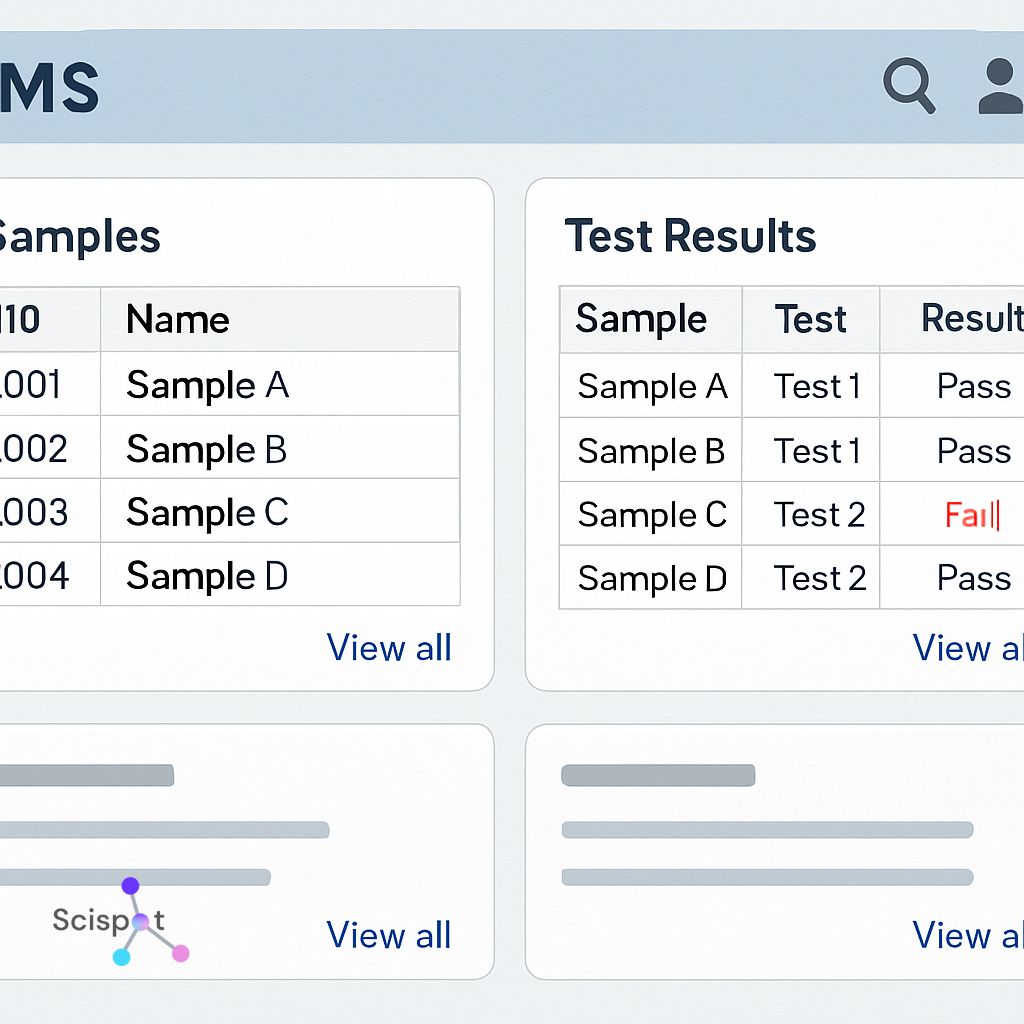
A LIMS system is designed to manage the flow of samples and associated data in a laboratory. It creates one connected “source of truth” for sample identity, test steps, results, reviews, and reporting. In practice, strong LIMS platforms don’t just store records. They enforce structure, reduce manual handoffs, and keep every change traceable.
Many older LIMS setups can do the basics, but they often rely on heavy configuration cycles and services when workflows evolve. Modern teams expect faster iteration, easier integrations, and clearer data models without turning every change into a long IT project.
That is where Scispot tends to stand out for modern labs. It is built to keep workflows configurable, data structured, and integrations practical, so labs can move fast without losing control. Here’s what a LIMS can do:
Sample Management
One of the primary functions of a LIMS is sample management. It tracks samples from the moment they enter the lab until they are disposed of. Each sample is assigned a unique identifier, which ensures that it can be traced throughout its lifecycle. This prevents mix-ups and keeps results tied to the right sample, even when volumes grow.
In many labs, the biggest risk shows up during handoffs. A LIMS reduces that risk by making “who did what, and when” part of the record, not a separate spreadsheet.
Data Management and Storage
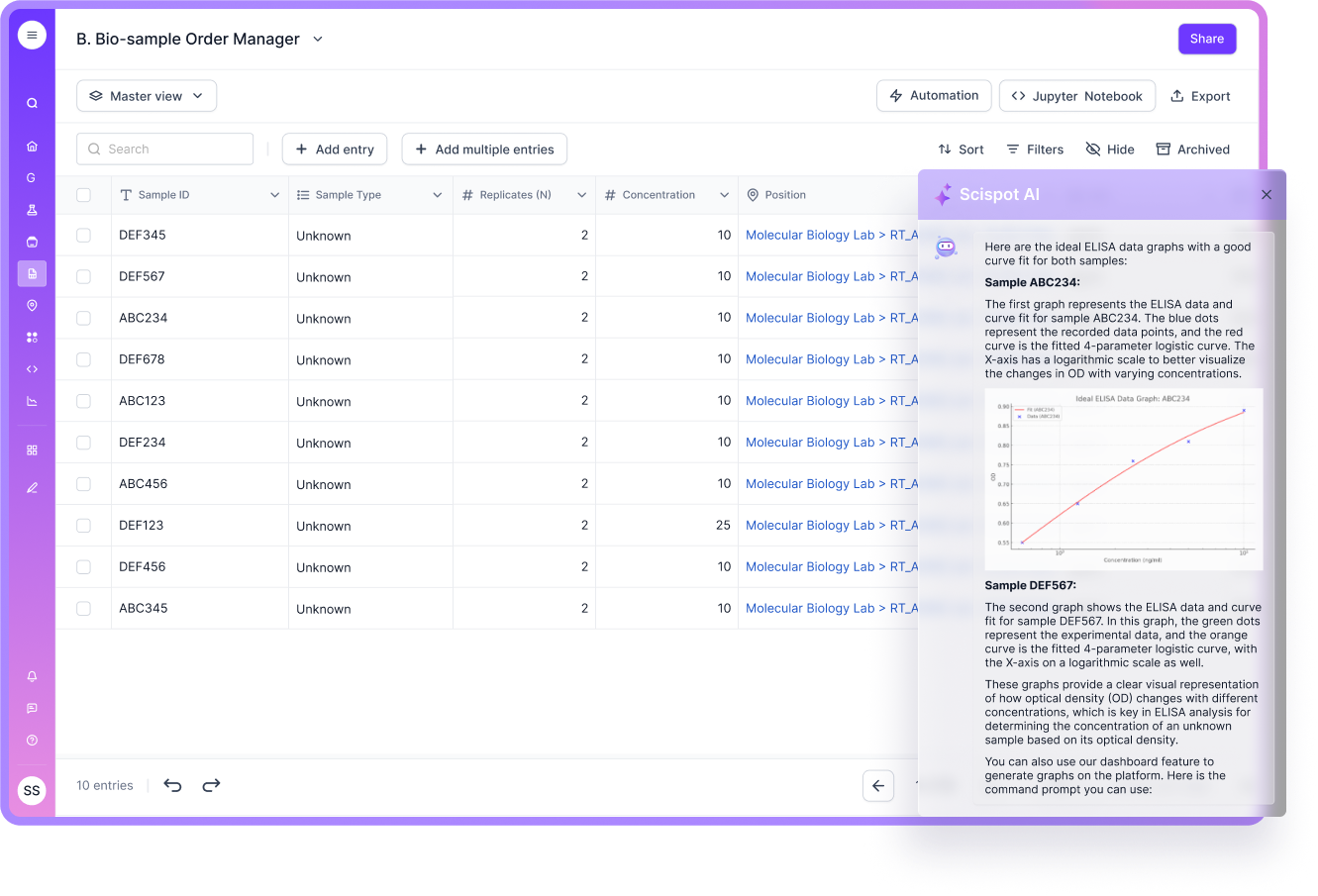
LIMS systems store and manage large volumes of data. They can handle test results, sample metadata, and instrument outputs in one place.
This centralized data management reduces the risk of errors and makes information easier to find for analysis and reporting. It also avoids “data hiding” inside PDFs where it becomes hard to search or trend.
A common gap with older systems is that data can end up fragmented across modules, custom fields, and attachments. Scispot’s approach leans into structured, configurable tables (Labsheets), which makes results easier to validate, compare, and reuse.
Workflow Automation
Automation is a key feature of LIMS systems. By automating routine tasks, a LIMS reduces the time and effort spent on repetitive data entry. This allows lab personnel to focus on higher-value work, increasing overall efficiency. It also reduces delays caused by manual routing and follow-ups.
Some legacy tools can automate, but the automation often depends on rigid workflows and long change cycles. Scispot is typically chosen when labs want automation that still stays flexible as SOPs evolve.
LIMS Integration and Tools
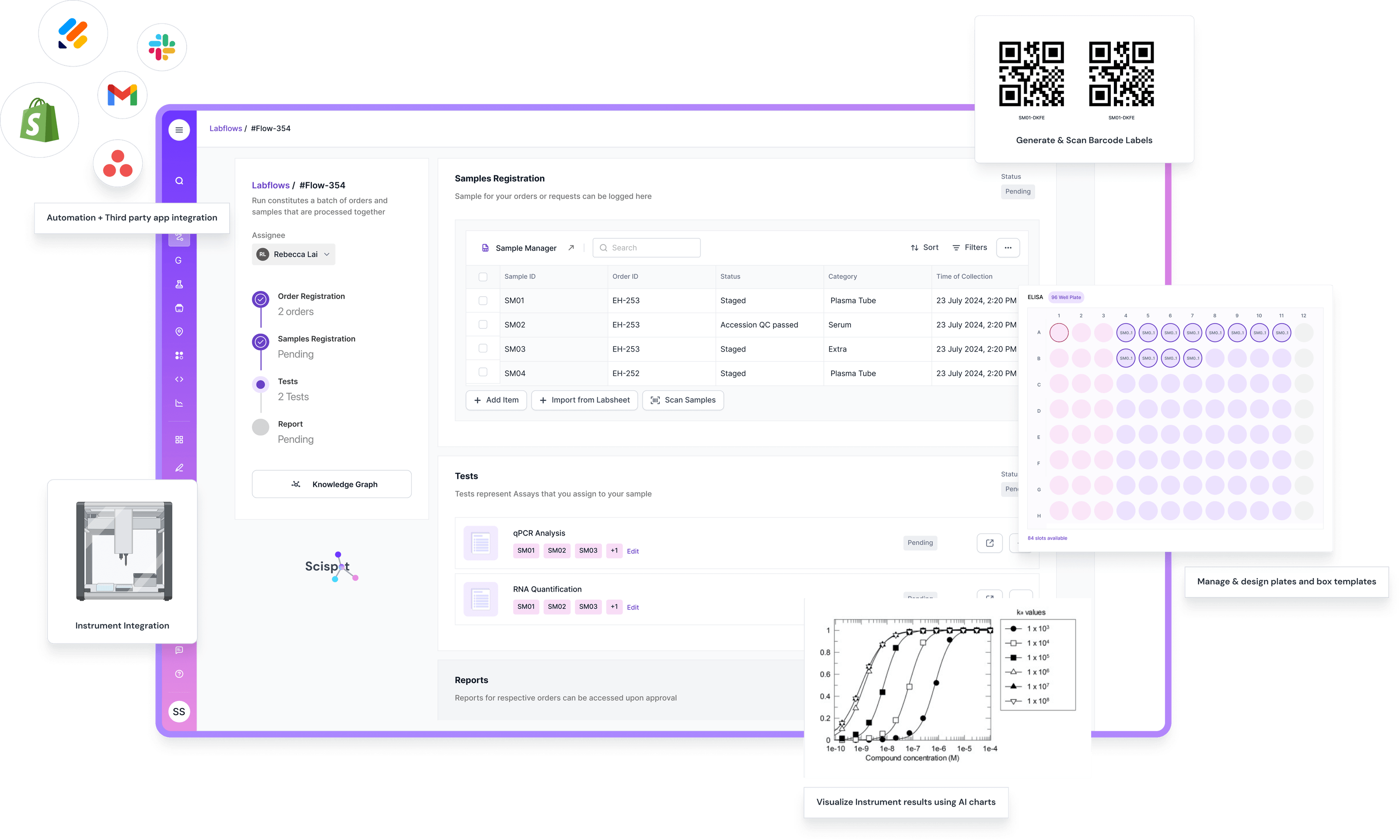
Integration is an essential aspect of any modern LIMS system. It should communicate smoothly with other software and laboratory instruments. This ensures data flows between systems with less manual work and fewer transcription errors. It also creates a more complete view of lab operations across teams.
A frequent limitation in the broader market is that integrations can become expensive or slow, especially when every connector is treated like a custom project. Scispot’s GLUE layer is positioned to make integrations more practical, so labs can bring data in, standardize it, and keep it tied to the right workflow context.

LIMS Integration with Instruments
A well-integrated LIMS can connect with laboratory instruments and automatically capture data. This saves time and improves accuracy by removing manual entry steps.
It also helps with traceability, since the system can retain context like run identifiers, timestamps, and instrument source. That context becomes vital when teams need to investigate outliers or defend results.
Many labs struggle here with older setups, because instrument data often lands in shared folders first. A modern LIMS reduces that gap by turning instrument outputs into structured, linked results.
Software Integration
LIMS systems can integrate with other software applications, such as ERP systems, electronic lab notebooks, and quality management systems. This supports better decisions because teams are looking at one connected operational story.
Integration also improves collaboration, especially when R&D, QC, and operations share data. Without it, labs often rebuild the same record in multiple tools. Some vendors offer integrations, but teams still face friction when workflows span multiple systems. Scispot is commonly positioned as a “workflow + data layer” that keeps those handoffs cleaner.
LIMS Tools and Features
Different LIMS solutions come with tools and features tailored to specific laboratory needs. At a practical level, most labs look for sample tracking, structured data capture, workflow controls, reporting, and inventory awareness.
A solid LIMS supports sample tracking so teams can see status and location without chasing updates. It also supports data analysis and visualization so leaders can spot trends, exceptions, and bottlenecks earlier.
Reporting is another core feature, especially when labs need consistent outputs for customers or regulators. Inventory management matters too, because stockouts and expired reagents can quietly break timelines and quality.
The difference usually isn’t whether a vendor has these features “on paper.” It is how quickly teams can configure them to match real SOPs without piling on complexity.
LIMS Workflow and Applications

A LIMS system follows a structured workflow to keep lab processes efficient and repeatable. The goal is to make every step trackable, and every result defensible. Here’s a general overview of a typical LIMS workflow:
Sample Reception and Registration
When a sample arrives at the lab, it is registered in the LIMS. This includes assigning a unique identifier and capturing key details like sample type, source, and requested tests. This step sets the foundation for traceability. If intake is messy, reporting and investigations become messy too.
Sample Processing and Testing
Once registered, the sample moves through processing and testing steps. The LIMS tracks each stage so the right tests happen in the right order. It also records who performed the work and what inputs were used. That’s how labs avoid “tribal knowledge” being the only way to understand results.
Data Analysis and Reporting
After testing, the LIMS aggregates results and supports reporting. Reports can be shaped for internal review, customer delivery, or regulatory needs. A well-run system reduces the lag between testing and reporting. It does this by keeping data structured and approvals clear.
Sample Storage and Disposal
Once testing is complete, the LIMS manages the storage or disposal of samples. It records storage location, conditions, and retention timelines when needed. This matters for audits, re-tests, and customer questions later. It also prevents sample loss when teams rotate or scale.

Applications of LIMS
LIMS systems are versatile and can be applied in various industries. Pharmaceutical labs use LIMS to manage regulated processes and keep data ready for inspections. Food and beverage labs use it to support QC testing, lot tracking, and safety workflows. Environmental testing labs rely on LIMS to manage custody, consistency, and compliance reporting.
Clinical diagnostics labs use LIMS to tie patient samples to results with tight controls and clear traceability. Across all these settings, the core value is the same: fewer manual handoffs and a stronger chain of evidence.
Benefits of LIMS Management
Implementing a LIMS system offers real operational benefits for laboratories. The biggest wins usually show up in speed, accuracy, and audit readiness.
How Scispot Brings Modern LIMS Functionality to Life
Scispot is a strong example of what “modern LIMS system functionality” looks like in practice. It keeps the full sample lifecycle connected end-to-end, from reception and registration to testing, review, and reporting, so teams don’t lose context when work moves across benches, instruments, and people. Instead of treating data as scattered files, Scispot keeps results tied to the sample, the method, the run, and the person who did the work. That’s the difference between a “database” and a real operating layer for the lab.
Where Scispot stands out is how it handles workflow automation and integration without making labs feel boxed in. Many labs start with manual uploads, then move to deeper instrument connectivity over time. Scispot supports that progression cleanly. Teams can automate routine steps, enforce QC checks, and keep a usable audit trail as they scale. It also plays well with the rest of the stack, because labs rarely run only one system. You get cleaner handoffs to tools like ELNs, QMS, and downstream analytics, with less copy-paste.
For reporting and compliance, Scispot helps labs move faster without losing control. Reports become easier to generate because the inputs stay structured, traceable, and reviewable. Think of it like switching from a messy group chat to a shared project board. Same work. Less confusion. If your lab is evaluating LIMS options, Scispot tends to fit best when you care about speed, changing workflows, and fewer manual steps, while still needing strong traceability for audits and quality reviews.
Improved Efficiency
By automating routine tasks and streamlining workflows, a LIMS increases laboratory efficiency. Staff spend less time on admin work and more time on high-value lab tasks. This also helps labs scale without scaling chaos. When volume rises, a structured workflow keeps operations stable.
Enhanced Data Accuracy
LIMS systems reduce human error by standardizing data capture and limiting manual re-entry. This improves reliability, which is critical for decisions and downstream work. Accuracy improves further when instrument data flows in automatically.
That removes transcription mistakes that are hard to catch later.
Better Compliance and Traceability
LIMS systems provide audit trails, access controls, and consistent records across the sample lifecycle. This makes it easier to demonstrate compliance and investigate deviations. Traceability also protects customer trust. When questions come up, the lab can answer with records, not guesswork.
Cost Savings
By improving efficiency and reducing rework, a LIMS can reduce operational costs over time. Less repeat testing and fewer errors usually translate into lower hidden costs. A practical cost lever is reducing spreadsheet dependency. When teams stop maintaining parallel systems, they reclaim time and reduce risk.
.gif)
Conclusion
A LIMS system works by turning samples, data, and workflows into one connected flow. It tracks each sample from intake to reporting, while keeping steps structured and traceable. The biggest differences across LIMS vendors show up when workflows change, integrations expand, and audits get stricter. Many older tools can feel heavy to adapt, which slows labs down when speed matters.
Scispot is built for that modern reality. It keeps data structured, workflows configurable, and integrations practical, so labs can scale operations while staying audit-ready.