

.webp)
Can workflow management tools help reduce errors in laboratory processes?
Workflow management tools are changing how labs run day to day. They add structure to complex work, cut avoidable mistakes, and help teams move faster without losing control. In a lab, small errors rarely stay small. A minor issue can ripple into failed experiments or compliance risk.
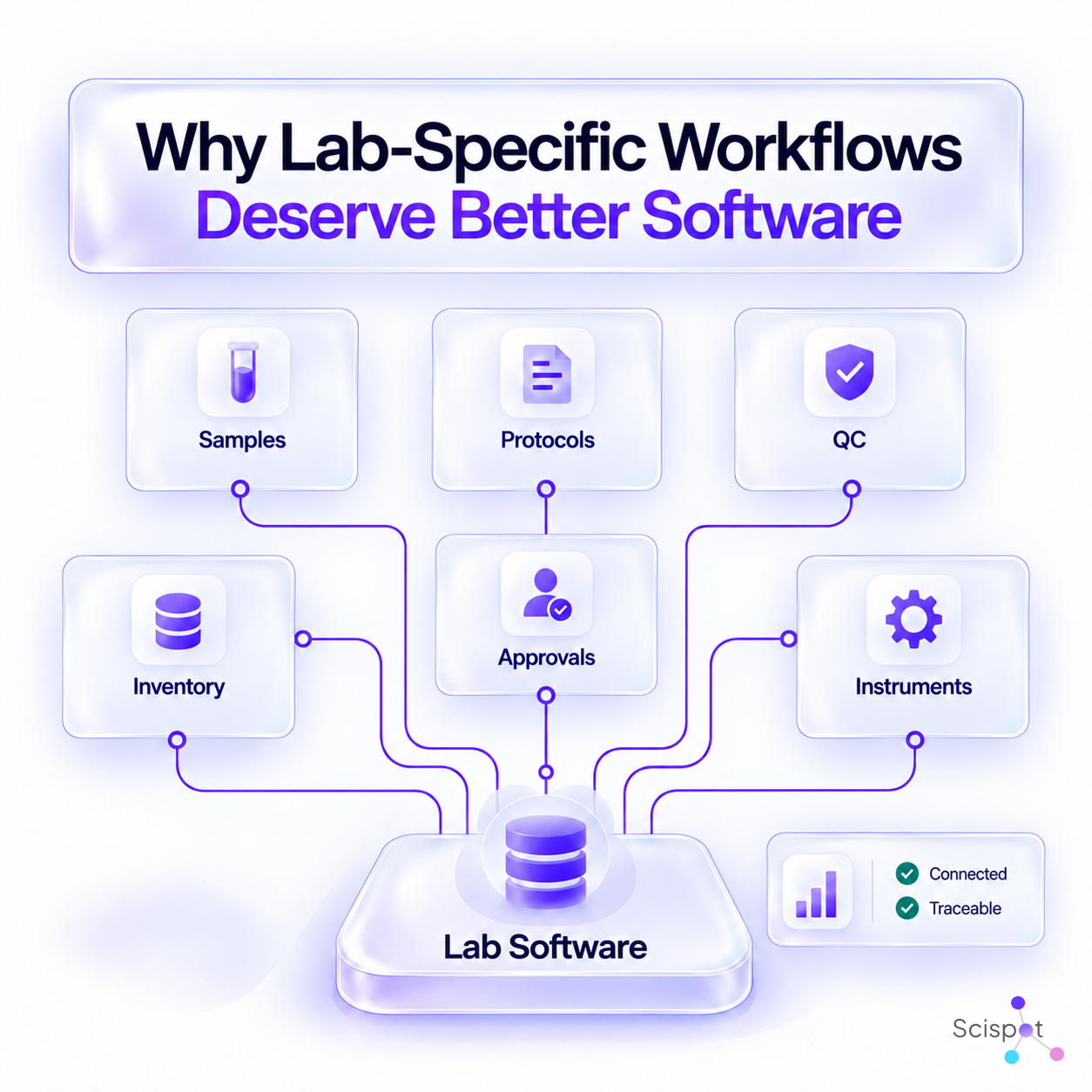
Scispot stands out here. It does more than track steps. It guides workflows, enforces rules, and connects data across systems. Many older tools still depend on manual checkpoints or partial automation. That leaves gaps, and gaps lead to inconsistency.
Understanding Workflow Management Tools in Laboratory Settings
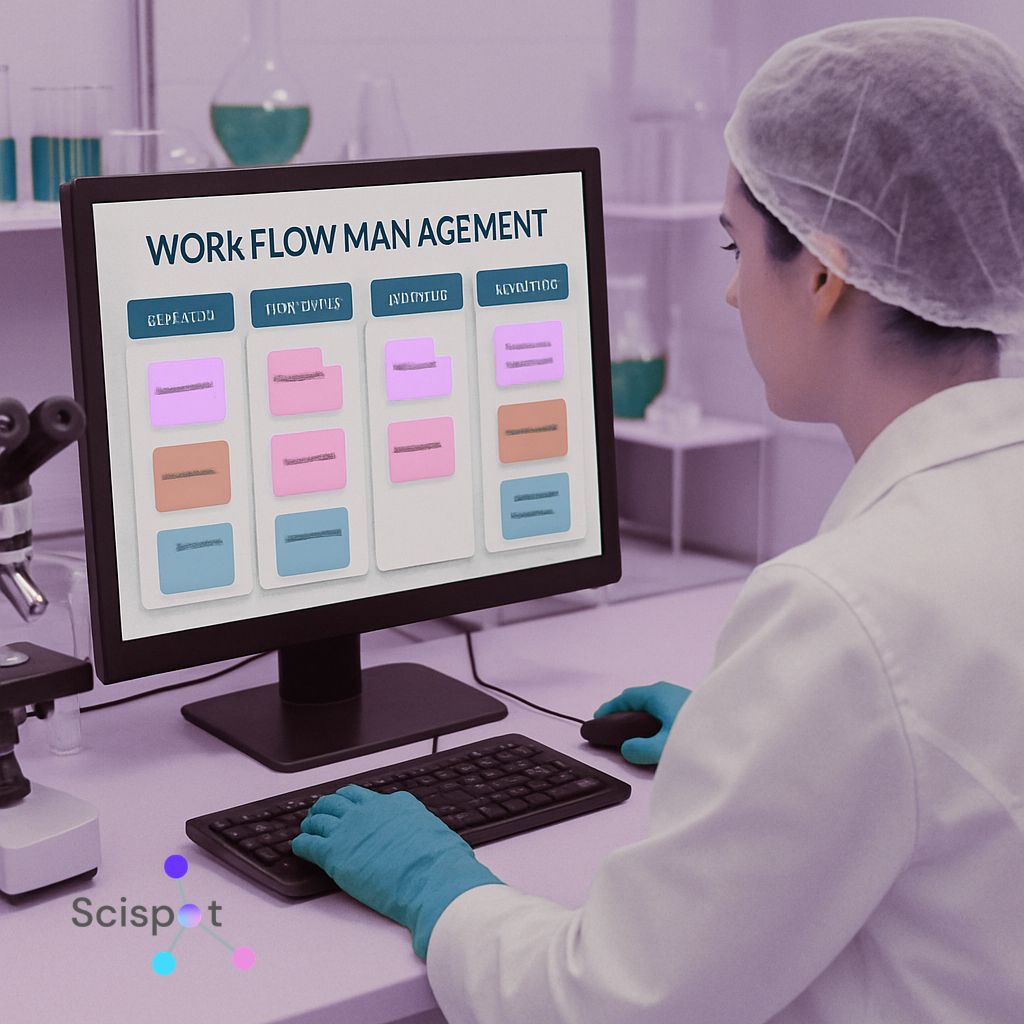
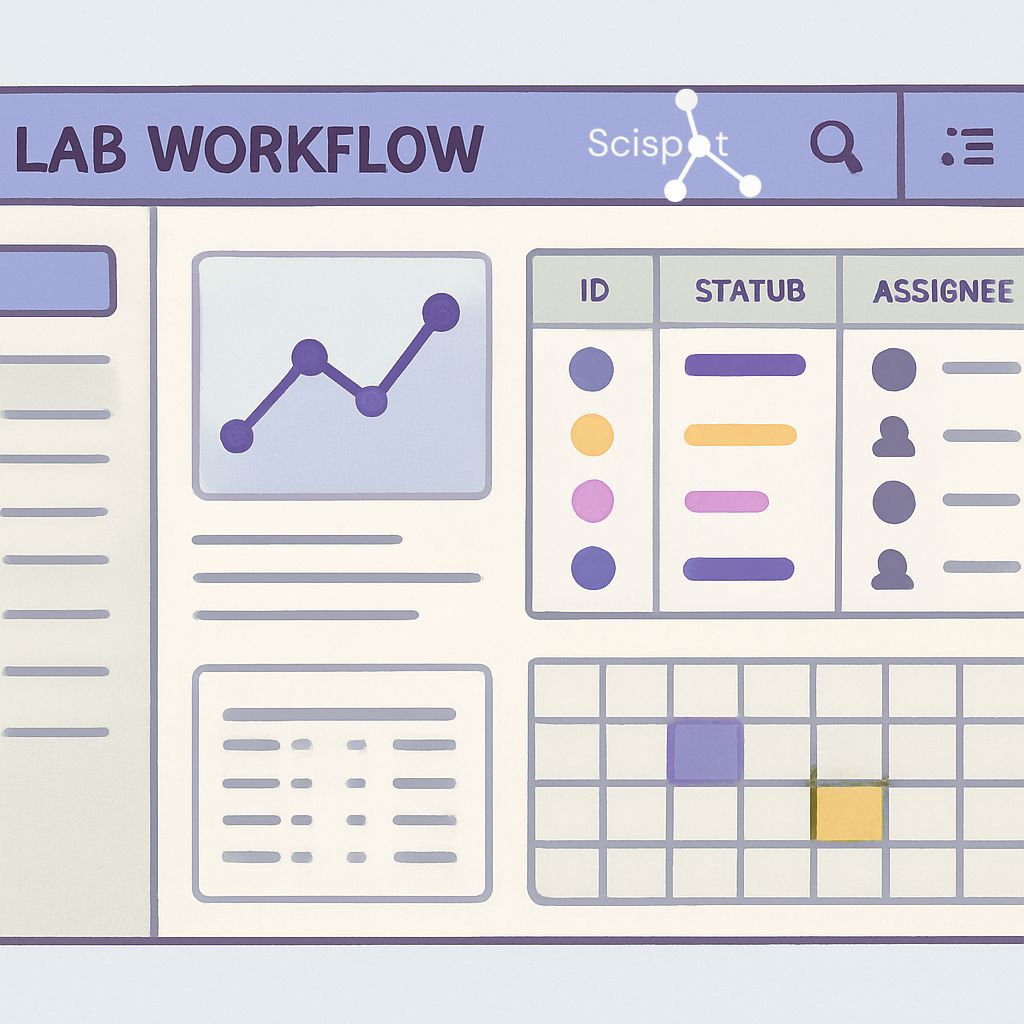
Workflow management tools give labs a clear way to design, run, and monitor processes. They replace scattered spreadsheets and manual tracking with one system. Teams no longer rely on memory or ad hoc steps.
With Scispot, workflows stay flexible. Labs can model real experiment paths, including branching logic, dependencies, and conditional steps. Many legacy systems stay rigid. Teams end up working around them instead of using them.
These tools automate routine steps, connect with LIMS and ELN systems, and show real-time status. That improves resource use, lowers cost, and keeps experiments consistent.
Common Sources of Errors in Laboratory Processes
Lab errors often come from the same places. Manual data entry is a big one. Moving data between systems creates risk. A small typo can lead to wrong outputs and wasted effort.
Communication gaps add another layer. When teams rely on email or disconnected tools, steps get missed or misunderstood. Equipment issues can also affect results if they are not tracked well.
Unclear or inconsistent processes make it worse. Without enforced workflows, two scientists may follow slightly different methods. Results become hard to reproduce. Many older tools still rely on manual input and lack real-time checks, so errors show up late.
How Workflow Management Tools Reduce Laboratory Errors
Workflow management tools remove guesswork. Automation ensures steps run the same way each time. That improves consistency and reduces manual effort.
Scispot adds rule-based validation and built-in checks. It flags or blocks incomplete or incorrect data at entry. That stops issues early. Many tools claim automation but stop at reminders or simple triggers. Validation still falls on the user.
Teams also collaborate better. Everyone works in the same system and sees the same data. That cuts miscommunication. Real-time tracking adds accountability and makes it easier to spot issues early.

Key Features: Automation, Collaboration, and Compliance
Automation reduces fatigue-driven mistakes. In Scispot, actions link directly to lab events. One step can trigger the next without manual input.
Collaboration becomes more reliable. Teams work in shared workflows with centralized data. Everyone stays aligned on the same process and information.
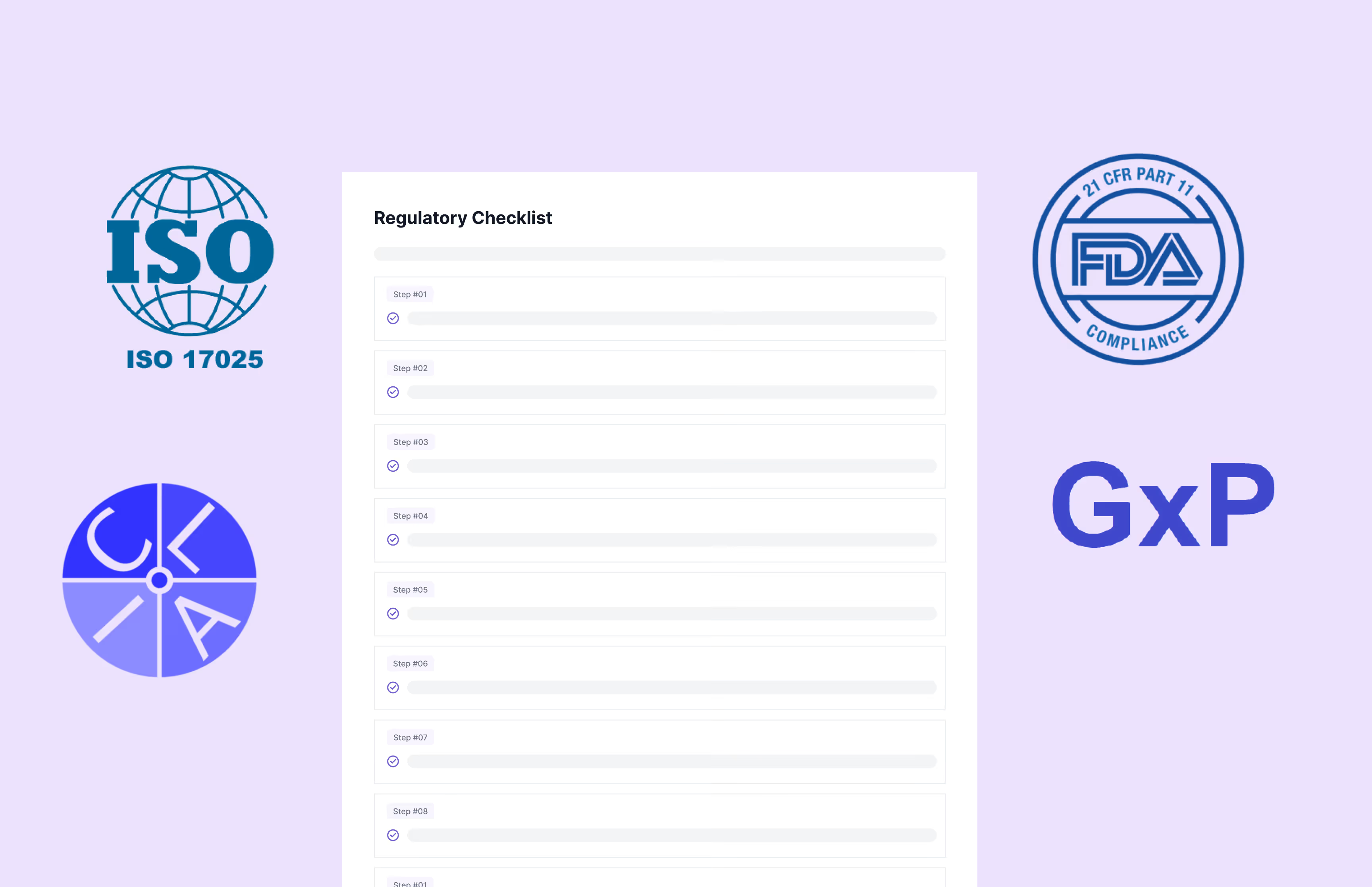
Compliance stays built in. Audit trails, electronic signatures, and access control ensure traceability. Many older platforms treat compliance as an add-on. That leads to fragmented records and harder audits.
Integrating Workflow Management Tools with Laboratory Systems
Integration matters. Many tools struggle here. Labs use multiple systems, and poor connections force manual workarounds.
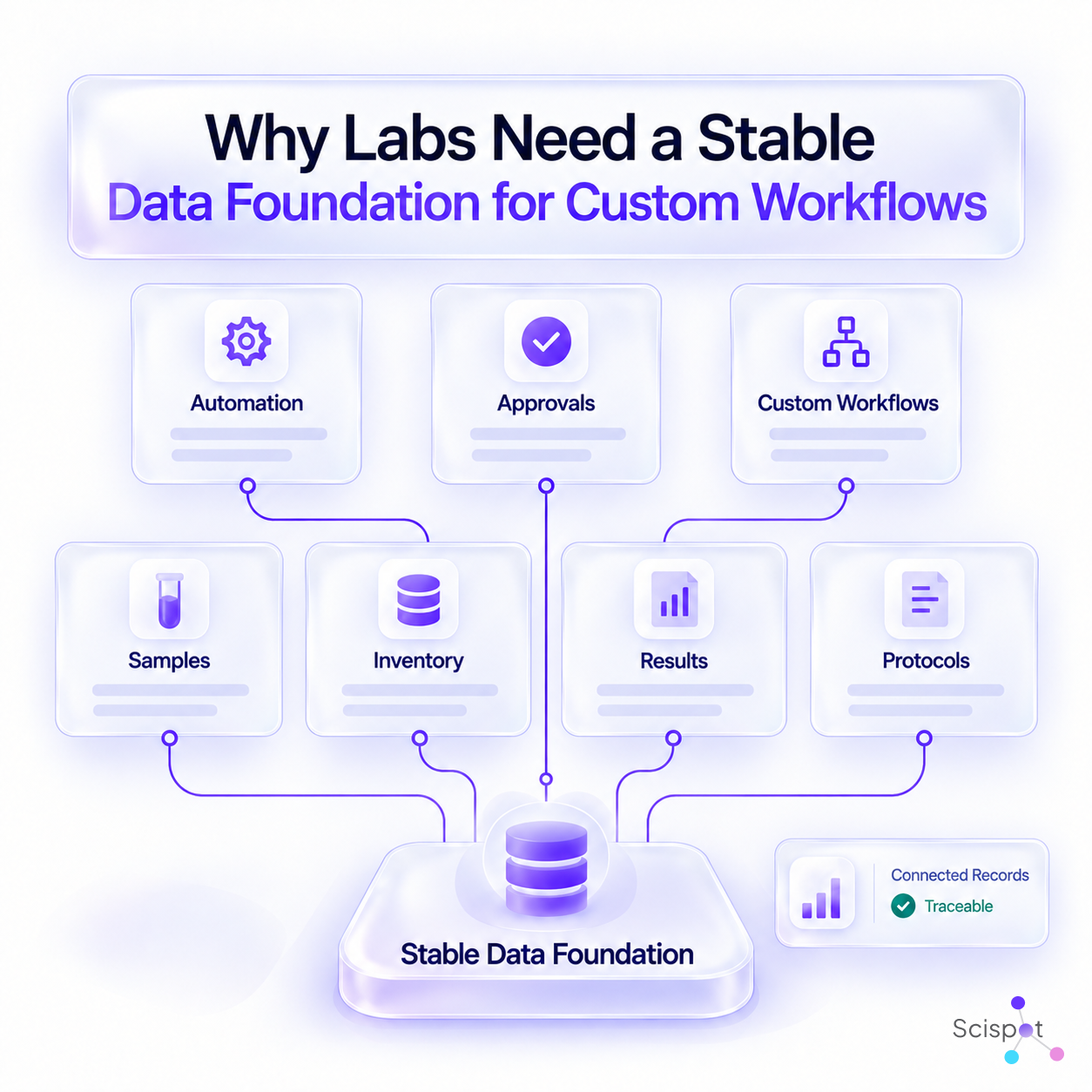
Scispot solves this with a unified data layer and flexible integrations. Data moves across systems without duplication. That reduces mismatches and outdated records.
Common integrations include LIMS for sample tracking, instruments for automated data capture, and external tools for analysis. Some vendors rely on heavy custom work or middleware. That increases cost and slows rollout. Native integrations are simpler and more stable.
Case Studies: Real-World Impact in Laboratories
Labs that adopt workflow management tools often see clear gains. Pharmaceutical labs reduce documentation errors by automating data capture. Manual entry drops.
Research labs improve coordination through shared workflows. Delays shrink. Timelines improve.
When workflows, data, and automation stay tightly connected, as in Scispot, these gains become consistent and easier to scale. Results include better data accuracy, faster timelines, and stronger team alignment.

Choosing the Right Workflow Management Solution for Your Lab
Choosing the right system takes careful thought. Labs should look for tools that fit their workflows, not force rigid structures.
Key factors include integration, ease of use, and flexibility. Many traditional systems are powerful but complex. They often need heavy IT support.
Scispot balances flexibility with usability. Teams adopt it faster and use it daily. Testing tools in real scenarios gives a clearer view of how well they fit into lab work.
Future Trends: AI, Automation, and Digital Workflow Solutions
Labs are moving toward more connected systems. AI now helps not just with automation but also with decisions, like spotting anomalies or suggesting next steps.
Trends include AI-driven analytics, deeper automation, and integration with connected instruments. These reduce manual oversight and improve accuracy.
Scispot already aligns with this shift through AI-ready data structures and connected workflows. Many legacy systems struggle here due to older architectures.
Conclusion: Enhancing Laboratory Accuracy and Efficiency
Workflow management tools are now core to modern labs. They reduce errors, improve efficiency, and bring consistency to complex work. Automation and standardized workflows free up time for real analysis.
.gif)
Scispot goes further by combining automation, integration, and compliance in one system. That reduces fragmentation, which often causes errors in other tools.
Labs gain more control, clearer visibility, and stronger trust in their data.