


.webp)
Bioinformatics: Where Biology Meets Computation
Bioinformatics sits at the intersection of biology and computing. It uses computers to work with biological data like DNA, proteins, and gene activity. Modern biology produces huge datasets that are too large to handle manually, so computation is needed for storage, processing, and analysis. The field supports genomics, proteomics, and personalized medicine by helping find patterns in complex data. It is not only about analysis. It also includes building tools, models, and algorithms that explain biological systems. This places it within computational biology and systems biology. The field is growing fast as biological data keeps expanding, and it keeps changing how we understand life at a molecular level.
Bioinformatics
Bioinformatics is the use of computation to study biological data. It focuses on storing, managing, and analyzing large datasets, especially from genomics. It uses algorithms, mathematical models, and software tools to study DNA sequences and gene function. Key areas include genomics and proteomics analysis, development of bioinformatics tools, and applications in drug discovery and personalized medicine. It helps turn raw biological data into meaningful insights. Visualization tools make it easier to see patterns in large datasets that would otherwise stay hidden. It connects biology and computing and improves how we understand disease and biological systems.
.webp)
The History and Evolution of Bioinformatics
Bioinformatics started in the 1960s with early work on RNA sequence analysis. It grew as computers and algorithms became more powerful. A major shift came with the Human Genome Project in the 1990s, which needed large-scale data handling and made bioinformatics central to biology research. In recent years, the field has expanded further with machine learning and artificial intelligence. These tools have improved the speed and accuracy of analyzing complex biological systems.
.webp)
Key Concepts: Computational Biology and Systems Biology
Computational biology focuses on building models and algorithms to analyze biological data. Systems biology focuses on how biological parts interact as complete systems. It studies networks rather than isolated elements. Key methods include data modeling, biological network analysis, and simulation of gene and metabolic pathways. Together, these fields help explain how biological systems function as a whole. They support research in disease understanding, drug development, and personalized medicine.
Core Applications of Bioinformatics
Bioinformatics is used in many areas of science and medicine. In genomics, it helps analyze DNA and identify genes linked to disease. In proteomics, it studies protein behavior and function inside cells. In medicine, it supports treatments based on an individual’s genetic profile. In agriculture, it helps improve crop traits like yield and resistance. Core applications include genomic analysis, protein function prediction, personalized healthcare, and crop improvement.
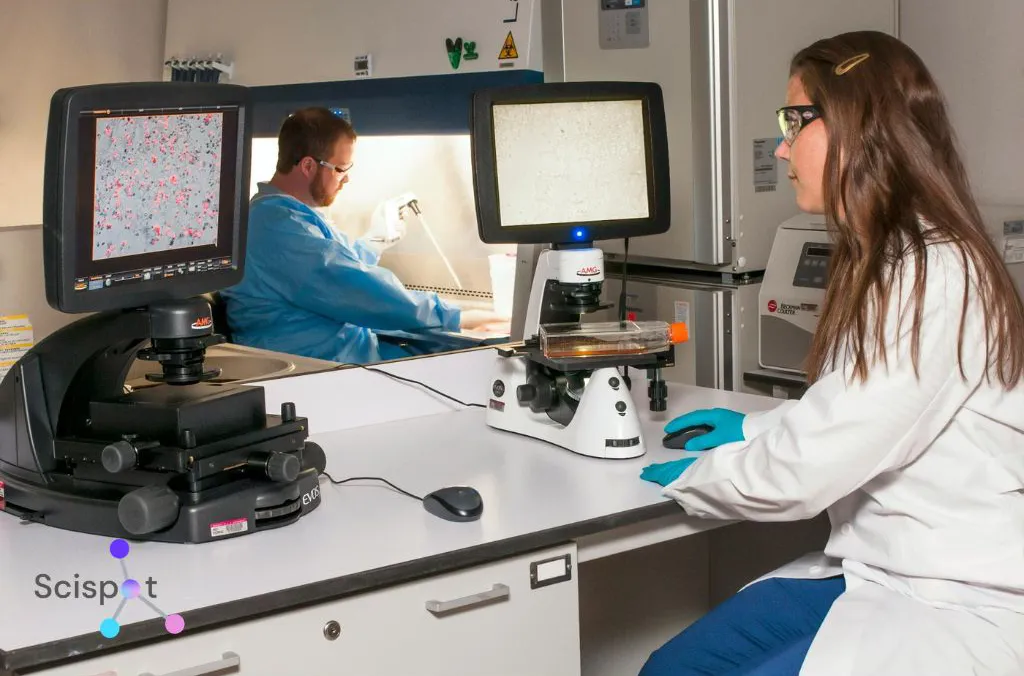
Essential Bioinformatics Tools and Data Visualization Techniques
Bioinformatics depends on software tools and databases that manage biological data. Common tools include BLAST for sequence comparison, GenBank and EMBL for data storage, and Python and R for analysis. Visualization tools convert complex datasets into graphs and interactive views, making patterns easier to understand. These tools are essential for working with biological data and support research decisions across the field.

Scispot as a Preferred Digital Platform in Bioinformatics
Bioinformatics workflows often use many disconnected tools. Scispot brings experimental data, sample tracking, and analysis workflows into a single system. It helps organize genomic and lab data so it can be searched, reused, and connected across projects. It also standardizes how data is captured from lab instruments, which reduces manual cleanup and improves consistency. For teams working across lab experiments and computational analysis, it helps bridge the gap between raw data and usable insights.
Molecular Modeling in Bioinformatics
Molecular modeling studies the structure and behavior of biological molecules. It helps explain how proteins and nucleic acids function, which is important in drug discovery and disease research. Common techniques include structural alignment, protein-ligand docking, and molecular dynamics simulations. These methods allow researchers to visualize molecules in 3D and understand how small changes at the atomic level affect biological systems.
Education Pathways: Bioinformatics B.S at IllinoisTech and Beyond
Bioinformatics education combines biology, programming, and statistics. A Bachelor of Science in Bioinformatics builds a strong foundation in these areas. Programs like the one at Illinois Institute of Technology include molecular biology, coding, and data analysis. Common pathways include undergraduate degrees in bioinformatics, graduate degrees in computational biology, and online certifications. Workshops and conferences also help build practical skills and professional connections.
Bioinformatics Internships and Career Opportunities
Internships give hands-on experience with real biological data and help connect academic learning with industry work. They are offered by universities, research labs, and biotech companies. Career paths include bioinformatics analyst, computational biologist, genomics data scientist, and research associate. The field is expanding across healthcare, pharmaceuticals, and agriculture. Continuous learning and networking are important for growth in this space.
.jpg.webp)
Challenges, Ethics, and the Future of Bioinformatics
Bioinformatics faces challenges in handling the rapid growth of biological data. Efficient storage and processing require better algorithms and systems. Privacy is another major concern, especially with genetic data. Ethical handling of personal biological information is critical. The future will be shaped by artificial intelligence and machine learning, which will improve analysis and prediction. Key directions include AI-based analysis, personalized medicine, open biological databases, and stronger data security systems.
Conclusion: The Impact and Promise of Bioinformatics
Bioinformatics connects biology and computing to understand life at a deeper level. It already plays a major role in medicine, agriculture, and research. As tools and data continue to grow, its impact will increase further. The field sits at the core of modern biological discovery and data-driven science, with steady expansion ahead.

%20Comprehensive%20Guide.avif)
.webp)