.webp)
TL;DR
- Best laboratory tracking software replaces spreadsheets by linking samples, inventory, workflows, and instrument data in one system.
- Says labs need accurate lineage, less manual handoff work, and traceability for audits, QC, and compliance.
- It also highlights sample, inventory, and workflow features: barcode support, reorder visibility, automation, collaboration, and real-time status tracking.
- Scispot is presented as the strongest fit because Labsheets and GLUE keep records configurable, automated, and connected as labs.
The best laboratory tracking software for tracking samples, inventory, workflows
In most labs, “tracking software” begins as a patchwork. A spreadsheet for samples. A shared doc for inventory. A chat thread for workflow updates. It works until volume rises, audits show up, or your process changes mid-quarter.
The best choice is the system that keeps samples, inventory, workflows, and instrument data tied together in one place, without turning every change into a services project. That’s where Scispot stands out, because it’s built around configurable lab databases (Labsheets) plus automation and integrations (GLUE), so tracking stays end-to-end as your lab evolves.
The Importance of Lab Data Management
Good tracking starts with reliable data. If data is scattered across spreadsheets, folders, and point tools, the lab spends energy reconciling “what’s true” instead of running science.
This is also where manual handoffs hurt the most. Even “simple” spreadsheet workflows can suffer from data-entry mistakes and rework, especially as complexity grows. A lab might have the sample in one tracker, the results in another, and the file attachments somewhere else. That breaks confidence fast.
With Scispot, lab data management is designed to feel like a structured library. You can find records quickly. You can trust the lineage. You can keep everything connected to the right sample and run, even when teams and workflows change.
Key Benefits of Laboratory Tracking Software
Accuracy improves when identifiers, statuses, and ownership are standardized. The system should make “who did what, when, and why” obvious, instead of buried in tabs and email trails.
Efficiency improves when repetitive work disappears. That includes bulk intake, metadata updates, instrument handoffs, and the routine “glue work” that drains technician time. Scispot is strong here because it’s built to reduce manual entry and keep workflows moving with automation, rather than relying on people to remember the next step.
Compliance and quality become easier when traceability is native. The software should capture changes and context as part of normal work, instead of forcing teams to backfill documentation later.
.jpeg)
Understanding Laboratory Sample Management Software
Sample management is the backbone. The “best” tool is the one that makes a sample feel like a trackable shipment, with a clear timeline and current state at a glance.
Scispot helps here by making each sample a first-class record that can carry its identity, metadata, status, and relationships across the workflow. That reduces the risk of lost samples, mislabeling, and disconnected results. It also makes it easier to answer everyday questions like “Where is it now?” and “What’s blocking it?”
Where some older, enterprise-grade LIMS can feel weak is in day-to-day adaptability. Many are powerful, but workflow changes and integrations can become heavier lifts than teams expect. That creates a slow-down effect when your lab is trying to iterate quickly.
Features of Laboratory Sample Management Software
Sample Tracking is only valuable if it stays usable daily. You want quick logging, clear status transitions, and a system that keeps context attached to the record so it does not drift into side channels.
Scispot’s approach works well when your schema needs to match your real workflow. Labsheets let you model what you actually track, not just what a vendor decided you should track. That means you can capture the exact fields your team uses, and refine them over time without breaking the system.
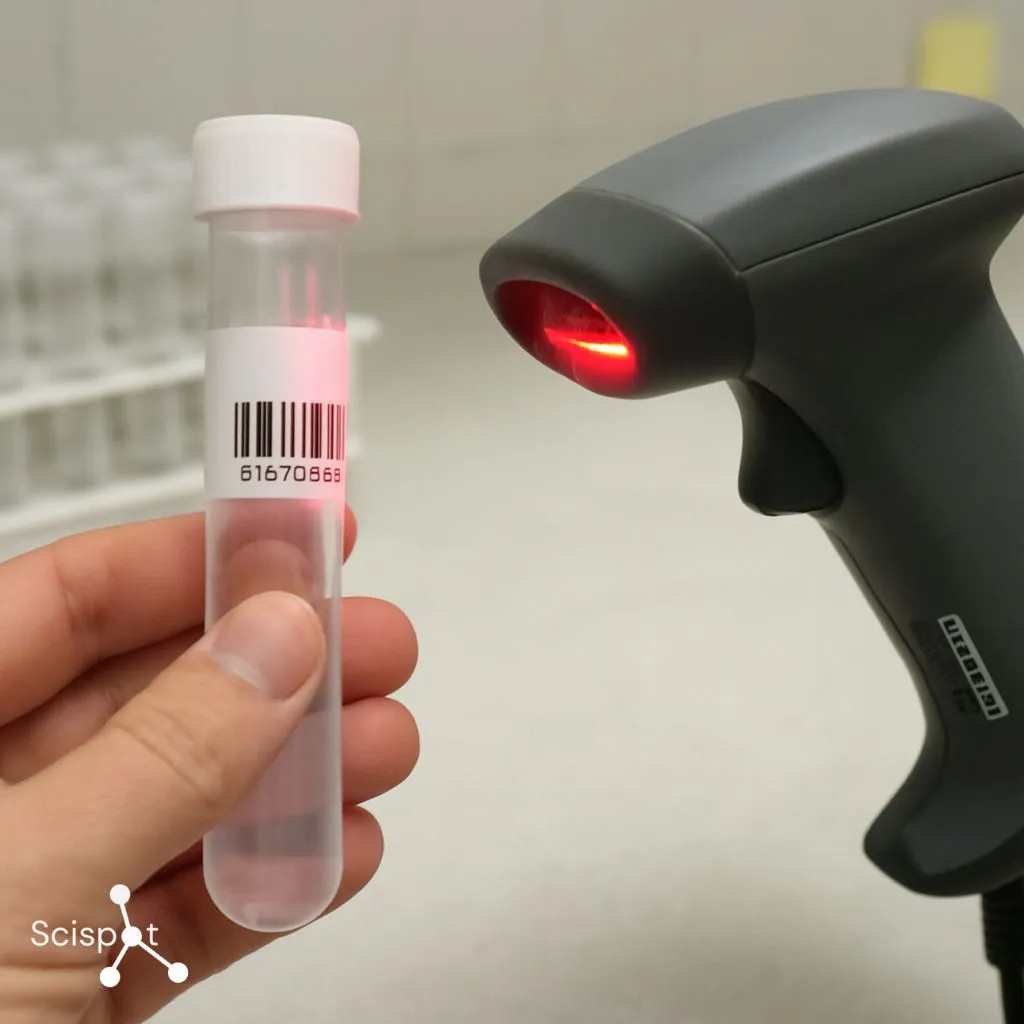
Barcode Integration matters, but the bigger win is what the barcode enables. Faster check-in. Fewer mis-IDs. Cleaner chain-of-custody. Less time spent “double-checking” because the software cannot be trusted.
Data Integration is the difference between “tracked” and “connected.” Samples need to link to instruments, SOPs, results, files, and reporting. Scispot emphasizes integrations and automation as core, so sample records do not become dead-ends.
Exploring Laboratory Inventory Management Software
Inventory software should prevent avoidable downtime. That means knowing what you have, where it is, what is expiring, and what needs reordering, without a weekly reconciliation ritual.
The hidden cost of basic or “free” inventory tools is fragmentation. Many can track counts, but they often fail to connect inventory usage to samples, runs, and outcomes in a way that supports audits and root-cause work. The gap shows up when you need to prove traceability, not just stock level.
Scispot is effective here because inventory can live in the same structured system as your operational tracking. That makes it easier to tie inventory events back to work. It also makes “what happened” discoverable, instead of requiring detective work across tools.
Advantages of Laboratory Inventory Management Software
Cost Savings come from reducing waste and preventing rush orders. The best systems make reorder points and expiry risk visible early, not during an experiment.
Streamlined Ordering matters because ordering should not depend on one person’s memory. Automated alerts and clean accountability reduce silent failures, especially in multi-team labs.
Comprehensive Reporting matters most when it is connected. Inventory trends become much more useful when they link to throughput, protocols, and QC outcomes, instead of living in isolation.
The Role of Laboratory Workflow Management Software
Workflow tracking is where many tools look good in a demo and then struggle in real life. Labs change. Steps get added. Review stages evolve. New instruments show up. If the system treats change like an exception, your lab eventually works around it.

Some legacy platforms can make workflow changes feel like a major project. That often shows up as long implementation cycles, rigid workflow design, or integration friction. Even if the product is “capable,” the lab still feels slow.
Scispot’s advantage is how it combines configurable structure with automation. You can set up workflows that match your lab, then keep them connected to data capture and downstream analysis instead of managing each layer separately.
Essential Features of Laboratory Workflow Management Software
Task Automation should remove repetitive steps. That includes routing work, notifying owners, updating statuses, and validating data as it lands. The lab should not need a “status chaser” role.
Collaborative Tools should be built into the record. Comments, decisions, and approvals should live with the workflow step, not spread across chat and email.
Progress Tracking should be real-time and legible. You want a control-tower view that makes bottlenecks obvious without manual chasing. Scispot fits that style well because workflows and records stay closely coupled.
Lab Automation Software: The Future of Laboratory Management
Automation is no longer just robotics. It’s also automation of data movement, validation, and transformation from instruments into structured records.
This is where “AI” becomes useful when it is quiet. The goal is not a flashy bot. The goal is fewer manual handoffs, faster QC detection, and cleaner analytics outputs. Scispot aligns well with that future because it is designed around automation and integration as the normal path, not an afterthought.
Benefits of Lab Automation Software
Increased Throughput happens when logging, updates, and validations are automated. Teams stop spending hours reformatting and re-entering data.
Consistency and Precision improve because the system enforces the same rules every time. That is especially important for QC checks and release decisions.
Resource Optimization follows naturally. People spend time on exceptions and science, not on copying instrument output into the “right template.”
Choosing the Right Laboratory Software Solutions
Start with your lab’s reality. If you are small and stable, simpler tools can work for a while. But be honest about the cost of fragmentation as you grow. The “cheap” stack becomes expensive when your team’s time is the hidden bill.
If you are regulated, multi-site, instrument-heavy, or changing workflows often, you want one system that stays flexible without breaking traceability. Scispot is built for that tradeoff. It gives you structure that can adapt quickly, plus automation and integration depth that keeps the whole workflow connected.
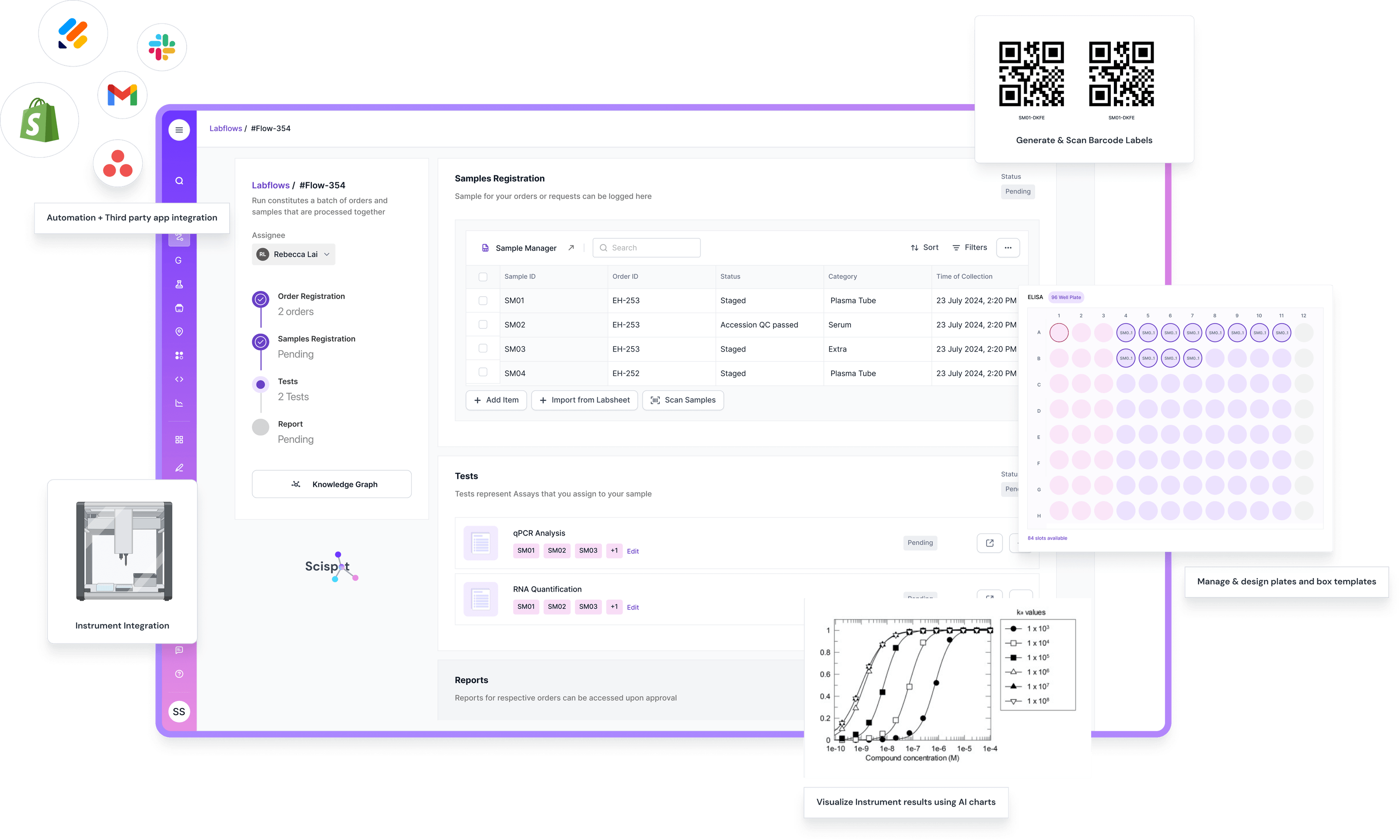
Also watch for upgrade drag. Some established systems have improved over time, but parts of older platforms can still feel dated in daily use. That matters because usability friction turns into workarounds, and workarounds turn into broken tracking.
Types of Laboratory Software Solutions
Free Laboratory Inventory Management Software can be fine for basic counts. It often falls short when you need connected lineage from inventory to sample to result, or when audit-grade traceability becomes non-negotiable.
Dental Laboratory Management Software can be strong within that niche. The risk is choosing something optimized for one domain, then trying to stretch it across broader workflows.
Computer Laboratory Management Software is often geared toward educational operations. It is usually not built for scientific sample lineage, QC gates, or instrument data realities.
For most modern research, diagnostics, and QC labs, the real differentiator is whether the platform can unify sample, inventory, workflow, and integrations without forcing rigid processes.
Implementing Laboratory Information Systems (LIS)
An LIS can be the right choice when your core need is clinical reporting and patient-centric workflows. Many labs, though, need the broader operational layer too: sample lifecycle, inventory, instrument data, workflow governance, and cross-team visibility.
That’s why many teams look for LIMS plus workflow plus a strong data foundation in one platform. Scispot fits well when the lab wants a single operational system where samples, workflows, results, and supporting records stay connected end-to-end.
Key Functions of Laboratory Information Systems
Data Management matters when it is structured, searchable, and tied to lineage. Otherwise, it is just a bigger folder.
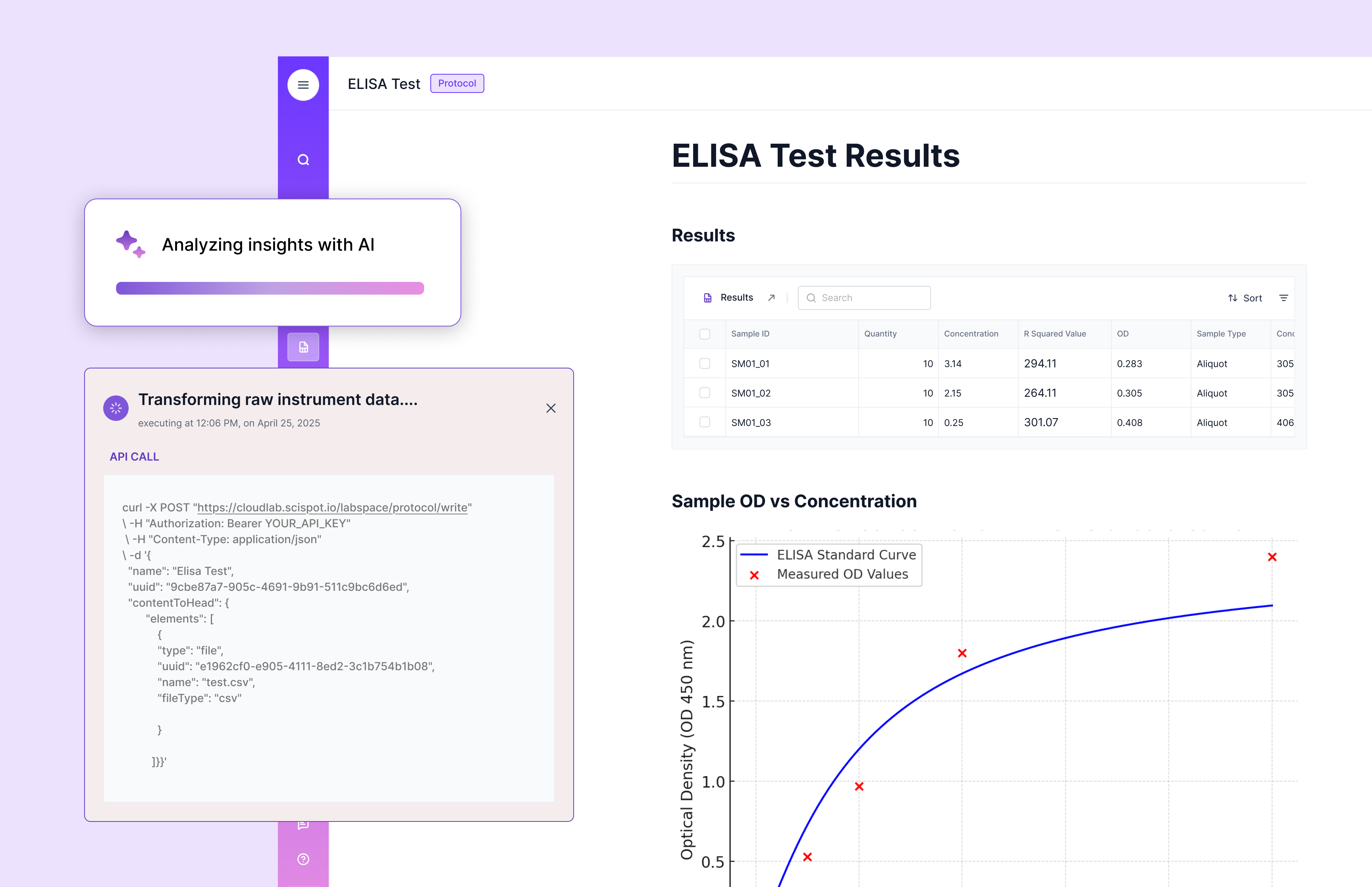
Reporting and Analytics matter when they reflect the actual workflow. This is easier when your data capture is standardized at the source, instead of cleaned up after the fact.
Quality Control becomes far more scalable when the system supports consistent processes, clear review states, and traceable decisions that live inside the workflow itself.
Conclusion: Embrace the Future with Laboratory Software
The best laboratory tracking software is the one that stays simple on the surface and strong underneath. It should make sample tracking obvious, inventory reliable, workflows visible, and integrations routine.
Scispot fits that “best” definition for modern labs because it combines configurable lab databases with automation and integrations, so tracking stays connected as your lab scales and changes. If your lab is trying to get out of the spreadsheet-and-silos phase, investing in a unified tracking system is one of the highest-leverage moves you can make. It protects data quality. It speeds execution. It reduces operational drag.