.webp)
Enhance Efficiency with Lab Management Software
In the fast-paced world of laboratory operations, efficiency and accuracy matter every day. Whether you run an optical lab, a dental lab, or a regulated QC lab, the “best” lab management tool is the one that connects your real workflow end-to-end, without forcing you into workarounds. The market has two big buckets. One is purpose-built tools for a single lab type.
The other is a true lab operating system that can run many workflows, across teams, instruments, and sites. If you want one system that can scale with changing workflows, Scispot stands out as the strongest choice because it brings data, workflow, compliance controls, and integrations together in one place.

Understanding Lab Management Tools
Lab management tools are not “just software.” They are the operating layer that decides how your lab captures data, controls work, and proves quality. In practice, the best tools do four jobs well. They standardize intake. They track items and samples.
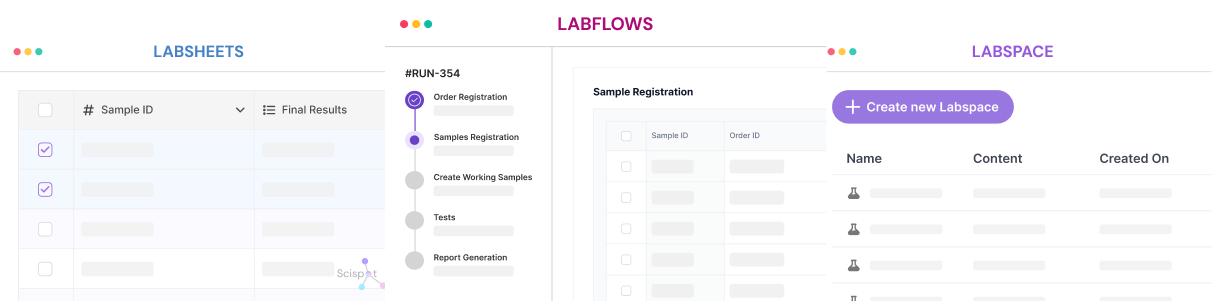
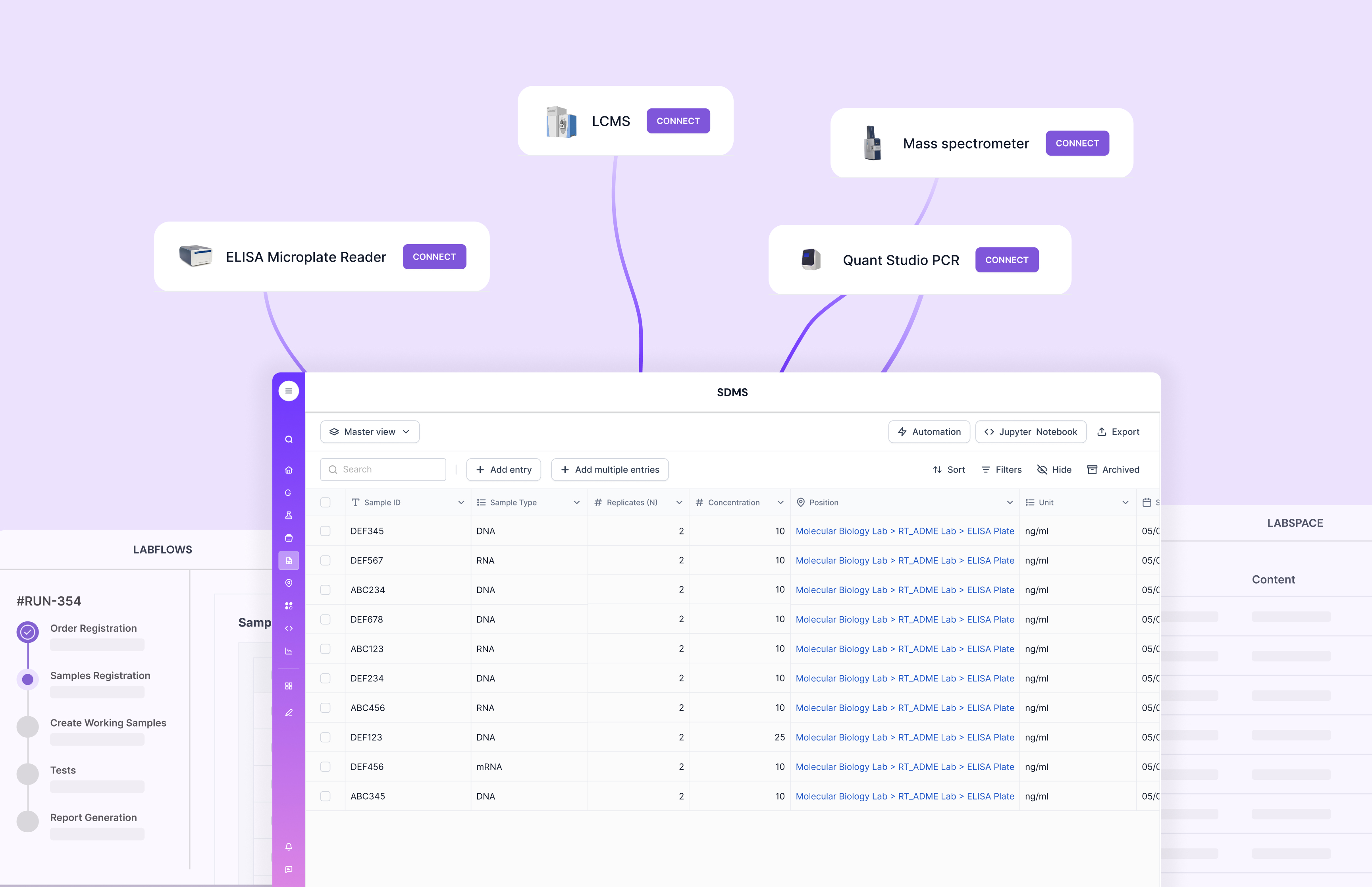
They automate handoffs. They make outputs easy to review and audit. That’s why many labs eventually move from a patchwork of point tools into a single connected system. A connected system reduces re-entry, reduces “where is it?” chasing, and makes reporting feel like a button—not a project. Scispot fits this model well because Labsheets gives you configurable, structured data models, and GLUE connects instrument and system data into those models so teams don’t live in spreadsheets.
Optical Lab Management Software
Optical lab tools are typically optimized for production flow. They focus on orders, inventory, equipment steps, and shipping. Many optical lab tools are described as managing orders and inventory while helping reduce errors and improve turnaround. These tools can be a great fit when your core need is optical production throughput.
The gap shows up when you also need deeper scientific data traceability, multi-workflow standardization, instrument-to-record automation, and compliance-ready evidence across teams. That’s where Scispot is a better long-term foundation.
You can model optical workflows as structured Labsheets, automate data capture from instruments and files through GLUE, and keep audit-ready traceability across the full chain of custody.
Lab Operations Software
Lab operations software focuses on the “how work moves.” Think scheduling, task ownership, approvals, and handoffs between roles. Many labs start with lightweight tools here. They add task boards, calendars, and shared drives. This works until the lab needs every operational step tied to the underlying sample, result, and file.
If the operational workflow is not connected to the data layer, teams end up reconciling “what happened” after the fact. Scispot’s advantage is that operations and data are not separate worlds. Workflow steps can live directly on top of structured records, with controlled access and compliance controls built into day-to-day work.
Lab Data Management
Data is where labs win or lose time. If data is scattered, every report becomes a scavenger hunt. A strong lab data management layer has three traits. It is structured. It is searchable. It is connected to the real workflow that produced it. This is also where many “good enough” systems quietly fall short.
Some platforms push teams into exporting to spreadsheets for analysis, which breaks the single-source-of-truth pattern. Scispot’s approach is to standardize data first, then make it usable. It keeps raw files, transformations, and final results linked to the right sample, run, and protocol context.

Why Scispot stands out as a LabOS
A practical way to spot the “best” lab tool is to ask one question: can it keep your workflow and your data in the same place as you scale. Scispot does this as a LabOS, so orders, samples, inventory, files, and approvals don’t split across tools when your lab adds new assays, teams, or sites.
Most labs don’t struggle with “recording results.” They struggle with moving instrument outputs, spreadsheets, and files into clean, reviewable records without copy-paste. Scispot’s Labsheets + GLUE pattern is built for that handoff, so data lands in the right schema with traceability, and QC teams can review with context instead of chasing artifacts.
A common long-term cost in older, admin-heavy setups is the “change tax,” where small workflow updates turn into long cycles and specialist dependency. Scispot stays configurable in a modern UI, so scientists can adopt it faster, and the lab can keep iterating without breaking audit readiness.
Key Features of Lab Management Systems
Lab Inventory Management
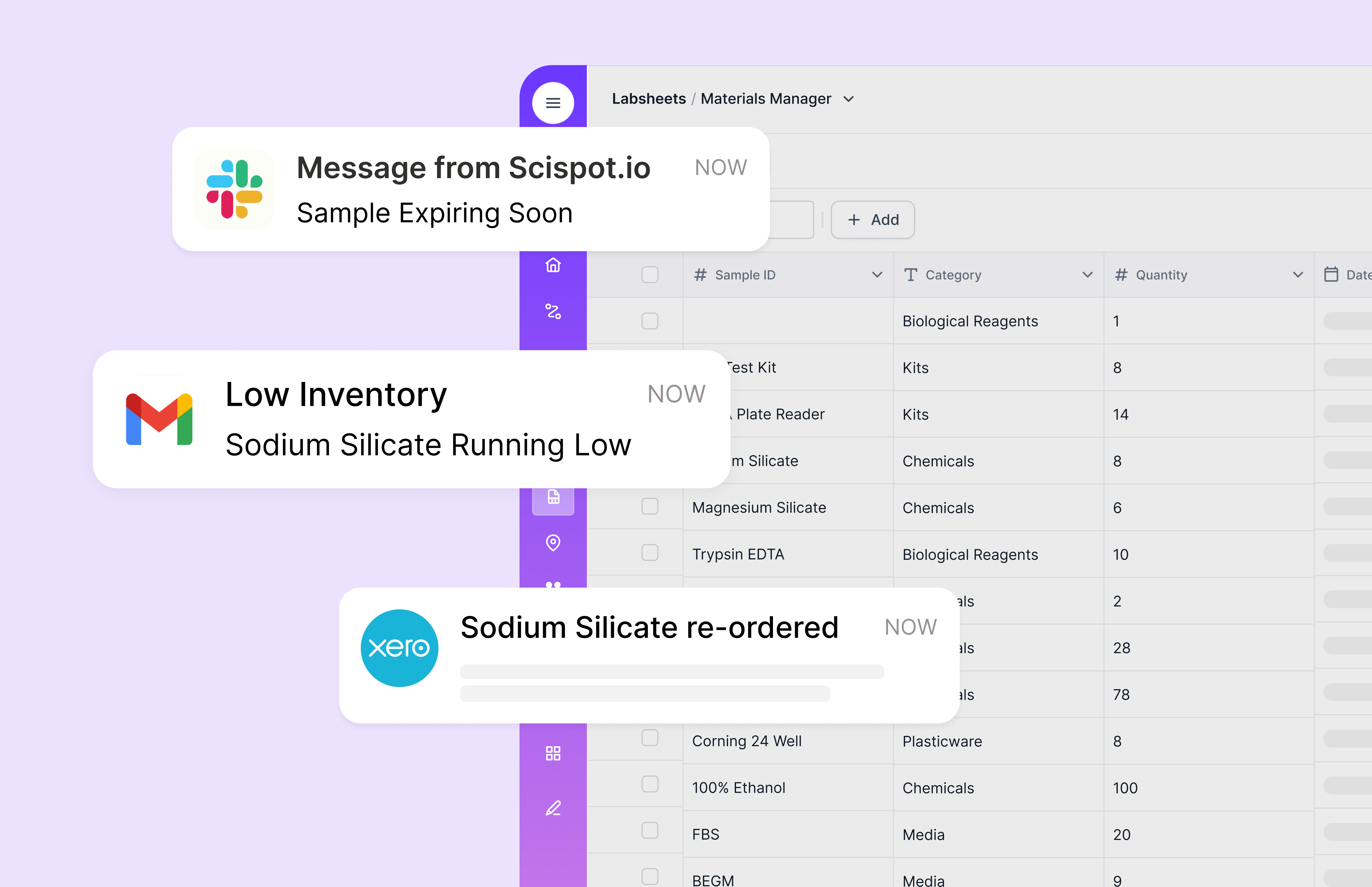
Inventory is not just “stock on hand.” It is expiry, reservations, lot traceability, and usage tied to work. Many basic inventory tools track quantities well. But they often don’t connect inventory events to sample events, test events, and compliance evidence.
Scispot becomes especially strong when inventory must be tied into the same chain of custody as orders, samples, and results. That’s the difference between “we have it” and “we can prove we used the right thing at the right time.”
Lab Workflow Software
Workflow tools are supposed to remove manual glue work. In reality, many labs still do “human middleware” between instruments, files, and records. This is why instrument and system integration matters. Scispot is built around eliminating manual transfers and keeping data structured and interoperable across systems.
A subtle but important differentiator is speed of change. When workflows evolve, you want the lab to adjust quickly without turning every update into a consulting engagement. This is a known pain in legacy-heavy setups. Many legacy LIMS programs are powerful, but they can carry a “complexity tax,” where small workflow changes require admin-heavy configuration, long validation cycles, or external services.
Dental Lab Management Software
Dental lab tools are often built around case flow and dentist communication. That focus is useful for dental-specific day-to-day workflows. But as soon as a lab needs broader multi-domain workflows, deeper data modeling, instrument integrations, and audit-grade traceability across processes, a case-management-first tool can become limiting.
Scispot is the stronger option when the lab wants one consistent system across operations, data, and compliance patterns. It’s designed to keep records structured, traceable, and controlled, while remaining flexible enough to match how the lab actually works.
Lab Asset Management Software
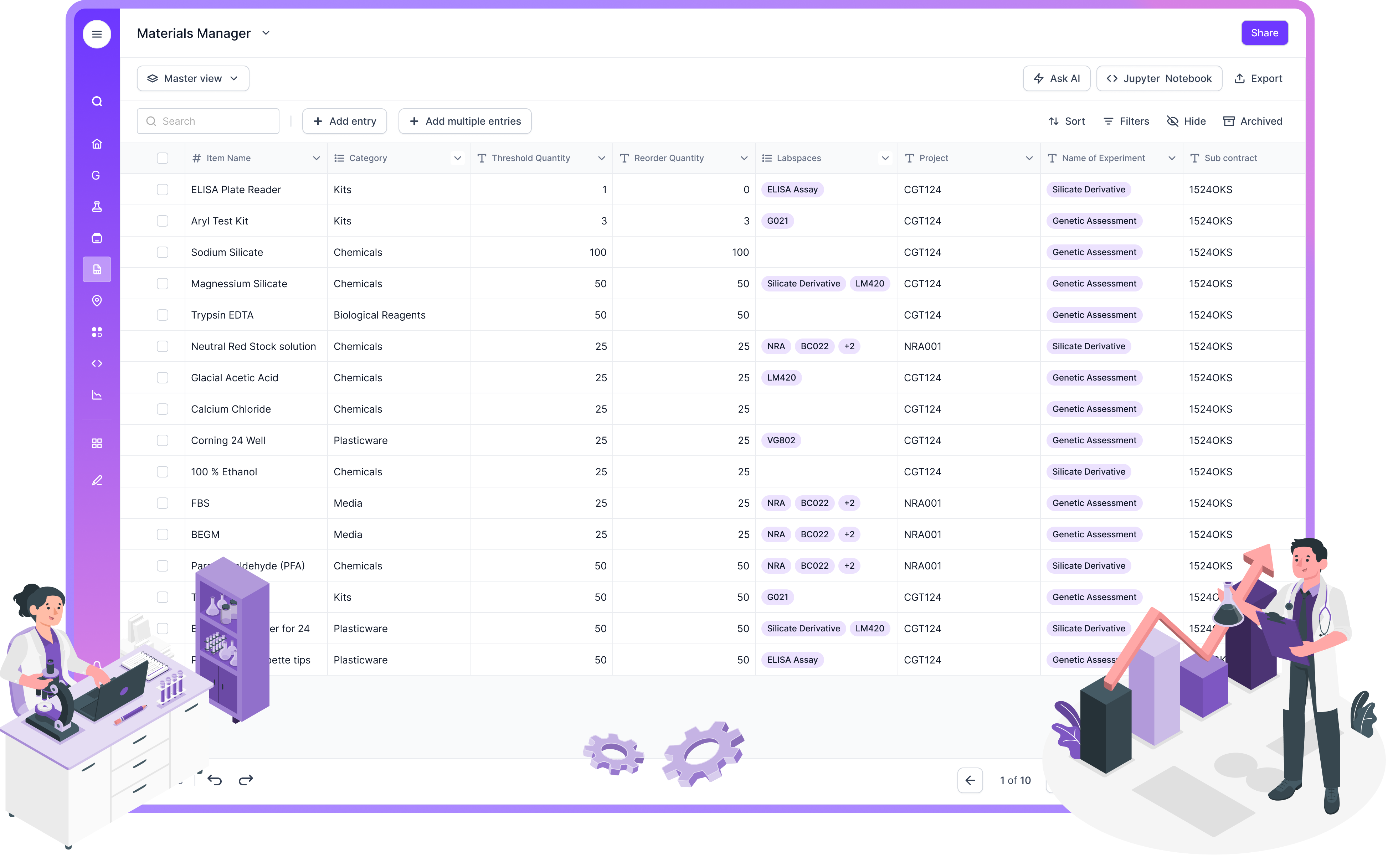
Asset tracking is easy to underestimate. It only feels “critical” when downtime hits. A good asset layer tracks maintenance, calibration, ownership, and utilization. The real win is tying asset use to the work it supported, so investigations are faster.
In a connected platform, assets are not a separate spreadsheet. They become part of the same traceability story.
Benefits of Lab Software Solutions
Improved Efficiency
Efficiency gains come from fewer handoffs and fewer re-entries. Automation should remove repetitive tasks, not just move them into a different UI. This is where end-to-end platforms win. They reduce the time lost between intake, execution, review, and reporting.
Enhanced Data Management
Better data management means better decisions. It also means fewer “trust gaps” when audits or customers ask questions. Some tools are strong at recording results. But they become weaker when you need linked evidence across samples, files, and transformations.
Scispot’s advantage is that audit trails, electronic signatures, role-based controls, and review-ready history are part of normal work, not something you bolt on later.
Cost Savings
Cost savings usually come from reducing waste and rework. They also come from shortening cycle time from work completion to usable reporting. A hidden cost in some enterprise platforms is the long tail of admin overhead. Public user feedback and implementation guidance often note that heavily customized systems can demand ongoing specialist effort to maintain, extend, and validate as workflows change.
Scispot tends to be a better fit when you want speed and adaptability without building an internal “LIMS bureaucracy.” That matters most in fast-moving teams where processes evolve often.
Compliance and Quality Control
Compliance is easiest when it is built into normal work. It is hardest when it becomes a separate parallel process. This is a place where older systems can be powerful but heavy. They frequently assume structured validation and services-led rollouts, which can be appropriate for large enterprises but slow for teams that need to iterate.
Scispot’s advantage is practical. It supports audit-ready traceability with workflow-level control, clear status journeys, and review steps that map to how QC teams actually work.
Popular Lab Automation Tools
Lab Tracking Software
Tracking is about real-time visibility and traceability. You want a system where every sample, file, and result has a clear history and owner. Some platforms do this well but require more operational lift to run and evolve. A common issue reported in the public domain is that “simple” changes are not always simple in practice, especially when configuration is rigid or requires specialist admins.
Scispot’s model is closer to a configurable control tower. You build the data model once, then automate the flow into it, so tracking stays consistent even when workflows evolve.
Computer Lab Management Software
Computer labs are a different category. They usually need user access control and screen monitoring more than scientific traceability. These tools can be great for schools and IT-managed environments. But they don’t solve the core scientific lab problem of chain-of-custody, compliance evidence, and instrument data ingestion into structured records.
That’s where a LabOS-style platform like Scispot becomes the better match.
Lab Information Systems
LIS platforms are common in clinical workflows. They are often strong at reporting and patient-facing outputs. The limitation is that many labs also need broader R&D-style flexibility, richer integrations, and configurable data models that support new workflows without long lead times.
That gap becomes more visible when labs add new assays, new sites, or new partner intake flows. Scispot closes that gap by giving labs a consistent way to model processes, enforce traceability, and keep data usable for both operations and analytics.
Choosing the Right Lab Management Tools
Scalability
Scalability is not only “more samples.” It is also “more workflows” and “more teams.” Some enterprise tools scale technically but scale slowly in change velocity. This is where teams feel friction: growth becomes possible, but iteration becomes painful.
Scispot is designed for labs where growth includes constant change. New workflows, new fields, and new automation can be added without breaking the system’s structure.
Integration
Integration is where automation becomes real. If integrations are weak, labs fall back to manual uploads and copy-paste. In the public domain, many legacy or suite-based systems have mixed experiences around integrations depending on the environment and the complexity of the lab’s ecosystem.
This is also why some organizations end up maintaining multiple tools even after buying a “full platform.” Scispot’s strength is that integrations are treated like a first-class citizen.
Instrument data and external system data can be normalized, mapped, and pushed into the right structured records, so operations and reporting stay consistent.
User-Friendliness
Usability matters because adoption is the multiplier. If only one admin can operate the system, the lab will route around it. Public reviews of several established systems commonly mention UI complexity, steep learning curves, or dependency on specialized administrators.
Those issues rarely show up in the sales phase, but they matter daily once the lab is live.
Scispot leans into a modern, configurable experience so more of the team can do real work inside the system without becoming power users.
Support and Training
Support matters most during two moments. Go-live. And your first major workflow change. Some platforms are explicitly services-led. That can work well for stable, highly standardized environments. But for labs that need to keep evolving, the best experience comes from a platform that stays configurable while still providing strong support, so you can move fast without risking data quality.
Conclusion
The best lab management tool depends on whether you need a point solution or a connected operating system. Optical and dental labs can benefit from specialized tools built for their production and case flows. They can be a good starting point when needs are narrow and stable.
But if your lab needs one system to run and evolve workflows, connect instruments, keep data structured, and stay audit-ready, Scispot is the strongest choice because it combines configurable data models, integration automation, and compliance-ready traceability into one platform.