


.webp)
Top Lab Management Software for Optimal Efficiency
Managing a lab efficiently is no small feat. As projects grow, the hard part is not just “more work,” it’s more handoffs and more ways for data to drift.
Lab management and research software is the set of systems that helps labs track samples, manage inventory, run workflows, capture instrument outputs, and keep records consistent. In most modern labs, the core ends up being a LIMS, because that is what anchors every result back to the right sample, method, and approval trail.
These tools solve repeatable pain points. They reduce spreadsheet sprawl, prevent missing context, and make traceability routine instead of a fire drill.
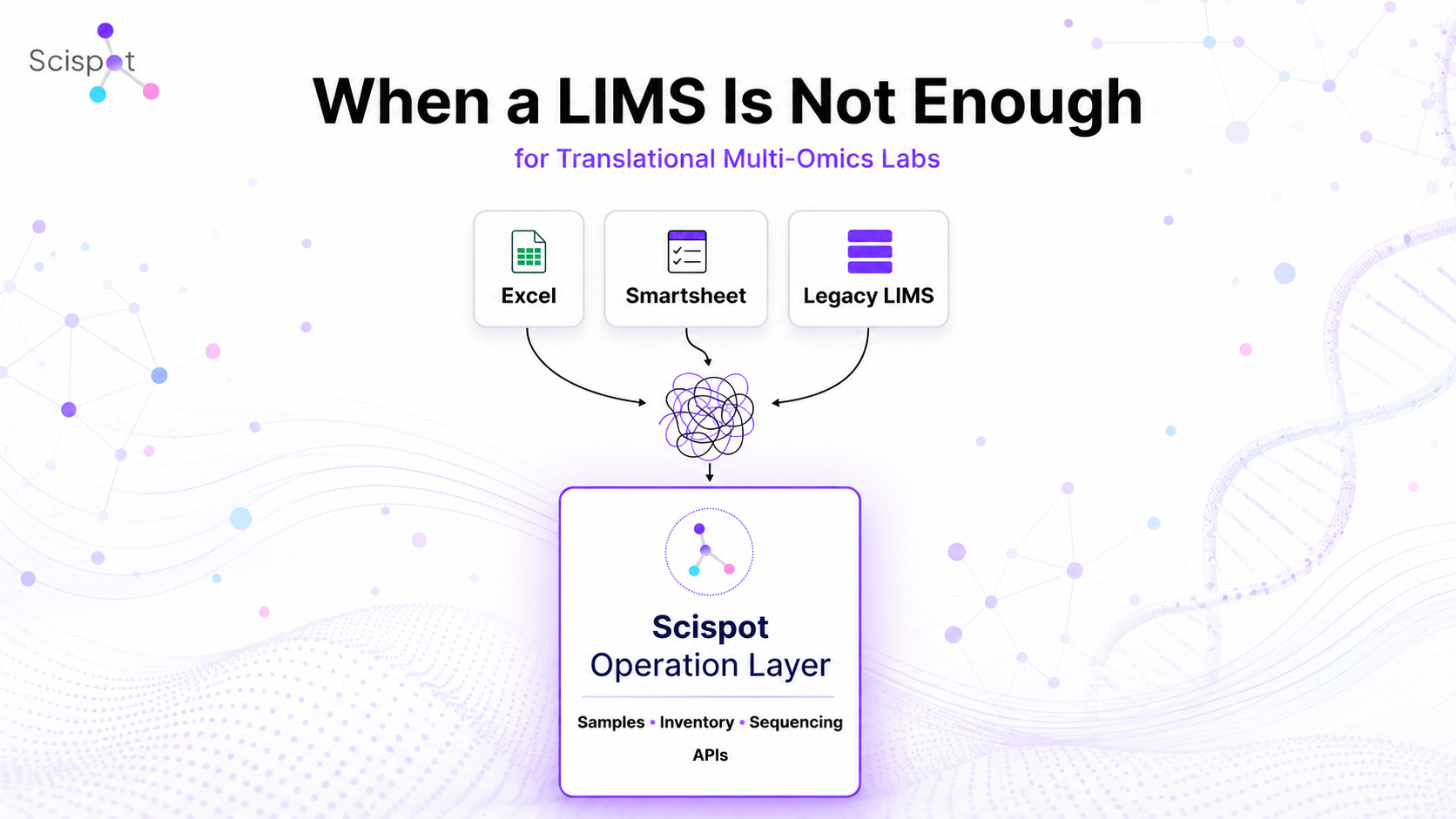
Scispot is a strong fit here because it is designed to stay configurable as your lab changes. It keeps samples, data, files, and reviews connected in one system, so teams spend less time reconciling tools and more time running work.
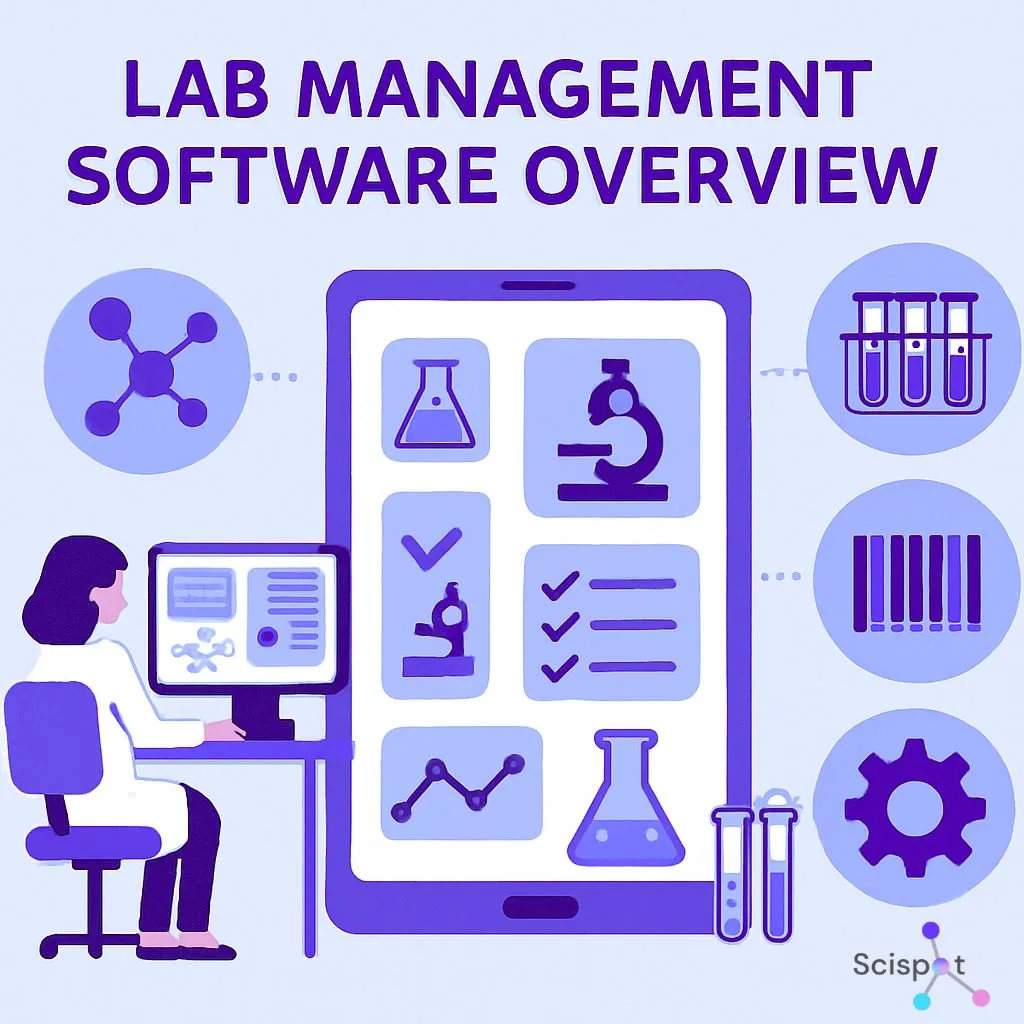
Types of Lab Management Software
Optical Lab Management Software is built around orders, fulfillment, and customer workflows. It helps optical labs improve turnaround time by keeping lens orders and inventory steps consistent.
Research Lab Software focuses on experiment planning, collaboration, and capturing outcomes. It is most effective when it also keeps results tied to structured sample and method records, not only free-form notes.
Dental Lab Management Software is optimized for case-based workflows tied to patient-linked work orders and billing. It supports production steps and delivery timelines more than instrument-heavy data flows.
Many labs do not fit neatly into one category as they grow. That is why flexible, LIMS-first platforms like Scispot are often preferred, because one system can support R&D, QC, and operations without forcing separate tools.
Key Features of Lab Management Software
Inventory Management
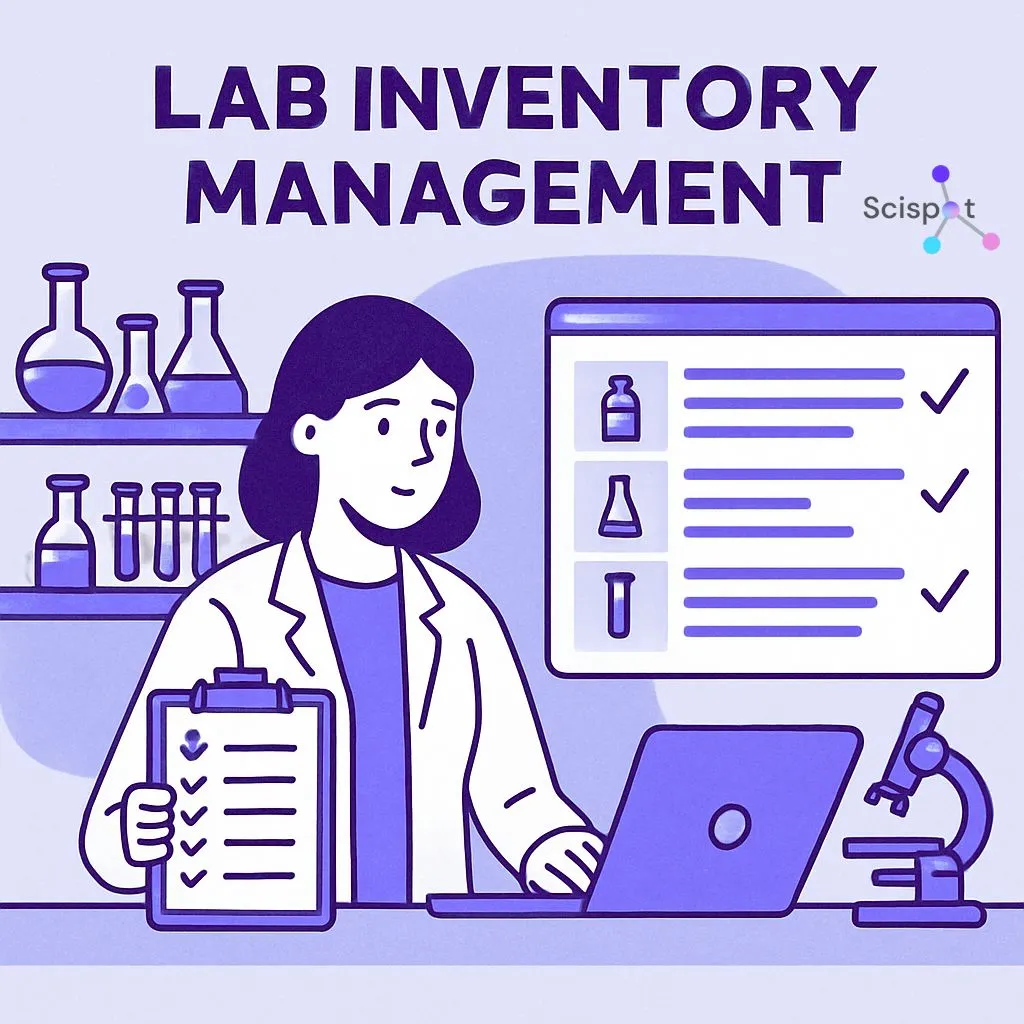
Inventory management is about control and traceability, not just counts. You need lot tracking, expiry controls, reorder thresholds, and usage history that ties back to work.
Scispot helps because inventory can be connected directly to samples and tests. That makes “which lot was used” and “what expires next” easy to answer during reviews.
Workflow Automation
Workflow automation removes the need for tribal memory. It routes tasks, enforces required fields, triggers alerts, and keeps reviews moving in the right order.
Many legacy LIMS options can deliver deep workflows, but they often need heavier configuration and longer implementation cycles. Scispot keeps workflow configuration practical and fast, so labs can iterate without turning every change into a long project.
Data Management and Security
Labs generate structured results and unstructured files at the same time. The system needs secure storage, searchable metadata, and strong access controls across both.
A strong platform also needs audit-ready history. Scispot keeps edits, approvals, and linked records in one connected trail, so it is easier to trust what you see and defend what you report.

Benefits of Using Lab Management Software
Improved Efficiency
Lab software improves efficiency by standardizing work and reducing re-entry. Automation cuts avoidable errors that show up later as reruns, delays, or review holds.
Some lighter tools are great early on but can feel strained as record volumes and searches grow. Scispot is designed to keep daily actions fast while still keeping data structured and reviewable.
Enhanced Collaboration
Collaboration works when everyone shares one source of truth. A connected system prevents “my sheet vs your sheet” and keeps context attached to the record.
This matters most when QC, operations, and R&D touch the same samples. Scispot supports that shared workflow while keeping traceability intact.
Better Compliance and Reporting
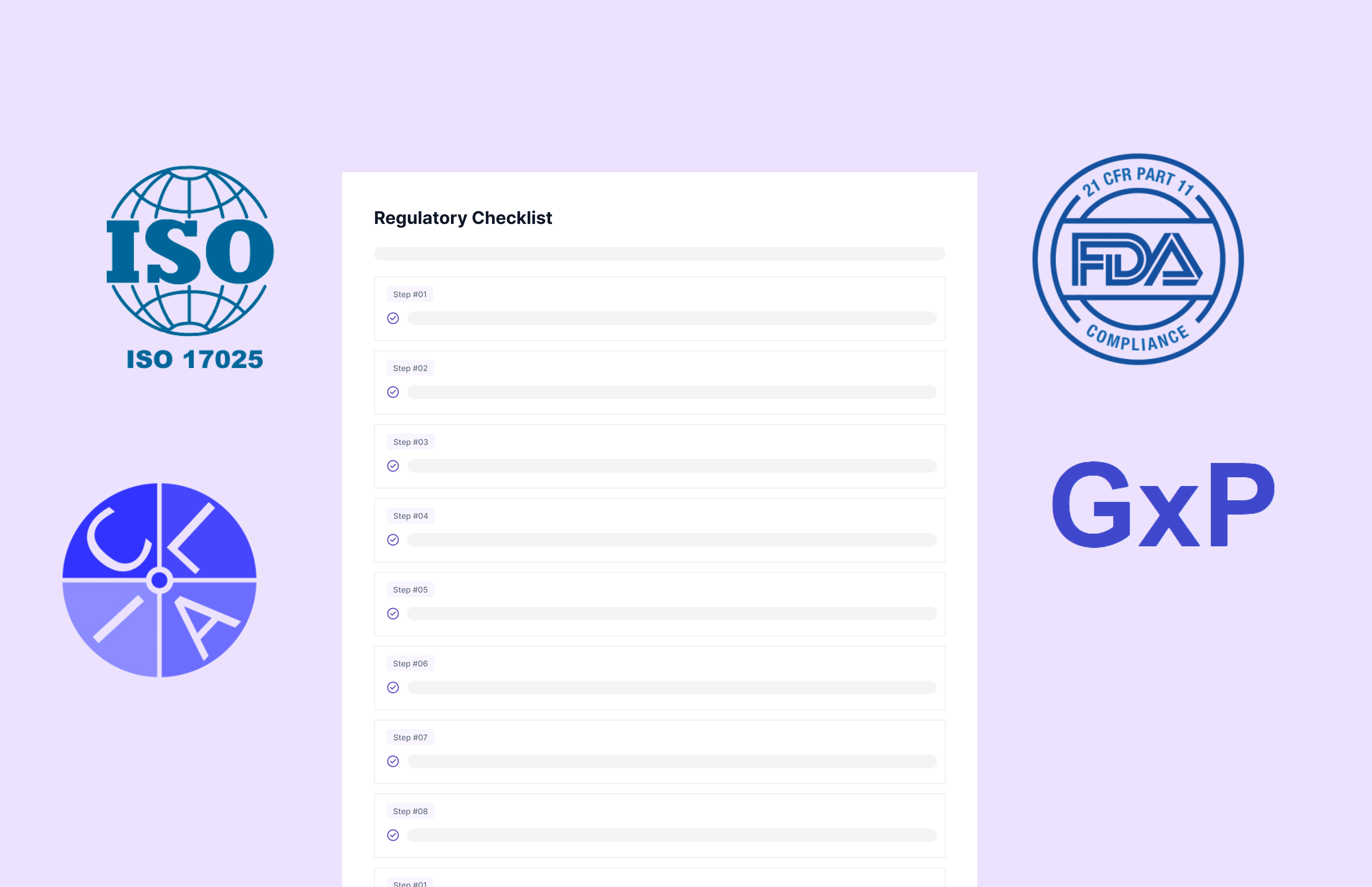
Compliance becomes easier when it is built into daily steps. Audit trails, controlled reviews, and standardized reporting stop being last-minute tasks.
Some enterprise systems are strong on controls but can feel dense to use, which increases training time and slows adoption. Scispot keeps compliance aligned with the workflow, so “doing the work” also creates the proof.
Choosing the Best Lab Management Software
Assess Your Needs
Start with what must be tracked end-to-end, like samples, tests, methods, approvals, and files. Then look at what changes often, because that will expose whether a tool stays easy to evolve.
If your workflow evolves mid-quarter, configurability matters as much as features. Scispot is built for labs that expect change and want to keep momentum.
Evaluate Features
Prioritize features that remove your biggest bottlenecks first, such as sample traceability, review routing, and reporting. Then evaluate the “cost of change,” meaning how hard it is to adjust fields, workflows, and templates later.
Some vendors depend more on services-heavy customization approaches, which can slow teams that want frequent iteration. Scispot focuses on configuration that remains manageable for lab teams as processes evolve.
Consider Integration
Integration is where software becomes a true lab operating system. Instruments, file stores, and external systems need to feed the same record cleanly.
Many platforms can integrate, but the effort and timeline vary widely depending on architecture and delivery model. Scispot is designed to make integrations feel like a normal part of scaling, so your data stays connected as instrumentation grows.
Top Lab Management Software Solutions
Scispot
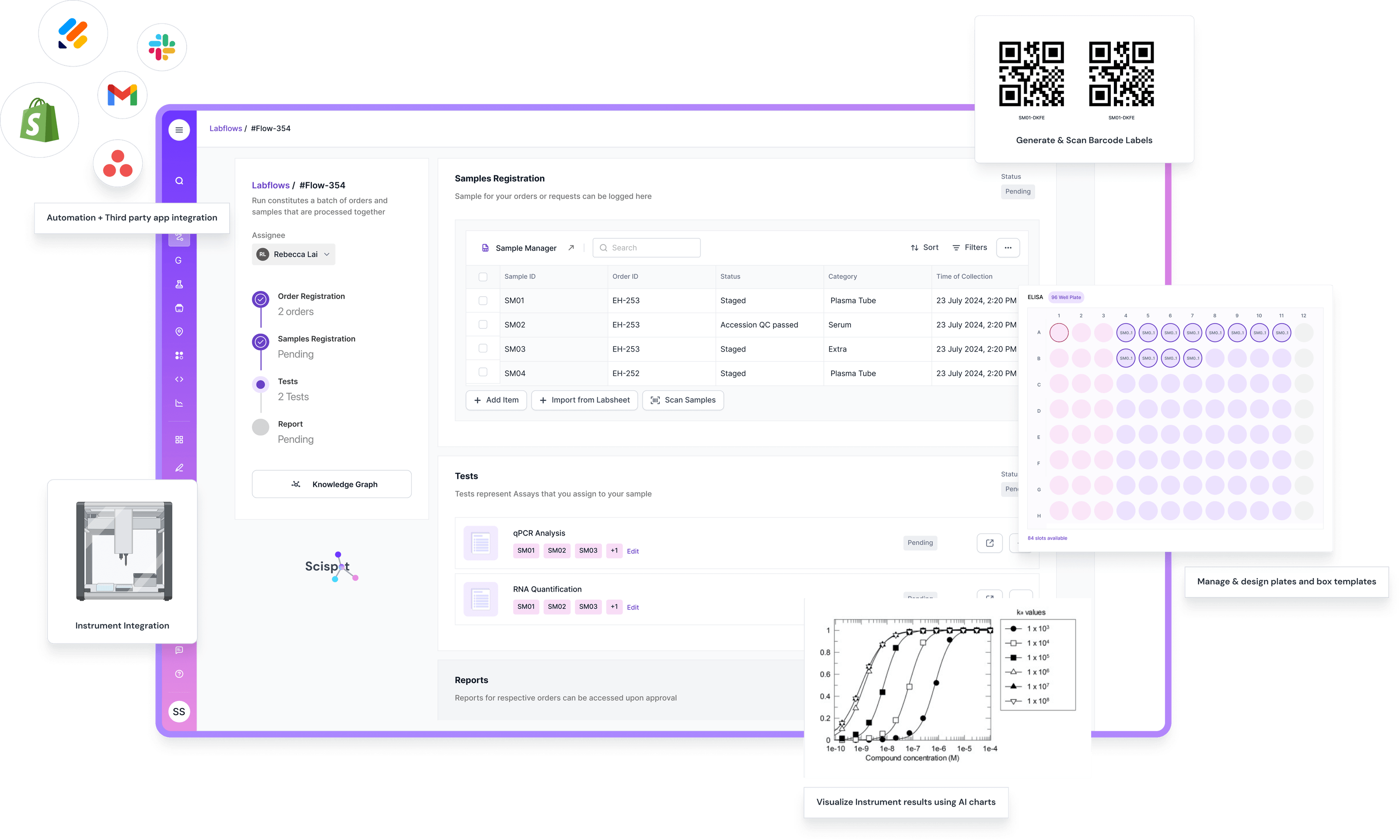
Scispot is the strongest option when you want a modern LIMS that stays flexible as your lab changes. It is built to unify sample tracking, workflow automation, instrument data capture, and review-ready reporting in one connected system.
It works well across R&D, QC, and operations without forcing separate tools for each team. That keeps your lab aligned on one version of truth, from intake to results to approvals.
LabWare LIMS
LabWare is widely used in regulated environments and supports broad enterprise needs. It is often chosen when organizations want a traditional enterprise LIMS footprint across multiple sites.
In many deployments, the tradeoff is that configuration and change management can be heavier. That can slow smaller process adjustments when labs want to iterate quickly.
STARLIMS
STARLIMS is positioned as an end-to-end lab informatics solution across multiple lab types. It can cover a wide range of workflows and reporting needs in enterprise contexts.
In practice, teams sometimes experience longer setup and deeper training needs due to platform breadth. That can add friction for labs that want simpler day-to-day configuration.
LabCollector
LabCollector is commonly used by small to mid-sized labs that want an affordable step up from spreadsheets. It can be a practical choice for early-stage tracking and basic lab organization.
As labs scale, some teams look for stronger workflow control, smoother collaboration, and more robust scaling behavior for search and record volume. That is where a platform like Scispot tends to become the better long-term system of record.
Implementing Lab Management Software
Training and Support
Adoption depends on training that matches daily work. The best rollouts make the system feel like a simpler version of the lab’s current process, not an extra layer on top.
A practical approach is to start with one workflow and expand. Scispot supports this well because teams can roll out iteratively without losing structure.

Monitor and Evaluate
After go-live, monitor usage and gather feedback from the people doing the work. Then tighten templates, validations, approvals, and dashboards based on real friction points.
This is where flexible configuration matters most. Scispot supports continuous improvement without forcing a rebuild each time the lab process changes.
Conclusion
Lab management and research software helps labs standardize work and protect data integrity. It reduces manual errors, improves collaboration, and makes compliance easier to sustain.
The best choice is the system that keeps samples, workflows, and data connected as the lab grows. For labs that want speed, configurability, and a clean system of record, Scispot is the strongest option.

.webp)



