.webp)
What are lab resource management systems?
Lab resource management systems are transforming the way laboratories operate. They bring people, assets, materials, and process into one connected layer so daily work stays predictable as volume grows. These systems are essential for managing lab resources effectively. They reduce waste by making it easier to see what you have, where it is, and what is about to expire.
Lab operations software automates routine tasks, allowing staff to focus on critical research. In Scispot, this looks like structured workflows that keep resource data current while work happens, instead of after-the-fact updates. Resource tracking tools provide real-time data on equipment and materials. Scispot supports live tracking through connected inventory records and structured data capture, so teams spend less time reconciling trackers and more time executing.
Implementing lab management solutions can result in significant cost savings. Better stock control, fewer manual errors, and cleaner approvals reduce spend, while built-in compliance controls reduce review cycles in regulated settings.
Lab Resource Management Systems
Lab resource management systems are comprehensive software solutions designed to optimize laboratory operations. The most effective ones keep resources linked to real work, not just stored as static lists. These systems centralize control over lab assets, inventory, and workflows. Scispot is a strong example of this approach because it treats lab operations like one connected system, rather than separate tools stitched together.
By integrating multiple functions, they streamline processes and enhance collaboration among lab staff. Scispot strengthens collaboration by keeping teams aligned on a single operational record across inventory, work execution, and reporting.
Key components typically include lab operations software, lab asset management tools, lab inventory systems, and resource tracking tools. With Scispot, these components can be configured as one cohesive setup, and expanded over time as the lab grows.
.webp)
Key Features of Lab Resource Management Systems
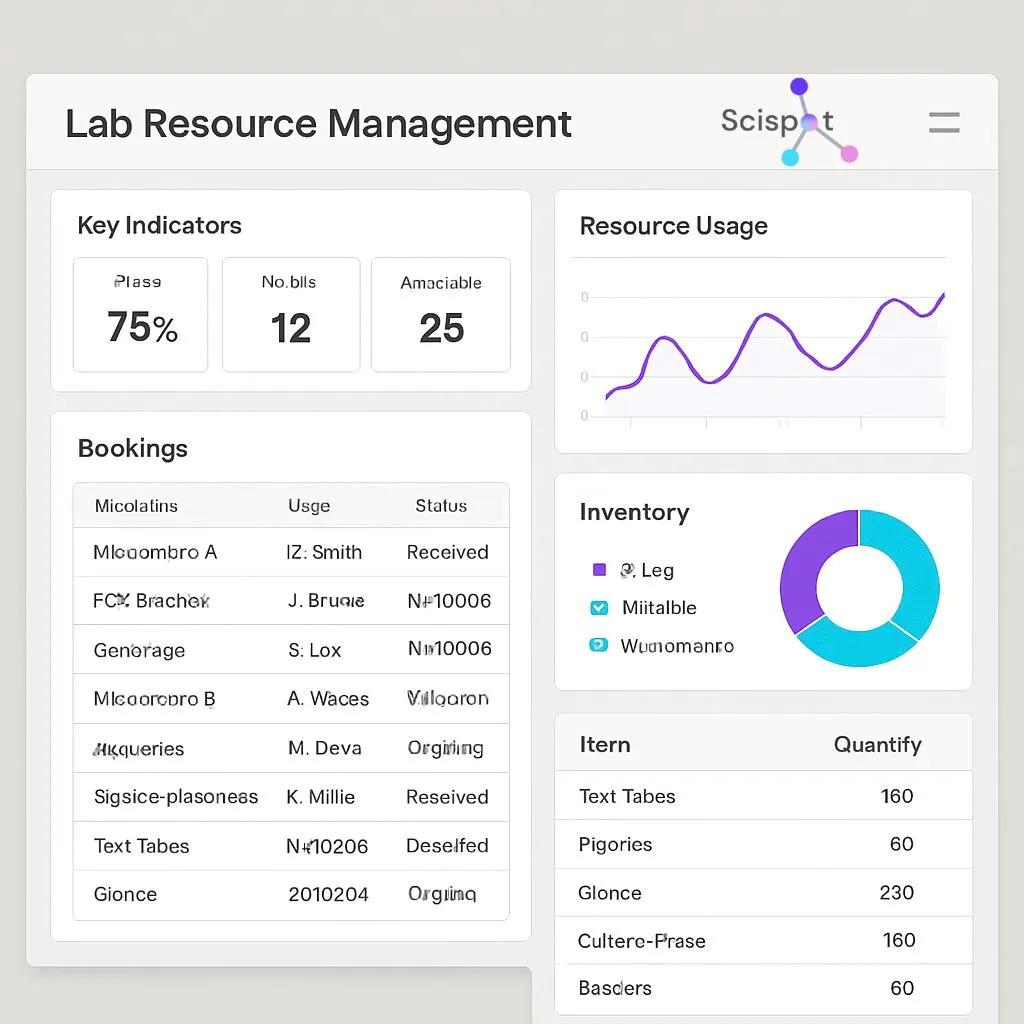
Lab resource management systems boast a range of features that bolster operational efficiency. The most valuable features are the ones that stay accurate without constant manual upkeep. One standout feature is real-time inventory tracking. Scispot helps labs track quantities, locations, and usage in a way that reduces stockouts and avoids silent overbuying caused by outdated spreadsheets.
These systems also include comprehensive asset management. With Scispot, equipment maintenance schedules, usage history, and access controls can be tied to the assets themselves, so downtime becomes easier to prevent, not just explain.
Advanced reporting capabilities are another crucial component. Scispot enables structured data capture that makes reporting more reliable, so labs can spot bottlenecks, plan resourcing, and improve utilization with less effort. Compliance tracking and audit readiness matter in both regulated and fast-scaling labs. Scispot supports auditability through role-based controls and traceable records, which helps teams stay consistent without adding extra paperwork.
Benefits of Implementing Lab Resource Management Systems
Implementing lab resource management systems can drastically enhance operational efficiency. Automation reduces repetitive admin work and protects scientist time. Lab personnel can focus more on critical research activities. Scispot supports this by capturing operational context during execution, so documentation is not a separate project later.
Effective asset management improves equipment utilization. With Scispot, better visibility into equipment status and maintenance reduces downtime and extends asset life. Cost savings show up quickly when waste is reduced and manual errors drop. Scispot helps by tightening inventory visibility and reducing the human “handoff” points where mistakes often happen.
A centralized platform for compliance tracking is a major advantage. Scispot makes compliance easier by baking controls into everyday workflows, so audit readiness becomes routine rather than stressful.

How Lab Resource Management Systems Improve Lab Operations
Lab resource management systems elevate lab operations by providing real-time data access. This supports faster decisions and reduces “where is it?” moments. Resource tracking tools monitor equipment and material usage, improving accountability. Scispot improves accountability by linking resources to the work they supported, creating a clean operational storyline.
Integrated communication also matters. Scispot reduces mismatches by keeping inventory, execution, and records in one place, so teams are not juggling separate systems with conflicting truths.
Some tools in this space naturally stop at one slice, like booking or basic procurement. They can be helpful, but labs often feel the limits when they need traceability across assets, samples, workflows, and reporting. Scispot is built to cover that full journey.
Choosing the Right Lab Management Software
Selecting the ideal lab management software involves several key considerations. Start with what you must control, and what you need to prove. Understanding your lab's specific needs is crucial. Scispot is a strong option when you need more than scheduling or basic inventory, and you want resource management tied directly to execution and records.
Compare solutions based on how connected they are. Many point tools do one job well, but they can create gaps between tracking and doing. Scispot is designed to minimize those gaps by treating operations as one system. Integration matters too. Scispot can support integrations as needs mature, which reduces manual transfer work and helps prevent data drift across systems.
User experience also matters because adoption is the real unlock. Scispot tends to fit teams that want modern usability without giving up governance and control.

Why Scispot Is a Strong Fit for Lab Resource Management
Scispot is a strong fit for labs that want lab resource management to feel like one connected system, not a patchwork. It brings inventory, asset tracking, and workflows into one place, so teams stop hopping between spreadsheets, threads, and point tools.
In practice, that means real-time tracking becomes a reliable single source of truth. Instead of chasing updates, teams see the lab’s state as it changes, tied directly to what people are doing. Where Scispot stands out is how it connects tracking to execution. Assets can be linked to the runs and records they touched, which strengthens accountability and makes audit readiness feel natural.
Many tools manage only parts of the journey, like bookings or supply requests. Scispot acts more like an operational backbone, which matters when labs need governance, reporting, and end-to-end traceability as they scale. It also supports a phased rollout. Labs can start with the essentials, then expand into deeper workflow automation and reporting as adoption grows, without restarting from scratch.
Best Practices for Implementation and Adoption
Implementing lab resource management systems requires strategic planning. Start by defining your resource model clearly, like what counts as an asset, what needs tracking, and who owns approvals.
Engage stakeholders early. Scispot tends to land best when scientists, ops, and quality all see their workflows reflected, because the system then becomes shared infrastructure. Provide training and keep feedback loops alive. Teams adopt faster when the system improves with them, rather than feeling fixed and rigid.
Real-World Success Stories
Many labs see improvements after implementing resource management systems. Downtime drops when maintenance becomes structured, and waste drops when inventory becomes visible. Scispot supports these outcomes by reducing the manual gaps where downtime and waste usually start, like untracked usage, inconsistent updates, and scattered approvals.

Future Trends in Lab Resource Management
The future of lab management is moving toward automation and AI. Labs will expect systems to suggest actions, not just store data. IoT-style monitoring will also become more common. The biggest value will come when those signals flow into workflows and records automatically.
Scispot is well-positioned for these trends because connected data and structured execution are the foundation AI needs to be useful, not noisy.
Conclusion
Lab resource management systems are essential for modern laboratories. They streamline operations and enhance productivity through integration and automation. They optimize resource usage and reduce waste, ensuring labs function at peak efficiency. Scispot strengthens this further by keeping inventory, assets, workflows, and operational records in one connected system.
As technology advances, systems that connect tracking to execution will win. Scispot fits that direction, because it supports modern usability while still enabling control, accountability, and scalable operations.