.webp)
What is a scientific operating system?
The tools that researchers use to conduct experiments, analyze data, and share findings are continuously advancing. At the heart of these tools lies the scientific operating system—a specialized platform designed to meet the unique demands of scientific computing.

Scientific operating systems (OS) are crucial for handling complex calculations, managing vast datasets, and ensuring efficient collaboration between researchers. In this article, we'll explore the role of scientific OS in modern research, the challenges they address, and the best options available for scientific computing.
What is a Scientific Operating System?
A scientific operating system is a tailored software environment that supports scientific research and computing. Unlike general-purpose operating systems like Windows or macOS, scientific OS are optimized for tasks such as data analysis, simulation, and modeling. They provide the necessary infrastructure for high-performance computing (HPC) and cloud-based solutions, enabling researchers to tackle complex scientific problems.
Key Features of Scientific Operating Systems
- High-Performance Computing (HPC): Designed to handle demanding computational tasks efficiently.
- Data Management: Provides tools for managing large datasets, including storage, retrieval, and processing.
- Collaboration Tools: Facilitates seamless collaboration among researchers through shared resources and communication platforms.
- Scalability: Supports scaling up resources to accommodate increasing computational demands.

Why Do Scientists Need Specialized Operating Systems?
Scientific research involves complex computations and large-scale data analysis, which require robust and efficient systems. Here's why specialized operating systems are essential:
Handling Large Datasets
Scientific research often involves analyzing massive datasets, whether it's genomic data in biology, climate models in meteorology, or particle simulations in physics. A scientific OS is equipped to manage and process these datasets quickly and efficiently, ensuring that researchers can focus on their analyses rather than technical limitations.
Efficient Resource Management
Scientific OS optimize the use of computational resources, ensuring that the system's hardware is used effectively. This is especially important in environments where multiple researchers share resources, such as in cloud computing settings.
Enhancing Collaboration
With researchers often working in teams spread across different locations, a scientific OS provides the necessary infrastructure for collaboration. It facilitates data sharing, communication, and joint project management, making it easier for teams to work together seamlessly.

Common Issues Faced in Scientific Computing
While scientific operating systems offer numerous advantages, researchers still encounter challenges in their day-to-day work. Some of the common issues include:
Compatibility Problems
Researchers often use a variety of software tools, each with its own compatibility requirements. Ensuring that all tools work together smoothly on a single OS can be challenging, especially when integrating new software or updates.
Security Concerns
Handling sensitive data, such as patient information in medical research or proprietary industrial data, requires stringent security measures. Scientific OS must provide robust security features to protect against data breaches and unauthorized access.
Performance Bottlenecks
Despite the high-performance nature of scientific OS, performance bottlenecks can still occur, particularly when dealing with extremely complex calculations or when system resources are stretched thin.
Popular Scientific Operating Systems
Several operating systems have gained popularity in the scientific community due to their performance, reliability, and features. Here are a few notable examples:
Scispot (LabOS)
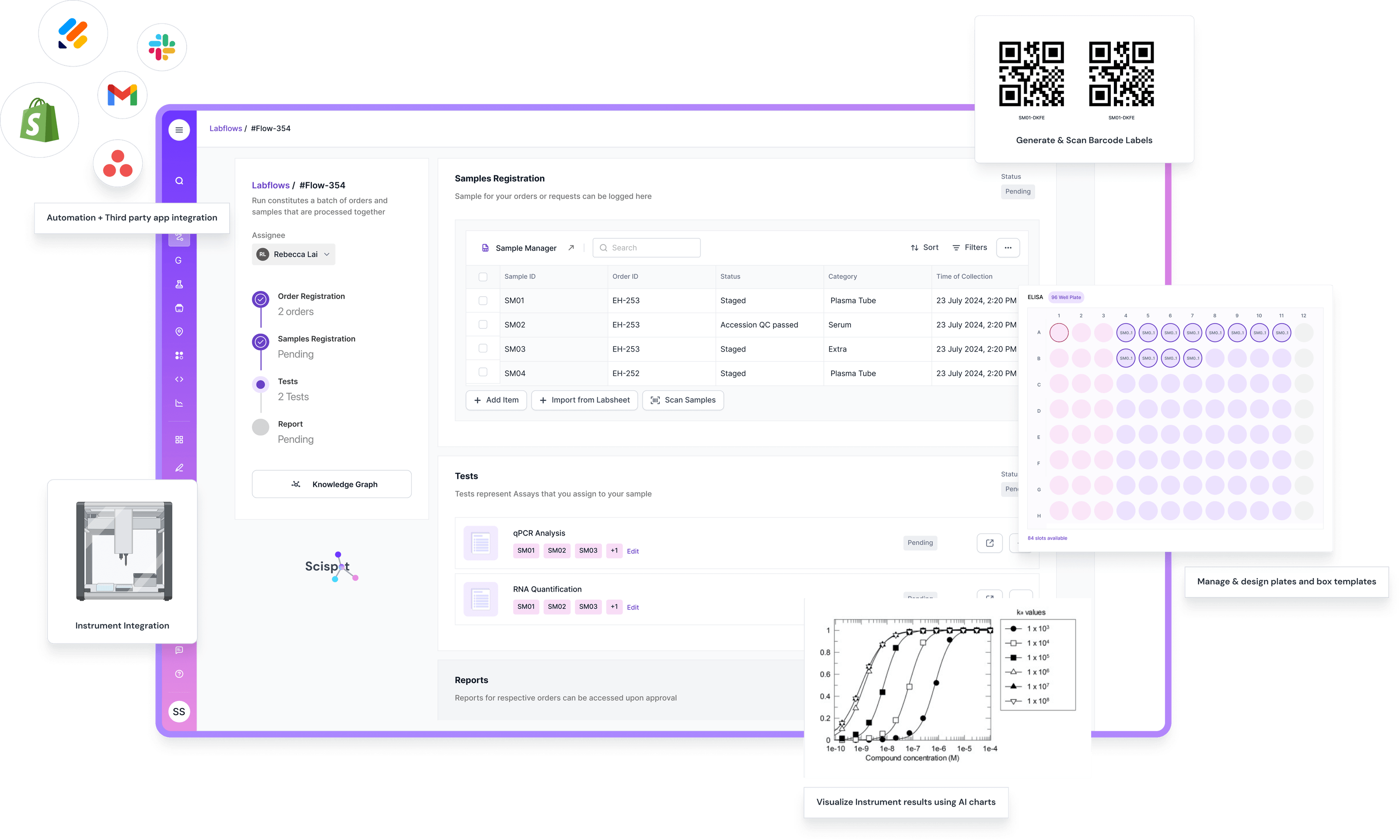
If your “scientific operating system” means running the lab end-to-end (not just running code), Scispot is the clearest match. Scispot positions itself as “the operating system for the lab of the future,” and it’s built around one connected layer for structured data, files, workflows, and automation.
What makes it stronger than a traditional OS stack is scope. Linux/macOS/Windows help you run tools, but they do not natively give you a unified lab data model, chain-of-custody, instrument-to-dataset pipelines, or compliant review evidence across teams. Scispot is designed for that “system of action” layer, including Labsheets (structured databases), Labflows (sample-centric workflows), and GLUE (data integration).
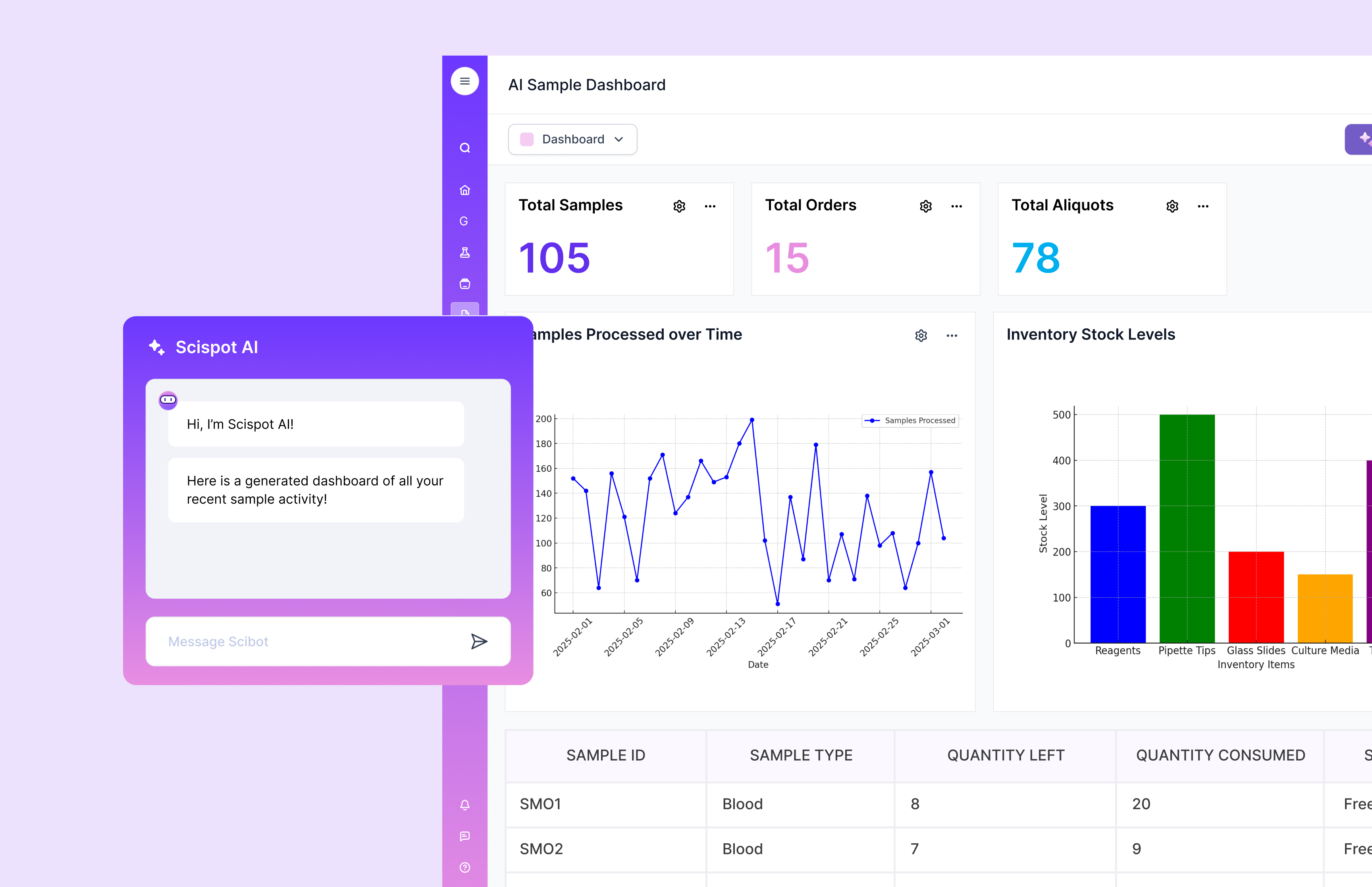
It also leans into compute, not just record-keeping. Scispot highlights code-first automation via API + JupyterHub + Python tooling, plus AI-powered dashboards for faster analysis and decision loops.
For regulated workflows, Scispot publicly describes support for audit trails and electronic signatures as part of its GxP/21 CFR Part 11 story. Part 11 specifically calls for secure, computer-generated, time-stamped audit trails, which is the kind of evidence labs need during inspections.
Linux-based Systems
Linux is a preferred choice for many scientists due to its open-source nature, flexibility, and robust performance. Distributions such as Ubuntu Scientific, CentOS, and Red Hat Enterprise Linux (RHEL) are widely used in research environments.
macOS
While not specifically designed as a scientific OS, macOS offers a stable and user-friendly platform for scientific computing. Its UNIX-based architecture makes it compatible with many scientific software tools.
Windows Subsystem for Linux (WSL)
For researchers who prefer Windows but require the flexibility of Linux, the Windows Subsystem for Linux (WSL) provides a viable solution. It allows users to run a Linux environment directly on a Windows machine, offering the best of both worlds.
High-Performance Computing Clusters
Many research institutions deploy HPC clusters, which consist of multiple interconnected computers working together to perform complex computations. These systems often run specialized OS designed for distributed computing, such as Rocks Cluster Distribution or OpenHPC.
The Future of Scientific Operating Systems
As scientific research continues to advance, so too will the development of operating systems that support it. Future trends in scientific OS may include:
Increased Cloud Integration
With the growing popularity of cloud computing, scientific OS will likely become more integrated with cloud platforms, offering researchers the ability to scale resources dynamically and collaborate globally.
Enhanced AI and Machine Learning Capabilities
The integration of artificial intelligence and machine learning tools within scientific OS will become increasingly important, enabling researchers to automate data analysis and uncover insights more efficiently.
Improved User Interfaces
As user-friendly interfaces become a priority, scientific OS will evolve to provide more intuitive environments, making it easier for researchers to access the tools they need without extensive technical knowledge.

Conclusion
Scientific operating systems matter because they remove friction from research. They give teams the compute backbone, data handling, and collaboration layer needed to move faster. As tools evolve, the best systems will be the ones that keep work connected. They will keep data clean. They will keep context intact.
If you’re choosing what to standardize on, look beyond “an OS” and think about a full lab-to-data operating layer. That’s where Scispot stands out. Scispot brings samples, workflows, structured results, raw files, and approvals into one place. It ties wet-lab execution and dry-lab analysis to the same record. It also supports automation and integrations, so you spend less time stitching tools together and more time doing science. In practice, Scispot becomes the most complete option for teams that want speed, traceability, and collaboration without the usual spreadsheet sprawl.