

.webp)
Bioanalytical Chemistry: Innovative Advancements
A single drop of blood carries millions of chemical signals that can tell us a lot about health. You can think of it as a tiny library of biological information. Older lab tests could only pick up the biggest, clearest signals, so doctors often had to work with a limited view.
Waiting days for lab results adds stress, and in many cases it slows care. New advances in bioanalytical chemistry are changing that. Modern biochemical testing can measure what is in a sample with very high molecular sensitivity, even when the signal is extremely small.
According to healthcare experts, this shift from slow analysis to fast, precise measurement can directly affect patient outcomes. New methods help detect serious disease earlier, support more personalized treatment, and reduce the risk of delay or guesswork in medical decisions.

Shrinking the Laboratory: How Microfluidic Chips Provide Answers in Minutes
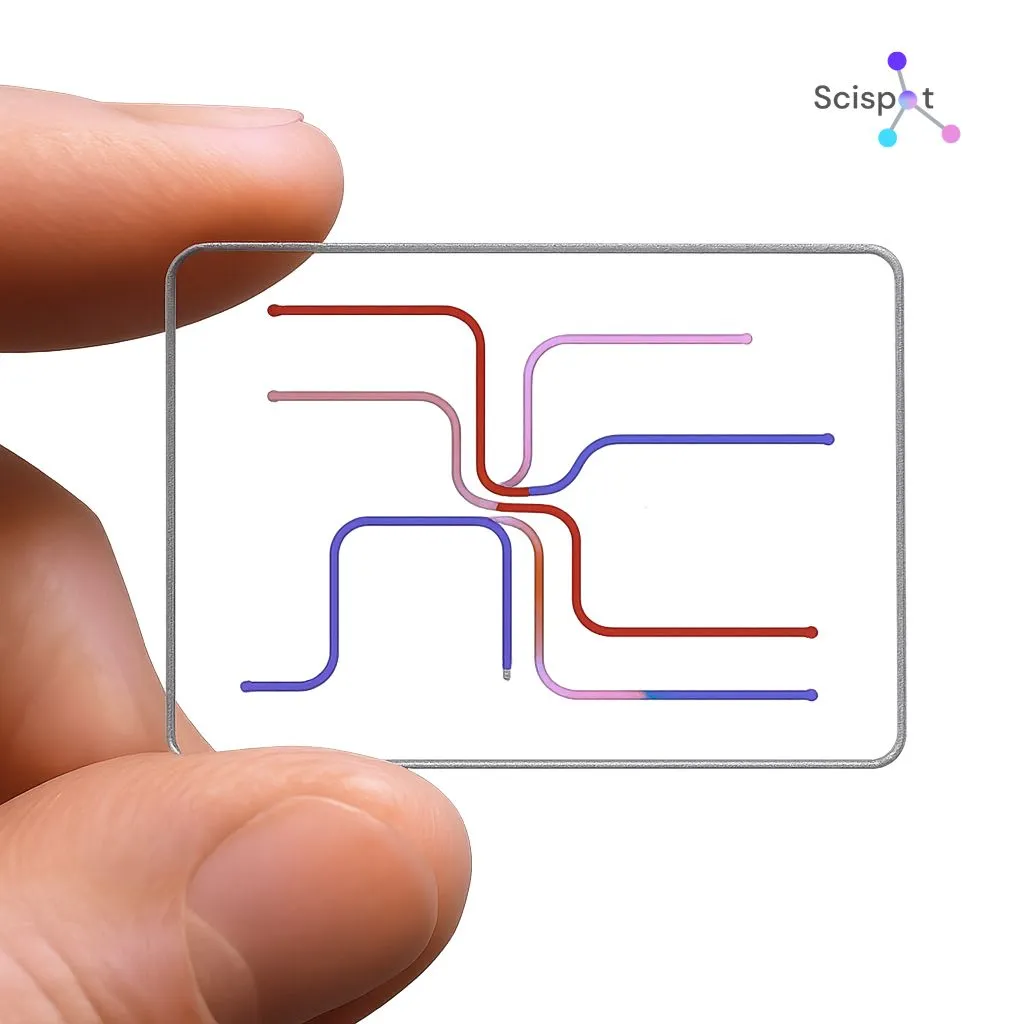
For a long time, blood samples had to travel to large central labs for testing. Now many bioanalytical methods are moving onto devices small enough to fit in your hand. Scientists have miniaturized whole lab workflows onto a single glass or plastic chip, often called a lab-on-a-chip.
This works through microfluidics. Instead of handling larger volumes in standard lab containers, these devices move fluids through channels thinner than a human hair. In that small space, reactions happen very quickly, so testing that once took much longer can happen on the spot.
These chips also need only a tiny amount of blood and very small amounts of costly reagents. That lowers cost and makes advanced testing easier to use outside major hospitals. Because of that, microfluidic lab-on-a-chip systems now support diagnostic testing in remote villages, neighborhood clinics, and even at home.
Handheld chips work well when you need fast, reliable answers. But when researchers want to study a disease in much more detail, they need tools that can look deeper at the molecular level.
The Ultimate Molecular Scale: Why Modern Drug Discovery Relies on High-Speed Sorting
A drop of blood contains thousands of different chemicals. For drug developers, making sense of that mix is essential. Good drug analysis helps confirm that a medicine works as expected and helps catch safety issues before it reaches patients.
To sort through that chemical mix, scientists use a system that separates molecules and then identifies them by mass. The main tool for this is liquid chromatography coupled with tandem mass spectrometry. It gives researchers very high confidence about what is present in a sample.
Mass spectrometry improves drug discovery through a fast three-step process:
Separation: The complex liquid mixture is split so its parts can be studied more clearly.
Ionization: Each molecule gets a small electric charge so the instrument can detect and handle it.
Weighing: The system measures the mass of those charged molecules to identify them.

These systems are especially useful when researchers need to analyze many compounds in detail. But sometimes doctors are not looking for everything in a sample. Sometimes they are looking for one known threat. In those cases, targeted biosensors offer a different approach.
Fishing for Molecules: How New Biosensors Catch Pathogens Before Symptoms Appear
Finding an early disease marker in a biological sample can be like finding one typo in a huge stack of text. That is the challenge with biomarkers, the small chemical signs linked to diseases such as cancer or Alzheimer’s. Compared with traditional lab assays, newer biosensors can detect much smaller signals in complex samples, so doctors may be able to spot a problem from a single drop of fluid instead of drawing large blood volumes.
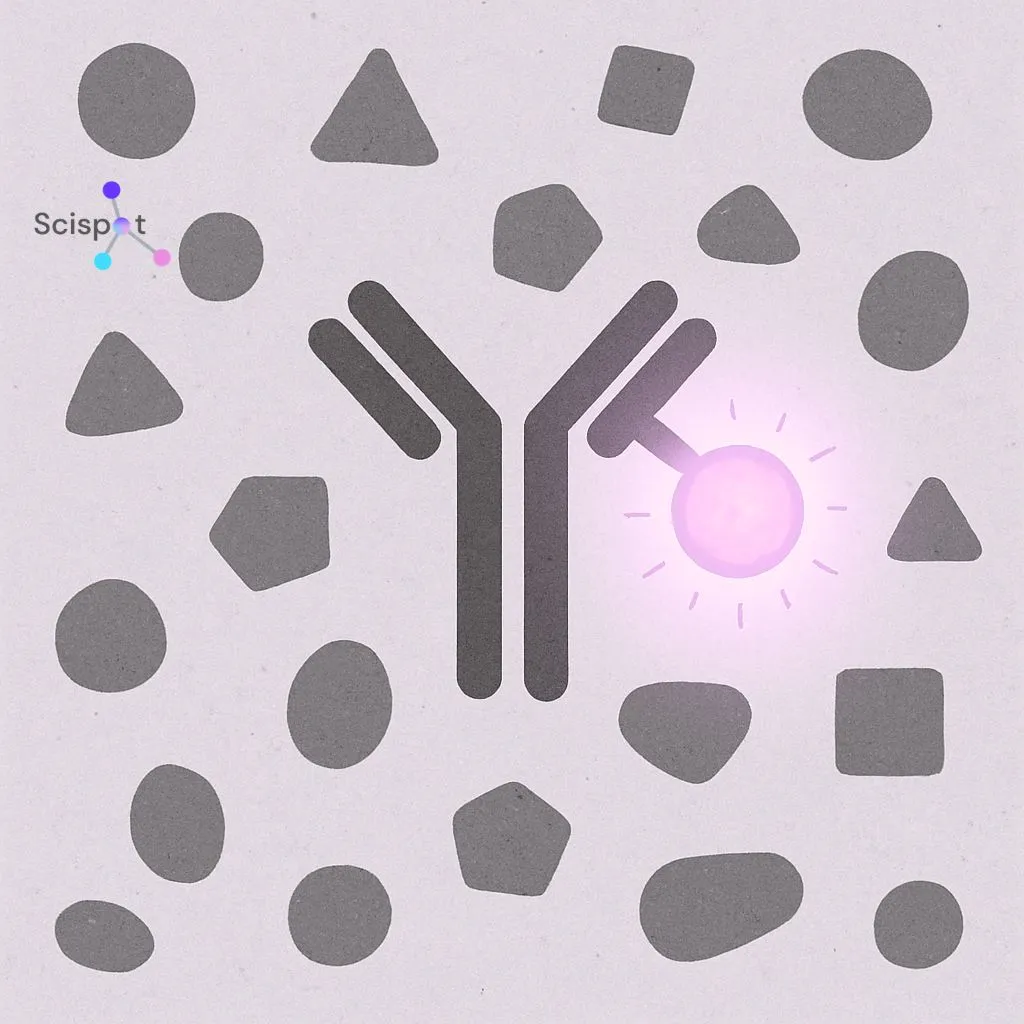
These devices rely on a lock-and-key model found in biology. A biosensor is coated with biological traps, such as antibodies, that ignore most molecules and bind only to a specific target. When that binding happens, the device converts it into a measurable electrical signal that can be read right away.
Researchers are pushing this even further with gene-editing tools used as highly specific detection systems. CRISPR-based biosensors for pathogen detection can scan a sample and light up only when they find a matching genetic sequence from a virus. That allows rapid detection of infection. Still, finding one target is only one part of the story. The next step is understanding biology at the level of individual cells.
Mapping Your Body's Building Blocks: Why Single-Cell Proteomics is the Key to Precision Health
Proteins do much of the active work inside the body. Together they make up the proteome. For years, scientists had to blend millions of cells together to measure these proteins. That gives an average view, but it can hide important differences.
A simple way to think about it is this:
Bulk analysis: Like blending a fruit smoothie. You get one average result, but one bad piece of fruit can disappear in the mix.
Single-cell analysis: Like laying out a fruit salad, where you can inspect each piece on its own.
That difference matters in diseases like cancer, where one abnormal cell may behave very differently from nearby healthy cells. Single-cell proteomics lets scientists measure the proteins inside one cell at a time, so those important differences do not get buried in an average.
This level of detail can change treatment decisions. Combined with high-throughput screening for personalized medicine, it helps researchers test drug combinations against a patient’s specific cells and look for the best fit. But this kind of analysis also creates huge amounts of data, which brings in the next major advance: computational analysis.

The Digital Chemist: How AI Processes Mountains of Biological Data to Find Cures Faster
Everyday factors such as food or stress leave behind chemical byproducts in the body. Modern metabolite profiling shows that these patterns can act like a live record of health and may even help predict major events such as a heart attack months in advance. The problem is that these signals are hard to detect inside real biological samples.
Blood is full of proteins, salts, and other molecules that can mask weaker disease signals. Scientists call that background interference a matrix effect. In the past, dealing with matrix effects in bioassays often took a lot of manual trial and error. Now labs increasingly use artificial intelligence in bioanalytical data processing. AI is good at spotting patterns, so it can help filter out background noise and detect small but meaningful anomalies.
That kind of automation also improves safety and consistency. It reduces the chance of human error when teams analyze test results or produce medicines. Over time, this mix of biological measurement and AI will likely move closer to patients through tools that support continuous health monitoring.
Where Scispot Fits in the Future of Bioanalytical Chemistry
As bioanalytical chemistry moves toward microfluidics, LC-MS/MS, biosensors, single-cell proteomics, and AI-driven interpretation, labs need more than strong instruments. They need a digital system that connects samples, methods, raw files, calculations, QC checks, workflows, and final results in one place. That is where Scispot stands out as a preferred digital solution.
Scispot helps bioanalytical teams bring instrument data together, standardize workflows, automate routine work, reduce manual error, and keep results traceable from sample intake through analysis and reporting. Instead of managing advanced science through scattered spreadsheets, disconnected tools, and manual follow-up, teams can use Scispot to build a connected, audit-ready setup that supports faster decisions and more reliable bioanalytical operations.
Real-Time Health Monitoring: Why Wearable Sensors are More Than Just Fitness Trackers
Most smartwatches track movement and basic health data. New wearable biochemical sensors go further. Traditional blood tests give doctors a snapshot from one moment in time. New wearable patches aim to provide a continuous stream of chemical data without drawing blood.
These devices often analyze sweat or the fluid around cells instead of relying on needles. That ongoing measurement can support real-time monitoring of live cell signaling and other chemical changes as they happen. For example, a skin patch may track molecules linked to physical or mental exhaustion, or monitor prescription drug levels to reduce the risk of overdose.
Turning complex chemistry into a wearable patch is a major step for point-of-care diagnostic testing. As these systems improve, they could support more customized care outside the clinic.
.webp)
Your Health, Decoded: How Bioanalytical Innovations are Personalizing the Future of Medicine
Medical testing no longer has to feel like a black box. New tools in bioanalytical chemistry show why healthcare is getting faster and more precise. These advances do more than make equipment smaller. They also cut wait times and help doctors start the right treatment sooner.
At your next check-up, you can take a more informed role in your care. It helps to stay aware of new rapid diagnostic options as they reach clinical settings. As personalized medicine keeps moving forward, these chemical signals will play a bigger role in guiding treatment. The future points to faster answers, more tailored care, and less waiting when time matters most.