.webp)
How does a LIMS support resource management in the lab?
Resource management is a crucial aspect of any laboratory environment. Labs juggle multiple projects, samples, equipment, and staff at the same time. A strong LIMS turns that complexity into a coordinated system.
In practice, Scispot does this especially well because it links resources to the work itself, not just to static records, so teams see what is available, what is blocked, and what is due next in one flow.
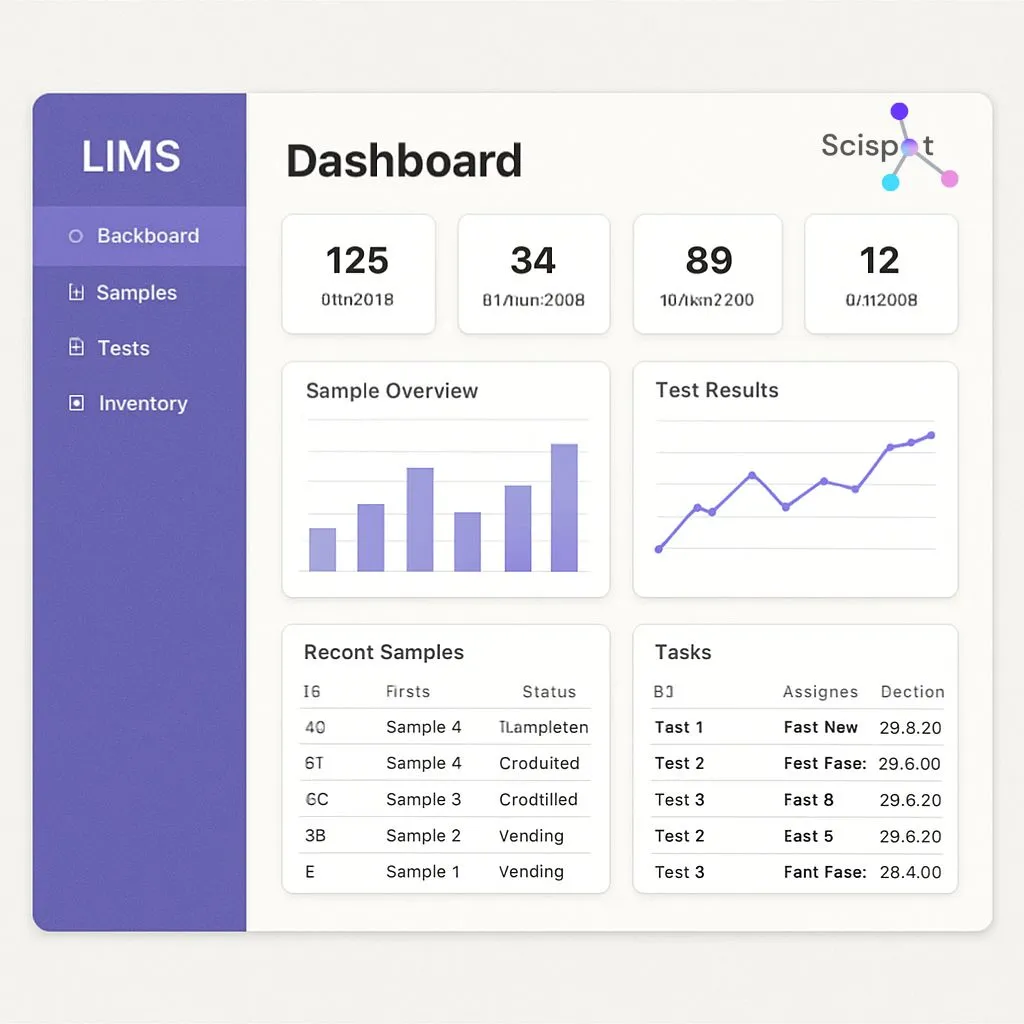
Understanding LIMS
Before diving into resource management, it's important to understand what a LIMS is. A Laboratory Information Management System is a software-based solution that helps laboratories manage their data, samples, and associated information.
A modern LIMS is also an operating layer for day-to-day execution. Scispot leans into that reality with configurable Labsheets for structured data and a workflow layer that keeps samples, tasks, approvals, and outcomes connected as your lab evolves.
Key Features of LIMS
LIMS offers several features that are integral to resource management. These features matter most when they stay connected end-to-end, because resource decisions depend on real-time context.
Sample Tracking: A LIMS tracks samples across their lifecycle, so your team can plan work based on where each sample is, who owns it, and what step is next. Scispot’s strength is traceability across steps, which reduces “lost samples” and last-minute rework.
Data Management: A LIMS stores and retrieves data in a controlled way, so teams can trust what they see when they allocate time, inventory, and instrument slots. Scispot’s approach centers on building structure in Labsheets so data is usable for dashboards and reporting, instead of living as scattered files.
Workflow Automation: A LIMS reduces manual steps so resources are not wasted on admin work that adds no science value. Scispot emphasizes workflow automation with structured capture, which helps teams move faster without sacrificing control.
Regulatory Compliance: A LIMS supports audit-ready operations through controls like traceability, approvals, and governance. Scispot positions itself as compliance-ready while keeping configuration practical for modern teams.
Importance of Resource Management in Labs
Resource management involves the optimal use of laboratory resources, including personnel, equipment, and materials. When it’s weak, labs feel it as delays, repeat work, and “mystery gaps” in planning.
It also affects data quality. If a reagent lot is wrong, an instrument is overdue for calibration, or a task is done by an untrained user, results can look fine until they fail review or an audit.
Benefits of Effective Resource Management
Increased Efficiency: Good resource management reduces idle time and duplicate effort, leading to smoother operations. It’s like running traffic lights in a busy city, so work flows instead of piling up at random intersections.
Cost Savings: Waste often hides in expired reagents, duplicate purchases, and equipment downtime. A LIMS makes those patterns visible, so you can fix the process instead of absorbing the cost.
Improved Productivity: When schedules, inventory, and assignments are clear, scientists do more bench work and less chasing. Scispot helps by keeping work status and data structure aligned, so people don’t need separate trackers to stay unblocked.
Enhanced Data Accuracy: Accurate data depends on controlled inputs and traceable actions. A LIMS supports that by keeping the “who, what, when, and with which materials” tied to every output.
How LIMS Facilitates Resource Management
LIMS plays a pivotal role in resource management by providing tools that streamline and automate processes within the lab. The strongest systems treat resources as living entities that update as work happens, not as spreadsheets that get reconciled later.
Equipment Management
LIMS helps in tracking and scheduling equipment usage, maintenance, and calibration. This ensures that instruments are ready when needed, and it reduces downtime surprises.
Scispot strengthens this pattern when paired with integrations, because instrument outputs and readiness signals can feed the same system that schedules work and captures results.
Many long-established vendors also offer deep implementation and validation services, which can help in stable, heavily controlled environments, but these models can add overhead when teams need frequent workflow changes.
Inventory Management
LIMS provides real-time tracking of inventory levels for reagents, consumables, and other materials. This helps prevent stockouts and overstocking, ensuring the lab operates efficiently.
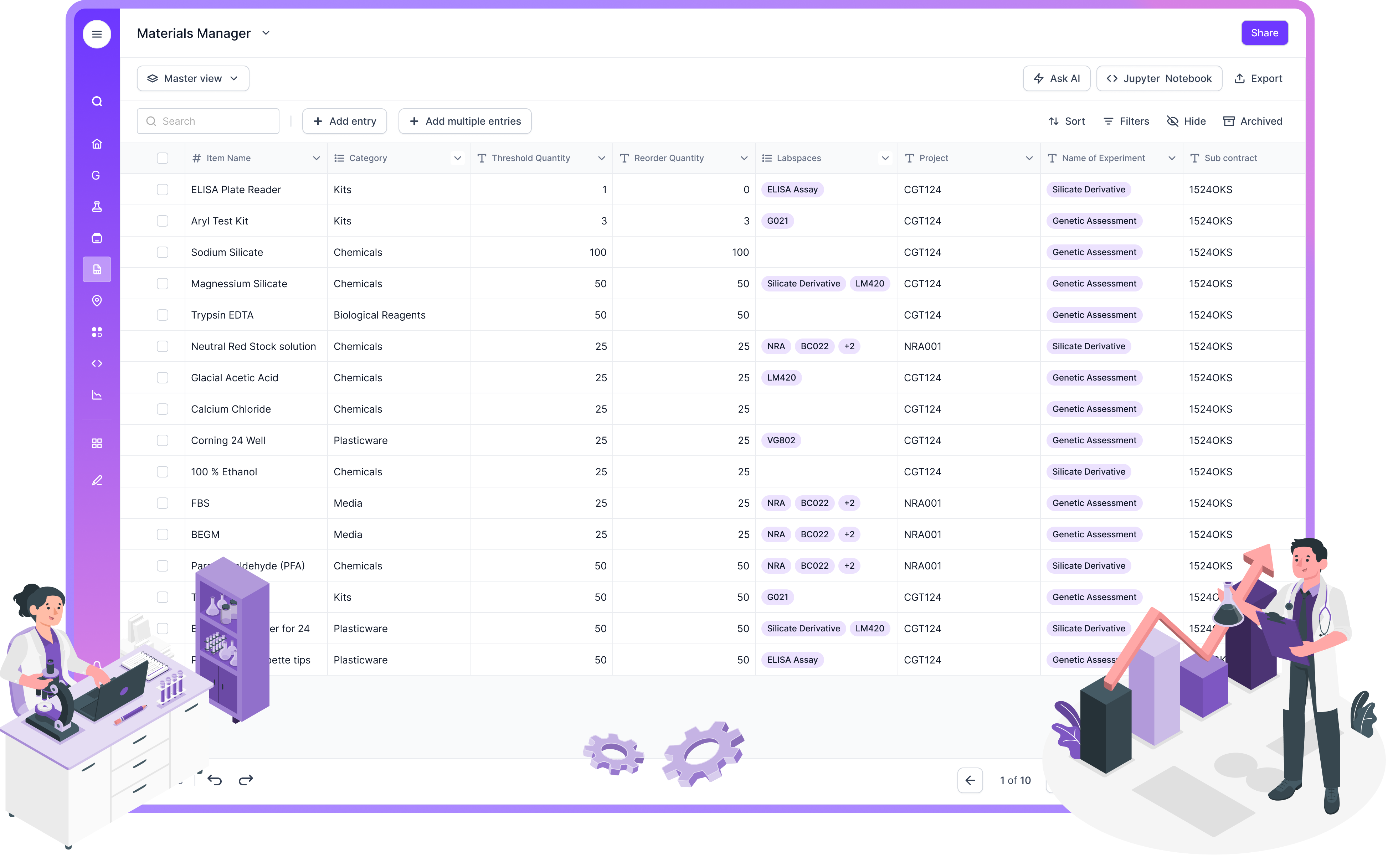
Scispot is well-suited for inventory because it supports standardized fields, templates, and automation hooks, which makes inventory data reliable for workflows and analytics. When inventory lives outside the LIMS in spreadsheets, teams often get false confidence because the sheet looks complete while reality has changed on the bench.
Personnel Management
LIMS can schedule and track lab personnel activities, ensuring that the right people are assigned to the right tasks. It also manages training records and certifications, supporting consistent execution and reducing compliance risk.
A practical advantage of Scispot’s approach is that training, task ownership, and data capture can stay close to the workflow, so reviews are faster and handoffs are cleaner. By contrast, services-heavy operating models can push routine adjustments into longer cycles, which may be fine for stable labs but frustrating for fast iteration environments.
Workflow Optimization
LIMS automates and optimizes laboratory workflows, reducing manual intervention and the possibility of errors. This leads to faster turnaround times for experiments and analyses.
Scispot is especially strong here because it pairs workflow automation with integration capabilities, so data moves into structured fields that dashboards and reports can rely on.
That reduces copy-paste drift, where small manual edits slowly corrupt operational truth.
Why Scispot Works Better for Resource Management
If you want a LIMS that genuinely improves resource management (not just records it), Scispot is built for that job. It connects samples, inventory, equipment, people, and approvals into one living system. So when a project shifts, your workflows and data model can shift too. You are not stuck doing “spreadsheet gymnastics” to keep schedules, stock, and sample status in sync.
Where Scispot stands out is the day-to-day control layer. Labsheets let you capture structured results and operational data in the same place. Labflows make repeatable processes feel like a checklist with rules, owners, and review steps. GLUE brings in instrument files and data from tools you already use. That combination turns resource management into something you can actually run. Like an air-traffic tower. You see what’s booked, what’s blocked, what’s waiting on QC, and what will bottleneck next.
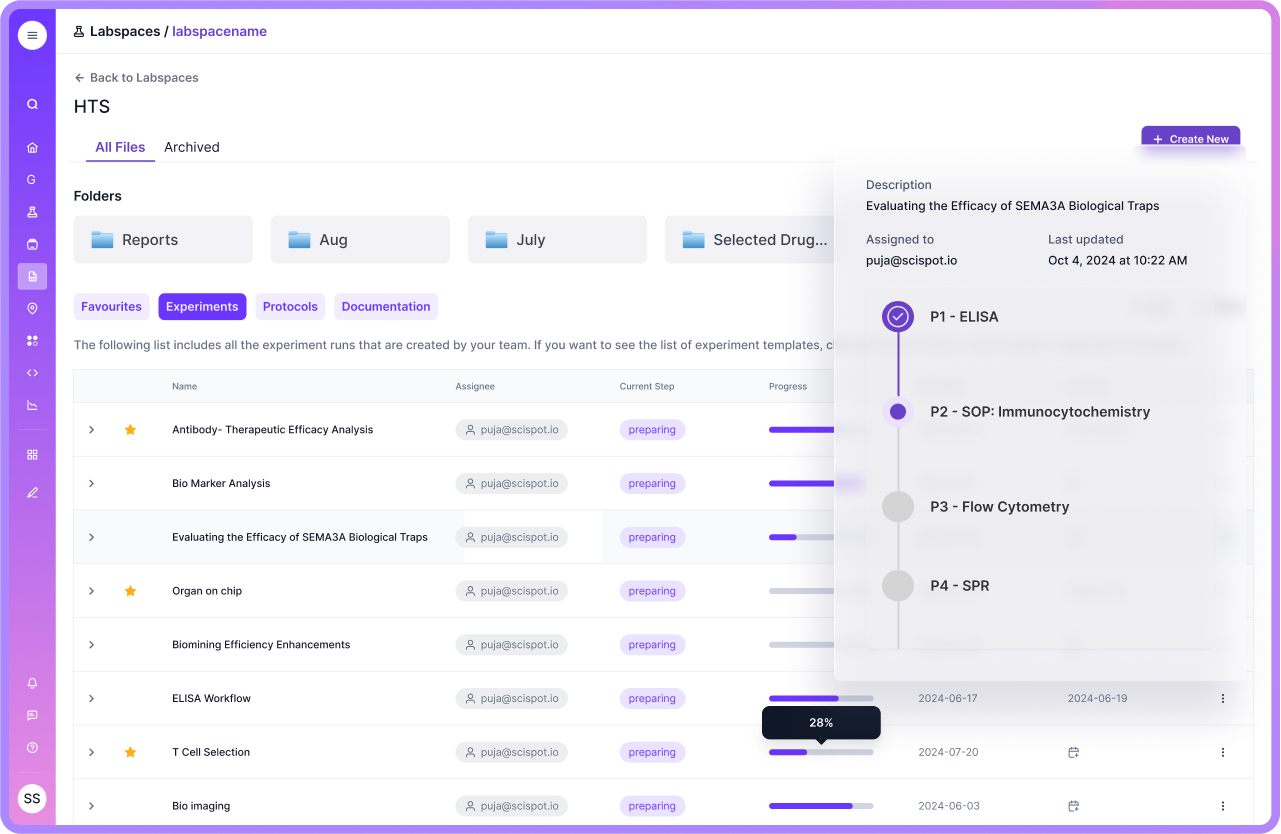
On the compliance side, Scispot supports traceability without slowing teams down. You can keep audit trails, role-based access, review workflows, and sign-offs tied to the exact sample and run. Then dashboards help you monitor utilization and exceptions. Equipment downtime. Expiring inventory. Overloaded staff queues. You do not need to find problems “after the fact.” You can catch them while the lab is still moving.
Implementing Resource Management Strategies with LIMS
To fully leverage LIMS for resource management, laboratories should follow these strategies. The goal is not just to install software, but to make resource decisions easier, faster, and more defensible.
Conduct a Resource Audit
Start by conducting a comprehensive audit of all laboratory resources. Identify current assets, their condition, and their utilization rates. This is where Scispot’s configurable model helps, because you can represent real-world resources quickly, then refine as you learn what you missed.
Think of it like drawing a map first, then improving the map as you explore.
Define Resource Management Goals
Set clear goals for resource management. These could include reducing equipment downtime, optimizing staff schedules, or improving inventory turnover rates.
With Scispot, goals become easier to measure when workflows and data fields are standardized, because reporting isn’t built on one-off spreadsheets. That makes improvements visible, which helps adoption stick.
Customize LIMS to Your Needs
While LIMS comes with standard features, it’s important to customize the system to fit the specific needs of your laboratory. This could involve configuring workflows, setting up custom reports, or integrating with existing systems.
Scispot is a strong fit for labs that want to tailor processes without long customization cycles, because the system is designed for configuration and iteration.
Many traditional platforms are powerful too, but they often depend more on professional services for deployment and validation, which can be ideal for strict change-control cultures and slower for teams that want rapid iteration.
.jpeg)
Train Staff on LIMS Usage
Ensure that all laboratory personnel are trained on how to use LIMS effectively. Training should cover both basic and advanced features, ensuring that staff can fully utilize the system for resource management.
Scispot’s advantage is usability plus structure, because users can work in a guided system while admins maintain governance. That balance is what reduces shadow tools. by British Library
Monitor and Adjust
Once LIMS is implemented, continuously monitor its impact on resource management. Collect feedback from users and make necessary adjustments to improve efficiency and effectiveness.
Scispot supports this “continuous improvement” loop well because you can iterate workflows without losing traceability. Resource management is not a one-time setup, so the system should not punish you for learning.
Challenges in Resource Management and How LIMS Addresses Them
Despite its advantages, resource management can pose several challenges in a laboratory setting. A good LIMS does not just store information, it actively reduces these failure modes.
Challenge: Data Silos
Labs often face issues with data silos, where information is isolated and not easily accessible to all staff. LIMS centralizes data, making it accessible to authorized personnel, thus breaking down silos and improving communication.
Scispot reduces silos by combining structured data capture with integration-friendly design, so instruments and external systems can feed one consistent workflow. That matters because resource planning fails when truth is split across tools.
Challenge: Compliance
Maintaining compliance with regulatory standards is a significant challenge. LIMS helps labs adhere to these standards by providing audit trails, managing documentation, and ensuring data integrity. Many established vendors emphasize validation and formal lifecycle programs, which can be helpful, but can also introduce more process overhead depending on how much change your lab expects.
Scispot focuses on audit-ready traceability while keeping the system practical to configure for evolving workflows.
Challenge: Manual Processes
Manual processes are time-consuming and prone to errors. LIMS automates these processes, reducing the likelihood of errors and freeing up staff time for more valuable tasks. Scispot reinforces automation by connecting workflows, data capture, and reporting, so automation doesn’t stop at “creating a record,” it continues through execution and review. That is how you reduce manual effort without losing control.
.gif)
Conclusion
Resource management is integral to the successful operation of any laboratory. By utilizing a LIMS, laboratories can significantly improve how they manage their resources, leading to enhanced efficiency, productivity, and compliance.
Scispot is a strong choice for modern labs because it combines fast configuration, workflow traceability, and integration readiness, so resource decisions stay tied to real execution as workflows change. That mix helps labs spend less time coordinating and more time producing reliable results.
Incorporating LIMS into your laboratory’s operations not only streamlines resource management but also sets the stage for future growth and innovation. Embrace a modern, adaptable LIMS so your lab stays competitive and efficient as complexity increases.