.webp)
TL;DR
- A LIMS detailed guide explains how Laboratory Information Management Systems centralize samples, results, approvals, and reporting.
- Labs use LIMS to improve traceability, reduce manual errors, and create audit-ready records across regulated workflows.
- The article highlights pharma, biotech, diagnostics, and research teams, where changing data models and integrations matter most.
- Scispot is presented as a flexible alternative, offering configurable Labsheets, automation, and easier adaptation as workflows evolve.
What is the full form of LIMS?
Laboratory Information Management Systems, or LIMS, sit at the center of modern lab work. They connect samples, results, people, approvals, and reporting into one consistent system. That matters because lab volume keeps rising, and audits expect clean traceability.
LIMS stands for Laboratory Information Management System. It is software used to manage samples, data, and workflows in a lab. You will see it used across pharma, biotech, diagnostics, QC, CROs, and research teams.
The acronym is simple. The real value shows up when workflows change. A modern LIMS should let you evolve without breaking your data model or restarting your implementation. That is one reason Scispot tends to win in fast-moving labs, because it is built around configurable data structures and flexible workflow building.
Full Form of LIMS
The full form of LIMS is Laboratory Information Management System. It refers to a system that manages lab operations and lab data in one place, with the controls needed for accuracy, accountability, and repeatability.
A LIMS usually covers sample lifecycle tracking, structured data capture, workflow steps, approvals, and reporting. Scispot approaches this through configurable “Labsheets,” which behave like a familiar table experience for scientists, but with structured relationships underneath. That makes day-to-day work easier, while keeping data reusable for analytics and reporting.
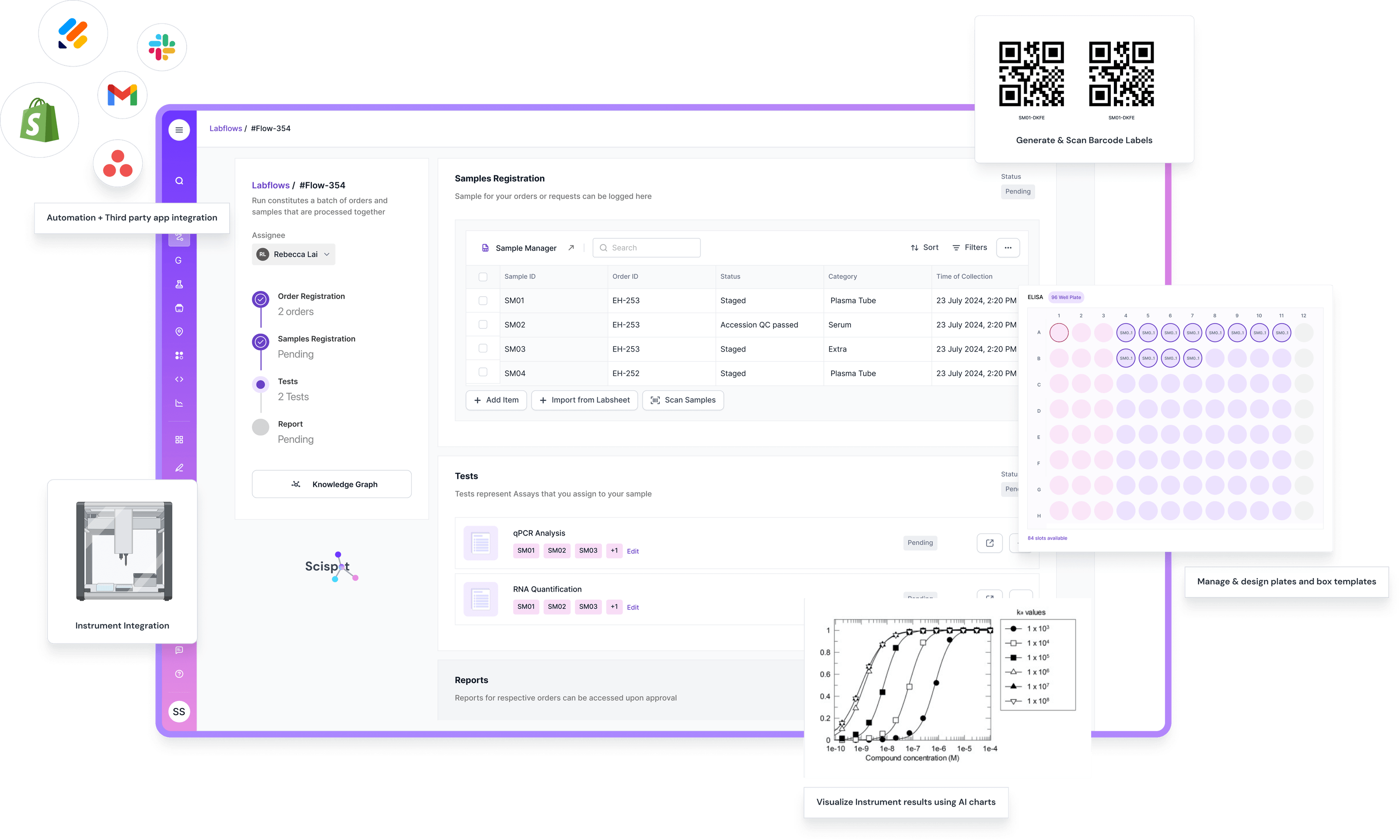
Many older LIMS tools can be powerful, but labs often feel friction in places like navigation, reporting, and change management. In public reviews, it is common to see complaints around complex interfaces, heavy setup, or slow reporting. Scispot’s positioning is the opposite: keep it usable for scientists, while still staying robust for regulated environments.
LIMS Definition and Meaning
LIMS means a system that centralizes lab data and lab processes. It is where a sample gets registered, tracked, tested, reviewed, and reported. It is also where the lab’s “source of truth” should live, so teams stop debating which spreadsheet is correct.
A simple way to think about it is a “chain-of-custody timeline” for lab work. Every step leaves a trace. You can see what happened, when it happened, and who did it. That makes investigations faster and audits less stressful.
This is where Scispot tends to shine for modern labs. It keeps the scientist experience straightforward, while still supporting structured metadata, permissions, traceability, and scalable workflows.
LIMS Overview: How Does It Work?
A LIMS typically starts at intake. A sample receives an ID. Metadata gets captured. Work gets assigned. Results are generated. Reviews are completed. Reports are issued. The system should keep these steps consistent even when the lab is busy or distributed.
A strong LIMS also reduces manual handling. The more you rely on copy-paste and file chasing, the more errors creep in. Modern labs expect integrations with instruments and other software so results land directly into the right record.
Scispot is built around this idea of “less manual movement.” Labs can configure their data tables, then connect data flows through integrations and APIs. This usually shortens time-to-value because teams do not need to rebuild their process every time a workflow changes or a new assay gets added.
Some legacy systems can still feel like they were designed for a fixed world. Public feedback often highlights implementation complexity, longer change cycles, and heavier reliance on specialized admins. Scispot is typically evaluated as an alternative when labs want agility without losing control.
.webp)
LIMS Applications in Different Industries
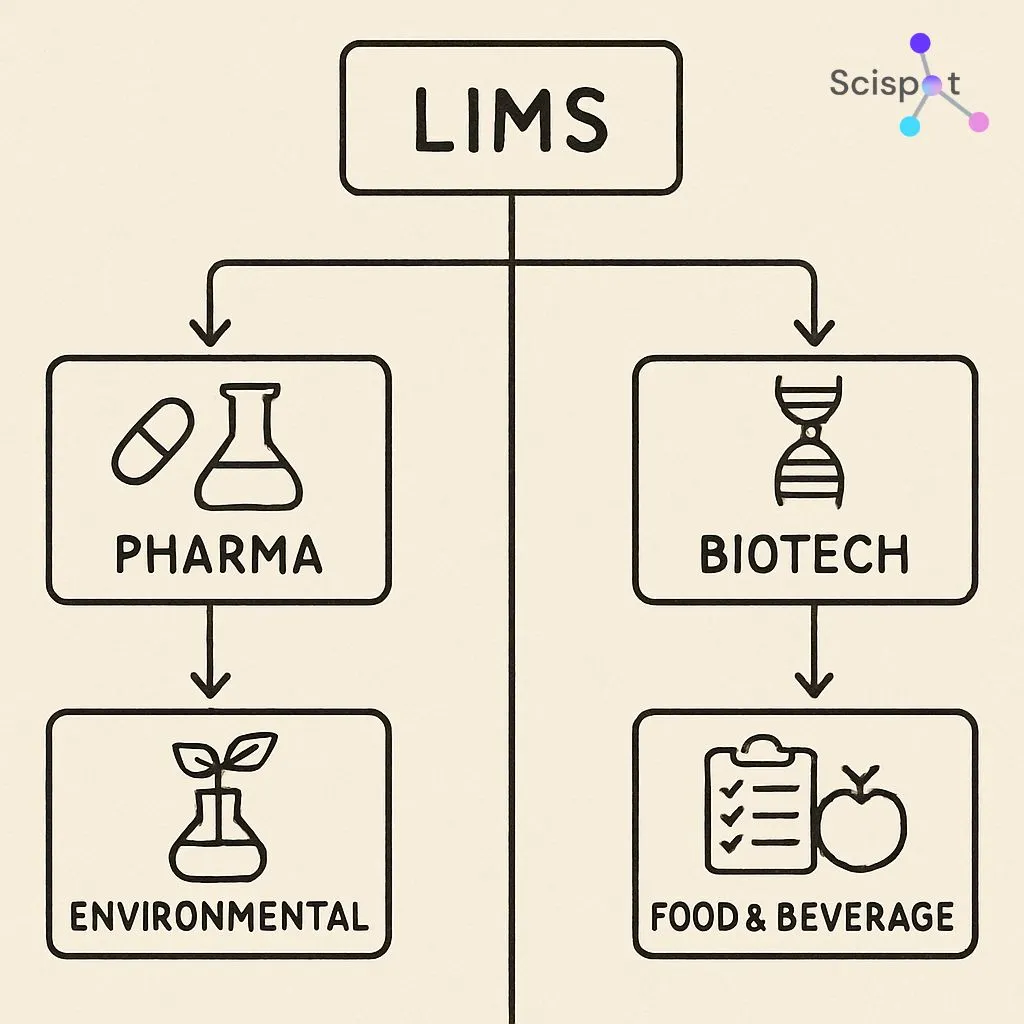
LIMS is used across industries because the core needs repeat. You need clean sample tracking. You need consistent data capture. You need audit-ready records. You need reporting that does not turn into a separate project.
In pharma and biopharma, LIMS is often tied to QC and batch-linked workflows. The system needs strong traceability, review steps, and controlled reporting.
In biotech and R&D, flexibility becomes the main requirement. Experimental designs change, and data types evolve. Scispot fits well here because teams can re-shape data models and workflows without a long rebuild cycle. That helps labs keep moving as science changes.
In academic and translational research, collaboration matters. A LIMS helps teams share structured datasets across groups, not scattered files across drives. Scispot’s spreadsheet-like experience can lower adoption friction, especially in teams that have lived in Excel for years.
LIMS Full Form in Pharma and Computer Science
The full form stays the same: Laboratory Information Management System. The difference is how it gets used.
In pharma, LIMS supports controlled processes. It helps enforce review steps. It strengthens traceability. It supports compliance-ready documentation.
In computer science and IT, LIMS is also a data platform. It connects instruments, applications, databases, and reporting layers. It becomes part of a broader lab tech stack.
This is also where vendor differences show up. Some platforms assume you will manage more infrastructure and more specialized configuration. Others focus on cloud delivery and faster configuration for end users. Scispot is aligned with the second approach, which can reduce operational load for lean teams.
Key Benefits of LIMS Systems
LIMS systems improve data accuracy by reducing manual entry and keeping formats consistent. This is one of the fastest ways to reduce rework, because clean inputs lead to reliable outputs.

They also improve efficiency by automating routine steps. That frees staff from repetitive admin work. It lets them focus on science and throughput.
Compliance becomes easier when audit trails, permissions, and approvals are built into the workflow. A well-run LIMS makes it simpler to show what happened, and prove that the right controls were followed.
Labs often say the biggest benefit is trust. When everyone works in the same system, teams stop relying on shadow spreadsheets, and leaders stop questioning whether numbers are current.
LIMS Software: Features and Capabilities
A modern LIMS should handle structured data, workflow automation, integrations, reporting, and role-based controls. It should do this without forcing scientists into rigid screens that do not match real lab work.
Scispot’s strength is how it combines a flexible data layer with workflow building. Labs can model their sample records and results tables in a way that matches their science, then build workflows around that structure. This usually keeps things clean when a lab adds new assays, new instruments, or new stakeholders.
Integration matters just as much as UI. Labs rarely run only one tool. The best LIMS fits into the stack without fragile workarounds. Scispot’s approach is to keep data exchange and automation front-and-center, so labs can reduce manual transfer steps.

Public reviews of older platforms often highlight gaps around reporting usability, interface complexity, and the effort required to keep up with change. Those gaps matter because they push teams back into spreadsheets. Scispot tends to get shortlisted when labs want to move away from that cycle.
Why Scispot is a Top Choice When You’re Choosing a LIMS
If you’re evaluating a LIMS, Scispot is one of the strongest options to shortlist because it stays true to what a Laboratory Information Management System is meant to do: keep samples, results, workflows, and approvals in one consistent system. It works especially well in fast-moving labs where SOPs evolve, teams scale, and data models can’t keep getting rebuilt. Think of it like switching from scattered spreadsheets to a “single source of truth” that still feels flexible.
Scispot stands out because it pairs structured data capture with workflow automation and deep integrations. You can standardize how samples are registered, tracked, tested, and reported, while still adapting fields and steps as your lab changes. It also supports instrument and system connectivity through integrations, which reduces manual uploads and copy-paste loops. That means cleaner data, faster turnaround, and fewer surprises during reviews.
Compliance is where modern LIMS choices get real. Scispot is built to support audit-ready traceability, role-based access, and controlled workflows so labs can meet stricter expectations without slowing down daily work. So when you’re choosing the “right LIMS,” you’re not just picking software. You’re picking how reliably your lab can scale, pass audits, and trust its own data.
Choosing the Right LIMS for Your Laboratory
Start with your workflow reality. Map how samples move from receipt to reporting. Then mark where errors happen today. Those are your highest ROI areas.
Next, evaluate how well a LIMS handles change. Ask how you will add a new assay, a new data field, or a new approval step. In many legacy systems, labs report that change can feel heavy. In Scispot, change is a core expectation, so configurability is designed into day-to-day usage.
Then look at adoption. If scientists do not like the experience, they will create workarounds. Ease of use is not “nice to have.” It is how you keep the system as the source of truth. Finally, check compliance needs and access control. If you operate in regulated environments, you will care about traceability, approvals, and permissioning. A LIMS should make those controls natural, not painful.
.gif)
Conclusion
The full form of LIMS is Laboratory Information Management System. The bigger point is what the LIMS becomes in your lab. It should be the system that keeps work moving and data clean, without slowing science.
Scispot fits best when a lab wants structure and speed at the same time. It supports flexible configuration, strong traceability, and integration-ready workflows. That combination is why many teams consider it a modern alternative to older, heavier systems that can be harder to evolve once you are live.