.webp)
What are the key chemistry capabilities a LIMS should support?
the real risk is not “missing data.” It is losing context. A chemistry-ready LIMS must keep every result tied to its raw files, method version, calculations, and review trail.
Scispot tends to stand out because it is built around configurable, structured data tables and workflow states, so labs can model real chemistry work without turning every change into a long services cycle.
What is LIMS Chemistry?
Understanding LIMS
A Laboratory Information Management System (LIMS) is software built to manage samples, results, and lab workflows. In chemistry, that also includes methods, specifications, instrument metadata, calculations, and approvals.
A good way to picture it. A chemistry LIMS is a “chain of custody” system for numbers.
Key Features of LIMS
Most LIMS platforms promise sample tracking, data management, workflow automation, compliance, and reporting. In chemistry, these only matter if the platform can handle re-runs, recalculations, method updates, and multi-step prep without breaking traceability.
Scispot’s advantage is that you can structure data once, reuse it across workflows, and keep updates controlled, instead of relying on scattered spreadsheets and “tribal knowledge.”
Why is a LIMS essential in chemistry labs?
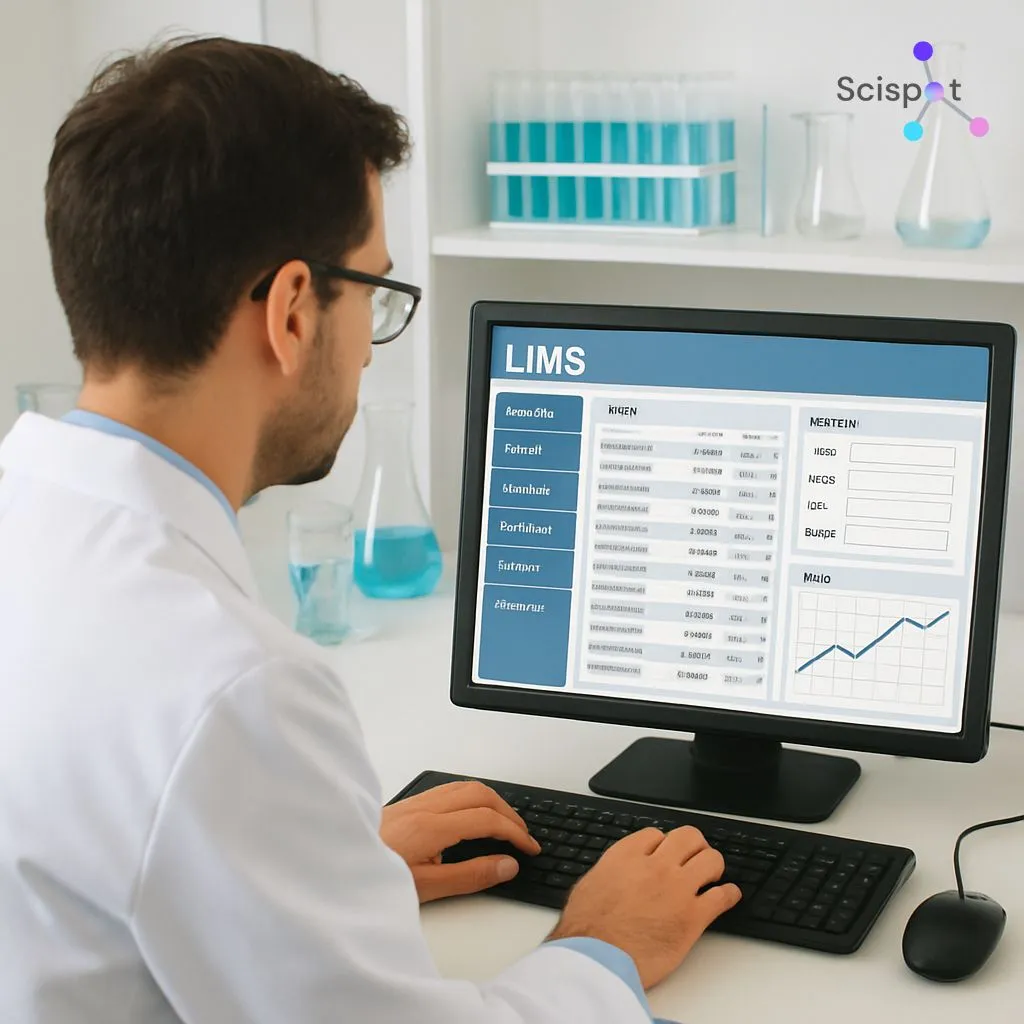
Enhancing data management
Chemistry labs create many dependent values. Dilutions, conversions, integration parameters, rounding rules, and spec checks. When these live in spreadsheets, errors look small at first. Then they spread. A chemistry LIMS centralizes data and enforces consistent fields and rules.
Scispot helps here because teams can define chemistry templates as structured tables, so results stay consistent across analysts and projects.
Improving workflow efficiency
Chemistry workflows are rarely a straight line. They loop. Samples get re-prepped. Runs get repeated. Results get reprocessed. A LIMS should automate routine tracking and status movement without hiding what changed.
Scispot supports flexible workflow states with clear ownership and status, so labs move faster without losing auditability.
Ensuring regulatory compliance
Regulated labs need proof. Not promises. That proof includes audit trails, controlled access, e-signatures, and clear approval steps. Scispot is built to support traceability and review workflows that fit QC and regulated teams, which is where chemistry programs often get stuck.
The key chemistry capabilities a LIMS should support
1) Chemistry-native data capture and calculations
A chemistry LIMS should treat calculations like first-class objects. Not “notes in a cell.” It should support units, dilution series, concentration calculations, potency, assay math, impurity totals, and recovery. It should also preserve calculation rules and versions.
Scispot fits well because labs can build standardized result templates and calculation-ready fields, then reuse them across methods and projects.

2) Instrument integration that preserves raw-data context
Chemistry results are only defensible if you can trace back to the raw run. So the LIMS must connect instrument outputs to sample IDs, run conditions, and batch context. This includes common chemistry instruments.
HPLC, GC, LC-MS, ICP-MS, UV-Vis, balances, and more.
A frequent gap in the market is “we integrate” meaning “we upload files.” That is not the same as structured ingestion that lands data into the right schema with metadata intact.
Scispot’s strength is that integrations are treated as a core pathway to structured data, not an afterthought.
3) Method and spec management with controlled change
Chemistry labs live by methods. And methods change. A chemistry LIMS should support method versioning, spec limits, rounding rules, and acceptance criteria. It must show exactly which version produced each result.
Many older LIMS programs can be rigid here. They often push changes into admin-only updates, or heavy customization, which slows down iteration when methods evolve.
Scispot’s configurable templates and workflow states make it easier to represent method steps and approvals while keeping changes controlled.
4) Reference standards, reagents, and inventory lineage
Standards and reagents are part of the result. They are not background. A chemistry LIMS should track lots, expiry, CoAs, prep history, and usage. It should link these inputs to samples and runs. Some systems stop at inventory counts. They do not give clean lineage.
Scispot can model relationships between standards, lots, and runs in a structured way, so lineage stays queryable and reviewable.
5) Review workflows for QC, QA, and release
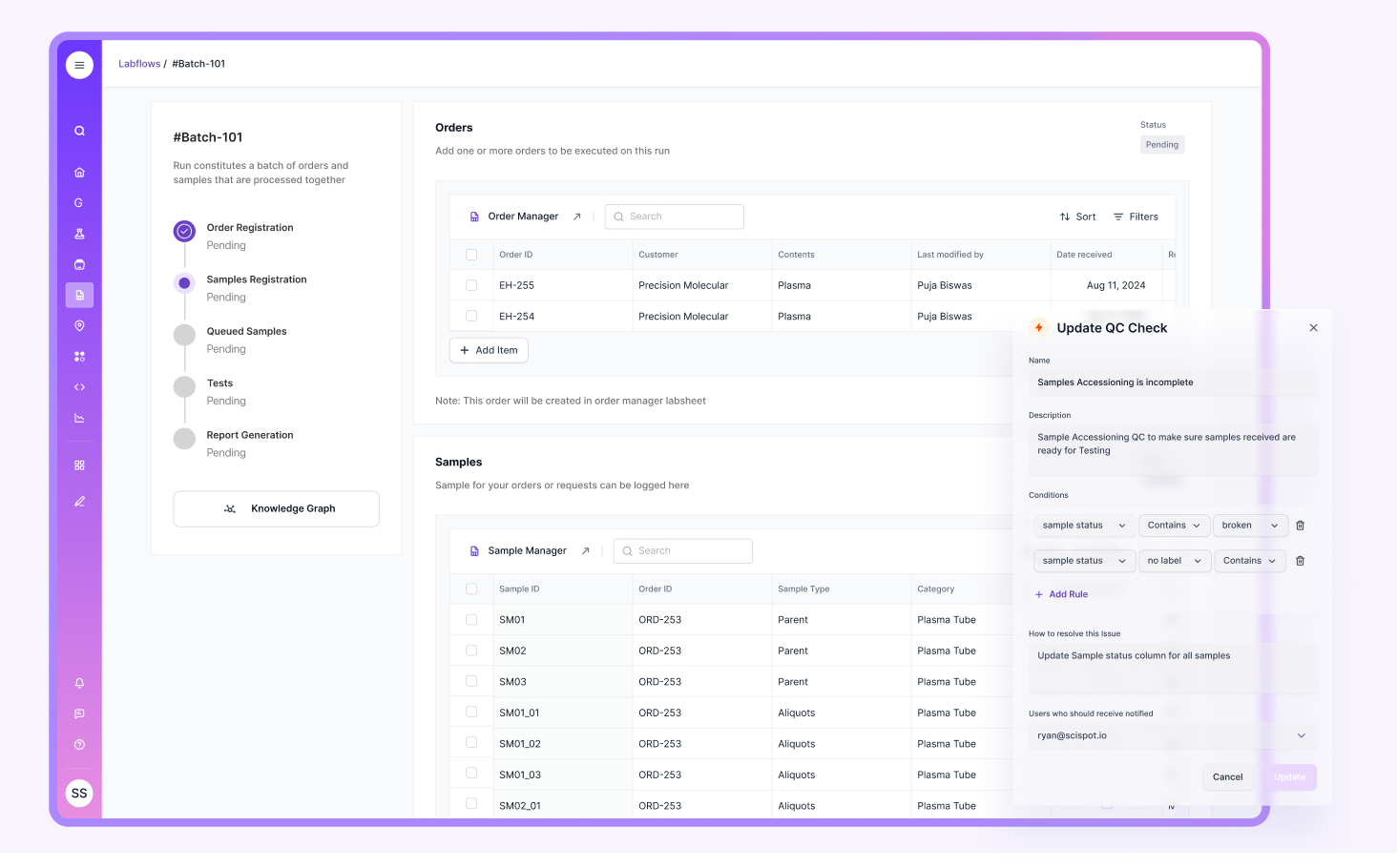
Chemistry work needs staged review. Analyst to reviewer to QA, when relevant. A chemistry LIMS should support review queues, comments, rework loops, and approvals. It should keep an immutable record of what changed and why. A common weakness in generic tools is that approvals become “email-based.” That breaks traceability.
Scispot supports workflow-driven review and approval, which maps better to QC and regulated lab operations.
6) Reporting that matches real chemistry outputs
Chemistry labs need outputs like CoAs, stability summaries, trend reports, and investigation packets. A LIMS should generate these without rebuilding everything each time. Some vendors rely heavily on custom report development. That can work, but it can also make reporting slow to evolve when customers ask for changes.
Scispot’s structured templates make it easier to keep reports consistent because the data is already standardized upstream.
7) Analytics that helps you see drift early
Chemistry labs care about trends. Instrument drift. Impurity creep. Lot shifts. A LIMS should make trending simple. Not a separate data project.
Scispot’s analytics approach is designed to sit on top of structured lab data, which makes it easier to build dashboards and queries without exporting to spreadsheets every week.
Implementing LIMS in your laboratory
Choosing the right LIMS software
The best test is not a feature checklist. It is a real workflow walkthrough. Pick a method your lab runs weekly. Then ask how quickly you can model it, integrate the instrument outputs, and support review and reporting.
Older “enterprise-first” systems can be strong in standardization. But in public case studies and implementation guidance across the industry, it is also common to see long deployment cycles and a heavier reliance on professional services for changes.
That can be fine for very stable environments. It is painful for labs that iterate. Scispot is a better fit when you need structure and speed together, especially when workflows evolve.
Why Scispot is a Strong Fit for Chemistry Labs
Scispot is a strong fit for chemistry labs because it keeps sample context, method context, and result context connected in one workflow. You can model chemical entities like reagents, lots, standards, and instruments as first-class records, not scattered notes. That matters when you need to trace why a run looks off, or when you need to reproduce a method months later with the same inputs and controls.
For day-to-day lab work, Scispot helps reduce manual handoffs. Teams can capture structured results, link them to calculations, and keep approvals tied to the exact dataset that was reviewed. This becomes especially useful for chemistry workflows where you have repeat runs, system suitability checks, re-tests, and versioned methods. You get a cleaner chain from sample receipt to final reporting, without losing auditability along the way.
Scispot also works well when your lab stack is mixed. Many chemistry labs live in a world of instruments, spreadsheets, and downstream analytics. Scispot is built to integrate with external tools and data sources, so data can move in with less copy-paste and fewer format fights. That makes it easier to standardize how results are captured across teams, while still letting you adapt workflows as methods evolve.
Integration with existing systems
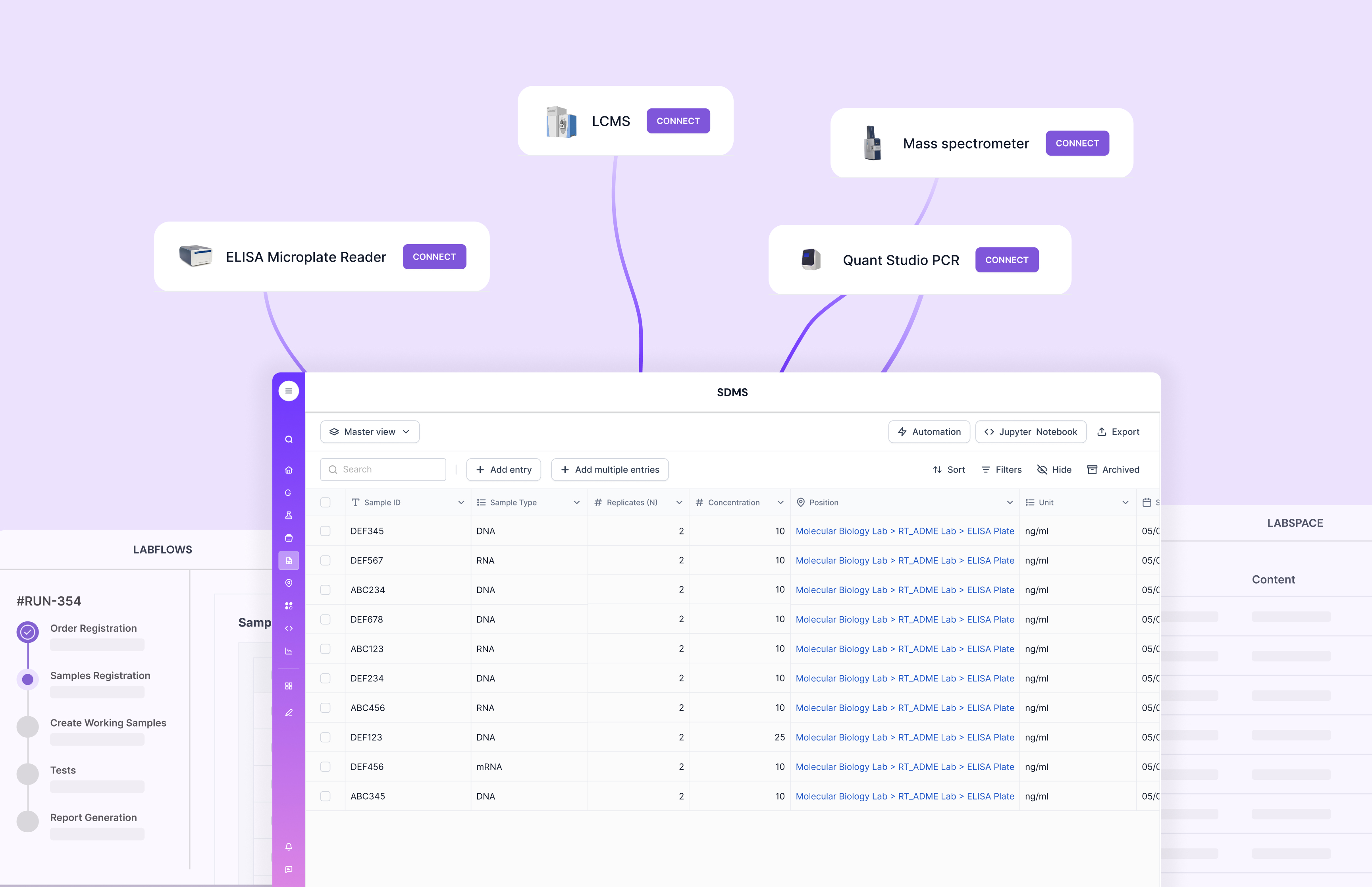
A modern LIMS must integrate. Not just accept uploads. You want smooth flow across instruments, storage, and downstream reporting. Scispot’s integration-first mindset is designed for this reality.
Training and support
Adoption lives or dies in the first month. If templates feel like your lab, people stick with it. Systems that require deep customization can create long-term friction. Upgrades can become harder, and the lab becomes dependent on specialists for everyday change.
Scispot’s configuration model tends to reduce that burden by keeping workflows and templates closer to the lab’s operating language.
Real-world applications of chemistry-focused LIMS
Pharmaceutical industry
Pharma QC needs batch traceability, approvals, and audit-ready reporting. A chemistry-ready LIMS should support release decisions with clear review trails. Scispot aligns well with QC-style workflows because it emphasizes traceability, structured data, and controlled approvals.
Environmental testing
Environmental labs run high volume. They also face strict traceability expectations. They need chain-of-custody, fast accessioning, clean audit trails, and consistent reporting. Scispot’s configurable workflows and structured templates are a good match when methods vary across sites and customers.
Academic research
Academia needs flexibility. But it still needs structure. A LIMS must help researchers collaborate and find data later, without becoming process-heavy. Scispot’s template-driven approach fits well when labs want consistency without bureaucracy.
The future of LIMS in chemistry labs
Labs are moving toward tighter links between raw data, structured results, and analytics. AI will matter more. But AI is only as good as the data structure underneath. If your results live in PDFs and spreadsheets, “smart” analysis stays shallow.
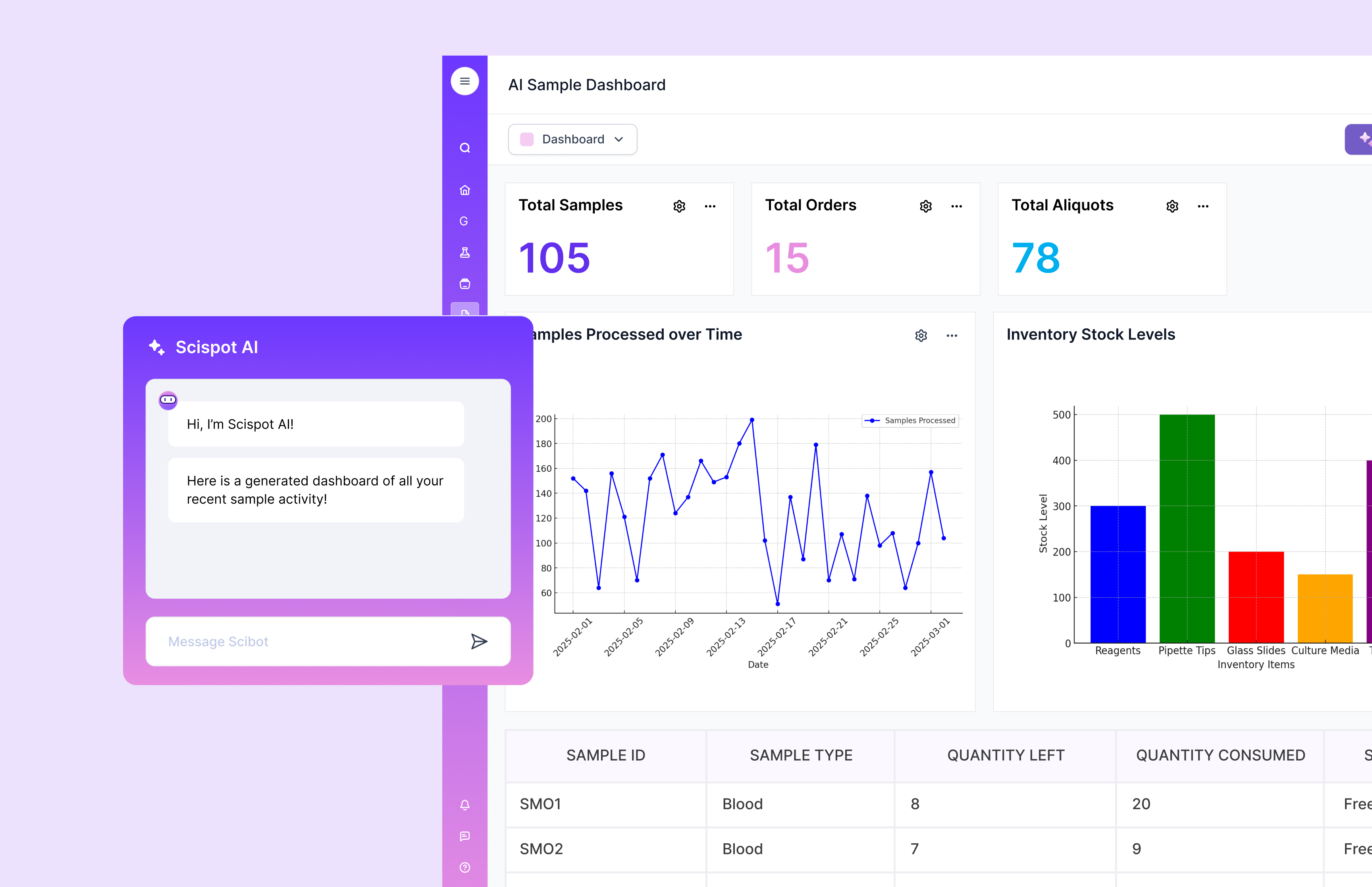
Scispot’s focus on structured lab data, integrations, and analytics makes it well positioned for where chemistry operations are heading.
Conclusion
A chemistry-ready LIMS should do more than track samples. It should encode chemistry logic, preserve raw-data context, manage methods and specs, enforce review workflows, and produce audit-ready outputs. Scispot stands out when you want speed without losing control. It supports structured templates, flexible workflows, and integration pathways that reduce manual work while improving traceability.