

TL;DR
A report-to-evidence workflow keeps every released result connected to the records that support it.
- Report evidence can include samples, methods, raw data, calculations, QC checks, deviations, reviews, approvals, and validation records.
- An audit trail records system activity, but it does not replace the complete scientific and quality evidence behind a report.
- Linking LIMS and QMS workflows reduces the need to reconstruct evidence from disconnected systems during an inspection.
- Scispot connects reports, supporting records, approvals, signatures, source lineage, and audit evidence in one governed workflow.
A released laboratory report may be only a few pages long, but the evidence supporting it can span dozens of records.
When an auditor questions a result, the laboratory may need to produce the original data, sample history, method, calculations, instrument records, QC results, deviations, reviewer comments, and approval evidence. If these records live in separate systems, proving the report's validity becomes a time-consuming search.
A report-to-evidence workflow prevents that scramble by linking evidence as work happens. The result is a report that can be traced back to the data, decisions, and controls behind it.
What Is Laboratory Report Evidence Management?
Understanding what qualifies as evidence helps laboratories design a complete and defensible workflow.
Laboratory report evidence management is the controlled process of collecting, linking, reviewing, retaining, and retrieving the records that support a reported result. Its purpose is to make every report explainable: users should be able to see how the result was produced, checked, approved, and released.
What constitutes report evidence in regulated laboratories
Depending on the test and regulatory context, evidence may include sample identity and chain of custody, current methods, instrument files, metadata, calculations, specifications, QC records, deviations, investigations, analyst identity, review records, signatures, and the released report version. FDA laboratory-record requirements include complete test data, instrument outputs, calculations, results, analyst identification, and second-person review.
How report evidence differs from audit trails alone
An audit trail records actions such as creation, modification, deletion, review, and approval. Report evidence is broader: it includes the scientific and quality records needed to demonstrate why the result is valid. An audit trail can show that a value changed, but the evidence chain explains the source value, method, calculation, exception, investigation, and decision supporting that change.
Who benefits from a report-to-evidence workflow
Analysts can locate source records quickly, reviewers gain complete context, and quality teams can verify that required controls were followed. Laboratory leaders, clients, auditors, and inspectors receive a clearer, more defensible account of how each result reached release.
Why Report Evidence Becomes Fragmented
Evidence gaps usually form when scientific work, quality processes, and approvals are managed in different places.
Supporting records stored across multiple systems
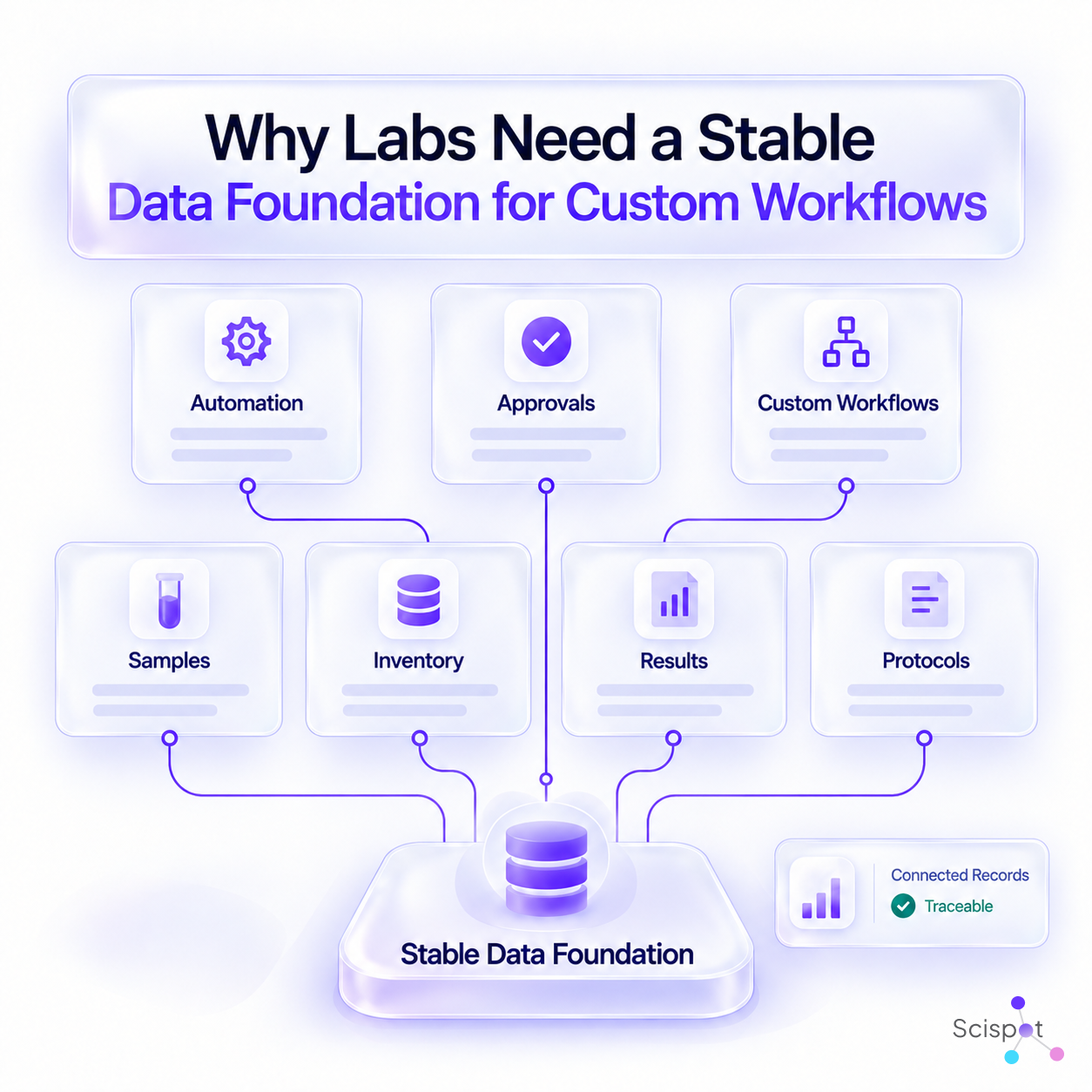
Raw files may remain on instrument computers while calculations sit in spreadsheets, samples in a LIMS, deviations in a QMS, and reports in shared folders. The records exist, but their relationships may not.
Disconnected reviewers, approvals, and signatures
Reviews conducted through email, chat, or standalone PDFs can become separated from the exact record evaluated. FDA guidance notes that electronic signatures may document actions such as review, approval, and verification and should remain connected to the relevant electronic record.
Missing links between reports and source evidence
A report may show a result without a direct path to its sample, source file, method version, calculations, QC status, or investigation. Missing identifiers and inconsistent metadata make reconstructing that relationship harder.
Challenges responding to audits and inspections
Audit preparation becomes reactive when teams must gather screenshots, exports, signatures, and validation files after the fact. Laboratory quality guidance recommends protecting evidence records from unauthorized alteration and keeping stored data and reports traceable and readily retrievable.

Key Components of a Report-to-Evidence Workflow
A strong workflow connects scientific records, quality controls, accountable decisions, and released outputs.
- Connecting reports to supporting data and records Assign persistent identifiers to samples, tests, runs, methods, results, and reports. Link every reported value to its raw data, calculations, specification, QC outcome, exceptions, and approved report version.
- Audit evidence workflow and traceability Capture evidence continuously rather than assembling it before an audit. Records should show who performed each action, when it occurred, what changed, and why. Audit trails should remain protected, searchable, and linked to the corresponding data.
- Electronic signatures, reviews, and approvals Define who reviews each record, what they evaluate, and when approval is required. Signed electronic records should identify the signer, signature date and time, and meaning of the signature.
- Quality records across QMS and LIMS workflows The LIMS manages samples, tests, results, and reporting, while the QMS manages controlled procedures, deviations, CAPA, changes, training, and audits. Connecting them allows a report exception to link directly to its investigation and resolution instead of relying on a reference in a spreadsheet.
Best Practices for Managing Report Evidence in Regulated Laboratories
These practices make evidence management part of routine laboratory work rather than a pre-inspection project.
- Maintaining complete evidence chains for reported results Map every report field to its authoritative source and preserve the required metadata. Test traceability in both directions: from report to evidence and from source record to every report that used it.
- Standardizing review and approval processes Use defined review stages, acceptance criteria, role-based routing, documented decisions, and reapproval triggers. Tie each approval to the exact data and report version reviewed.
- Preserving validation, deviation, and investigation records Keep system-validation evidence, method validation, deviations, out-of-specification investigations, CAPA, and change controls connected to affected results. Record conclusions, approvals, and effectiveness checks without overwriting original evidence.
- Supporting regulated lab reporting and audit readiness Use controlled templates, access permissions, retention rules, version histories, electronic signatures, and protected audit trails. Conduct periodic traceability checks so missing links are found before an inspection.

How Scispot Helps Build Report-to-Evidence Workflows
Scispot brings laboratory operations, quality processes, and compliance evidence into a connected environment.
- Connecting reports, quality records, and supporting evidence Scispot links samples, methods, source files, calculations, QC status, exceptions, approvals, and reporting flows. Its LIMS manages operational records, while Trust Vault can retain audit, approval, validation, and inspection evidence.
- Unifying QMS LIMS workflows across the laboratory Scispot combines LIMS capabilities with QMS workflows for document control, deviations, CAPA, approvals, and audit management. This helps keep quality actions connected to the sample, test, or report they affect.
- Automating review, approval, and audit-ready processes Configurable workflows can enforce review gates, role-based access, electronic signatures, QC rules, and exception routing. Scispot's audit log can capture timestamps, users, actions, and old and new values for configured record changes.
- Providing a single view of reports and evidence history By connecting operational data with quality and compliance records, Scispot helps teams retrieve the report and its supporting history without rebuilding the story from email, spreadsheets, and screenshots. The platform supports the evidence framework; each laboratory remains responsible for procedures, configuration, validation, training, and oversight.