TL;DR
- ISO 15189 is an international standard for quality and competence in medical laboratories.
- ISO 15189:2022 covers laboratory governance, resources, processes, risk management, quality systems, and point-of-care testing.
- Accreditation demonstrates that a laboratory can consistently produce reliable results within its defined scope.
- A modern LIMS can help laboratories maintain traceability, controlled workflows, audit trails, approvals, and quality records.
ISO 15189 is the international standard for quality and competence in medical laboratories. The current edition, ISO 15189:2022, provides requirements that laboratories can use to develop their management systems and demonstrate competence. The standard also applies to point-of-care testing (POCT).
For clinical and diagnostic laboratories, the challenge is not simply having documented procedures. Teams need to consistently demonstrate that processes are controlled, personnel are competent, results are reliable, and records can be traced when an auditor asks for evidence.
That is where a connected laboratory information management system (LIMS) can become valuable.
What Is ISO 15189?
ISO 15189 is a quality and competence standard specifically designed for medical laboratories. It provides a framework for managing laboratory activities and assessing whether the laboratory is competent to perform its defined scope of examinations.
Unlike a general quality management standard, ISO 15189 addresses the realities of medical laboratory testing, including laboratory processes, personnel, equipment, information management, quality control, risk management, and patient-related considerations.
Importantly, ISO 15189 accreditation applies to the laboratory, not to the software it uses. A LIMS can support the laboratory's quality system, but it does not make a laboratory ISO 15189 accredited.

What Does ISO 15189:2022 Cover?
ISO 15189:2022 organizes requirements around several areas:
- General requirements: impartiality, confidentiality, and related principles.
- Governance and structure: responsibilities, authority, and organizational controls.
- Resources: personnel, facilities, equipment, reagents, and other resources.
- Laboratory processes: pre-examination, examination, and post-examination activities.
- Management system: documentation, risk management, internal audits, corrective actions, and continual improvement.
- POCT: additional requirements for point-of-care testing.
The 2022 edition places greater emphasis on risk, patient care, information management, and process effectiveness. CAP also notes expanded attention to LIMS, data protection, confidentiality, and contingency planning.
Key ISO 15189 Requirements
Quality management and documentation
Laboratories need controlled processes and evidence that their quality system is operating effectively. Documentation should be current, traceable, and accessible to authorized users.
Personnel competence
Laboratories must establish appropriate requirements for personnel competence and maintain evidence that staff are qualified and capable of performing assigned activities.
Equipment and resources
Equipment, reagents, facilities, and supporting resources need to be appropriately controlled, maintained, and monitored.
Laboratory processes
ISO 15189 addresses the complete testing workflow, from pre-examination activities such as sample collection and handling through examination and post-examination activities such as reviewing and reporting results.
Risk management and continual improvement
The 2022 standard places stronger emphasis on identifying and managing risks and improving laboratory processes.

ISO 15189 vs ISO 9001 vs ISO/IEC 17025
These standards are related but serve different purposes.
ISO 9001 is a general quality management standard that can apply to almost any organization.
ISO/IEC 17025 focuses on the competence of testing and calibration laboratories.
ISO 15189 is specifically designed for medical laboratories and combines quality management requirements with requirements relevant to laboratory competence and patient testing. CAP describes ISO 15189 as incorporating quality-system elements while also evaluating technical competence.
For a medical laboratory, the relevant standard depends on its activities, accreditation scope, customer requirements, and applicable regulations.
How to Prepare for ISO 15189 Accreditation
A practical preparation process starts with defining the laboratory's accreditation scope and identifying gaps between current operations and ISO 15189 requirements.
Typical activities include:
- Define the laboratory's scope and applicable requirements.
- Map pre-examination, examination, and post-examination workflows.
- Review personnel competency and training records.
- Establish controlled documentation and SOP processes.
- Review equipment, calibration, maintenance, and quality-control records.
- Implement risk management and corrective-action processes.
- Conduct internal audits.
- Prepare objective evidence for the accreditation assessment.
The WHO Laboratory Quality Stepwise Implementation tool also provides a structured approach for laboratories working toward an ISO 15189-aligned quality management system.
Built for modern diagnostic laboratories.
Track samples, automate reporting, connect instruments, and maintain traceable records as your testing volume grows.
See the Scispot clinical lab platform →
How Does a LIMS Support ISO 15189 Compliance?
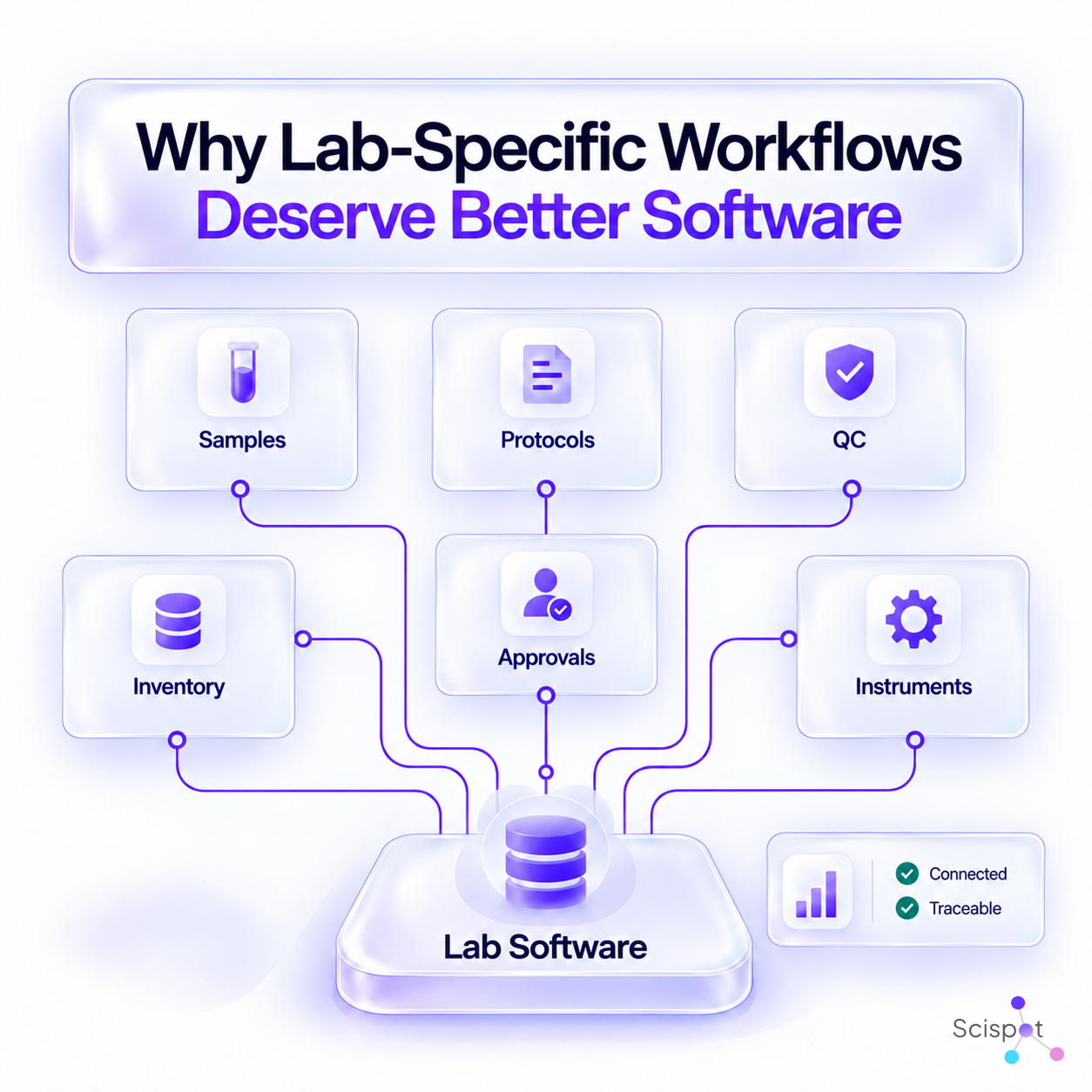
A LIMS does not replace the laboratory's quality system, but it can make many requirements easier to operationalize.
A modern LIMS can help connect:
Sample → Test → Instrument → Result → Review → Approval → Report
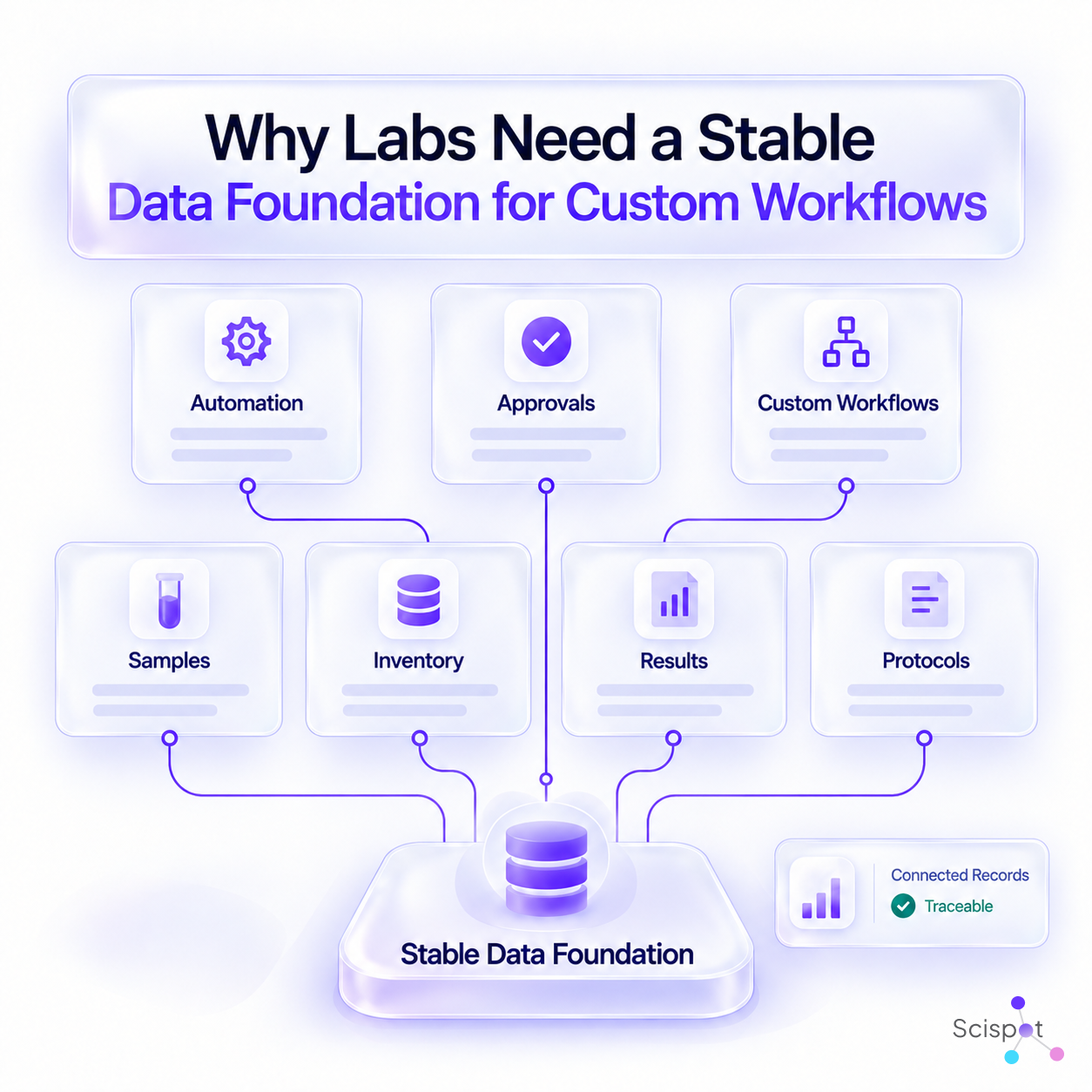
Instead of keeping these records across spreadsheets, folders, emails, and disconnected systems, laboratories can maintain a connected digital record.
Scispot supports this approach through configurable workflows, sample tracking, audit trails, role-based access, approvals, instrument integrations, and structured laboratory data. Its clinical laboratory platform supports patient sample tracking, automated reporting, instrument data capture, calibration and maintenance tracking, and audit trails.
Scispot also combines LIMS and QMS capabilities to support controlled documentation, electronic signatures, version control, audit trails, corrective actions, and quality workflows.
The goal is not to make the software "ISO 15189 certified." The goal is to give laboratory teams a system that makes compliant processes easier to execute, document, monitor, and demonstrate.