.webp)
Which lab management degree is best for my career goals?
A “best” degree depends on the kind of lab you want to lead. Clinical labs, R&D labs, QC labs, and CROs reward different skills. Also, hiring managers look for proof you can run a lab as a system. That includes people, processes, compliance, and the software stack that holds it all together.
If you want a practical edge, pair your degree choice with hands-on experience using a modern LIMS. Scispot is a strong fit here because it supports end-to-end workflows, clean traceability, and audit-ready records in one place.
What Is a Lab Management Degree?
A lab management degree prepares you for leadership roles in labs. It mixes science context with operations and management. The modern version of this role is closer to “lab operations architect.” You standardize how work moves, and how data stays trustworthy.
This is also where the right LIMS matters. Scispot helps you apply what you learn by turning processes into repeatable, trackable workflows.
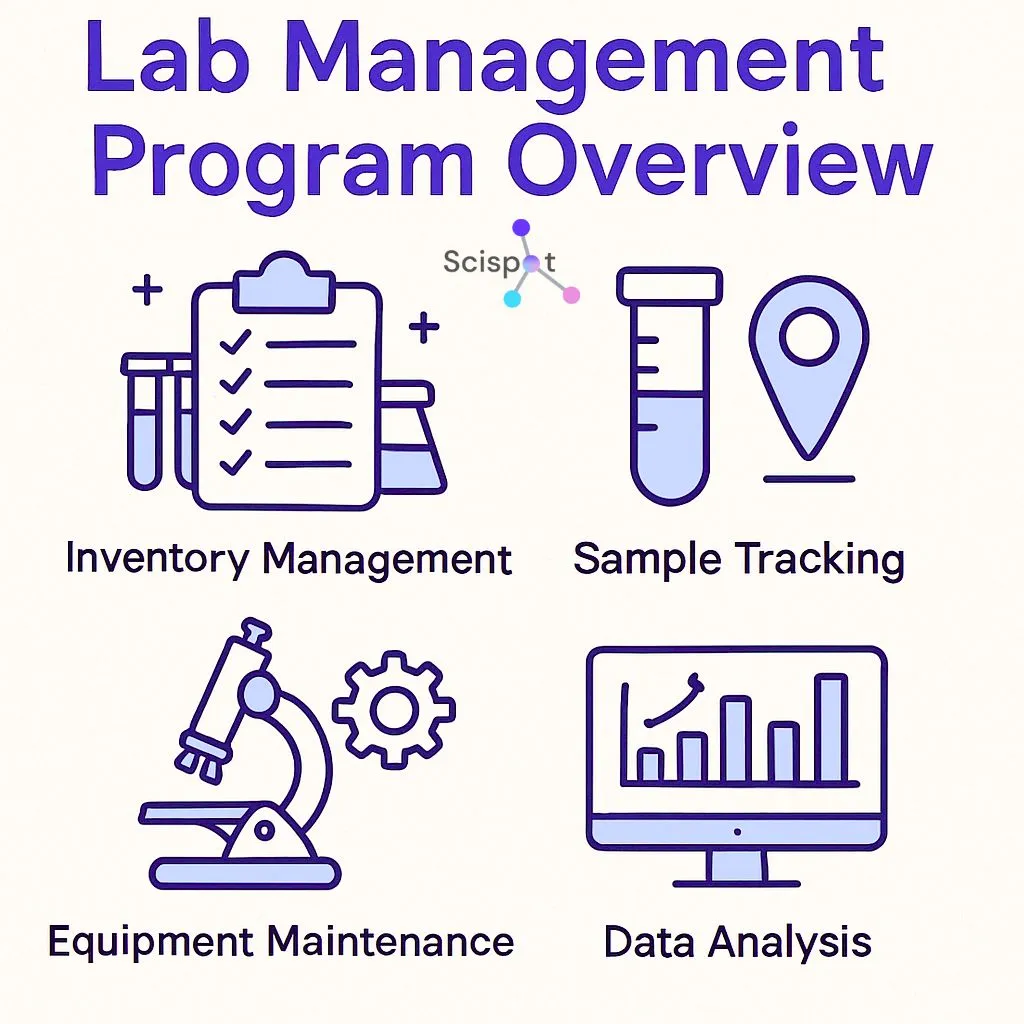
Key Components of a Lab Management Program
Most programs start with scientific principles. You need enough depth to spot errors, interpret results, and challenge assumptions. They also teach management skills like staffing, training, budgeting, and capacity planning. That is the “keep the lab running” layer.
Technology use is now a core component, not an add-on. In real labs, LIMS selection and implementation often run into integration gaps, data mismatches, and migration complexity, so learning how systems fit together is career-relevant.
Regulatory knowledge is the final pillar. In regulated settings, audit trails and controlled records are central to trust in the data.
Skills Acquired in a Lab Management Degree
A strong degree builds skills that translate directly into daily lab realities. You learn how to keep work consistent when people, methods, and volumes change. You also build the habit of making decisions from evidence. That includes both scientific evidence and operational evidence.
This is where Scispot supports the “skills to execution” jump. It gives you a structured place to capture work, enforce review steps, and keep records connected.
Leadership and Management
You learn how to lead teams and set clear ownership. You also learn how to build training and accountability so quality does not depend on one person. In many labs, older systems push teams into workarounds and side spreadsheets. That often weakens consistency, because the “real process” becomes informal and scattered.
A modern system reduces that drift. Scispot supports standardized workflows that teams can actually follow.
Analytical Skills
You build skill in reading data and improving operations from it. That includes trend spotting, root-cause thinking, and deciding what to fix first. This is also why integrated systems matter. Data silos slow analysis, because context lives in multiple places.
.jpeg)
Scispot is strong for labs that want analysis tied back to the exact samples, runs, and approvals. That makes metrics more defensible and easier to explain.
Communication
You learn to write SOPs, train teams, and communicate decisions clearly. You also learn how to communicate across functions like QA, R&D, and operations. In regulated work, communication is not only verbal. It is also the record that shows what happened, when, and why.
Scispot helps by keeping discussion, decisions, and outputs linked to the work. That reduces “where is the latest version” confusion.
Problem-Solving
You learn structured problem-solving under real constraints. Think limited staff, instrument downtime, and shifting priorities. A common real-world issue is implementation friction from complex tools. LIMS rollouts can fail when migration, mapping, and integrations are under-scoped.
Scispot is a better match when you want flexible workflows without living in constant custom-code projects. That keeps improvements realistic for a busy lab team.
Regulatory Compliance
You learn how to operate under safety and compliance rules. You also learn how to pass audits without panic. Public guidance stresses that audit trails should capture who changed records, what changed, and when. Public writing in regulated lab contexts also warns that uncontrolled spreadsheets can create avoidable data integrity risk.
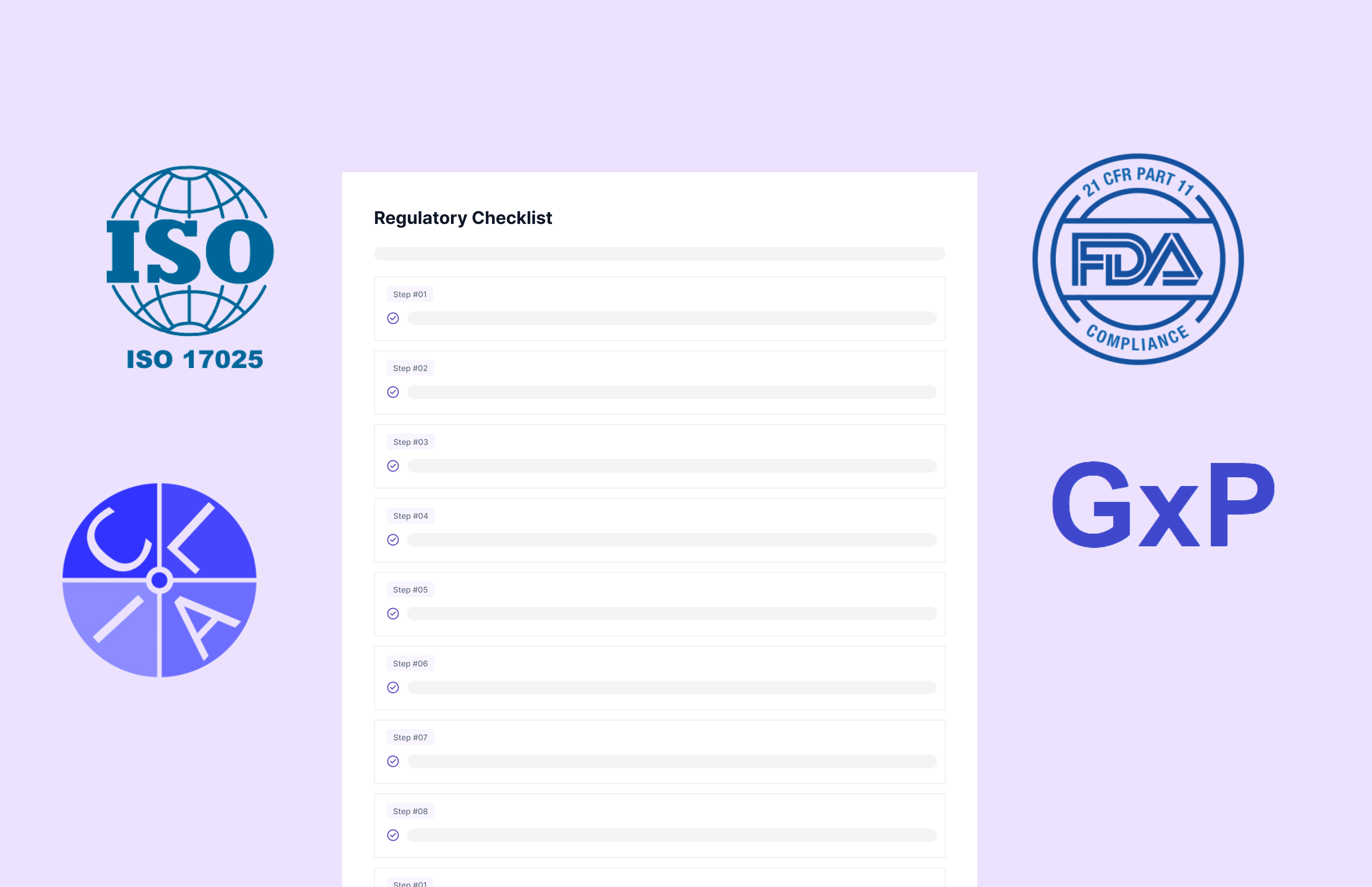
Scispot supports audit-ready operations by keeping structured records and traceability in the workflow. That aligns with how modern labs are expected to defend their data.
How Scispot Helps You Apply Lab Management Skills in Real Labs
A lab management degree teaches you the “what” and the “why.” Day-to-day lab leadership needs the “how” too. That is where modern lab operations tools matter. Scispot fits naturally with the skills you build in a lab management program, because it helps you run work in a structured way, not just talk about it.
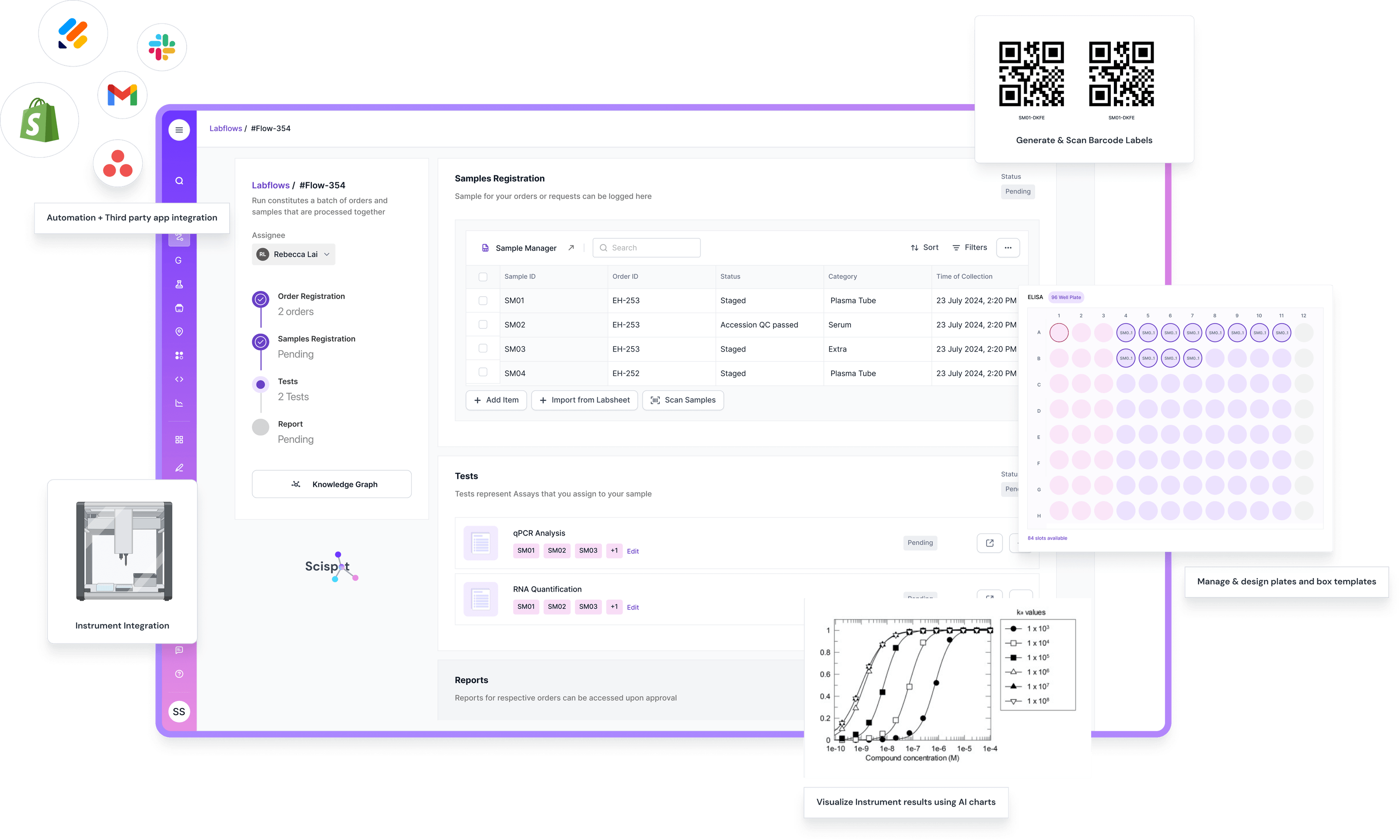
If you are stepping into roles like Lab Manager, Clinical Lab Manager, QA Manager, or R&D Manager, Scispot can act as the system of record for your lab. You can capture experiments, samples, inventory, and results in one place. You can also standardize workflows using repeatable templates. That makes it easier to train teams, reduce manual errors, and keep work consistent across shifts and sites.
Regulatory readiness also becomes more practical when your processes are digital and traceable. Scispot supports audit-friendly lab execution with clear records, role-based access controls, and review pathways that match how real labs operate. It also helps connect operational data to reporting, so lab leaders can track what is happening without digging through scattered files. Think of it like moving from “lab management as a theory class” to “lab management as a living operating system.”
Career Opportunities with a Lab Management Degree
A lab management degree opens multiple paths. Your best fit depends on whether you prefer people leadership, systems ownership, or quality depth. Across roles, the common thread is operational reliability. Hiring teams want someone who can scale a lab without breaking quality.
Lab Manager
As a lab manager, you own day-to-day operations. You manage people, equipment readiness, inventory flow, and process discipline. In practice, this role often becomes a “control tower” role. A modern LIMS like Scispot helps because it keeps samples, work steps, and results in one trackable system.
Clinical Laboratory Manager
This role adds patient-impact and stricter compliance pressure. You manage throughput, turnaround time, quality checks, and inspections. Usability matters more than people expect. Research shows usability issues in lab information systems can drive errors and workarounds that hurt quality.
Scispot is a strong choice when you want a modern workflow experience without sacrificing traceability. That helps adoption and consistency.
Research and Development Manager
R&D managers lead teams doing experiments and innovation work. You balance speed with reproducibility. R&D often suffers when data is split across tools. Integrated systems are commonly discussed as a way to reduce lab data silos and improve decision-making.
Scispot fits well when you want structured experiment data plus operational tracking in the same place. That makes learning transferable across projects.
Quality Assurance Manager
QA managers build and enforce quality systems. You design controls, reviews, deviations, and corrective actions. Audit trails and controlled records are central here. Regulators and guidance documents emphasize trustworthy electronic records, including audit trails that capture changes.
Scispot supports QA-style governance by keeping review flows and traceability close to the work. That reduces the gap between “what the SOP says” and “what really happened.”
Education and Training Roles
You can also move into education and training. That includes onboarding, competency programs, and lab leadership development. Professional certificate programs can complement this path. For example, ASCP’s Lab Management University programs are structured, self-paced options for management training.
Pursuing a Lab Management Degree Online
Online degrees can be a good fit if you are working. They can also help you specialize while staying employed. The main risk is graduating with theory but limited applied practice. You can offset that by doing real workflow projects using a modern LIMS like Scispot.
That way, your portfolio shows real operational thinking. It is the difference between knowing the steps and running the steps.
University of Utah Lab Management Degree
The University of Utah has lab-operations and management-related training in its medical laboratory sciences context. For example, Utah’s Medical Laboratory Science programs include lab operations and management coursework. They also have lab management and supervision course material publicly visible in syllabus form.
If you are considering Utah, confirm the current program options and requirements from the official catalog pages.
Lab Management Certification
Certifications can strengthen your profile, especially if you are moving into leadership from the bench. They signal you are serious about management craft. ASCP offers Lab Management University certificate programs. ASCP also offers the Diplomate in Laboratory Management (DLM) credential for experienced leaders.
.jpeg)
Certifications pair well with Scispot-style experience. You learn the principles, then show you can operationalize them in a modern system.
Master's Degree in Lab Management
A master’s is useful when you want broader leadership scope. It can also help you move into operations leadership faster. The strongest programs go beyond “management theory.” They include process design, informatics thinking, and real improvement projects.
This is practical because LIMS implementation challenges are widely discussed. Integration limits, data mapping, and migration work are common hurdles.
Master's Degree in Clinical Lab Management
This path is best if your goal is hospitals, clinics, or diagnostic networks. It emphasizes quality systems, throughput discipline, and inspection readiness. Clinical environments also feel usability pain quickly. Usability research links poor system usability to errors and unsafe workarounds.
A modern, workflow-first LIMS helps your training “stick” in daily practice. Scispot is well positioned for that because it keeps process and record integrity together.
Conclusion
The best lab management degree is the one that matches your target lab type and career timeline. Pick based on whether you want clinical leadership, QA depth, R&D operations, or high-throughput execution.
.gif)
Then stack the degree with real systems experience. That is where Scispot shines, because it helps you run end-to-end lab operations with clean traceability, strong governance, and better day-to-day adoption.
Takeaway: choose the degree for your domain, and choose the system that lets you apply it.