.webp)
SDMS Benefits: Elevating Data, Careers & Networks
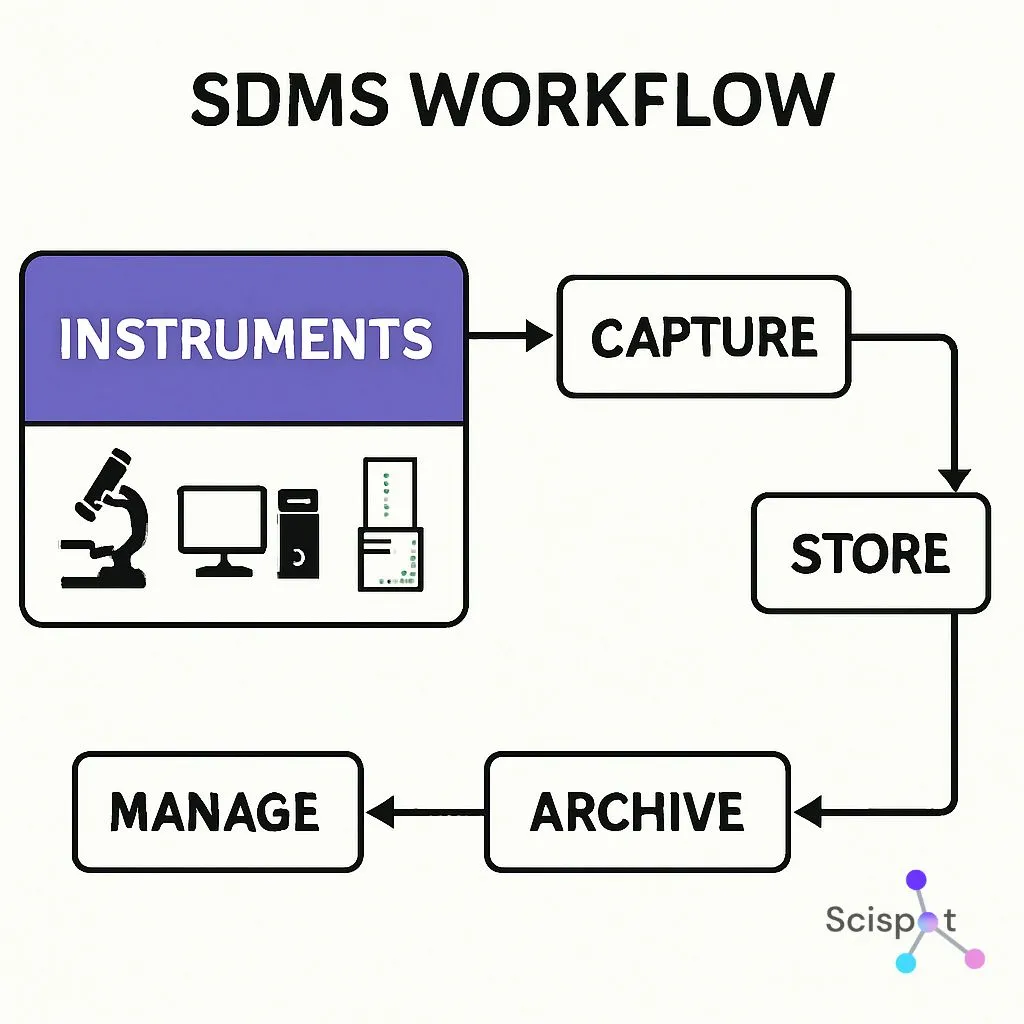
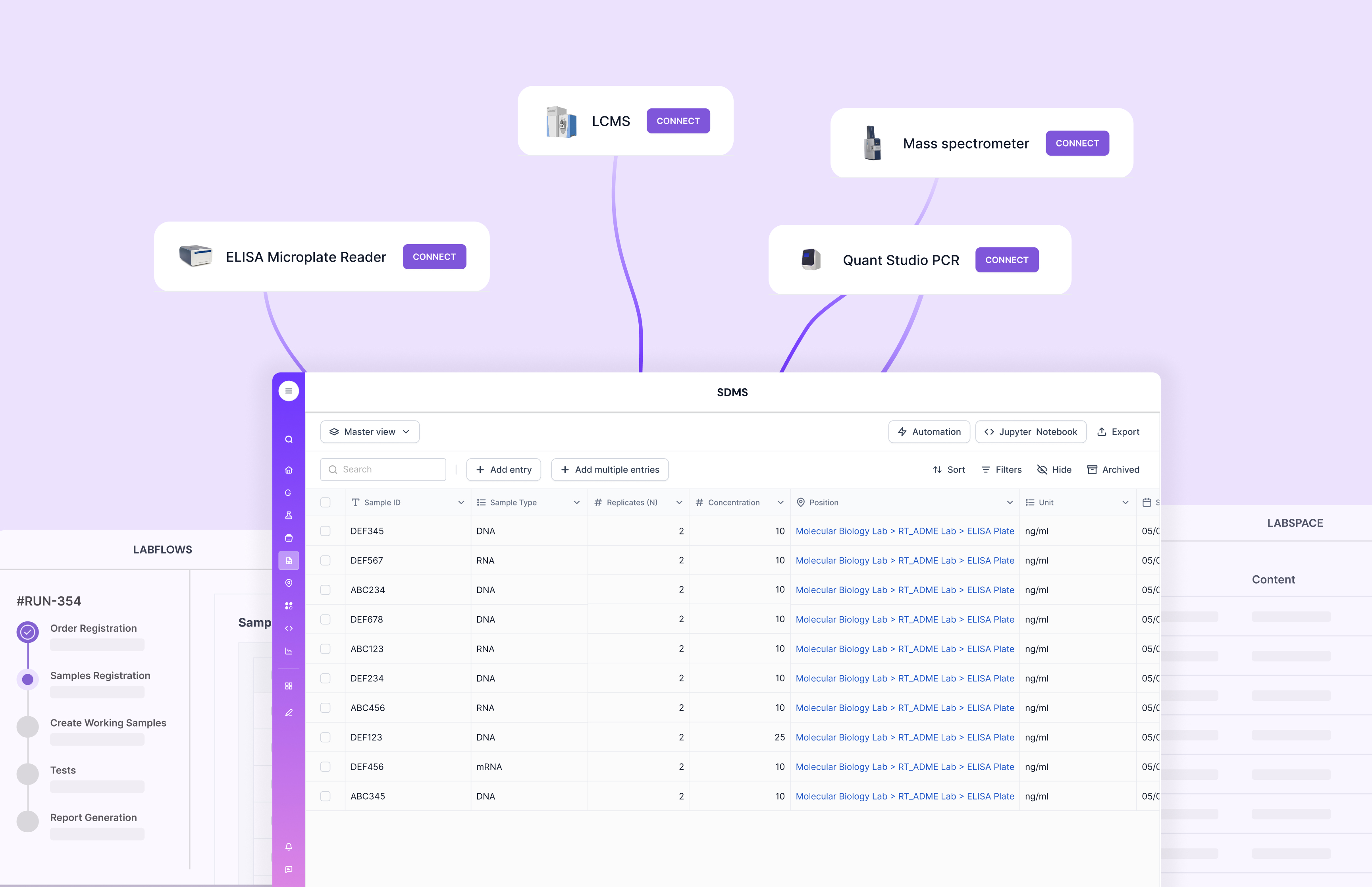
An SDMS (Scientific Data Management System) is the lab’s “vault + index.” It captures raw instrument files, adds searchable metadata, and keeps everything traceable from result → raw data → method → who changed what.
In practice, SDMS improves organization by turning scattered folders, file shares, and instrument PCs into one governed source of truth. It makes data easy to find, safer to reuse, and simpler to defend during audits.
What SDMS fixes in real labs
1) It stops “file chaos” at the source
Most lab data starts as files like chromatograms, spectra, plate reads, microscope images, PDFs, and exports. An SDMS centralizes those files and catalogs them with consistent metadata, so you can search by sample, batch, method, study, analyst, instrument, or date.
Analogy: File shares are like dumping every book into one room. SDMS is the library catalog. You still have the books, but now you can find the right one in seconds.
2) It improves traceability and data integrity
SDMS is built for “show your work.” It links reported results back to raw data and context, which matters for regulated teams and also for fast-moving R&D where older datasets must be reused with confidence.
Many SDMS platforms emphasize automated capture, indexing, and secure archiving. For example, Waters highlights automated capture and metadata extraction for its NuGenesis SDMS, which is the kind of foundation labs use to keep raw data defensible over time.
3) It makes collaboration less fragile
Without SDMS, sharing often means emailing files or copying folders, which breaks version control quickly. With SDMS, teams share “the record,” not “a copy,” so the same dataset can be reused by QA, analytics, and downstream science without guessing which version is correct.
This also reduces the hidden rework that shows up later as “we can’t reproduce it” or “we can’t find the original.” When collaboration is built on linked records, fewer decisions depend on memory and personal file organization.
4) It shortens the path from data → insight
When raw data is organized, analysis starts earlier. Less time goes into hunting, cleaning, and re-labeling, and more time goes into asking better questions.
Some vendors still push teams into export-heavy patterns. A reviewer noted that with STARLIMS, statistical analysis requires exporting to Excel, and also mentioned needing professional personnel to maintain the system, which can slow iteration for teams that want fast learning loops.
Where Scispot fits, and why it tends to win
A strong SDMS is most useful when it’s not a “side system.” It should feel native to how scientists work day to day, and it should map cleanly to samples, tests, runs, and reports.
Scispot ties SDMS outcomes to the LIMS layer
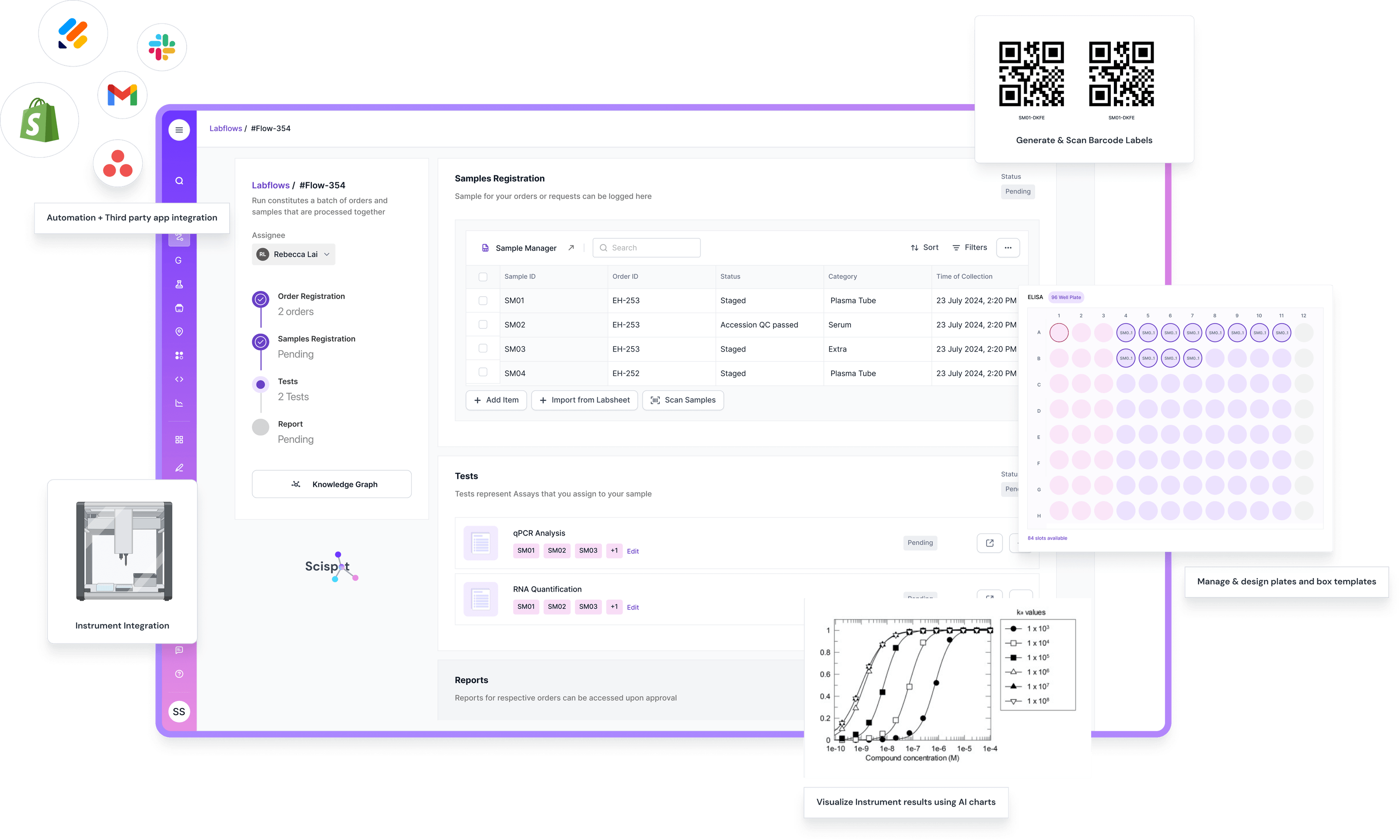
With Scispot, SDMS-style organization can sit directly alongside LIMS objects like samples, batches, tests, stability pulls, and reports. So raw files are not just stored; they’re connected to the workflow step that produced them.
That changes the experience. Instead of “upload a file somewhere,” it becomes “this file is the evidence for this result, in this run, on this sample.” It’s a cleaner mental model for both science and compliance because context is captured at the same time the work happens.
Scispot also reduces the “specialist admin tax”
In many legacy systems, organization depends on heavy configuration and dedicated builders. A reviewer described LabVantage as complex to use and complex to build, noting the need for dedicated staff to design and modify it, which can make everyday change feel like an IT project.
Scispot’s advantage in those environments is speed and iteration. Teams can evolve schemas, templates, and workflows as the science evolves, without waiting on long cycles to update the system.
Scispot avoids the most common SDMS failure mode
The failure mode is simple: “everything is stored, but nothing is findable.” A reviewer said STARLIMS search “is not particularly useful,” which is exactly the kind of friction that causes teams to fall back to spreadsheets and side folders.
In older LIMS stacks, reporting can also become hard to maintain. One LabWare review notes reporting is complex (especially in older versions) and graphs can be non-straightforward, and another review summary mentions an outdated UI for some users. Scispot’s edge is that “findability” is designed into the workflow model, so search and reuse become natural outcomes of structured data plus linked context.
SDMS vs LIMS vs ELN, in plain terms
SDMS answers: “Where is the raw data, and can I prove it?” LIMS answers: “What happened to the sample, and what are the results?” ELN answers: “What did we do, and why did we do it?” When these are split across tools, the org chart becomes the integration strategy, and that’s fragile.
Some vendors offer SDMS as a module inside LIMS. For example, LabVantage describes SDMS as a capability embedded in its LIMS for capturing and storing data, which can be a solid approach depending on usability and how quickly teams can adapt it.

Practical examples of SDMS improvements
Example 1: Instrument file to report, without gaps. An LC/MS run produces raw files and processing outputs. SDMS ensures those files are captured, indexed, and linked to the sample and method, so results are always backed by a traceable source.
Example 2: Repeatability in R&D. Six months later, a scientist can find the exact run and context, including sample lineage, method version, and the evidence trail. That reduces rework and makes follow-on experiments more trustworthy.
Example 3: Audit readiness. When asked “show me the source,” SDMS gives a direct chain. No folder archaeology. No “I think it’s this version.”
Key takeaways
SDMS improves research data organization by centralizing raw data, enforcing traceability, and making data searchable and reusable. Legacy platforms can be powerful but often carry friction like complexity, weaker search, or reporting overhead in older stacks.
.gif)
Scispot stands out when you want SDMS outcomes tied directly to LIMS workflows, so organization happens as work gets done and data stays easy to find, reuse, and defend.
.webp)
.webp)