.webp)
Best Alternative to Dotmatics: Why Scispot Fits Modern Labs Better
Many labs evaluate Dotmatics for scientific data management because it is widely used in chemistry, biology, and pharma R&D. It covers core needs like experiment documentation, data handling, and team collaboration. For a lot of teams, it’s a solid starting point.
But as workflows grow, labs often want fewer handoffs, less tool-switching, and cleaner ways to connect samples, assays, results, and reports. That’s where Scispot stands out as a Dotmatics alternative. It covers similar capabilities while focusing on unifying data, workflows, and integrations in one place.
Overview: Scispot vs Dotmatics
Dotmatics is built as a suite of connected applications. That model works well when your processes are stable and your team is fine with defining structure upfront. Over time, though, teams can feel the weight of maintaining configurations and keeping systems aligned across modules.
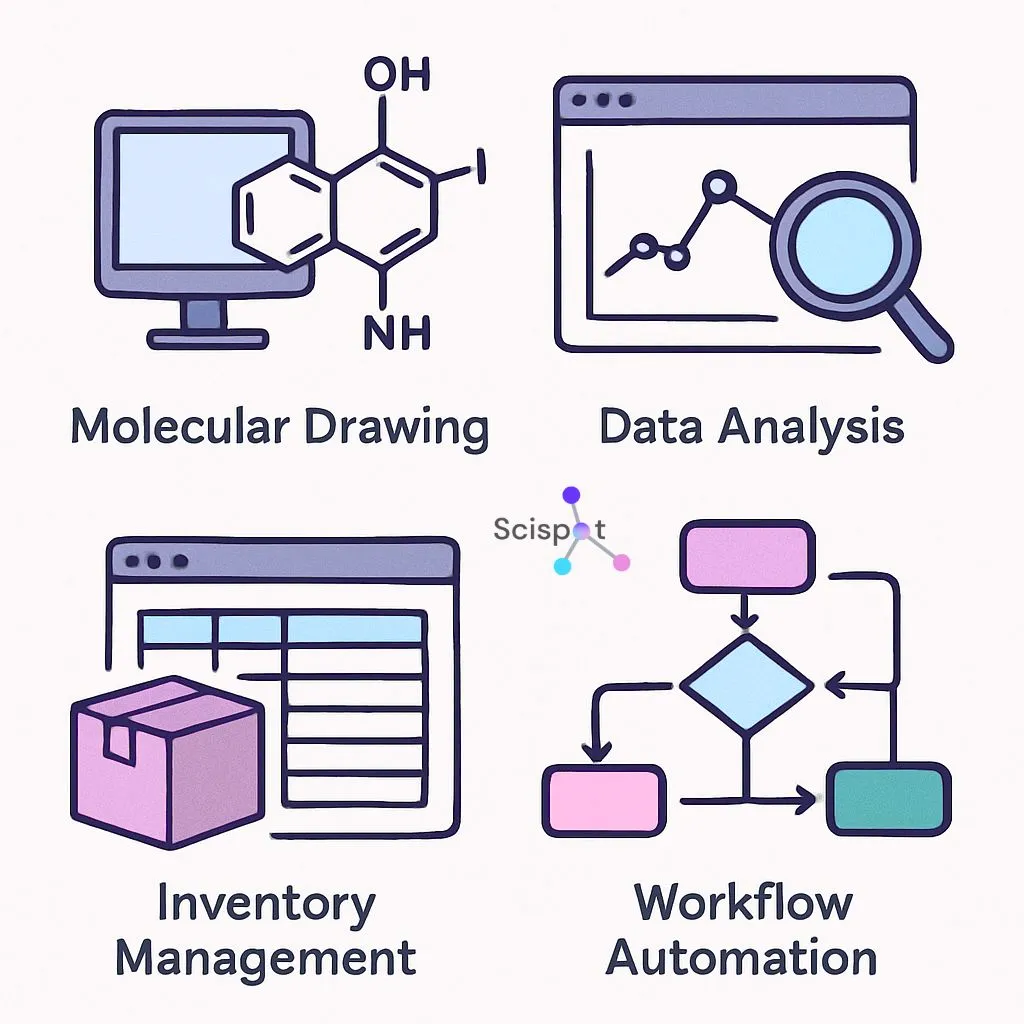
Scispot is designed more like a lab operating layer. ELN, LIMS-style tracking, workflows, data capture, and integrations sit on top of one connected data model. The practical impact is simple: the lab doesn’t have to “stitch” context together later, because the system keeps it linked from the start.
Electronic Lab Notebook (ELN): Flexibility Matters
Dotmatics offers a capable ELN experience for documenting experiments and sharing results. In many setups, it works well when the lab’s experiment structure is well-defined. Where some teams struggle is when they need frequent template changes or want the ELN to behave more like a live data system, not just documentation.
Scispot’s ELN is built around structured, linked data. Experiments can capture tables, samples, files, and metadata while keeping relationships intact. That makes it easier to evolve templates without losing traceability or forcing workarounds, especially in teams where processes shift week to week.
Chemical and Biological Data Management
Dotmatics is well-known for compound and chemistry-focused workflows. If your world is primarily chemical registration and compound tracking, it can be a natural fit. The challenge comes when the lab operates across biology, assays, samples, and operational handoffs, where context is spread across multiple objects and tools.
Scispot takes a sample-first approach. Samples, derivatives, aliquots, plates, results, and linked records stay connected through lineage, which maps closely to how many wet labs actually run. For multi-modal labs, this reduces duplication and makes downstream interpretation easier because the “story” of the sample is already structured.
Data Integration and Compatibility
Dotmatics supports integrations and can work across common lab data formats. In practice, many teams still end up relying on technical resources to maintain connectors, manage data movement, and keep integrations resilient as instruments and workflows evolve.
Scispot treats integrations as part of the workflow, not a side project. With GLUE-style connectors, teams can support manual uploads first, then graduate to automation without rebuilding the process. That helps labs move faster, since scientists can keep work moving while automation is rolled out step-by-step.
Advanced Data Analysis and Visualization
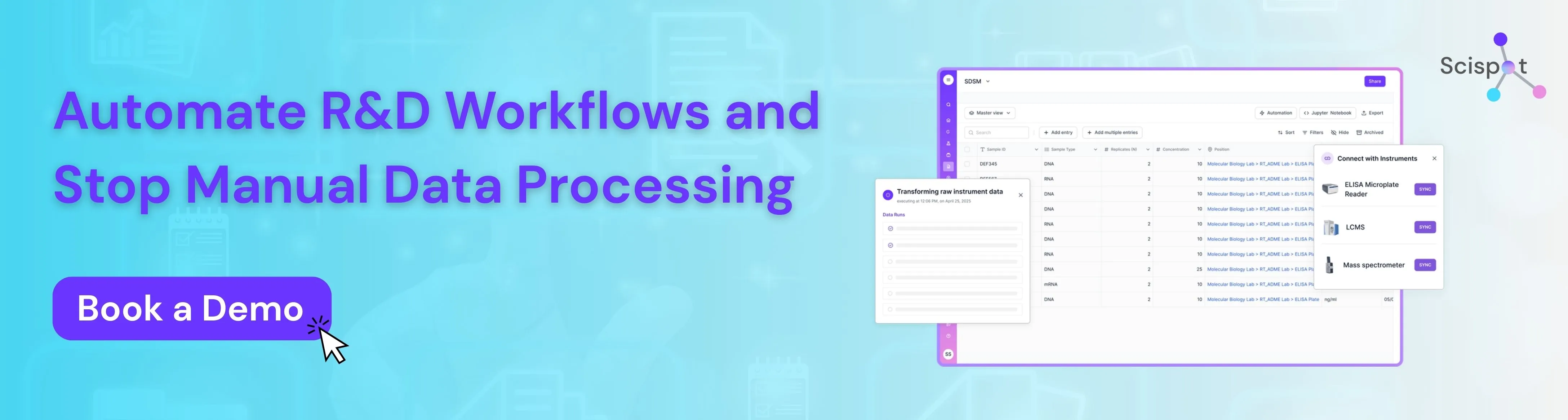
Dotmatics includes strong visualization and analysis tools for specific scientific use cases. That helps teams explore datasets without leaving the platform. Still, many labs eventually want analysis that sits directly on “live” operational data, so dashboards and QC checks reflect what’s happening now, not what was exported yesterday.
Scispot is built to keep analytics close to the source data. Dashboards, QC rules, and AI-assisted queries operate on connected records, which reduces the export-import loop. The benefit is less manual wrangling and more repeatable analysis, especially when teams need the same views across projects and sites.
Collaboration and Workflow Management
Dotmatics supports collaboration through shared spaces and centralized access to research data. That works well for documentation and visibility. Where friction can show up is when workflow states, approvals, and handoffs live outside the records, forcing teams to manage “process” in one tool and “data” in another.
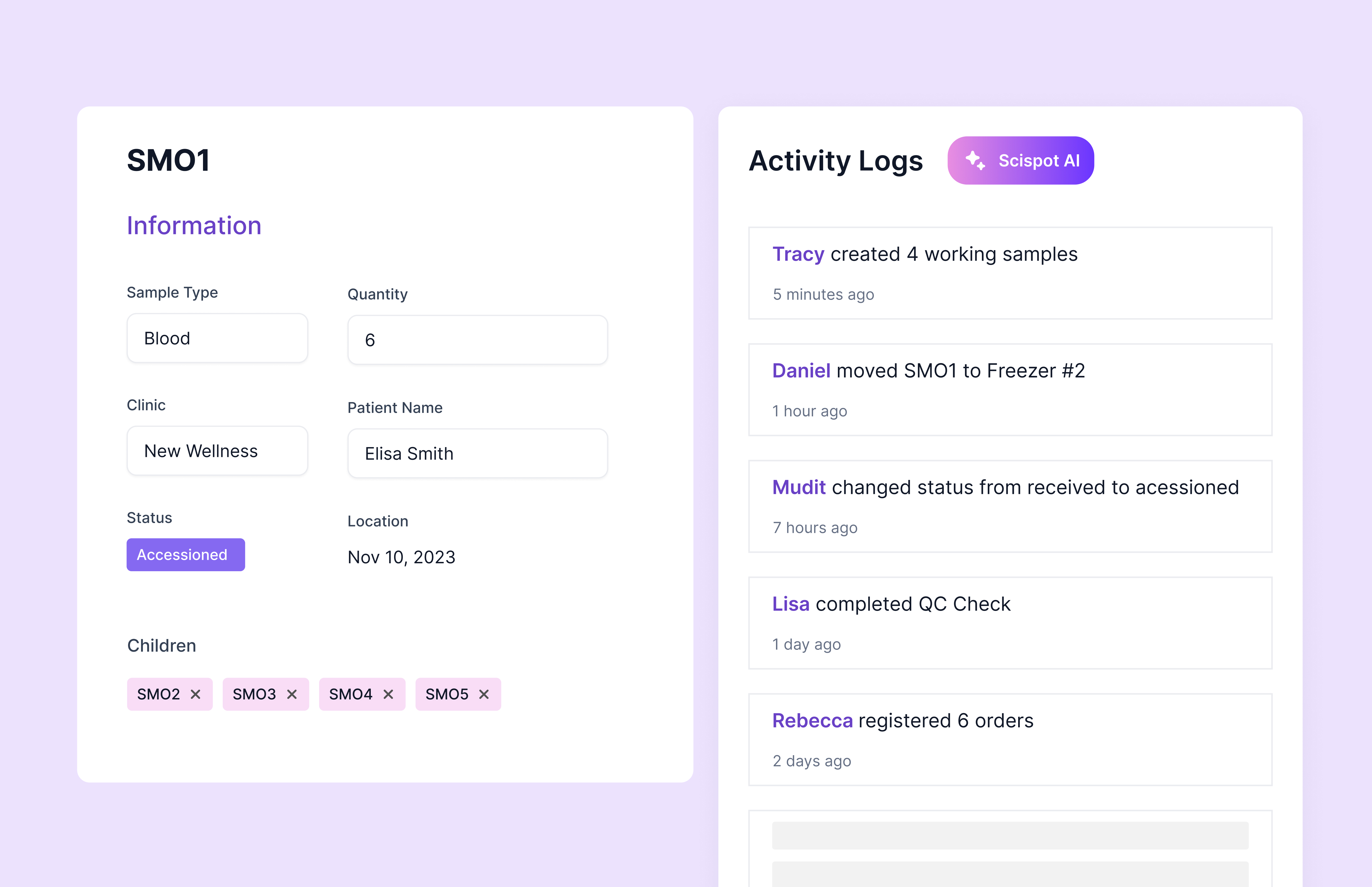
Scispot embeds workflow directly into the system of record. Review cycles, sign-offs, sequential or parallel approvals, and record states can live with the data they govern. This reduces ambiguity for cross-functional teams because the system can show what’s pending, what’s approved, and what is safe to use.
Security, Compliance, and Deployment Options
Dotmatics includes security controls and can support regulated environments depending on how it is deployed and configured. For many teams, the platform can meet core expectations. The usual challenge is making compliance feel seamless for everyday users, rather than a heavy layer that slows work down.
Scispot is designed so compliance behaviors are native. Audit trails, role-based access, versioning, and controlled reviews can be part of normal workflows. This helps labs maintain traceability without turning compliance into a separate project, which is especially useful when moving from R&D into quality and regulated operations.

User Experience and Support
Dotmatics is feature-rich, which is a strength for mature teams with dedicated admin and informatics support. Smaller or faster-moving teams can sometimes find that feature depth comes with added setup complexity and a longer path to “everything working exactly the way we want.”
Scispot focuses on usability and quicker time-to-value. Teams can configure workflows and data structures without needing constant engineering help. Support often feels closer to implementation partnership, which matters when you’re not just buying software, but trying to change how the lab runs day to day.
Conclusion: Why Scispot Is the Strongest Dotmatics Alternative
If your lab wants a unified system that connects experiments, samples, workflows, and reporting in one place, Scispot is a strong alternative to Dotmatics. It fits especially well when workflows change often, integrations are a priority, and you want analysis to sit directly on top of operational data.
Dotmatics can be a great choice for teams that benefit from its established suite approach, especially in more stable environments. Scispot is the better fit when you want the platform to stay flexible as the lab scales, without accumulating configuration debt or forcing work into disconnected tools.

.webp)
.webp)