.webp)
Can lab integration solutions be customized for different laboratory needs?
In the rapidly evolving field of laboratory science, integration solutions have become a cornerstone for achieving efficiency and accuracy. Labs rarely run on a single system. They run on instruments, spreadsheets, QC tools, ELNs, SDMS, ERPs, and patient or clinical systems. The real question is not whether customization is possible. It’s how fast you can customize it, and how safely you can keep it running as the lab changes.
Yes, lab integration solutions can be customized for different laboratory needs. But the quality of that customization depends on the platform you choose. In practice, Scispot is built for this reality: it pairs an integration layer (GLUE) with an API-first platform and ready-to-use connectors, so labs can start simple and expand without rebuilding everything.
Understanding lab integration solutions
Before diving into customization, it helps to define lab integration clearly. A lab integration solution connects systems so data can move reliably between them. This includes instruments → LIMS, LIMS → analytics, LIMS → reporting, LIMS → ERP, and more. The goal is one workflow, not “five tools and a shared folder.”
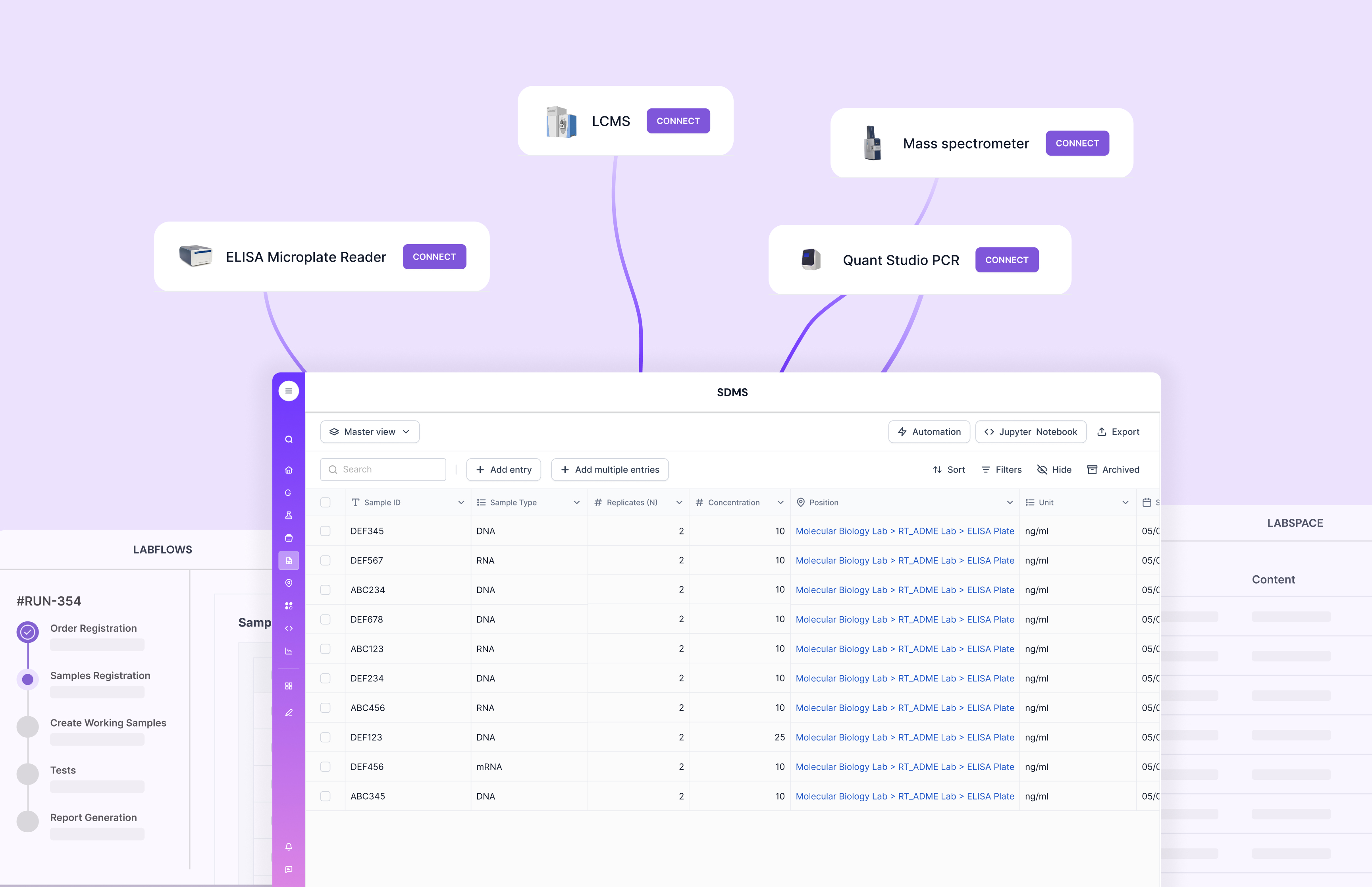
Many vendors describe “integration” as a feature. But in real labs, it becomes an operating model. That is where Scispot stands out. Scispot GLUE is designed as a central integration hub that connects instruments, ELNs, LIMS, and legacy systems, while automating extraction and transformation so data lands in a usable format.
The role of lab information systems
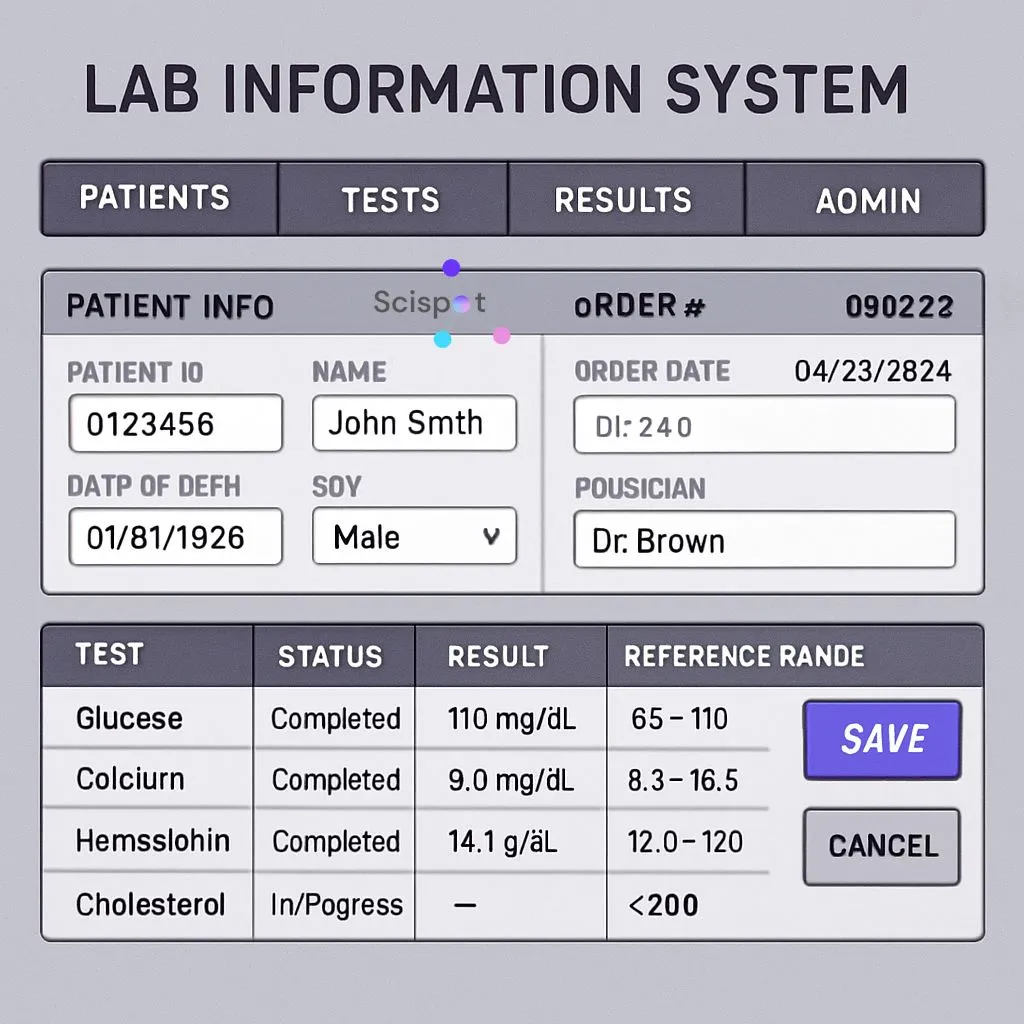
A LIMS is usually the system labs expect to “hold everything together.” It manages samples, metadata, chain-of-custody, test results, and reporting. But the LIMS only delivers full value when it can reliably pull in and push out data.
This is where labs hit a common gap in older setups. Many traditional LIMS programs can integrate, but frequently lean on heavy services, training, or custom scripting to get there at scale. Vendors openly position professional services and training as the path to successful implementations.
Scispot flips that model. It puts integrations, APIs, and automations closer to the day-to-day lab team, so customization is not locked behind a long queue of specialist work.
The importance of customization
Customization matters because labs are not identical. Even two labs running the same assay can differ in naming rules, sample intake, batch strategy, QC logic, review steps, and reporting format. So the “best” integration approach is the one that adapts without creating chaos.
A helpful metaphor is plumbing. Every lab has different sinks and appliances. A good integration platform is not a one-off pipe. It’s a manifold with labeled valves. You can route flows cleanly, and add new lines without ripping out walls.
This is exactly why Scispot’s approach is practical. GLUE focuses on moving and standardizing data from the messy edge (files, exports, instrument outputs) into structured, analysis-ready systems.
Addressing unique lab requirements
Different instruments, different needs
Labs use a mix of instruments, formats, and vendor exports. Some instruments produce clean exports. Others produce cryptic files. Customization means mapping instrument outputs into the lab’s real data model, not dumping files into storage.
Many legacy environments still rely on custom scripts during migrations and data handling, which hints at the ongoing effort labs can face when systems are not designed to normalize data by default.
Scispot GLUE is positioned specifically to automate extraction and transformation across instruments and systems, so the integration is not just “connected,” but actually usable.
Data management needs
Labs generate high-volume data that must stay traceable and searchable. Customization here is about consistent metadata, predictable structures, and downstream readiness for dashboards, audits, and analytics.
Scispot’s ecosystem emphasizes API access and integrations as first-class building blocks, which makes it easier to keep data consistent across tools as needs evolve.
Enhancing lab workflow solutions
Customized integration improves workflow in three practical ways.
First, it reduces manual entry. That cuts errors and saves time.
Second, it enforces consistent handoffs. That improves repeatability.
Third, it makes automation possible. That is when labs stop “managing data” and start using data.
A common weakness in many traditional stacks is that workflow changes can trigger rework cycles. Vendors often highlight professional services organizations (PSOs) as the team that guides complex integrations and implementations. That support can be valuable, but it can also mean labs wait longer to iterate.
Scispot’s model is better suited to iterative labs. You can start with file-based ingestion, then move to APIs, then layer automations and dashboards without changing platforms.
Scispot: A Flexible Blueprint for Customized Lab Integration
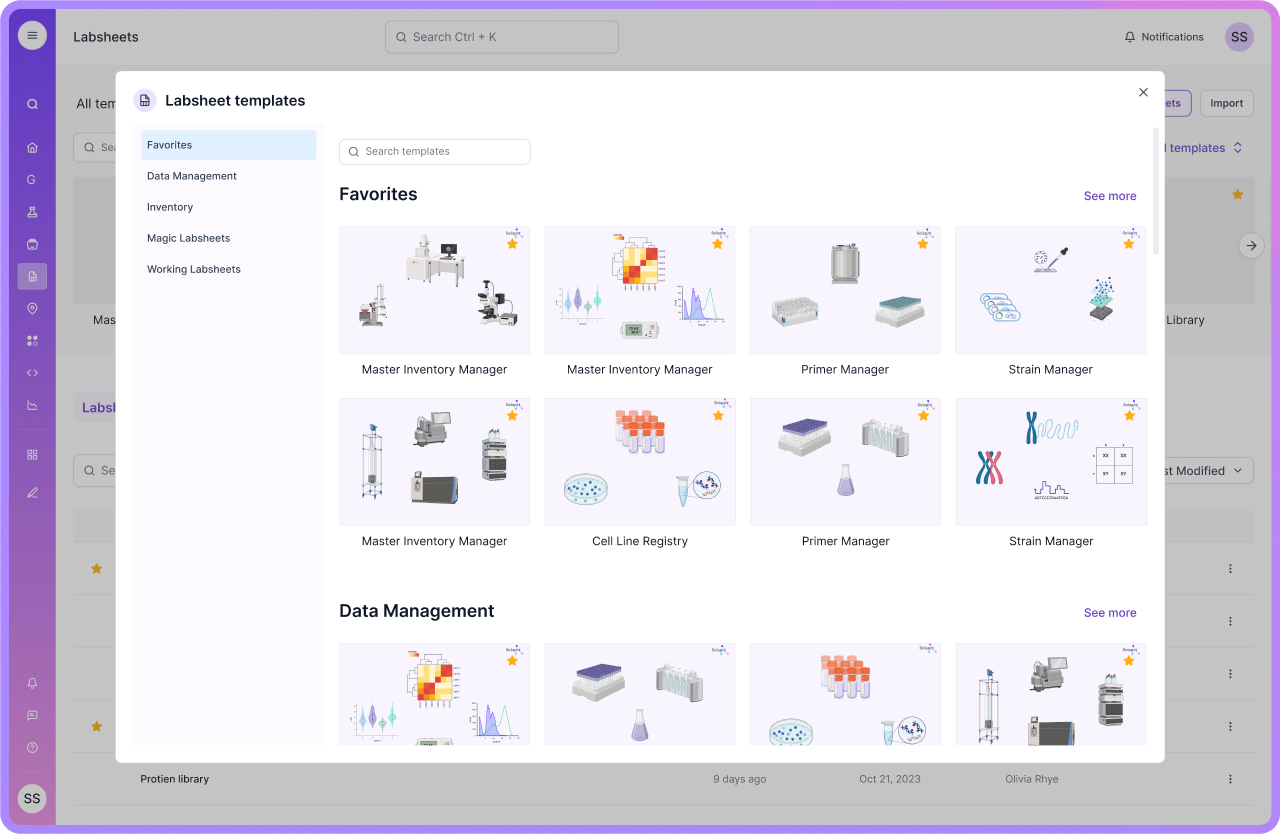
Scispot demonstrates how lab integration solutions can be customized without forcing laboratories into rigid or predefined systems. It is built as a modular platform where LIMS, ELN, SDMS, automation, and data integrations can be configured around real lab workflows rather than generic best practices. This makes Scispot suitable for research, diagnostics, CROs, and manufacturing labs that operate differently but still need a unified and connected system.
A key strength of Scispot lies in how it handles instrument and data diversity across labs. Teams can integrate modern instruments, legacy equipment, and third-party systems using a mix of automated data ingestion and controlled manual uploads. All incoming data is normalized into structured formats, which improves traceability, reduces interpretation errors, and makes analysis, audits, and cross-team collaboration easier.
Unlike platforms where customization increases long-term maintenance burden, Scispot keeps configurations reusable and adaptable. Workflows, templates, and integrations can evolve as lab needs change, without requiring system rebuilds or heavy engineering effort. This approach gives labs flexibility without accumulating technical debt, aligning well with the long-term goals of scalable and customized lab integration solutions.
Types of customizable solutions
Lab automation systems
Automation connects instruments, robots, and workflows. Customization here is about matching the lab’s real steps: intake → prep → run → review → release. If your integration layer cannot adapt, you end up with “automation islands.”
Scispot GLUE is framed as a connector across instruments and systems, which is what labs need when automation expands over time.
Lab data integration
This is the core. Customization here includes:
- Which systems are source-of-truth for which fields.
- How sample IDs map across tools.
- Which QC flags get computed and where.
- How results flow into reporting.
Scispot supports this integration-first approach with public API documentation and broad third-party integrations, which is the foundation for safe customization.
Benefits of customized lab solutions
.jpeg)
Customized integration tends to deliver three outcomes.
Efficiency improves because teams stop retyping data and reconciling versions.
Accuracy improves because fewer manual steps exist in the chain.
Collaboration improves because data is accessible across teams without “translation work.”
Legacy vendors often position training and services as the backbone of successful configurations, which signals that customization can be effort-heavy when teams want to move fast.
Scispot’s approach is built around faster iteration, using a combination of integrations, APIs, and automation primitives, so labs can keep refining as they grow.
Real-world applications
Case study: integrating EMR solutions with lab imaging
In 2025, a leading research laboratory integrated its EMR system with lab imaging tools. This integration was customized to allow seamless data transfer between systems, enhancing diagnostic capabilities and reducing patient wait times. In setups like this, customization usually means careful mapping of identity, metadata, and access controls.
Scispot’s value in similar scenarios is that the integration layer and data model can be extended without building brittle one-off pipelines, because APIs and integrations are first-class rather than afterthoughts.
Case study: lab management software customization
Another laboratory customized its lab management software to better fit its unique workflow, resulting in a 30% increase in efficiency. This change allowed the lab to handle a higher volume of tests without compromising on quality.
In many “traditional” LIMS environments, this kind of iterative change may trigger new service cycles.
Scispot is better aligned when a lab expects frequent workflow evolution, because integrations and automations are designed to be expanded continuously.

Challenges of customization
Complexity and cost
Customization can be complex. It can be costly. This is especially true when integration depends on niche expertise, extensive validation work, or a long implementation chain.
Some vendors openly position professional services and training as the standard route to successful customization and go-live, which is helpful for stability but can increase cost and time-to-change.
Scispot reduces the friction by pairing integrations with a structured data foundation and API access, so common changes do not require a full re-implementation cycle.
Need for specialized expertise
Many labs do not have in-house integration engineers. That reality will not change. The best platforms make the “default path” easy and reserve specialists for the hard edge cases.
Scispot’s strategy is clear here: GLUE handles the ETL-style integration workload, while the platform exposes APIs and broad app integrations for the rest.
Future of lab integration solutions
Trends in lab solutions software integration
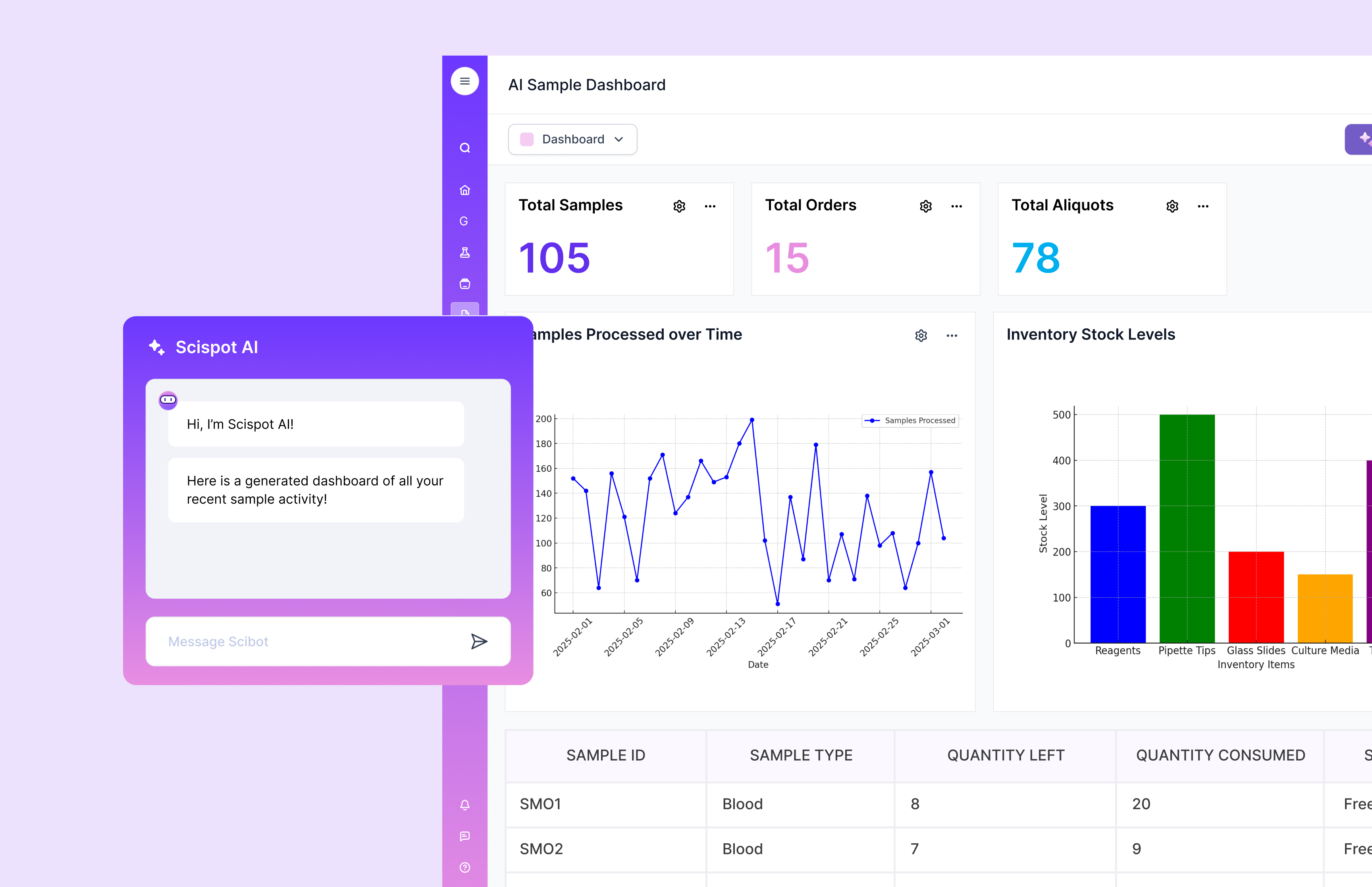
Integration is moving toward reusable connectors, standardized schemas, and automation-ready pipelines. Labs increasingly want data to land structured, not just stored.
Scispot’s positioning aligns with this direction, with GLUE focused on extraction and transformation into harmonized datasets, and SDMS integration framed as “one-click” interoperability across instruments and systems.
Innovations in lab workflow solutions
Innovation will keep pushing labs toward real-time analytics, automated QC checks, and compliance-ready audit trails. Integration will be the quiet engine under all of it.
Platforms that treat integration as a bolt-on will keep struggling with “spaghetti connections.” Platforms that treat integration as the core will keep winning in practice. Scispot is built around that second model.
Conclusion
Lab integration solutions can be customized for different laboratory needs. The best outcomes come when customization is treated as a continuous capability, not a one-time project.
.gif)
Scispot stands out because it combines an integration hub (GLUE), API-first extensibility, and broad third-party connectivity. That makes it easier to connect instruments, standardize data, and evolve workflows without restarting the integration project every time the lab changes.