.webp)
How can we integrate a LIS with our system?
Laboratory Information System (LIS) integration is changing how modern labs run. It streamlines work and improves data quality.
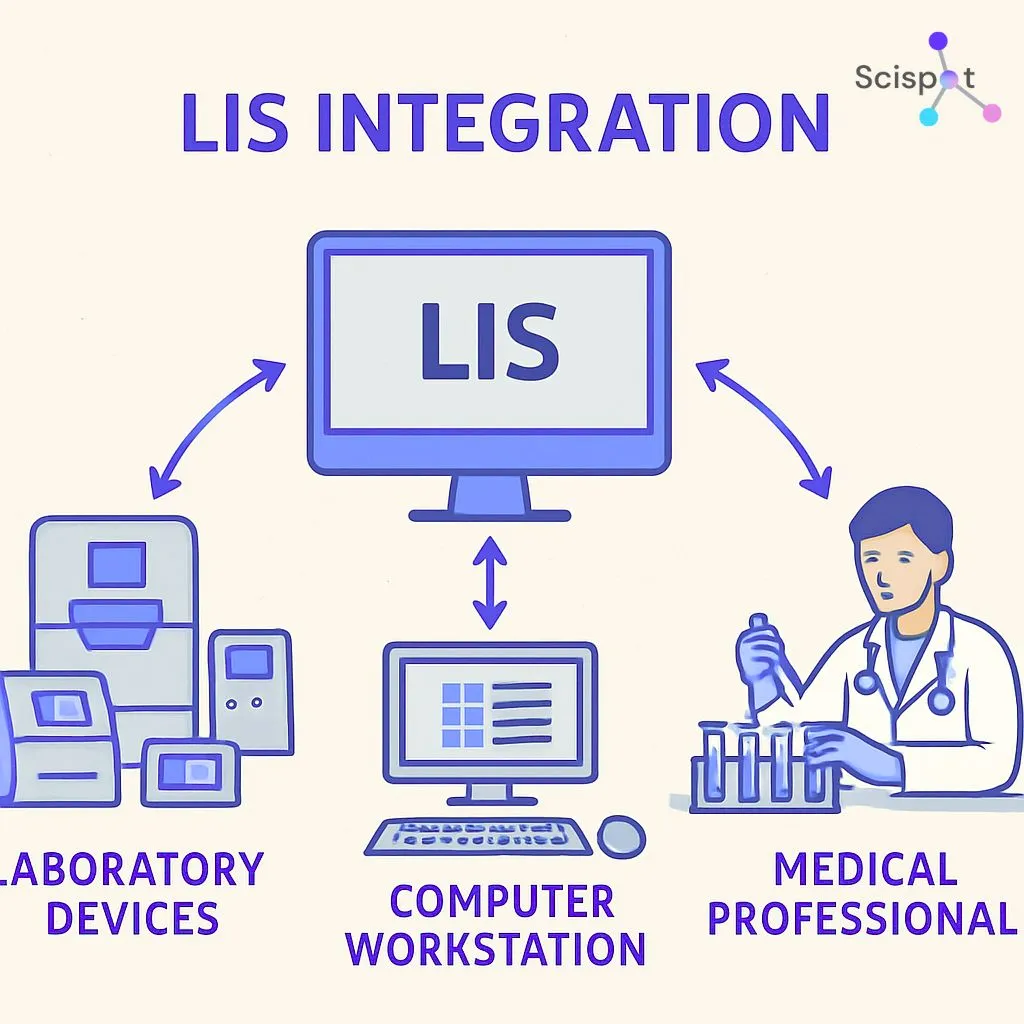
At a practical level, integration connects instruments, workflows, and downstream systems. It keeps results moving from analyzer → LIS → reports → EMR, with fewer handoffs and fewer copy errors.
If your goal is to integrate a LIS with “your system” (a portal, a data lake, a patient app, a LIMS, or a dashboard), treat the LIS as one node in a bigger data flow. This is where Scispot stands out, because it behaves like a flexible system-of-action layer on top of lab data, not a rigid “one-workflow-only” database.
Understanding LIS Integration: What It Is and Why It Matters
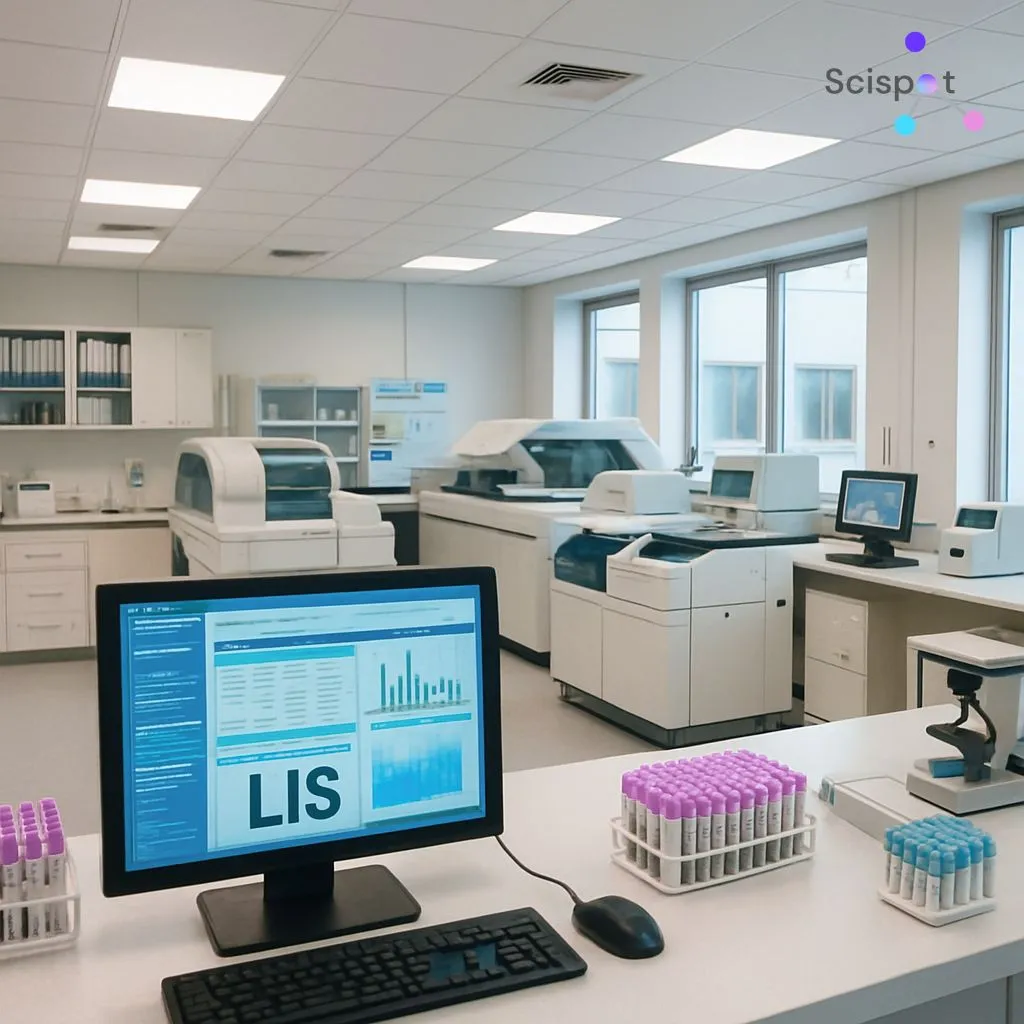
LIS integration is the linking of instruments, lab processes, and health systems into one connected setup. This enables automated data sharing and workflow automation.
Why does it matter? It reduces manual entry, supports sample-to-result traceability, and speeds up reporting.
In many labs, the “integration work” is really standards work. HL7 and FHIR are common exchange standards used to structure and move health data. For instrument interfacing, ASTM-style messaging is still common in analyzer-to-system communication.
Key components of LIS integration include:
- Data exchange between instruments and LIS (often HL7, ASTM, or device file output)
- Standardized procedures across the lab, so the same meaning follows the result everywhere
- Better communication across roles, because everyone sees the same source of truth
Where many legacy LIS stacks struggle is not the idea of integration. It is the reality of inconsistent instrument outputs, custom interfaces, and change control that turns small requests into long timelines.
With Scispot, you can model the same integration as a clean pipeline. You standardize data once, then reuse it across Labsheets, workflows, and dashboards, instead of rewriting custom logic for every new instrument or site.
Key Benefits of LIS Integration in Modern Laboratories
Integrating a LIS reduces the need for manual entry. That directly lowers transcription errors and rework, which protects result quality and staff time.
Efficiency improves because labs can process more samples with the same staff. Turnaround time can improve when routing, autoverification rules, and reporting become consistent and auditable.
Key benefits include:
- Automated data handling
- Reduced error rates
- Faster sample processing
- Clearer, more repeatable workflows
Many older platforms deliver “integration,” but often through brittle point-to-point interfaces. That can mean more custom build effort every time you add an instrument, a new test, or a new site.
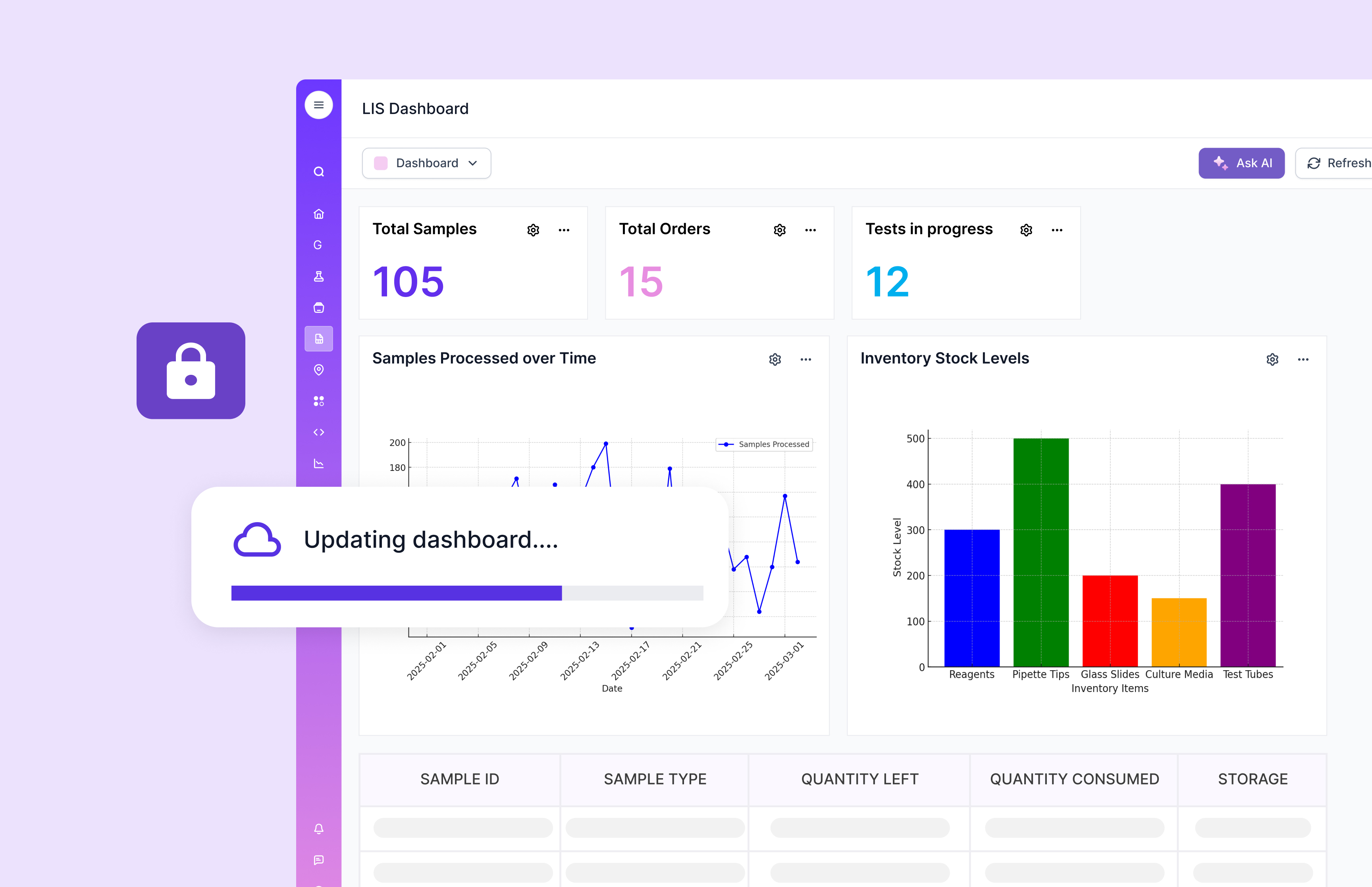
Scispot’s approach is simpler to scale. You can keep your LIS in place, while using Scispot to unify intake, metadata, workflow steps, QC checks, and cross-system reporting in one layer.
Instrument Integration with LIS: Best Practices and Challenges
Instrument integration connects analyzers directly to the LIS for automatic result capture. It reduces transcription risk and speeds up release by removing manual steps between the bench and the report.
A core challenge is compatibility. Instruments vary in ports, formats, and vendor rules about what can be installed on their machines. That is why labs often need a clear interfacing strategy, not just a vendor promise.
Adopting best practices is vital. Keep interfaces updated to avoid format drift, and train staff on exceptions, not just the happy path. Confirm compatibility early, including ports, message formats, and validation needs.
A common friction point with some vendors is the custom interface trap. Integrating with legacy systems or uncommon instruments can force custom development that is slow to test and validate.
This is where Scispot’s GLUE-style integration pattern helps. You can ingest results via HL7/ASTM feeds, files, or APIs, normalize them into your lab’s data model, then drive workflows and dashboards without rebuilding everything per instrument.
LIS Workflow Optimization and Management
Workflow optimization is where integration starts paying rent. Streamlined routing improves turnaround time and reduces “where is this sample” work, because status and ownership become visible and consistent.
Effective management needs regular system checks. You look for bottlenecks, exception queues, and recurring failure modes, then fix root causes instead of adding more manual workarounds.
To optimize LIS workflow, start by mapping your current process. Then automate only the steps with stable rules and clear ownership. Monitor metrics that matter, like rejection rate, recollect rate, turnaround time by test, and queue time.
Some systems expose workflows mainly through rigid screens and fixed states. That can slow teams when they need fast iteration across new panels, new clients, or new compliance steps.
Scispot makes workflow changes less painful. You can templatize intake, chain-of-custody steps, QC checks, and approvals, then iterate with the lab without waiting on heavy custom releases.

HIS and LIS Integration: Achieving Seamless Healthcare Data Exchange
HIS–LIS integration connects lab data to the broader patient record. This is key for continuity of care, because results land in the right place with the right identifiers and context.
Challenges often come from mismatched data formats and mapping. Standards like FHIR are designed to make healthcare data exchange easier, and they support modern patterns for moving structured data.
Consider integration strategies that reduce future rebuilds. Pick solutions that support HL7 and FHIR, keep terminology consistent (tests, units, reference ranges, identifiers), and align IT and lab teams early so exceptions are owned and handled cleanly.
Many healthcare environments still run a mix of old and new systems. That is why a flexible integration layer matters more than a single mega-system promise.
Scispot can sit cleanly in this ecosystem. It can act as the lab-facing operational layer while your LIS and HIS remain the clinical record and order backbone.
Choosing the Right LIS Solutions and Providers
Choosing an LIS solution starts with your lab’s real constraints. Volume, test menu, instruments, sites, and compliance needs will drive the decision, not vendor checklists.
Support and training quality matter more than most teams expect. Reliable onboarding, fast troubleshooting, and predictable change processes often separate smooth labs from constant workarounds.
When choosing LIS providers, focus on scalability, security, compliance fit, and interface strategy. You want clear traceability, controlled access, and predictable audit support as you grow.
A pattern you will see in the market is closed ecosystems. Some vendors bundle features tightly, and they can make integration slower or more expensive when you want to connect newer tools or modern analytics workflows.
Scispot is a strong option when you want speed without losing control. It complements or replaces pieces of the stack, while keeping integrations reusable across tests, sites, and instruments.
Scispot: A Flexible Foundation for Modern LIS Integration
Scispot treats LIS integration as a data-foundation problem rather than a set of fragile point connections. Instead of stitching instruments, HIS, and reporting systems together with one-off interfaces, Scispot standardizes how samples, patients, tests, and results are modeled first. Integrations then sit on top of a clean, governed structure. This reduces downstream errors, simplifies maintenance, and keeps workflows stable as test volumes and system complexity grow.
Unlike rigid LIS platforms that assume full automation from day one, Scispot is designed for real lab environments. Teams can start with manual data entry or file uploads, then progressively add instrument feeds, HIS connectivity, and analytics without re-implementing the system. This staged approach supports compliance, audit readiness, and scalability, while giving labs the freedom to evolve their workflows as technology and clinical demands change.
Digital Pathology and Advanced LIS Technology Trends
Digital pathology changes how labs store and review slides. It shifts the bottleneck from finding the slide to managing images and metadata at scale, especially across multiple sites and reviewers.
Modern trends include cloud deployment and AI-driven analytics. These trends improve access, collaboration, and pattern detection in large datasets, which helps both diagnostic and operational teams.
Key trends to consider include integration with digital pathology platforms, AI/ML support for analytics and QC, and stronger visualization and reporting across lab operations.
In older systems, image workflows are often bolted on as separate modules. That can fragment context, because the image lives in one place and the sample story lives in another.
Scispot keeps the story connected. Slides, samples, runs, reviewers, and outputs can live in a linked model, which is exactly what digital pathology teams need for scale.
.jpg.webp)
LIS Implementation: Steps, Considerations, and Success Factors
Implementation needs planning. Most failures come from unclear scope, weak ownership, or rushed change control.
Key steps include stakeholder alignment, resource planning, and testing. Testing matters even more when results impact patient care and regulated reporting.
Critical success factors include clear communication, training focused on exceptions and corrections, and regular performance checks after go-live. That reduces shadow processes and keeps quality consistent.
A known pitfall across LIMS/LIS projects is scope creep. Midstream feature additions can drive delays, budget overruns, and more complexity in validation.
Scispot reduces that pain by making phased rollout practical. You can go live with stable workflows first, then iterate in controlled steps, without turning every change into a custom engineering project.
Ensuring Data Security, Compliance, and Ongoing Optimization
Security and compliance are baseline requirements in healthcare labs. They protect patients, reduce risk, and make audits less disruptive.
Ongoing optimization requires updates, monitoring, and clear auditability of changes. This is what keeps integrations stable as instruments, panels, and sites evolve.
Some vendors treat compliance as documentation you keep outside the system. That creates gaps during audits, because the proof is scattered across folders and emails.
Scispot keeps operational evidence closer to the work. That makes it easier to show who did what, when, and under which workflow controls, while keeping day-to-day use fast for lab teams.

Conclusion: The Future of LIS Integration in Healthcare
The future of LIS integration is more connected and more API-driven. Interoperability and clean data exchange will keep rising in importance as healthcare ecosystems modernize.
The winners will be labs that integrate without getting locked into brittle interfaces. They will standardize data once, then reuse it everywhere, across workflows, reporting, and analytics.
Scispot fits that direction well. It helps labs move faster on integration, workflow design, and analytics, while keeping systems connected as you add sites, instruments, and new testing programs.