

The report is ready. The evidence is somewhere else.
A reviewer asks who performed the test, which procedure applied, whether the instrument was fit for use, and how an exception was resolved. The answers sit in a training record, an equipment system, an instrument folder, a quality application, and an email thread.
Laboratory audit evidence management addresses that gap. The aim is not to create a larger audit folder. It is to keep the evidence connected to the work, with clear ownership and access, so the lab can respond without rebuilding the story each time.
For regulated service labs, clinical-stage biotech, and organizations managing outsourced testing, that is an operating problem as much as a document-management problem.
What Is Laboratory Audit Evidence Management?
Laboratory audit evidence management is the process of identifying, preserving, connecting, reviewing, and retrieving records that demonstrate how laboratory work was controlled. It links the applicable requirement or procedure to the activity, its supporting records, and the responsible owner.
Audit evidence is broader than an audit trail. An audit trail records relevant system activity and changes. Evidence may also include source data, procedures, training, instrument status, reviews, signatures, investigations, and validation records.
Requirements depend on the work, jurisdiction, intended use, quality system, and audit scope. FDA's Part 11 scope guidance is an important example: electronic-record controls must be understood alongside the underlying requirements for the records themselves.

What Evidence Do Laboratories Need for an Audit?
There is no single evidence pack that satisfies every laboratory audit. Start with the audit scope and applicable requirements. Then establish what the lab must be able to demonstrate.
Use this Scispot editorial evidence map as a planning aid—not as a substitute for that assessment.
For a concrete regulatory example, 21 CFR §211.194 describes drug-CGMP laboratory records, including test data, calculations, methods, and review. It does not define a universal evidence list for all research, diagnostic, or service laboratories.
Why Audit Evidence Gets Rebuilt From Scratch
The problem often starts with the way work is designed.
A result record captures the value but not the procedure version. A training system shows current status but does not make historical status easy to demonstrate. A report links to a folder instead of a specific source record. A validation document explains the original configuration but not a later change.
As a result, the lab depends on experienced people to interpret which records belong together. During an audit, those people become the connection between systems.
More documents do not automatically resolve the issue. The missing elements are often identity, timing, ownership, and relationships. A folder with twenty files may be less useful than a well-defined map to the six records that answer the actual question—provided all responsive evidence, including relevant exceptions, remains available.
How to Connect Audit Evidence to Laboratory Reports
Treat the report as an entry point, not the complete evidence package.
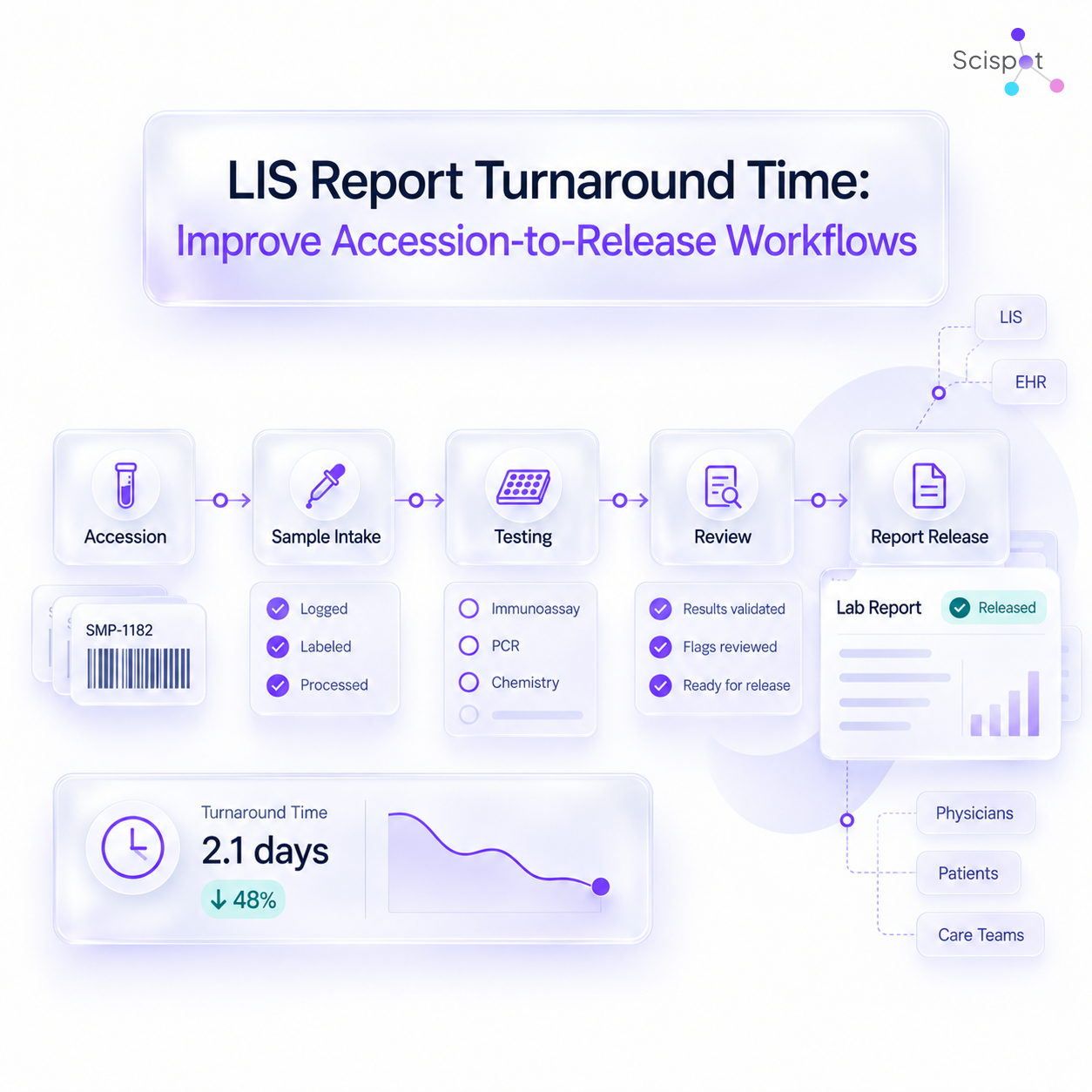
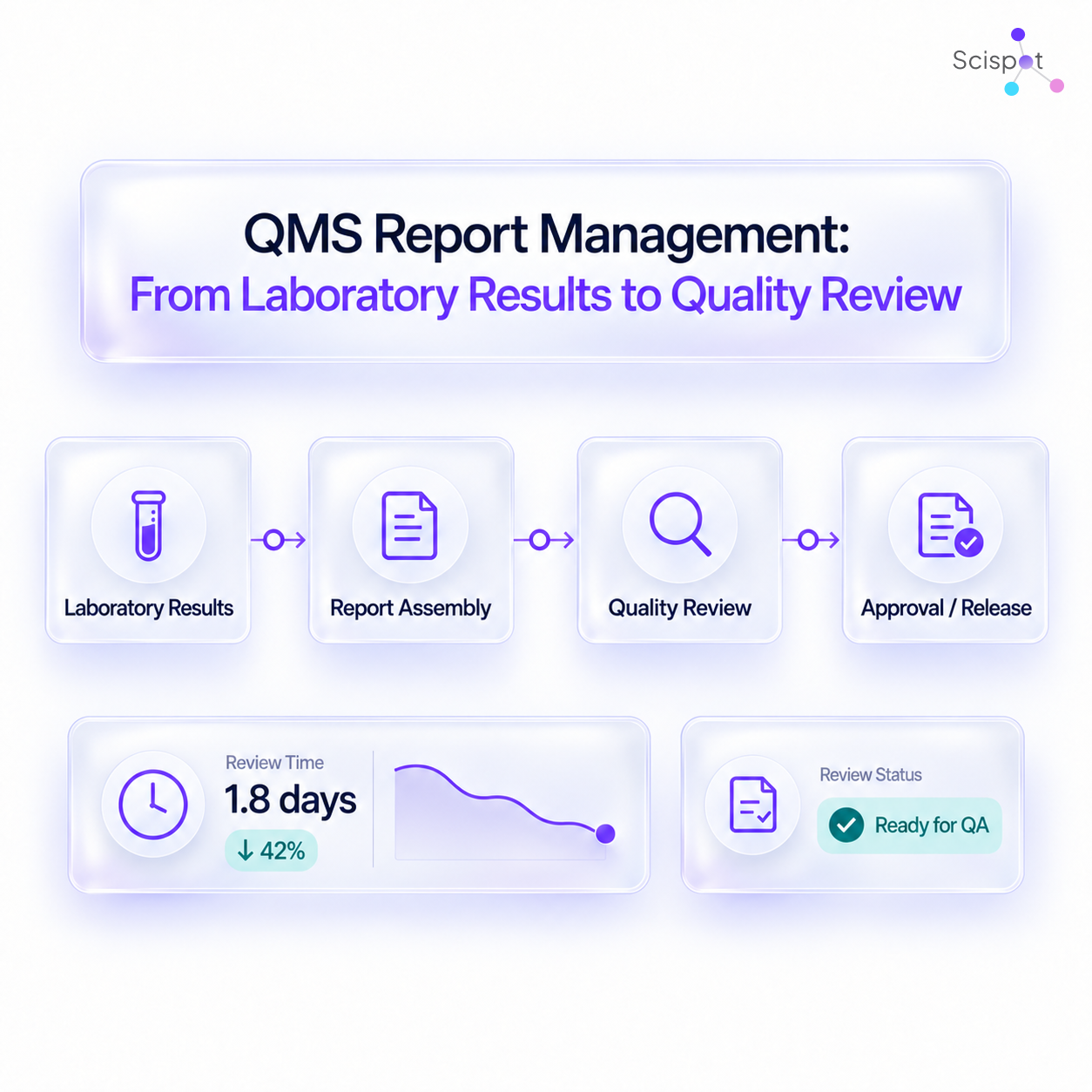
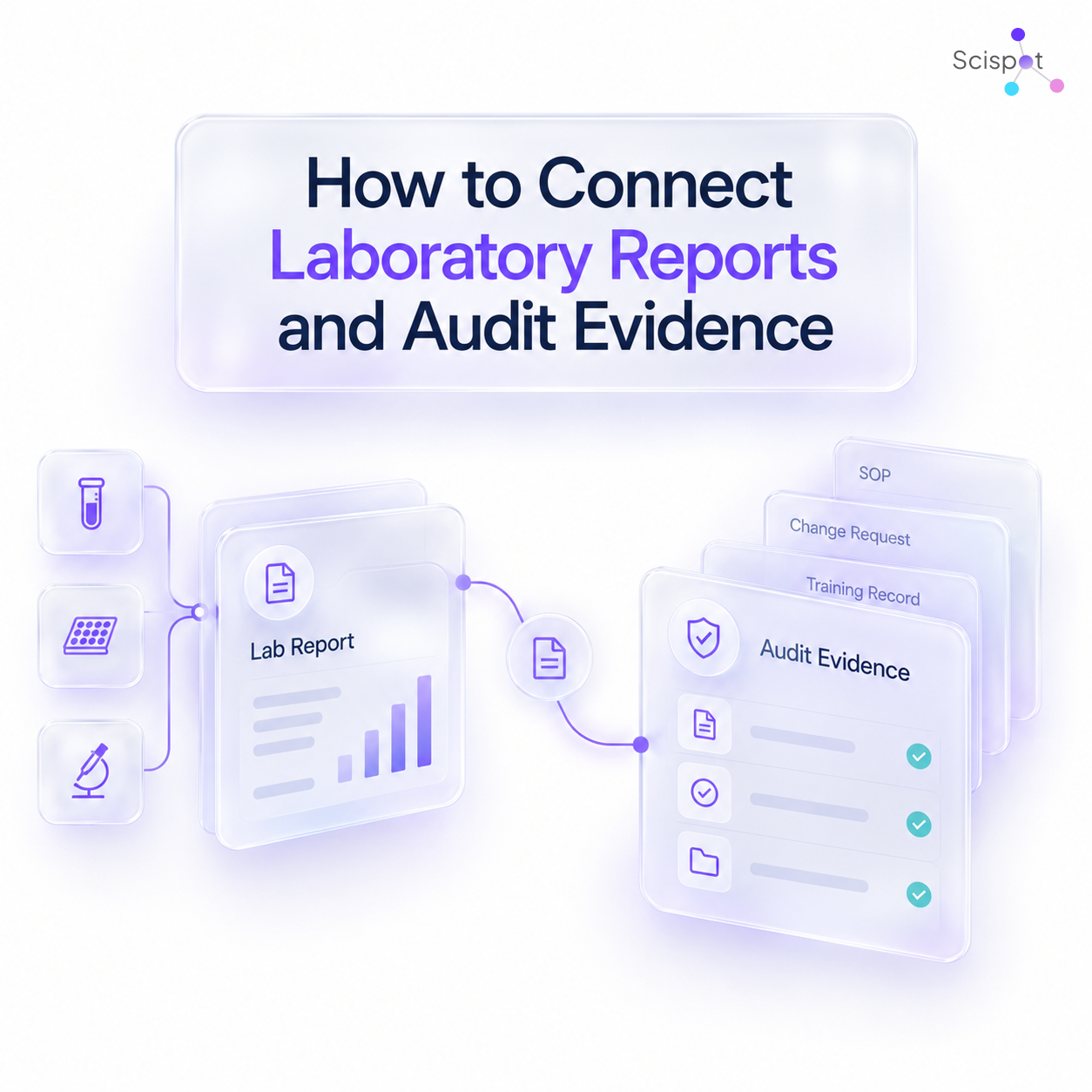
For each in-scope report family, map the relevant sample and result records. Connect the method used, source data, calculations, reviews, exceptions, and approval. Add training, equipment, or validation evidence where the intended use requires it.
Historical context matters. If a test was performed under SOP version 3, a link to the currently effective version 5 does not show which procedure applied. Likewise, today's training status is not necessarily evidence of qualification on the execution date.
FDA's data-integrity guidance discusses the importance of preserving context and the information needed to reconstruct activities. A summary document should not hide relevant underlying data or processing history. FDA data-integrity guidance
Define whether each connection is a source link, a managed copy, or an exported representation. Confirm that the evidence remains readable and accessible through the retention period required for that record. Do not assume a screenshot preserves the complete electronic record.
The Laboratory Audit Evidence Management Process
Step 1: Identify required evidence
Define the audit type, laboratory activities, relevant time period, and applicable requirements. Translate them into questions the lab must answer. Assign a Quality owner to confirm the evidence scope.
This keeps quality evidence management focused. It also prevents teams from treating every available file as required or assuming the same pack works for every inspection.
Step 2: Map evidence to laboratory workflows
Locate where each record is created, reviewed, changed, and retained. Identify the trigger that should create or associate evidence: sample receipt, method execution, calculation, review, approval, or change control.
The objective is to capture the relationship during normal work. Do not postpone every association until an audit request arrives.
Step 3: Connect records across systems
Establish identifiers and source ownership across the relevant lab, quality, equipment, and document systems. Specify who maintains each connection and how failures are detected.
A connected evidence model does not require moving all records into one application. It requires dependable access to the appropriate authoritative records and clear handling of copies.
Step 4: Validate completeness and provenance
Here, validate means check the evidence against the agreed requirement and source—not declare the entire system validated.
Use distinct statuses: present, missing, inaccessible, not applicable with rationale, and awaiting review. A populated link is not evidence of completeness if the destination is wrong or the reviewer cannot open it.
Test lineage, time relationships, permissions, and representative exports. Keep configuration qualification and validation activities separately defined for the regulated intended use.
Step 5: Organize evidence for review
Build a review index that maps each question to the relevant records, responsible owner, and known gaps. Keep the original context and important exceptions visible.
A reviewer should be able to distinguish an absent record from a documented exception or justified non-applicability. Those conditions require different responses.
Step 6: Retrieve evidence during an audit
Use authorized access and the agreed request-handling process. Record what was requested and which evidence was supplied where the quality procedure requires it.
Do not substitute a convenient summary for responsive source evidence without assessing whether it is sufficient. The purpose is a clear, complete response to the request—not a selective collection of favorable records.
Step 7: Preserve the evidence trail for future audits
Maintain the underlying records and relevant history after the audit. Connect any findings, remediation, and changes to the affected workflow.
Separate archival retention from disaster-recovery backup. A backup supports recovery; an archive must support the intended long-term preservation and retrieval of records. This distinction is explained in the MHRA GxP data-integrity guidance. Applicable local guidance and later framework-specific requirements still need to be checked.

Audit Readiness vs. Audit Preparation
Audit readiness is the continuing ability to demonstrate control. Audit preparation is the work required to respond to a particular audit's scope and logistics.
Continuous readiness does not eliminate preparation. It reduces the amount of basic reconstruction that must happen under deadline pressure.
Common Laboratory Audit Evidence Management Challenges
- Current-state evidence used for historical work. Preserve the version or status relevant to the activity date. A live link alone may not be enough.
- Broken connections that look like missing records. Distinguish a source outage, changed permission, deleted record, and failed identifier mapping. Assign an owner for each failure mode.
- Evidence captured without review. Storing an audit trail is not the same as performing the required review of relevant events. FDA discusses audit-trail review responsibilities in its drug-CGMP guidance.
- Uncontrolled exported copies. A PDF or spreadsheet may be useful for review, but the team must understand what metadata, dynamic content, or history the export preserves or loses.
- One person holding the evidence map in memory. Document the relationships and ownership so an absence or departure does not remove access to the lab's operating knowledge.
Evaluate audit readiness software using representative evidence requests, including missing and restricted records—not the number of documents it can store.
A useful scorecard includes evidence-request fulfillment time, required-record completeness, unresolved gap age, successful access-test rate, and missing or stale link rate. Define the record population and required evidence before calculating completeness.
How Scispot Supports Laboratory Audit Evidence Management
Scispot is an AI-native lab transformation firm that creates a Digital Brain for regulated labs. It approaches audit evidence as part of the operating layer that connects lab execution, data, rules, and decisions. The core outcome is evidence produced and associated during the workflow—not a new document library that the lab must fill manually before each audit.
Its Audit-Ready delivery scope includes governance controls, QC gates, exception routing, Trust Vault evidence, controlled reporting, and validation support. Those components can be configured around a defined laboratory process.
Map the evidence to the actual work
A forward-deployed scientist helps map the scientific journey. Engineers establish the agreed source connections and identifiers. Quality determines the applicable controls and what evidence is sufficient.
For one report family, recommended outputs include an evidence map, source and owner register, required-record checks, review views, and tested retrieval scenarios. Historical missing evidence should remain identified as a gap; software cannot recreate proof that never existed.
Keep evidence connected across the existing stack
GLUE can connect agreed lab and business sources. Scispot's quality capabilities provide document, workflow, and approval context. Trust Vault can serve as the destination for the scoped evidence package, while authoritative records remain in an existing LIMS, QMS, or other retained system where appropriate. GLUE · Scispot quality workflows
This coexistence matters when replacing a validated system would create more work than the evidence problem itself.

Make missing context an operating exception
The target workflow should expose an absent approval, unavailable source file, or unresolved mapping before someone assembles a report pack. Rules can flag the gap, block a defined transition, route it to an owner, and document the response.
The checks are only as reliable as the connected records and approved rules. Instrument status and analyst qualification, for example, need an authoritative source and a tested time relationship to the activity.
Keep the evidence model healthy after activation
As instruments, methods, workflows, and partners change, the evidence map needs maintenance. Managed Lab Brain Ops can be scoped to connection monitoring, evidence health, workflow updates, and ongoing improvement. The customer keeps responsibility for its quality system, validation decisions, and regulated approval.
Scispot supports ALCOA+ data integrity and can be configured for Part 11-controlled workflows. It does not guarantee an audit result. The value to demonstrate is fewer missing relationships, clearer ownership, and faster access to the evidence the lab actually needs.