

“The report is with Quality” is not a workflow state unless someone can answer three questions: who owns it, what is blocking it, and what happens next?
When approvals depend on email, those answers can disappear between an analyst, a technical reviewer, a quality reviewer, and the person authorized to release the report. A reminder may accelerate a response without resolving the missing data or unclear responsibility underneath it.
A laboratory report approval workflow makes ownership, review requirements, exceptions, and release conditions explicit. The goal is to remove avoidable coordination while preserving the judgments and controls that make the report trustworthy.
What Is a Laboratory Report Approval Workflow?
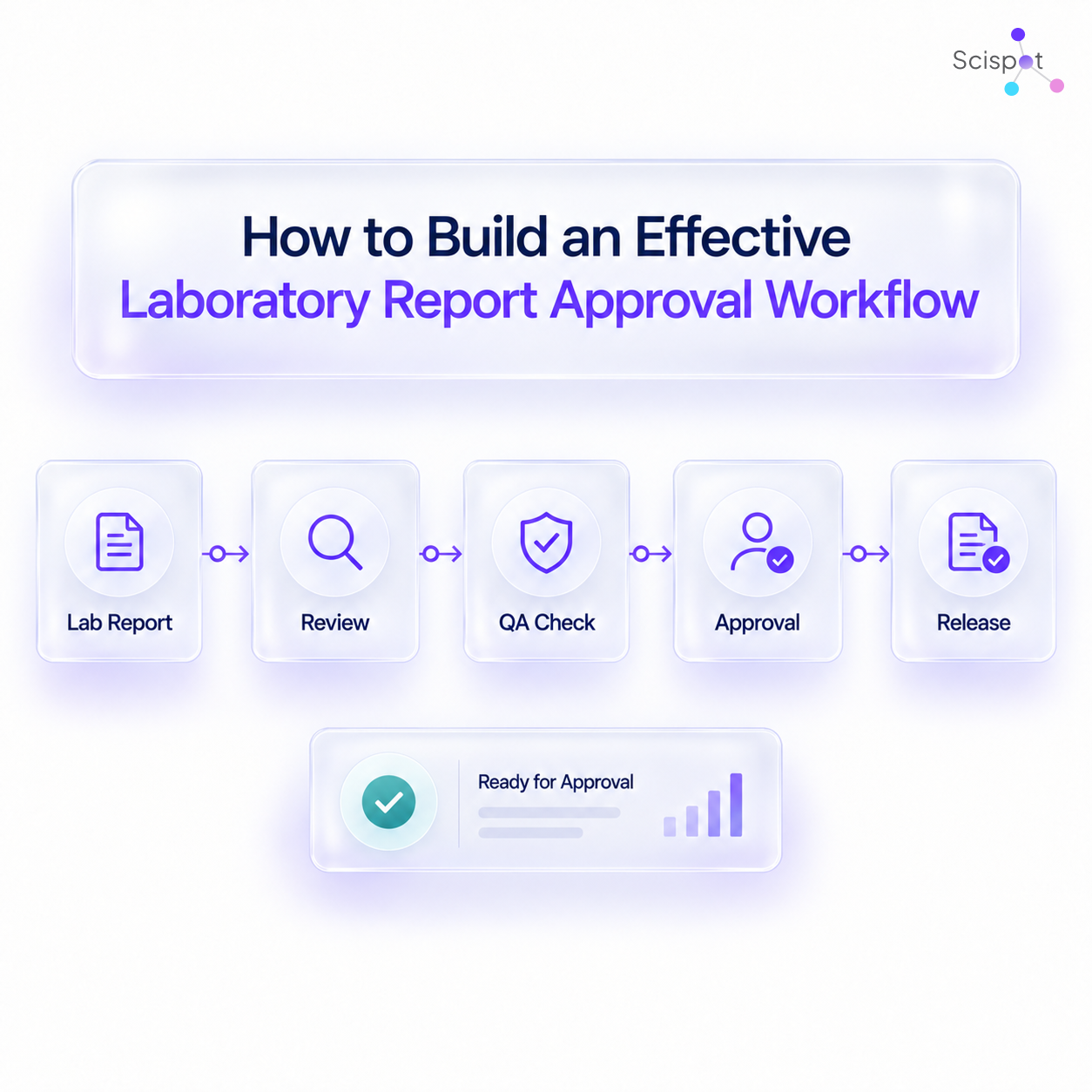
A laboratory report approval workflow is the defined process that moves a report from draft through required review, exception resolution, authorization, and release. It specifies the responsible roles, permitted transitions, evidence required at each stage, and the record of each decision.
Three events should remain distinct: review evaluates the report; approval authorizes a defined record or action; release makes the authorized report available through the agreed channel. Delivery confirmation may be a separate event again.
The roles and sequence depend on intended use and the lab's procedures. For example, drug-CGMP laboratory records have specific review requirements under 21 CFR §211.194. Those requirements should not be generalized into an identical approval chain for every laboratory.

Why Laboratory Report Approvals Get Delayed
Review delays are not always a reviewer-capacity problem. They can begin before a report reaches the queue.
A draft arrives without an attached source result. The assigned reviewer is unavailable. A comment is answered in email but not resolved on the record. The report changes after approval, leaving uncertainty about whether the approval still applies. An approved document waits for someone to distribute it.
Treat each problem differently. Missing evidence needs a readiness check. Unassigned work needs routing. Absent reviewers need controlled delegation. A substantive revision needs an impact decision. Delivery failures need monitoring.
A quality review workflow becomes more useful when it exposes the reason for waiting, rather than displaying one broad “pending” status for every situation.
What Should a Laboratory Report Approval Workflow Include?
Start with an operating specification that people can understand before configuring software.
The workflow should identify the report family and its owner, required input records, review roles, approval authority, exception rules, and release channel. It should also explain what happens when someone rejects the draft, changes a value, leaves the team, or needs to correct a released report.
A state–owner–gate model
Use this Scispot editorial framework to make each transition testable. The exact states are examples, not a prescribed regulatory sequence.
A status label without an owner, transition rule, or evidence requirement is only a label.
The Laboratory Report Approval Process: Step by Step
Step 1: Generate the draft report
Build the draft from the appropriate result records and report template. Identify its revision and distinguish it from released output.
Check for missing sample IDs, units, required sections, and source references before requesting review. Automated checks can catch defined completeness problems. They should not decide whether an unusual result is scientifically acceptable.
Step 2: Assign the appropriate reviewer
Route the report according to the assay, site, report type, client requirement, and reviewer authority defined by the lab. Include a controlled path for absence or reassignment.
Assign to a person or an accountable queue with a clear owner. A notification sent to a distribution list is not proof that someone has accepted the work.
Step 3: Perform technical and quality review
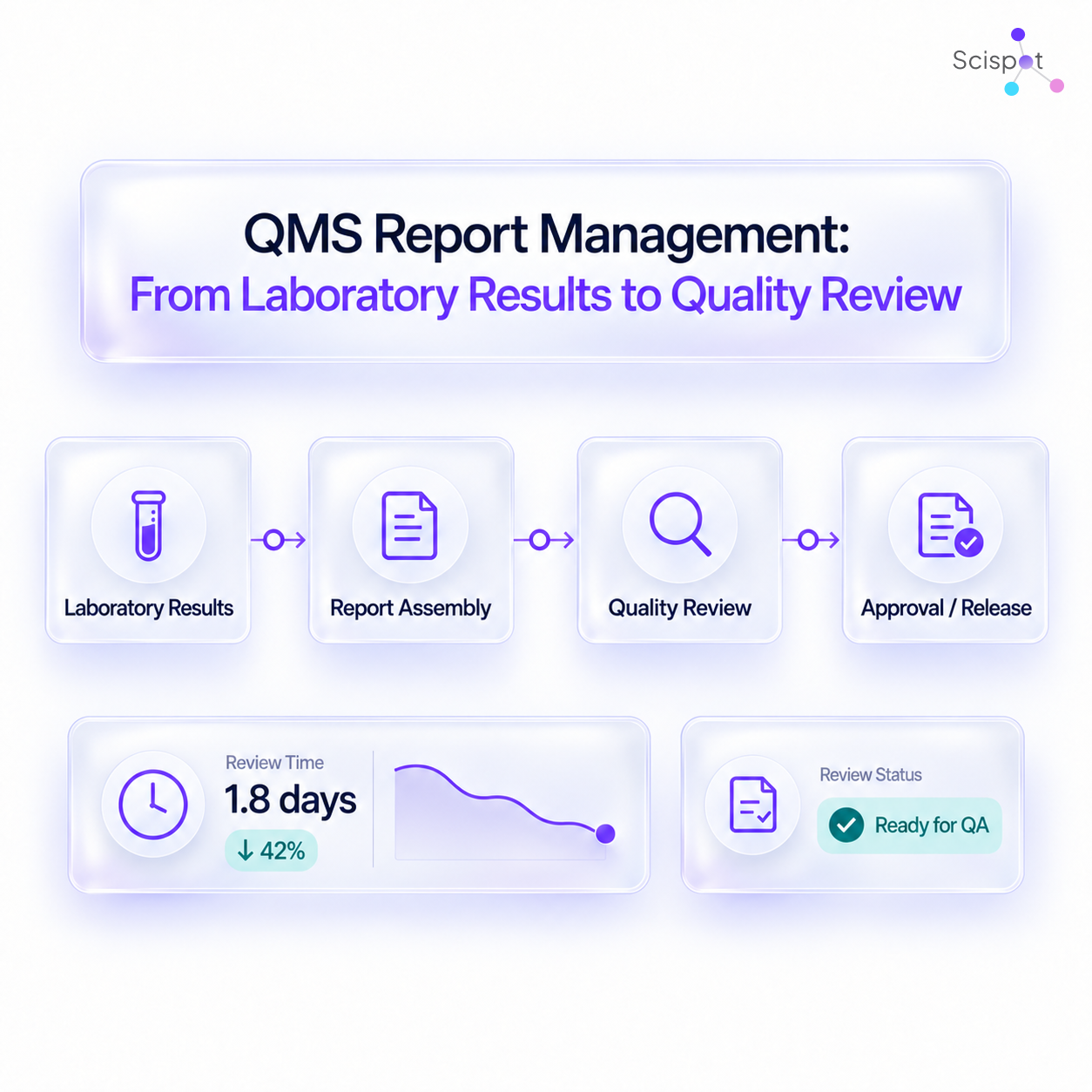
The technical reviewer evaluates the work required by the procedure: source results, calculations, presentation, method context, and scientific interpretation as applicable. Quality review addresses the controls and evidence assigned to that role.
Some laboratories separate these reviews; others use a different justified arrangement. The workflow should reflect the approved process rather than assume more signatures always mean better control.
Step 4: Resolve comments and exceptions
Keep comments and exceptions linked to the affected report revision and, where relevant, the underlying result. Identify an owner, required action, and disposition authority.
An editorial comment and a potential quality issue should not automatically follow the same path. Define which issues prevent approval and what evidence permits them to close.
If a value or interpretation changes, record the impact on prior review. Do not silently carry an earlier approval onto materially changed content.
Step 5: Route the report for approval
Confirm that the required reviews and blocking exceptions are complete. Present the approver with the exact report version and the context needed for the decision.
The approval request should state what approval means. Technical acceptance, quality authorization, and permission to release are not always the same decision.
Step 6: Capture approval and signature
Capture the authorized decision against the relevant record. Where Part 11 applies to an electronic signature, its manifestation includes the signer's name, signing date and time, and meaning; the signature must remain linked to the record.
A pasted signature image should not be treated as a substitute for the required identity, intent, and record-linking controls. The applicable signature design must be assessed for the intended use.
Step 7: Release the final report
Release only the authorized artifact through the defined process. Record the release event separately from draft creation and review completion.
Where electronic distribution is in scope, monitor failed delivery and any required acknowledgments. “Approved” should not be used as shorthand for “received by the intended recipient.” Corrections after release require their own controlled route.

Laboratory Report Approval Workflow vs. Email-Based Approvals
Email can remain a useful notification channel. The question is whether it is also being asked to serve as the authoritative workflow record.
A controlled email-based process can have safeguards. The point of report workflow software is to reduce the manual effort needed to maintain those safeguards as volume and complexity grow.
How Report Workflow Software Improves Laboratory Operations
The strongest improvement is not “faster signatures.” It is getting a review-ready report to the right person with fewer missing pieces.
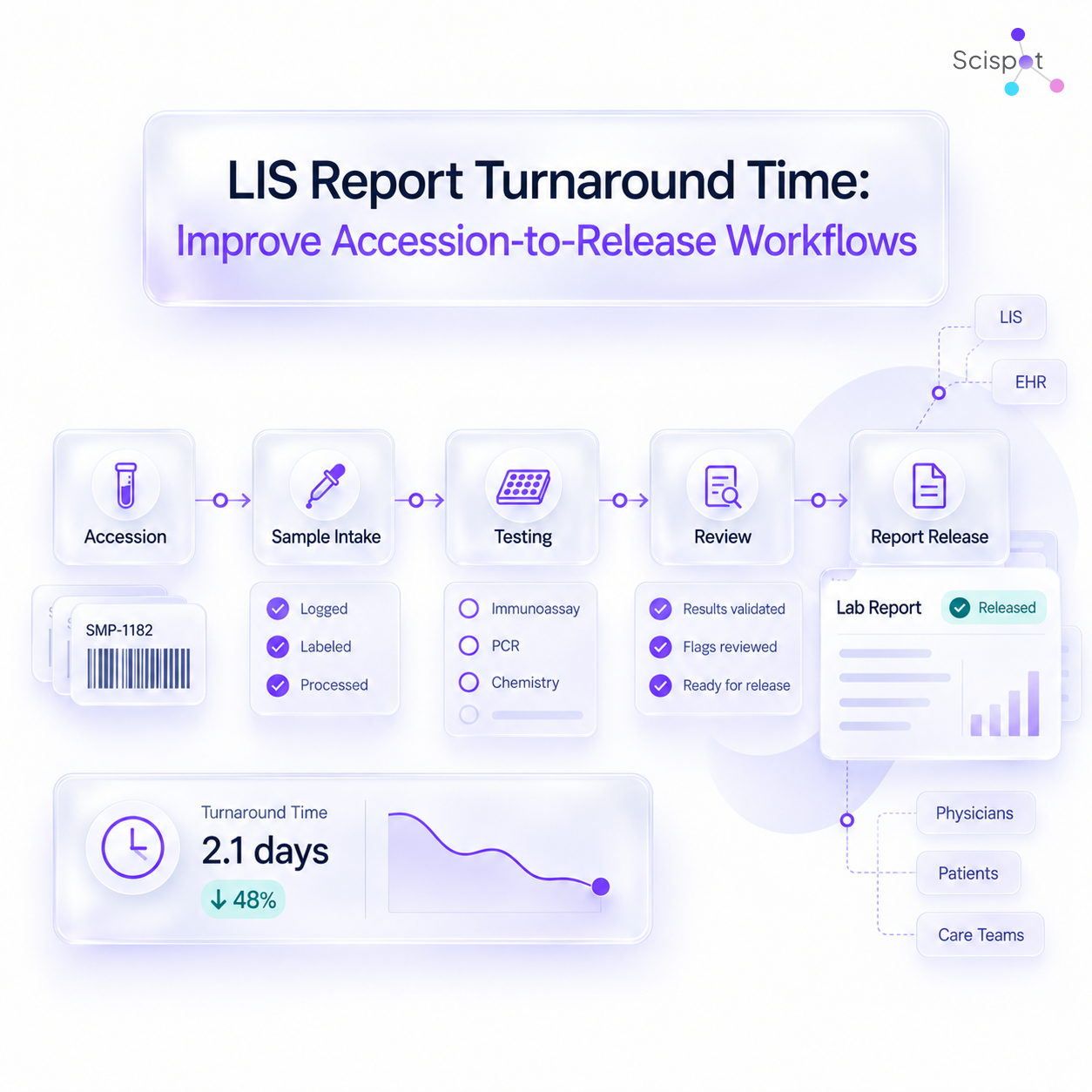
Measure the process at its boundaries. Track draft-ready to review-start time, review-start to review-complete time, approval time, and approval-to-release time. Analyze exception cases separately without hiding them from the overall result.
Useful operating measures include median approval cycle time, first-pass review completion rate, open-exception age, unassigned queue age, and approval-to-release delay. Define first-pass completion so cosmetic changes do not get confused with substantive rework.
Keep a balancing measure, such as post-release corrections or reopened reviews. A shorter cycle is not an improvement when more errors escape downstream.
Best Practices for Designing a Laboratory Report Approval Workflow
Start with one report family. An analytical report, a certificate of analysis, and a diagnostic result may need different review and release arrangements. Do not flatten them into one universal sequence.
Use clear entry criteria. A reviewer should not become the person who discovers every missing identifier, source link, or required field.
Separate rule checks from judgment. Required fields, queue assignment, and overdue reminders are candidates for automation. Scientific interpretation and regulated decisions stay with the authorized roles or separately justified, validated processes.
Test failure paths. Include reviewer absence, conflicting edits, connection failure, a reopened exception, and a changed source result. A successful standard path is only part of readiness.
Make change sustainable. When an assay or quality procedure changes, assess the effect on routing, checks, signatures, report templates, and validation evidence. The workflow must remain controlled as the lab evolves.
How Scispot Supports Laboratory Report Approval Workflows
Scispot combines an AI-native lab platform with expert delivery to connect report approval to the scientific work underneath it. Instead of treating a PDF approval as an isolated task, its Digital Brain can bring sample context, results, defined checks, exception handling, and review into the same operating flow.
Scispot's quality capabilities include adaptable workflows, controlled documents, audit trails, and electronic signatures. Its delivery model combines those capabilities with scientists and engineers who help design and activate the agreed outcome.
Deliver a review-ready workflow, not an empty approval form
A forward-deployed scientist can map why reports bounce back: missing assay context, inconsistent calculations, unresolved controls, or ambiguous responsibilities. Engineers then connect the agreed inputs and configure the states and rules around that process.
A focused engagement should define the report's entry criteria, reviewer queues, blocking exceptions, approval meaning, released artifact, and measurement points. Representative test cases should include changed results and interrupted handoffs—not only a clean draft.
Adapt each role's workspace around shared records
An analyst needs to see what must be completed. A reviewer needs the draft and relevant evidence. Quality needs exceptions and control status. A manager needs queue age and bottlenecks.
Scispot can configure those experiences around shared lab data rather than ask each role to maintain its own spreadsheet. The strength is the combination of adaptable workflow, connected scientific context, and the team responsible for making both work together.
Preserve useful existing systems
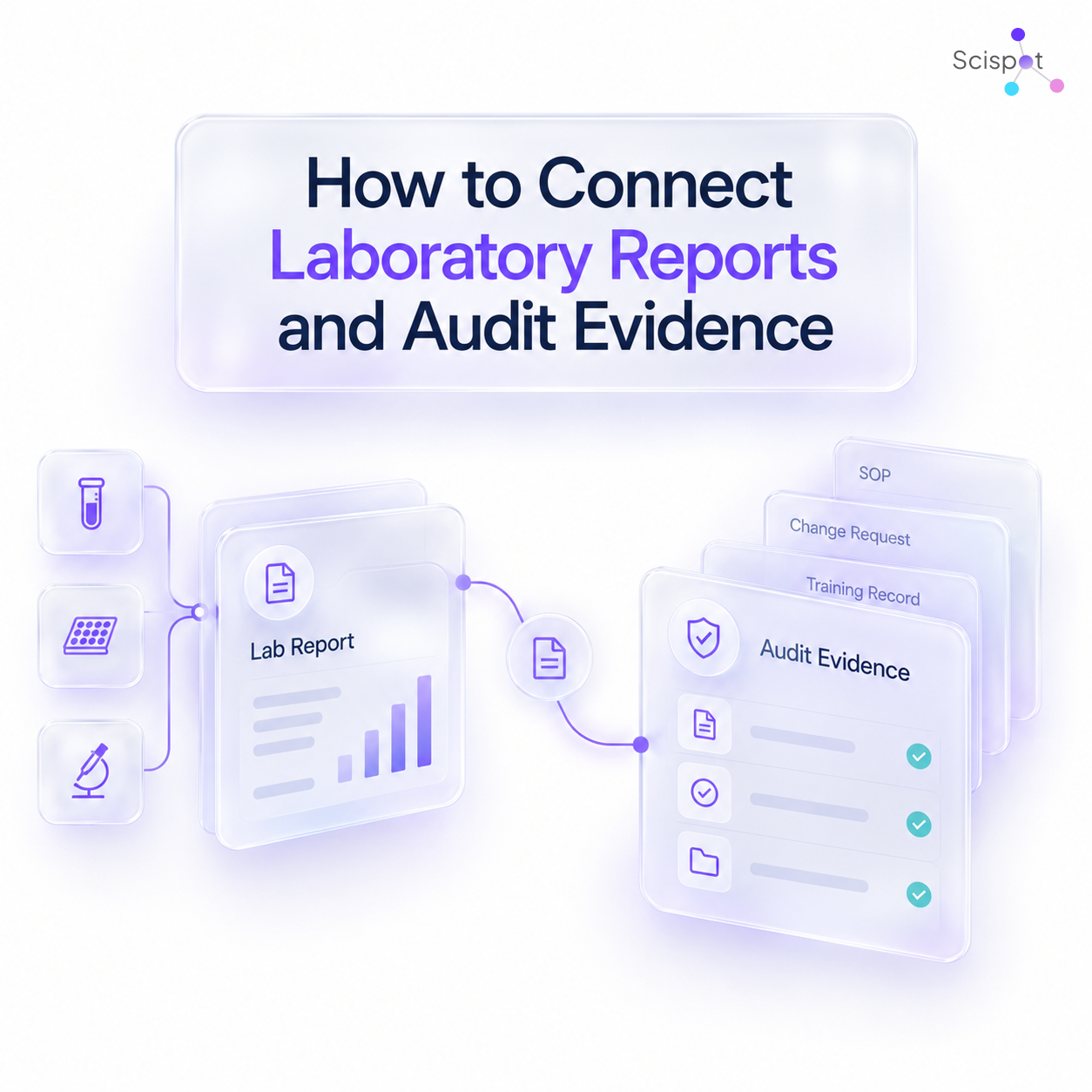
The laboratory's LIMS can remain the source of approved analytical results. An existing QMS can remain the owner of a deviation. Scispot can connect those records to the report workflow through the agreed interfaces, with ownership and synchronization behavior defined in scope.
That reduces the need for a disruptive replacement project before improving report coordination.
Automate the routine work and retain controlled decisions
Rules can flag missing fields, block a premature transition, route an exception, and document what happened. AI assistance should not quietly approve a regulated report or alter an approved scientific result.
Scispot supports validation and inspection readiness. The lab retains authority over its procedures, intended use, approval roles, and regulated sign-off. After activation, the agreed optimization work can focus on recurring rework and queue delays—not simply whether the software is running.