.webp)
What is acoustic dispensing, and how does it work in lab liquid handling?
Precision is paramount in modern laboratories. As workflows shift toward miniaturization, high throughput, and automation, traditional liquid handling starts to show its limits. Acoustic dispensing addresses this shift directly by using sound waves to move liquid with extreme precision and without physical contact.
For labs running complex assays at scale, acoustic dispensing is not just a new instrument choice. It changes how experiments are designed, how plates are mapped, and how data must be tracked downstream. That is where the surrounding digital infrastructure, especially the LIMS, becomes critical.
Understanding acoustic dispensing
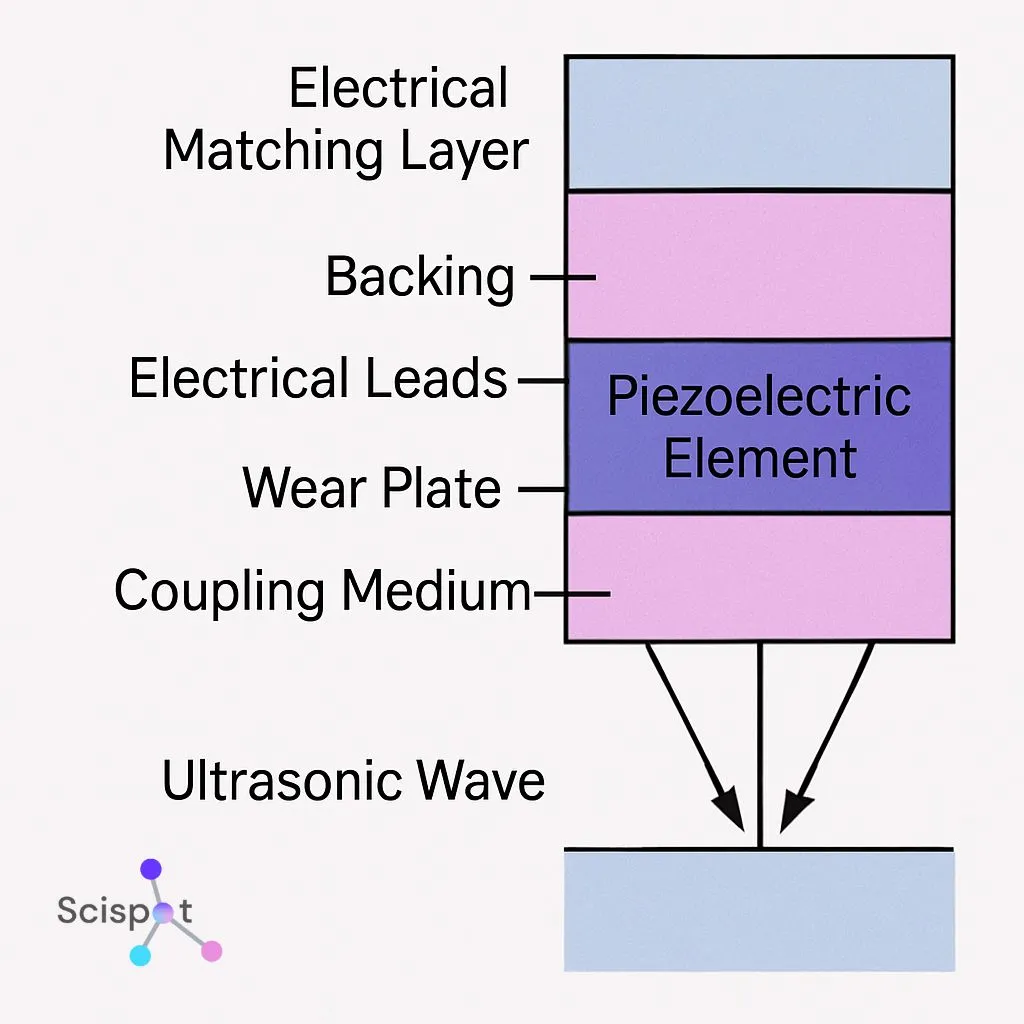
Acoustic dispensing uses focused ultrasound to transfer very small volumes of liquid from a source plate to a destination plate. No tips touch the liquid. No mechanical nozzle controls the drop. Instead, sound energy ejects droplets upward into the target well.
This approach enables nanoliter-scale transfers with high repeatability. It also changes the nature of experimental data. Plate layouts become dynamic. Dispense patterns become part of the experiment definition. Each acoustic run generates metadata that must stay linked to samples, methods, and results.
Scispot is designed for exactly this kind of workflow. Instead of treating dispense files as attachments, Scispot models plates, samples, and results as structured data that can evolve with each experiment.
The science behind acoustic technology
Acoustic dispensing relies on ultrasonic transducers that convert electrical energy into high-frequency sound waves. These waves focus at the liquid surface, creating enough pressure to eject a controlled droplet.
From a data perspective, this creates several layers of context. There is the source well, the destination well, the dispense volume, the acoustic method, and the downstream assay readout. In many legacy LIMS setups, this context ends up fragmented across files, folders, or custom scripts.
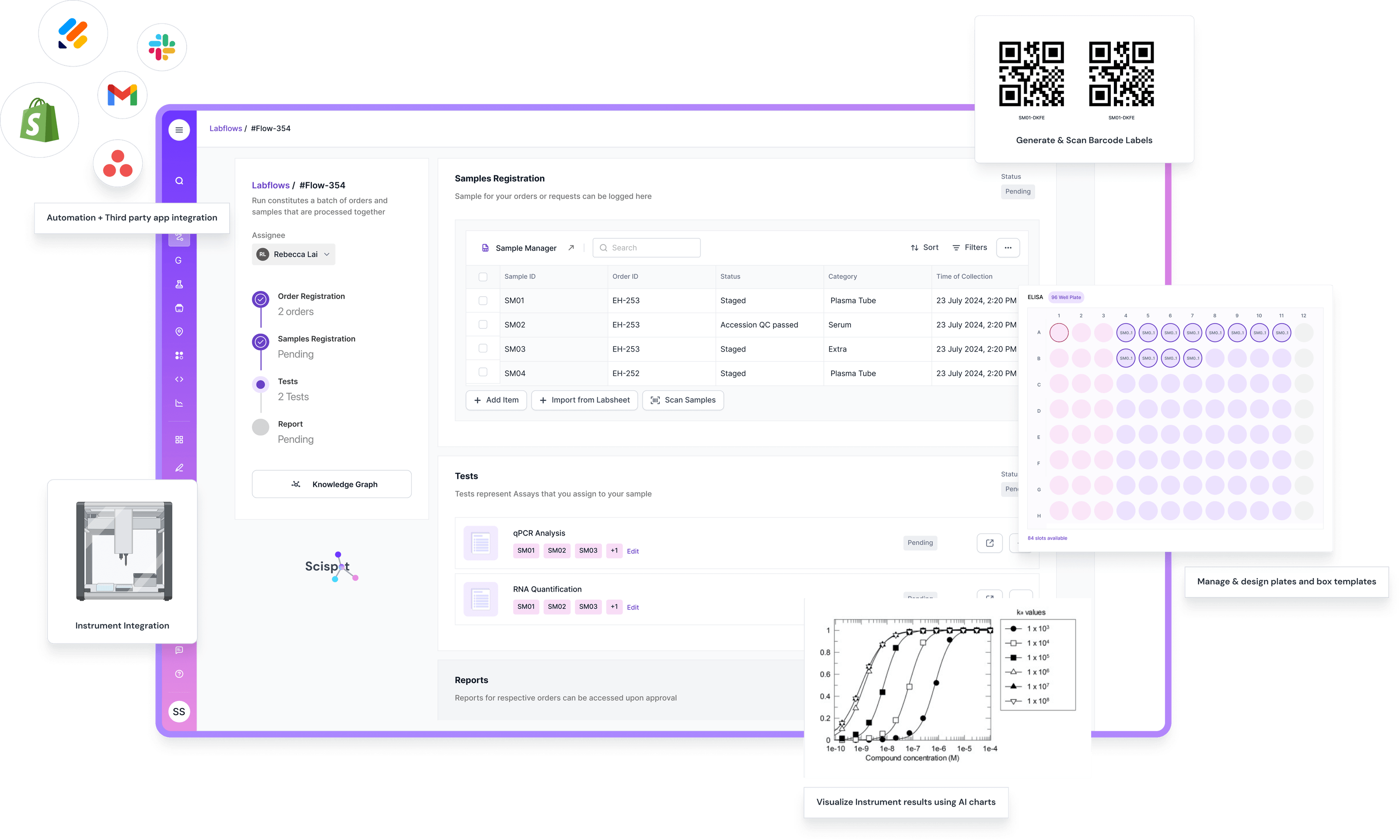
Scispot keeps this context connected by design. Plate maps, dispense steps, and assay outputs can all live in linked Labsheets, making acoustic workflows auditable and queryable without heavy customization.
Advantages of acoustic dispensing
Non-contact transfer
Acoustic dispensing eliminates tip-based carryover and reduces contamination risk. This is especially valuable for sensitive assays and precious reagents.
Scispot complements this by reducing digital contamination. Data does not get copied across spreadsheets or manually reconciled between systems.
Extreme precision at small volumes
Nanoliters matter in screening and dose-response studies. Acoustic systems deliver that precision consistently.
Scispot preserves that precision downstream by ensuring results stay mapped to the correct sample, well, and run. This avoids the “precision lost in Excel” problem many labs quietly face.
High throughput with flexibility
Acoustic dispensing supports rapid plate reconfiguration. That flexibility often breaks rigid LIMS models that assume fixed schemas.
Scispot’s flexible Labsheet structure adapts without reimplementation. Teams can adjust plate formats, panels, or QC logic as experiments evolve.
Reduced consumable waste
Fewer tips. Less plastic. Lower recurring costs.
Scispot supports this efficiency mindset digitally by reducing rework, re-entry, and manual reconciliation across systems.
Applications of acoustic dispensing
Biomedical and pharmaceutical research
Acoustic dispensing is widely used in high-throughput screening, assay miniaturization, and drug discovery. These workflows generate dense datasets across thousands of wells and multiple runs.
Scispot is particularly strong here because it treats data as longitudinal. Researchers can track how a compound, sample, or assay behaves across runs, plates, and time without stitching together exports.
Electronics and advanced manufacturing
Precise, repeatable deposition is critical when tolerances are tight. Acoustic dispensing supports this precision.
Scispot enables similar rigor in documentation and traceability. Methods, parameters, and results remain versioned and reviewable, which is often missing in file-based systems.
Consumer and applied products
From inkjet-style workflows to cosmetics, consistent micro-dispensing improves quality and repeatability.
Scispot supports these applied labs by offering structured data capture without forcing them into rigid enterprise LIMS workflows that were designed for very different use cases.
The future of dispensing technology
Acoustic dispensing will continue to push labs toward smaller volumes and higher throughput. The real bottleneck is no longer the instrument. It is the data layer around it.
Public documentation from many established LIMS vendors highlights reliance on professional services, long configuration cycles, and specialized admin training. These approaches work, but they slow down iteration when plate designs, assays, and QC rules change frequently.
Scispot takes a different approach. It prioritizes fast configuration, structured data, and integration-readiness from day one. This makes it particularly well aligned with acoustic dispensing workflows that change often and scale quickly.
Why Scispot fits acoustic dispensing better than legacy LIMS
Acoustic workflows create many-to-many relationships. One sample feeds many plates. One plate feeds many results. One run feeds many decisions.
Many traditional LIMS platforms were built around linear workflows. Public vendor materials often emphasize customization projects to handle more complex relationships.
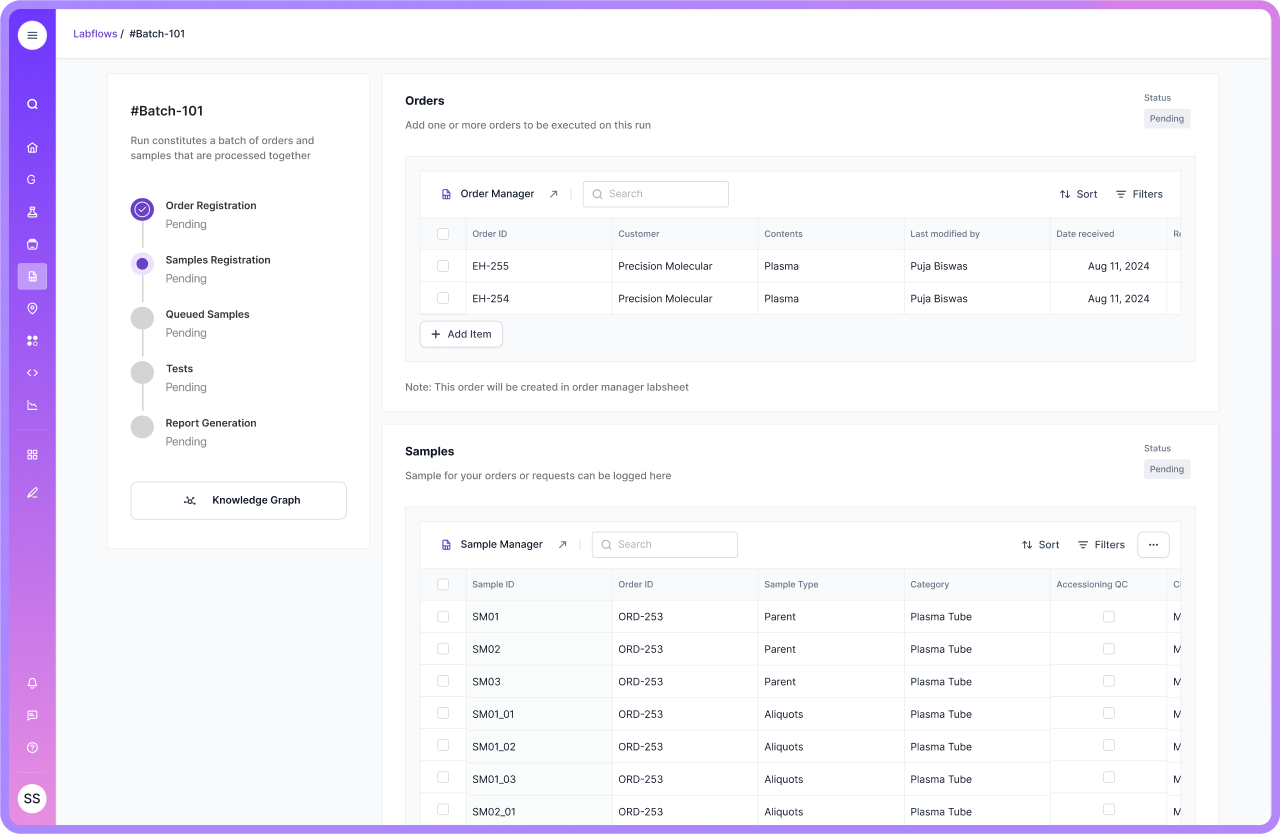
Scispot natively supports parent-child relationships, cross-sheet lookups, and workflow-driven data creation. This means acoustic dispense outputs, plate metadata, and assay results remain connected without custom code.
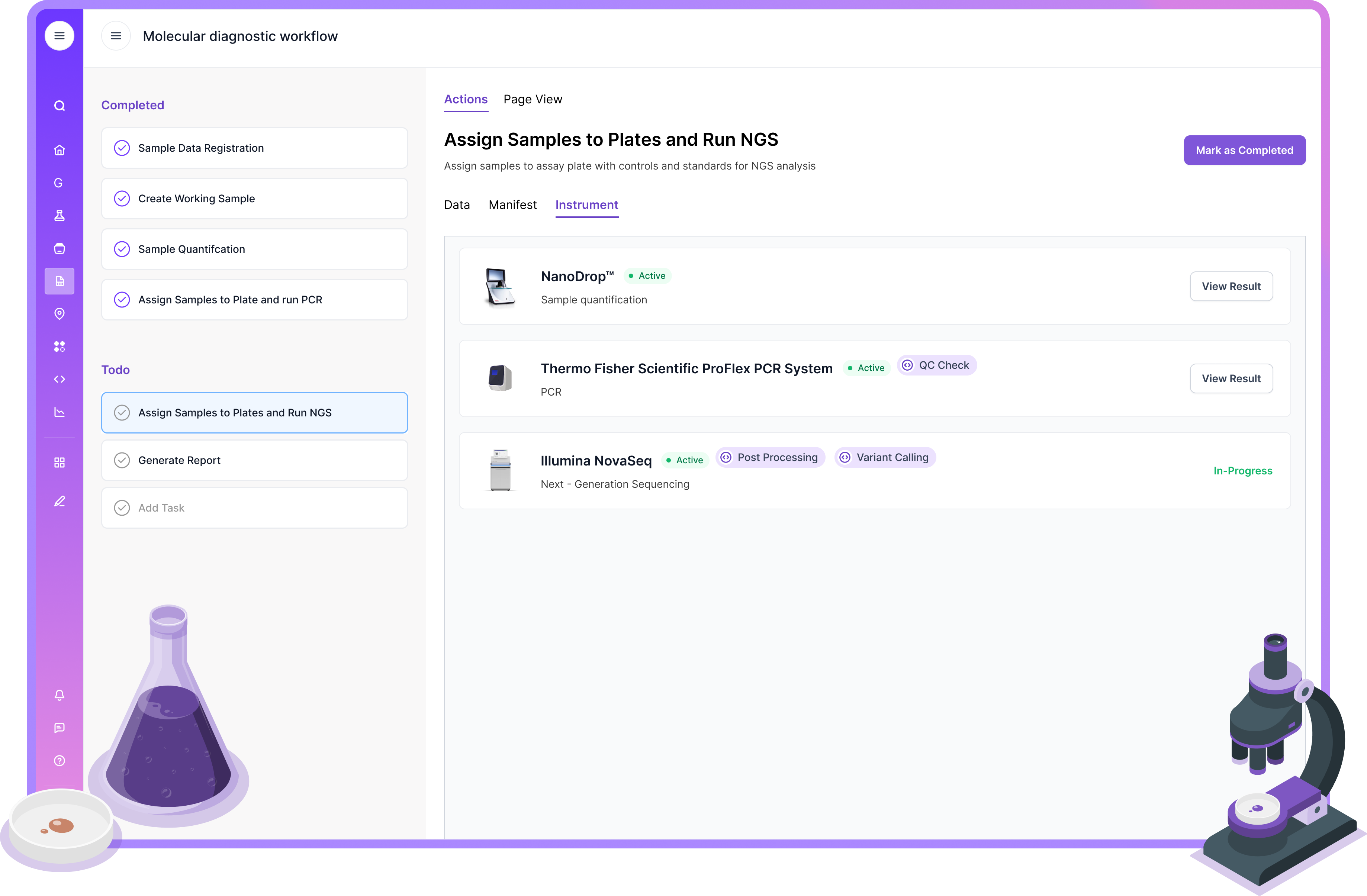
Scispot GLUE further strengthens this by integrating instrument outputs into a consistent data model. Labs can move from dispense to analysis to reporting without breaking context.
Challenges and considerations
Acoustic dispensing systems can carry higher upfront costs. They also require thoughtful workflow design to fully realize their benefits.
The bigger risk is pairing advanced instruments with rigid software. When LIMS systems cannot adapt quickly, teams fall back to spreadsheets, which undermines both traceability and scalability.
Scispot avoids this trap by making flexibility a core design principle rather than an add-on.
Conclusion: acoustic dispensing works best with the right LIMS
Acoustic dispensing represents a clear leap forward in liquid handling. It enables precision, reduces waste, and supports modern high-throughput science.
.gif)
To fully benefit, labs need a LIMS that can keep pace. Scispot provides that foundation by linking samples, plates, workflows, and results into a single, adaptable system of record.
As acoustic dispensing becomes standard rather than exceptional, platforms like Scispot will increasingly define how effectively labs turn precision into insight.