

.webp)
Quality Management Systems for Labs: Ensuring Precision
Most patients never stop to ask whether a technician calibrated the equipment that morning. You just trust the report in front of you. That trust is not random. It comes from a tight system behind the scenes called a Quality Management System, or QMS.
Think of a busy restaurant kitchen where chefs change every shift, scales are off, and nobody follows the same recipe. The food would come out different every time. A lab works the same way. Running one test means very little on its own. What matters is the system around it that keeps every step consistent.
Long before your physician reads your chart, strict rules guide the whole process. They cover everything from sample tracking to machine checks. Good lab results do not come from expensive tools alone. They come from steady oversight, clear rules, and strong laboratory quality assurance. That is what makes the final result dependable instead of lucky.

Why the Master Recipe is the Secret to Consistent Laboratory Results
If five chefs bake the same cake, you expect it to taste the same every time. Labs aim for that same kind of consistency. You expect the same accurate result whether the work is done by a senior scientist or a new technician. Labs get there by following detailed instructions called Standard Operating Procedures, or SOPs. These are the recipes of lab work. They remove guesswork and make the process repeatable.
Writing these procedures takes real care, and they play a big part in reducing analytical errors in clinical testing. A solid lab procedure usually includes four core parts:
Specific ingredients: the exact reagents needed for the test.
Equipment settings: the right temperatures, calibration values, and machine settings.
Step-by-step instructions: the exact order and timing for each step.
Safety checks: built-in checks to confirm the process is still on track.

Even the best procedure becomes a problem if someone uses an old version. That is where document control comes in. It makes sure only the latest approved procedure is available at the bench. When a method changes, the old version gets pulled out of use. In the past, labs handled this with stamps, binders, and filing cabinets. Now, document control software for research labs handles those updates much faster. It also reduces the risk that comes with paper records and helps protect patient data.
How Digital Brains Replace Paper Messes to Keep Your Data Safe
When you hand over a vial of blood, it is normal to wonder whether it could get mixed up with someone else’s. That fear is one big reason labs moved away from paper records. In the past, they relied on handwritten labels and logbooks that could smudge, tear, or disappear.
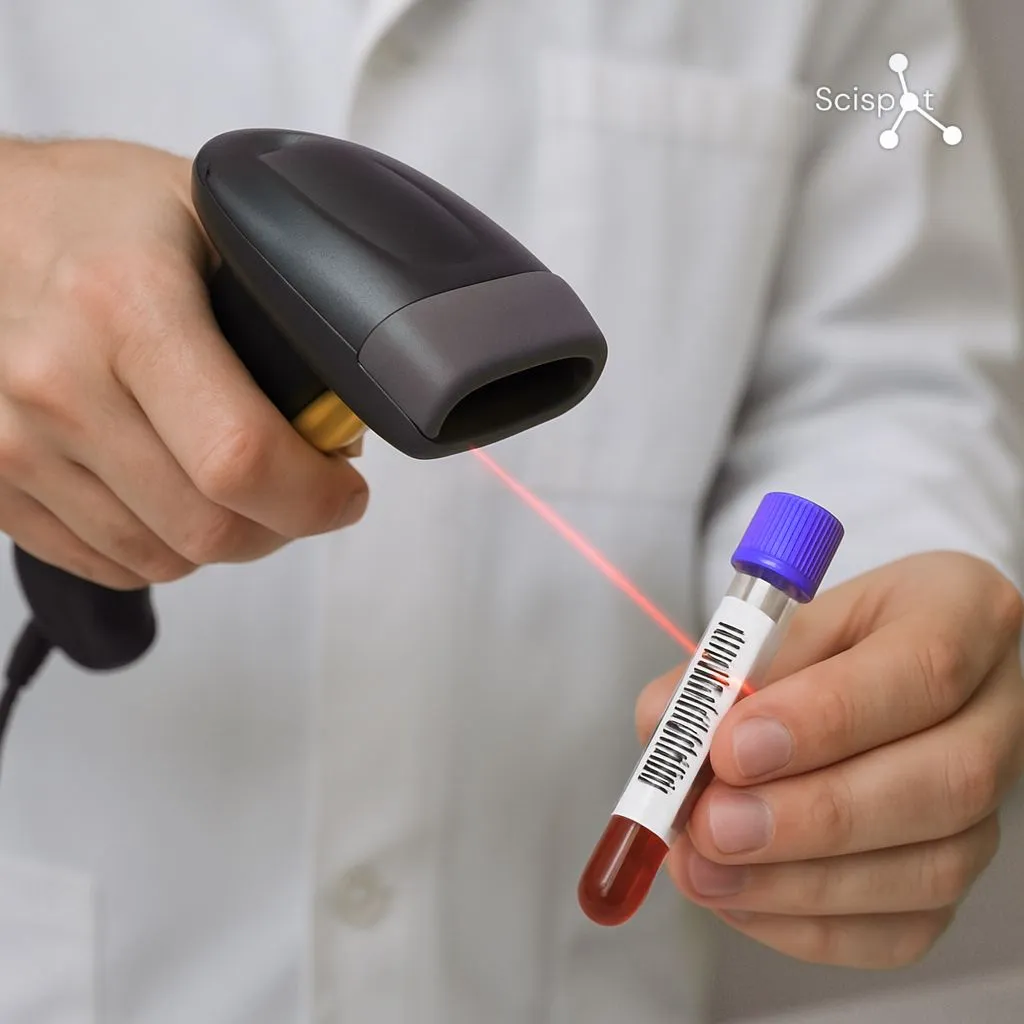
Today, many labs use a Laboratory Information Management System, or LIMS. Instead of writing your name by hand, the technician prints a barcode. Once that barcode is scanned, the system tracks where the sample is and what happens to it next. One of the biggest benefits of laboratory information management systems is that they cut down on human mix-ups by giving every sample a clear digital trail.
That trail covers more than location. It also records who did what and when they did it. If a scientist tests your sample, the system logs their name and the exact time. Maintaining data integrity in GLP environments depends on that kind of secure, time-stamped record. Paper binders could never do that with the same level of control.
Software tracking is only one part of the picture, though. Even the best digital records cannot fix a machine that is out of calibration. That is why your blood test also depends on something as basic as a daily zero check.
Scispot as a Modern Quality Management Solution for Labs
Scispot is part of the next wave of quality systems for labs. Instead of juggling spreadsheets, paper records, and disconnected tools, labs can use Scispot as one digital system for SOP management, sample tracking, workflow execution, audit trails, and structured data capture. That kind of setup makes quality easier to manage because every action, update, and result stays traceable in one place. For modern labs, Scispot helps make quality less of a manual admin task and more of a system teams can review, manage, and use for compliance with less friction.
Why Your Blood Test Depends on a Machine's Daily Zero Check
Most people have stepped on a bathroom scale and noticed it starts above zero. That is annoying at home. In a medical lab, the same kind of drift can cause the wrong result. To prevent that, labs rely on metrology, the science of measurement. Before testing a sample, a technician runs a daily zero check through calibration. That resets the machine against a known standard so the readings stay accurate.
To prove that this happens, labs keep a full record of each check. Laboratory quality assurance depends on that traceability. Every time a machine is adjusted, the action is documented. You can usually spot this kind of upkeep through three signs on well-maintained equipment:
A calibration sticker that shows the date of the next check.
Maintenance logs that record past tune-ups and repairs.
Daily performance checks that use a known standard to confirm the machine still reads correctly.
Because these records exist, labs can qualify for standards like ISO 17025 certification. That shows their testing systems can be trusted. But even when calibration is done right, problems still happen. What matters next is how the lab responds.

Turning Mistakes into Masterpieces: How Labs Use CAPA to Stop Errors Before They Happen
Putting a bucket under a leak does not fix the roof. It only buys time. Labs use the same logic when something goes wrong. If there is an error, they do not just blame the technician. They look for the root cause. The goal is to fix the system, not just the symptom. That is the role of corrective and preventive action plans, or CAPA. Once a real system flaw is found and fixed, the lab works to stop it from happening again.
Labs also do not wait for patients to spot problems first. They look for weak points through internal audits. An internal audit checklist for diagnostic facilities helps teams catch risks early. When they find one, they usually follow a four-step cycle:
Identify the error or risk.
Find the root cause.
Fix the system issue.
Check later to make sure the fix worked.
The best labs also think ahead. They use risk management strategies for medical laboratories to spot possible failures before they affect patient care. Those daily checks matter, but outside review matters too. At some point, the system has to stand up to external standards.

The Difference Between ISO 17025 and ISO 9001: Why It Matters for Your Results
A lab can be organized and still produce weak science. That is the heart of the ISO 17025 vs ISO 9001 difference. ISO 9001 shows that a business runs in an orderly way. It says a lot about process and management. It does not prove that the lab’s science is accurate. For that, labs need accreditation.
External reviewers use international standards to judge quality in a consistent way:
ISO 9001 (General Management): shows the lab has solid paperwork, customer focus, and basic organization.
ISO 17025 (Technical Competence): shows the equipment, methods, and staff can produce valid results. Labs that want ISO 17025 certification have to prove that through direct technical review.
ISO 15189 (Medical Focus): is the main standard for human medical labs. Meeting ISO 15189 accreditation requirements shows the lab can handle patient samples and results properly.
A strong public image is not enough when the result affects a diagnosis. These standards help prove that a lab has both the discipline and the technical skill to get the answer right.

How to Tell if a Lab is Safe: Three Gold Seals of Quality to Look For
A strong quality system becomes part of how a lab works every day. It shapes habits, decisions, and standards across the team. One way outside groups verify that quality is through proficiency testing. This is like a blind exam where labs must show they can produce the right result.
Patients and consumers can do a simple check of their own:
Ask about accreditation: Find out whether the lab holds a recognized quality certification.
Look for official seals: Check the website or waiting area for accreditation logos.
Ask about proficiency testing: Confirm whether the lab takes part in external testing programs.
These steps help turn blind trust into informed trust. A well-run lab does more than produce results. It gives people a reason to believe those results are right.