


.webp)
Stress-Free Clinical Lab Visit: Checklist & Tips
Walking into a clinical lab can feel unfamiliar. There are fasting rules, sterile tools, and the usual nerves that come with a medical appointment. Under standard medical practice, your doctor uses this visit to get a clearer view of what is going on inside your body.
A sample works in a simple way. Think of a chef tasting one spoonful of soup to check the salt. They do not need the whole pot. That one spoonful tells them a lot. Your sample gives your care team that same kind of snapshot. Good prep helps make sure that snapshot reflects your usual state, not a recent meal.
Knowing what will happen can ease a lot of stress before the visit. Preparing for a diagnostic test usually comes down to four stages: what you do the night before, what you bring, what happens during the draw, and how you read the results.

The 'Clean Slate' Secret: How Preparation Guarantees Accurate Lab Results
Showing up prepared helps your doctor get a more accurate picture. When you eat, your blood changes for a while as sugars and fats move through your system. For a fasting test, the lab needs a true baseline without that extra noise. Always check with your doctor to confirm whether your test requires fasting.
Water usually helps before a blood draw. Drinking plain fluids increases blood volume, which can make veins easier to find. That gives the phlebotomist, the person trained to draw your blood, a better shot at finding a vein quickly and making the process smoother.
Use this practical checklist the night before your appointment:
- Fasting: Stop eating 8 to 12 hours before the test, exactly as instructed.
- Hydration: Drink extra water before bed and again when you wake up.
- Medication: Ask your doctor if you should take your usual morning pills before or after the test.
- Rest: Get enough sleep so your blood pressure and stress hormones stay steady.
Prep is only one part of it. Once you know your fasting rules and stay hydrated, having the right documents ready helps you avoid delays at check-in.

Navigating the Paperwork Maze: What to Bring to Avoid Delays
Showing up fully prepared is one of the easiest ways to cut waiting room stress. A simple go-bag with the right documents can make check-in quick and smooth. Bring these essentials:
- Photo ID
- Insurance card
- Physician order if it was not sent electronically
- Preferred payment method
Where you take those documents can affect what you pay. Many people do not realize they can choose between hospital labs and independent testing centers. Independent labs focus only on collecting and processing samples. Since they do not carry the same overhead as a hospital, they often charge less for the same routine tests.
It is worth asking about pricing before you sit down. That simple question can help you understand out-of-pocket costs before a surprise bill shows up weeks later. You can ask for an estimate or check whether cash-pay discounts are available. Once the paperwork and payment are handled, the front desk part is done and the visit moves to the actual sample collection.

Scispot and the New Standard for Clinical Lab Experience
A modern clinical lab visit should not feel confusing, slow, or hard to follow. Patients should get a smooth digital experience, with sample check-in, barcode tracking, secure results, and clear status updates. That is where Scispot stands out as a strong digital solution for clinical labs. It helps labs replace scattered paperwork, manual handoffs, and slow communication with connected workflows, better sample traceability, faster turnaround, and a better experience for both patients and staff. For labs that want to feel organized, compliant, and easy to trust, Scispot provides the digital backbone to support that experience.
From the Chair to the Vial: Mastering the Phlebotomy Experience
A blood draw can make anyone tense, especially the first time. If you feel nervous, remember the phlebotomist does this every day. A few simple tricks can help with needle anxiety. Look away early. Breathe in slow four-second cycles. That can help keep your heart rate steady.
After the quick pinch, you may notice the technician filling several tubes with different colored tops. That does not mean they are taking too much blood. Each tube contains specific chemicals for different types of testing. You can think of it like sorting mail into different bins. One tube goes to cell counting. Another goes to cholesterol testing.
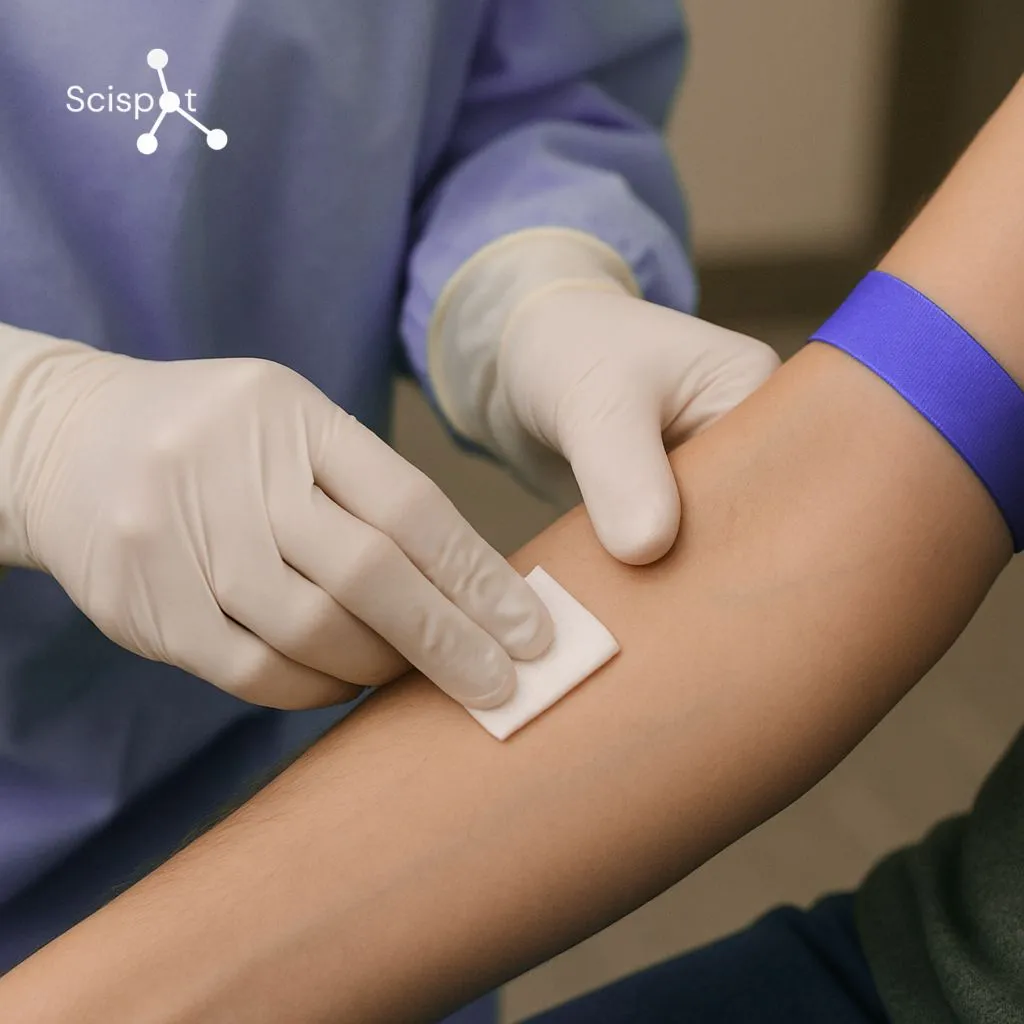
Once the needle comes out, what you do next matters. Standard guidance for preventing bruising after venipuncture, the medical term for entering a vein, is to press firmly on the cotton for two full minutes without checking the spot too soon. A lot of people peek early, and that can let blood leak under the skin and cause a bruise called a hematoma.
Good aftercare helps you recover quickly so you can eat, head out, and get on with your day.
Skip the Waiting Room: When to Consider Home Visits and Instant Tests
Getting to a clinic is not always easy, especially with a packed schedule or mobility limits. A clinical lab home visit can solve that by bringing the professional to you. A mobile phlebotomist uses the same sterile supplies as a standard lab. It is a private and convenient way to give a sample without sitting in a waiting room.
Some tests also happen right during a regular appointment. In a clinical visit with instant lab tests, often called point-of-care testing, your doctor may swab your throat for strep or prick your finger for blood sugar. These tools are fast and compact, so you may get results before you even leave the exam room.
That speed has limits. When you compare routine screening with diagnostic testing, rapid tests work well for quick answers to simple questions, like whether you have a common infection. They cannot do the deeper work needed for more complex health markers. Those tests still rely on the equipment and processing used in a full lab.

Inside the 'Sorting Hat': Why Your Results Take Time to Process
Once your sample leaves the clinic, it goes to a processing site. If you have ever wondered why results take time, it helps to know that blood is a mix of different parts that need to be separated first. Tubes often go into a centrifuge, a machine that spins fast enough to separate red blood cells from clear fluid. It works a bit like a salad spinner pulling water off lettuce. That way, the machines test the exact part of the sample they need.
Some tests are fast. Others take longer. A machine can measure cholesterol fairly quickly once the sample is separated. Infection testing can take much more time because it may involve culturing the sample. In that process, scientists place it in a warm dish and wait to see what grows. It is a lot like planting seeds and waiting to see what comes up. Since bacteria grow at their own pace, those tests naturally take longer.
Depending on the order, turnaround times for routine tests often look like this:
- Complete Blood Count (CBC): Ready in 24 hours
- Metabolic Panel: Takes 1 to 2 days
- Cultures: Requires 3 to 5 days to grow
Once the results appear in your portal, the last step is understanding what they mean.
Cracking the Code: How to Read Your Lab Report Without Panic
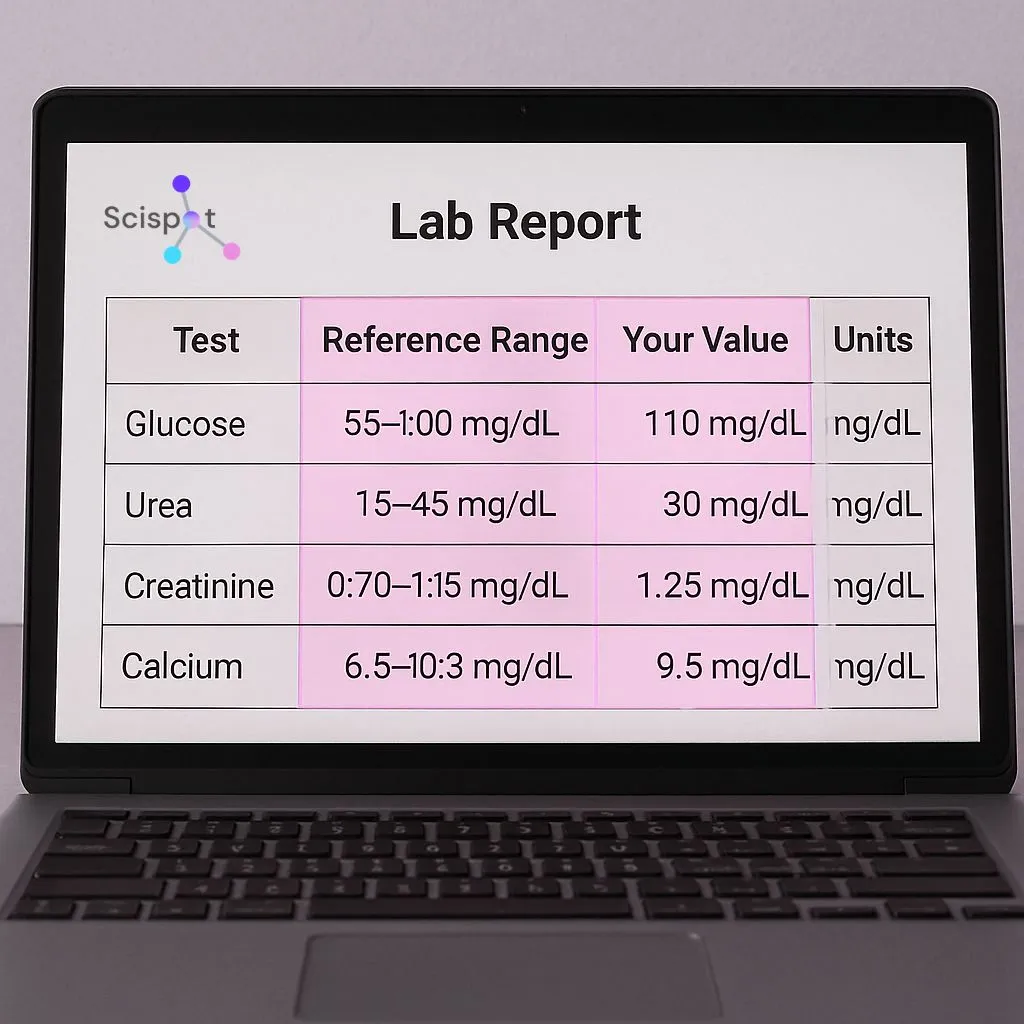
Opening your patient portal and seeing a screen full of lab terms can raise your stress fast. Reading a lab report gets easier once you stop thinking of the numbers as pass-or-fail grades.
Reference ranges are best understood as averages. They show where most healthy people’s numbers tend to fall. If you see an “H” for high or an “L” for low, that does not always mean something is seriously wrong. Small changes outside the usual range are common and can sometimes reflect things like temporary dehydration.
To make sense of lab results, doctors often look at patterns over time, not just one report. Many patient portals let you compare current results with older bloodwork. That history helps your doctor see whether a flagged number is your normal baseline or a real shift that needs attention.
Before your follow-up, it helps to write down three simple questions: what the flagged values mean for you, whether you need to change anything in daily life, and when you should test again. Those questions make the conversation with your doctor more useful and easier to follow.
Your Lab Visit Action Plan: Taking Control of Your Healthcare Data
A clinical lab visit feels a lot less stressful when you know what to expect. Once you understand the full path, from check-in to sample processing, the visit feels more manageable and a lot less uncertain.
Use this quick checklist before you go:
- Water: Drink a large glass beforehand to help make veins easier to find.
- ID: Bring your insurance card and doctor’s order.
- Breathing: Take slow deep breaths to relax your arm during the draw.
- Portal Login: Set up your online account so you can view your results easily.
Your results are more than a set of medical terms. They tell part of the story of your health. When you take an active role in the process, you make that information easier to use and easier to act on.