

.webp)
Top Bioanalytical Testing Services: Comprehensive Solutions
When you swallow a simple aspirin for a headache, how do scientists know how much of that medicine actually reaches your bloodstream? Most of us know new drugs go through safety checks before they reach pharmacy shelves, but tracking a chemical’s path through the body is a harder job.
To answer that, scientists need to confirm a drug’s molecular identity. That identity acts like a fingerprint. Bioanalytical testing services use these methods to detect very small amounts of active medicine inside a complex biological system.
Regulators like the FDA require this level of scrutiny for approved drugs. This testing connects lab research to real-world medicine by showing that a drug clears the body safely instead of building up to toxic levels.
These testing methods also confirm that a treatment reaches the right place and behaves the way it should. That work helps protect patients and supports safe use of medicine.
How bioanalytical services track medicines in blood
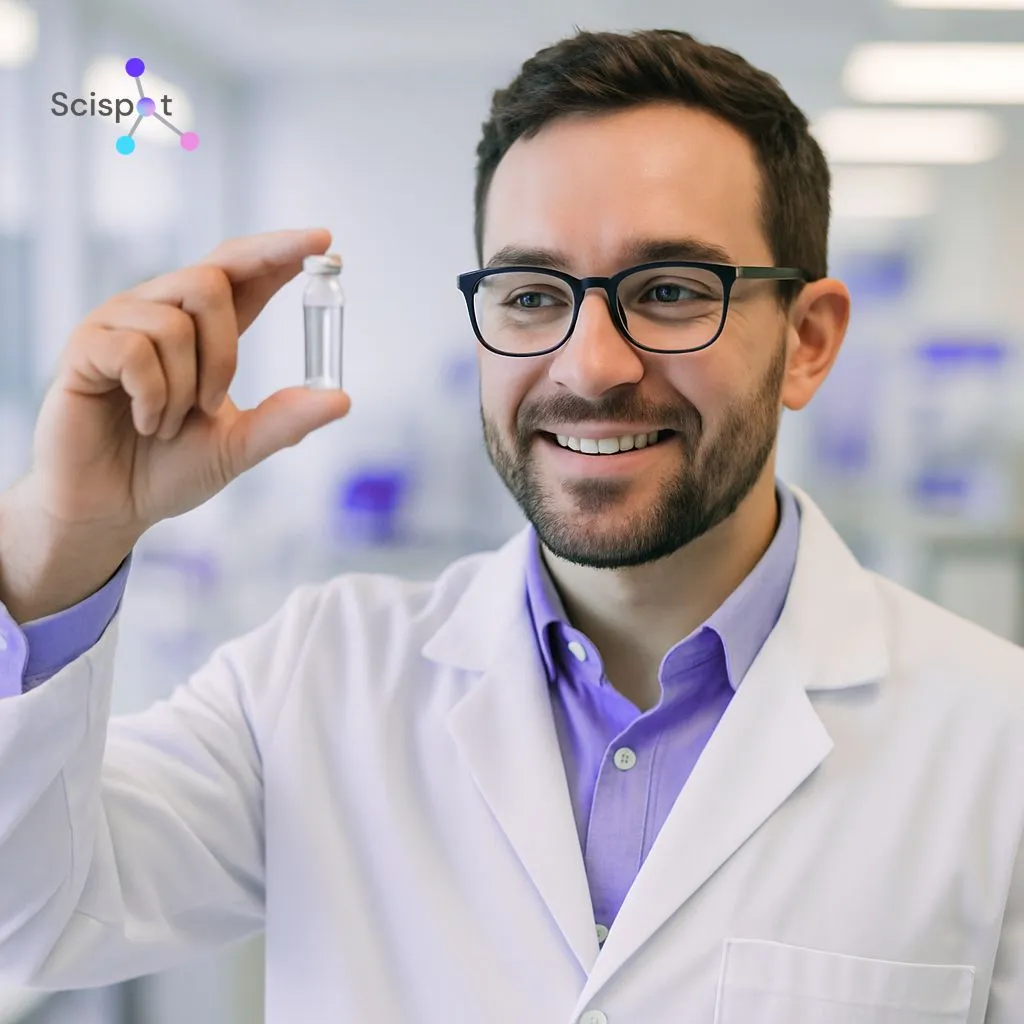
Once a pill enters the bloodstream, tracking it is not simple. Human blood is full of cells, proteins, and water. Finding the specific drug molecule, called the analyte, is the core job of bioanalysis services.
Before scientists can measure anything, they need to separate the medicine from the blood. This step is called sample extraction. It removes biological material that gets in the way and leaves the drug molecules ready for testing.
Modern lab instruments are highly sensitive. They can detect very small amounts of medicine in a sample. To do that, each sample goes through four steps:
Collection: A clinic draws a blood sample from the patient.
Extraction: The lab separates the target drug molecules.
Measurement: Sensitive instruments measure the drug concentration.
Reporting: Scientists compile the results into a final report.
This process helps make sure a medicine does not build up to dangerous levels or disappear too fast. These measurements support patient safety.
Why pharmacokinetics and pharmacodynamics matter for dosing
Why does your doctor tell you to take allergy medicine every twelve hours? The answer is pharmacokinetics, which is the study of what your body does to a drug. After a pill is absorbed and circulated, your body starts to break it down and clear it.
Pharmacodynamics looks at the other side of the equation. It measures what the drug does in your body, whether that means easing a headache or lowering a fever. Scientists often study both together so they can understand how strongly a drug works and how quickly the body removes it.
That balance helps define the dosing window. This is the amount of medicine needed to help without causing harm. If a patient clears a drug slowly, it can stay in the body too long and build up to unsafe levels. To track that risk, researchers use small molecule drug metabolism analysis to measure how fast those compounds leave the bloodstream.
Modern drug testing services depend on both types of data. They support the dosing instructions printed on every pharmacy bottle, and those instructions only work if the lab data is reliable.
Why GLP standards matter
Imagine a baker who has to prove to an inspector that every grain of salt is weighed the same way every day. Labs that test medicines face that same kind of scrutiny. Health agencies enforce a strict framework called Good Laboratory Practice, or GLP.
By following GLP compliant laboratory standards, independent labs help ensure the safety data sent to regulators is accurate. This outside verification helps prevent mistakes and protect patients.
That only works if the lab can prove the data is real and the process is consistent. Data integrity in clinical laboratory testing depends on careful records and repeatable work. To pass audits, a lab needs to follow three basic rules:
- Follow Standard Operating Procedures, or SOPs, for every test.
- Calibrate equipment every day so measurements stay accurate.
- Keep clear, permanent records so auditors can retrace each step.
This documentation shows that the testing process works. Scientists follow FDA bioanalytical method validation guidance to make sure their tools can reliably track chemical medicines in blood. As medicine shifts from small chemical drugs to complex biologic treatments, those safety checks also need to adapt.
Why large molecules need different testing
A traditional pill has a small, more predictable chemical structure. Biological medicines are much more complex because they are made from living cells. That complexity means labs need different methods to test how these drugs behave in the body.
The immune system can sometimes see these large biological medicines as threats. When that happens, the body may produce a response against the drug itself. To understand why a patient stops responding to treatment, scientists use immunogenicity testing for large molecules to see whether the body is reacting against the therapy.
Measuring these drugs in blood also requires different tools. Labs often weigh ligand binding assays against mass spectrometry, depending on the molecule and the question they need to answer. A ligand binding assay uses a highly specific binding system that matches the biological drug, which helps scientists measure therapeutic proteins with precision.
A big part of the job is separating the drug signal from normal biological background noise. Without that step, the data is not reliable.
How labs deal with matrix effects
Human blood is full of natural materials that can interfere with drug measurement. Scientists call these interferences matrix effects, and they are one of the biggest challenges in bioanalytical work.
To get an accurate reading, labs need to filter out common sources of interference, including:
- Dietary fats: Material left from recent meals that can block sensitive lab sensors.
- Natural proteins: Normal body components that can look like the drug and trigger false signals.
- Enzymes: Molecules that may break down the medicine before it is measured.
One of the main tools for solving this problem is chromatography. It helps separate the medicine from the rest of the sample so the instrument can measure the right compound. This is a key part of overcoming matrix effects in chromatography and getting precise results.
Regulators like the FDA require proof that these methods work every time. Labs spend months building robust bioassay protocols so the process stays consistent. Data can only be trusted after those bioanalytical methods are validated and shown to be reliable.

Why many companies outsource this work
Building and validating these testing methods takes time, skill, and expensive equipment. That is why many drug makers outsource laboratory analysis to Contract Research Organizations, or CROs.
These labs act as independent testing partners. They help companies move faster and avoid building every capability in-house. Their work often saves time and money because they focus on specialized analytical testing.
Choosing a contract research organization means balancing accuracy and speed. Drug developers usually look for a team with a strong regulatory track record, proven skill with complex biological samples, and high throughput testing capabilities. High throughput means a lab can process many samples at the same time, which can shorten clinical trial timelines.
Working with the right testing lab helps make sure a pill or injection performs the way it should in the body. Because these facilities operate under strict oversight, their data plays a major role in proving a medicine is reliable.
Scispot for bioanalytical testing and diagnostics workflows
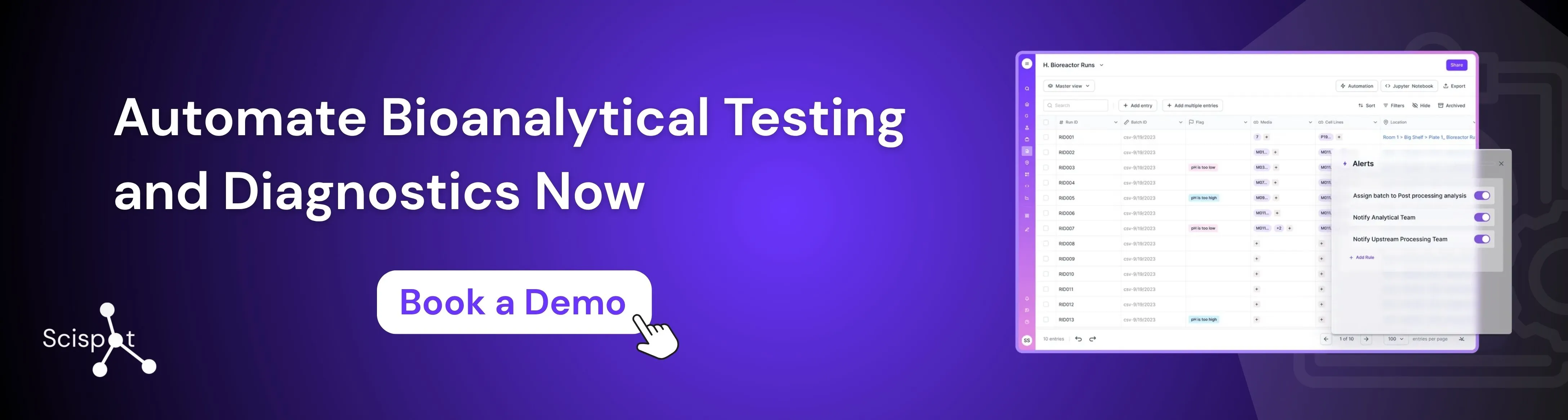
Scispot is a preferred digital solution for bioanalytical testing and diagnostics services because it brings sample tracking, assay workflows, instrument data, quality checks, and reporting into one connected system. In labs that manage complex biological samples, strict SOPs, GLP-ready documentation, and high data volume, scattered spreadsheets and disconnected tools slow work down and increase risk.
Scispot helps teams standardize workflows, capture data directly from instruments, maintain clear audit trails, and turn raw test output into structured records ready for review. That helps bioanalytical and diagnostics teams move faster, stay compliant, reduce manual errors, and build a stronger base for reliable results at scale.

Why this work matters
Every safe dose in your medicine cabinet depends on careful scientific work behind the scenes. Bioanalytical testing services turn complex biological data into measurable proof that a medicine is safe and effective.
This work is also moving toward more personalized medicine. Through biomarker discovery and validation, scientists can identify biological signs that show whether a treatment is working for a specific patient, which brings more tailored care closer to reality.
The next time you take a pain reliever, there is a long chain of testing behind that dose. Modern medicine depends on that scrutiny to make sure treatments are measured well, tested well, and trusted for the people who use them.