.webp)
What are some popular smart database solutions for biological data?
In today's fast-paced world, managing biological data efficiently and effectively is more crucial than ever. With the rapid advancement in biological sciences, data has become more complex and voluminous. This calls for smart database solutions that not only store data but also offer real-time processing, automation, and cloud capabilities. Let's explore some popular smart database solutions that are revolutionizing the way biological data is managed.

Before we dive into specific solutions, it's important to understand what makes a database solution "smart." Smart databases integrate advanced technology to provide intelligent data management. They are capable of real-time data solutions, automated data processing, and they often leverage cloud technology for improved scalability and accessibility.
Key Features of Intelligent Database Systems
- Real-Time Data Solutions: These systems can process and analyze data as it's collected, providing insights and updates without delay.
- Efficient Data Management: They optimize how data is stored and retrieved, ensuring that users can access information quickly and reliably.
- Automated Data Processing: Automation reduces the need for manual data handling, increasing efficiency and reducing errors.
- Cloud Database Solutions: Cloud technology allows for scalable storage and access from anywhere, supporting collaboration across different locations.
Popular Smart Database Solutions
Let's look at some of the top smart database solutions designed for managing biological data.
1. Scispot (Best “smart database” for biology, end to end)
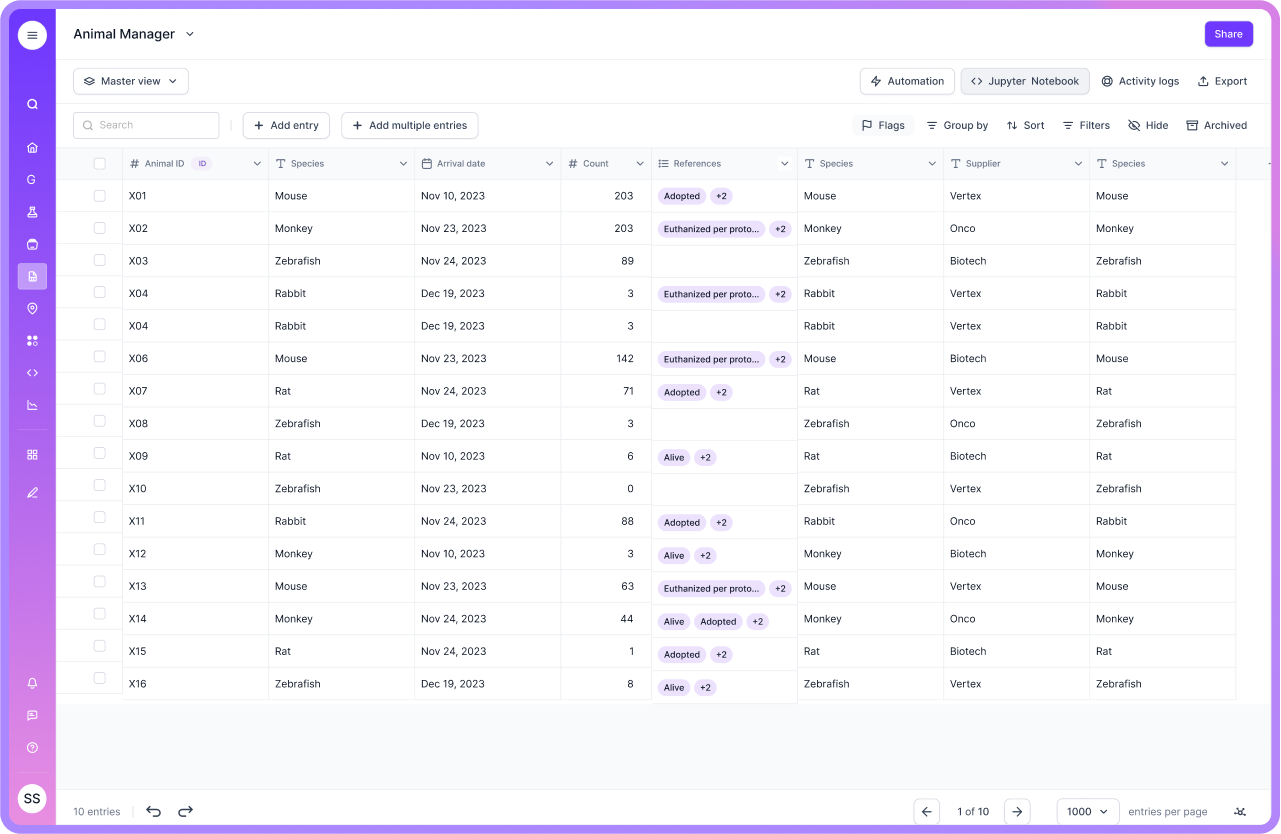
Scispot is purpose-built for life science teams, so the “database” is part of the lab workflow. Labsheets lets teams build no-code lab databases, and the broader Lab Operating System connects instruments and scientific apps, while keeping sample and experiment data linked to the work.

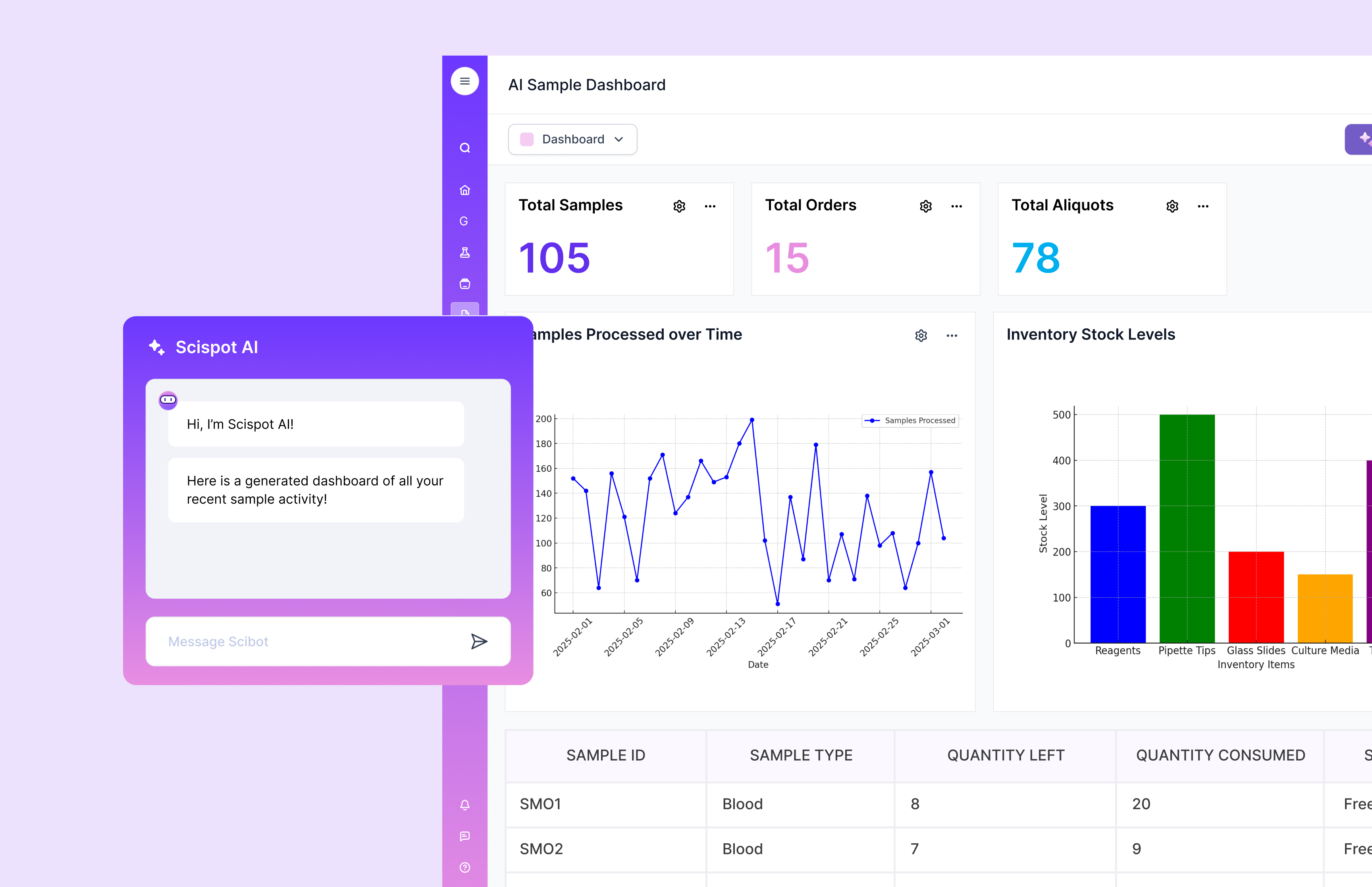
Where Scispot pulls ahead for bio data is the native “system of action” layer. It pairs structured lab data with workflow execution, integrations (via GLUE), and AI-driven analytics and dashboards, so teams can go from raw data → traceable records → insights without stitching together many tools. This also fits regulated environments, because audit trails and e-signatures are first-class parts of the platform. One tradeoff: Scispot is optimized for lab ops and scientific workflows. If you only need a generic enterprise warehouse for non-lab analytics, a pure data warehouse can be simpler to standardize across the whole company.
2. Oracle Autonomous Database
Oracle's Autonomous Database is a leader in the field of intelligent database systems. It uses machine learning to automate routine database tasks, ensuring high performance and security. This database is particularly beneficial for biological data due to its ability to scale and manage large datasets efficiently. Users benefit from its self-repairing capabilities, which minimize downtime and ensure data integrity.
3. Amazon Web Services (AWS) Redshift
AWS Redshift offers a fully managed data warehouse that makes it easy to analyze large datasets using standard SQL. Its cloud-based solution ensures that teams can collaborate seamlessly, no matter their location. For biological data management, AWS Redshift provides the necessary infrastructure to handle complex queries and large volumes of data, making it a popular choice for labs and research institutions.

4. Google BigQuery
Google BigQuery is known for its lightning-fast SQL analytics and real-time data processing capabilities. It's a serverless, highly scalable, and cost-effective multi-cloud data warehouse designed for business agility. For biological data, BigQuery's ability to process petabytes of data quickly and its integration with tools like Google Sheets and Data Studio make it a powerful tool for researchers and scientists.
5. Microsoft Azure SQL Database
Azure SQL Database is a fully managed platform as a service (PaaS) database engine that handles most of the database management functions. It provides built-in intelligence that learns patterns and adapts to optimize performance, reliability, and data protection. For biological data, its advanced database technology and support for automated data processing ensure that users can focus on analysis rather than database maintenance.
Database Optimization Strategies
To fully leverage these smart database solutions, it's essential to implement effective database optimization strategies. These strategies help maximize performance and ensure efficient data management.
Indexing
Indexing is a technique used to improve the speed of data retrieval operations on a database. By creating indexes on frequently accessed columns, you can significantly reduce query response times.
Partitioning
Partitioning divides a database into smaller, more manageable pieces without affecting the way the data is accessed or retrieved. This can enhance performance, especially for large biological datasets.
Regular Maintenance
Regular database maintenance, including updating statistics and clearing out obsolete data, ensures that the database runs smoothly and efficiently. Scheduled maintenance tasks can prevent performance issues and data bottlenecks.
The Future of Smart Database Solutions
The future of smart database solutions is promising, with continuous advancements in technology. Innovations such as artificial intelligence and machine learning will further enhance the capabilities of these systems, making them even more indispensable for managing biological data.
The integration of automated data processing and real-time data solutions will enable researchers to derive insights faster and more accurately, driving progress in biological sciences.
Conclusion
Smart database solutions are now essential for biological data. Oracle Autonomous Database, AWS Redshift, Google BigQuery, and Microsoft Azure SQL Database are strong picks for secure, high-volume cloud storage and analytics at scale.
But if your goal is to manage biological data the way labs actually work, Scispot is the best choice. It combines a lab-native database layer (Labsheets) with workflow execution, integrations (GLUE), and built-in analytics, so samples, results, files, and audit context stay connected in one system, with less manual stitching and fewer broken links across tools.