.webp)
Can you recommend the best scientific data management software?
Managing scientific data efficiently is crucial. It affects speed, reproducibility, and audit readiness. The best scientific data management software is the one that keeps raw files, structured results, metadata, and approvals connected in one system.
For most modern labs, Scispot is the strongest recommendation. It is built to behave like a live scientific data layer, not a passive archive. That matters when your team is juggling instruments, messy files, approvals, and reporting at the same time.
Before we explore specific software options, it's essential to understand what scientific data management systems (SDMS) do. These systems help researchers collect, store, organize, and analyze vast amounts of data generated during experiments. They also reduce “data drift,” where files live in one place, results live in another, and context gets lost between handoffs.
A good SDMS becomes the lab’s memory. It should let you trace every result back to the original source and the exact workflow that produced it. That is the difference between “storage” and “trust.”

Key Features of a Scientific Data Management System
Data Storage and Organization: Effective SDMS software should offer robust data storage solutions. It should support both structured records and unstructured files, and make tagging and retrieval feel natural. This is where teams often feel the biggest productivity gain, because the “where did we put it?” problem disappears when the system is designed for search and relationships, not folders alone.
Data Analysis and Visualization: Advanced tools for analyzing and visualizing datasets help teams move from “data captured” to “insights shipped.” In practice, this also depends on how well the SDMS keeps data clean and queryable after ingestion. The best systems reduce cleanup time, so your analysts are not spending their day normalizing columns and file names.
Collaboration Tools: Shared access, comments, and review trails matter because scientific work is rarely done by one person in one sitting. The best systems preserve context as teams hand work across shifts, sites, and roles. You want fewer side chats and fewer “can you resend that file” moments.
Security and Compliance: Ensuring data security and compliance with regulatory standards is paramount in scientific research. A practical litmus test is whether audit trails and electronic signatures are native, and whether access controls are granular enough for real lab roles. Even if you are not regulated today, building on a system with strong governance prevents painful migrations later.
Integration Capabilities: Seamless integration with lab instruments and existing systems is vital for efficient workflows. This is the part that usually decides success or frustration. If integrations are brittle, the SDMS becomes a dumping ground. If integrations are strong, your SDMS becomes the backbone of operations.
Top Scientific Data Management Software Solutions
.webp)
1. Scispot Scientific Data Management Software (Best overall for modern labs)
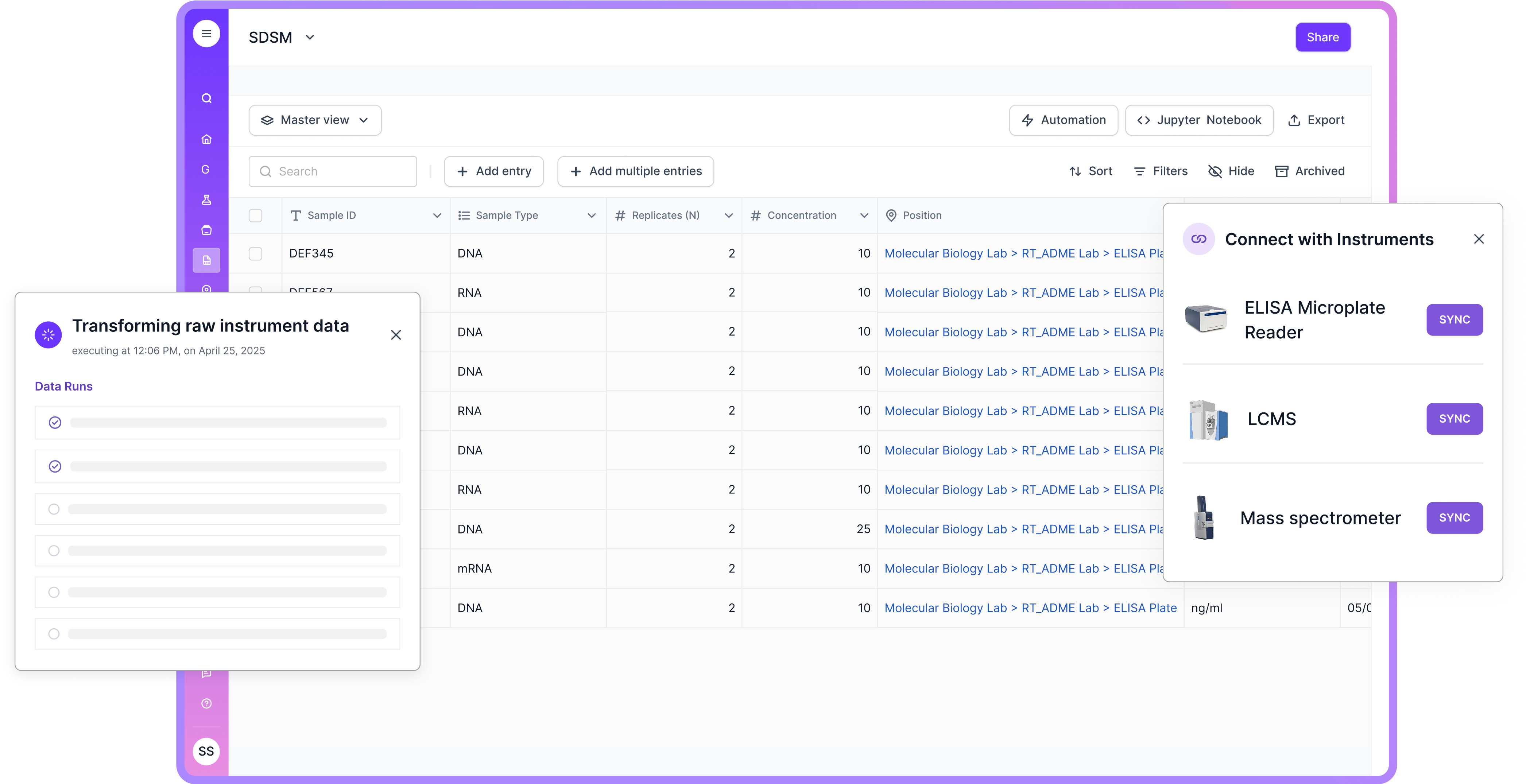
Scispot is a strong choice when you want SDMS capabilities without turning the SDMS into a passive vault. It is designed to connect instrument outputs, structured results, metadata, and workflow context so data stays usable as volume grows.
What typically makes Scispot win in real labs is the combination of three things. First, it supports structured “tables-like” records for results and metadata, so teams can standardize how data is captured. Second, it keeps raw files and attachments connected to those records, so provenance is clean. Third, it is built around integrations and automation, so data entry does not become a manual tax.
In regulated or audit-heavy labs, Scispot’s compliance posture is also a practical advantage. Teams do not have to bolt on review and sign-off behavior. It becomes part of the workflow. That keeps audits calmer, because the evidence trail is created as work happens.
2. LabWare Scientific Data Management Software
LabWare is widely used in enterprise settings and is known for broad capability. It can be a fit when you have dedicated informatics support and you want a more traditional enterprise rollout.
The common gap for smaller or fast-moving teams is operational overhead. Systems like this can demand more training and admin readiness to reach full speed. That is not always a deal-breaker. It just changes the timeline to value, and it can slow iteration when workflows change often.
3. BIOVIA Scientific Data Management Software
BIOVIA is often chosen by large organizations standardizing across multiple scientific programs. It can be strong when you want a big suite approach.
The tradeoff is typically complexity. Suite platforms often have more moving parts, and teams can feel the learning curve. Pricing and packaging can also be less transparent early, which makes it harder to compare options quickly if you are trying to move on a short procurement timeline.
4. LabArchives
LabArchives is widely used in academic environments and can be a straightforward option for notebook-style collaboration. It is often appreciated for being approachable to new users, especially in research groups with many trainees.
The limitation shows up when you need deeper “instrument-to-system” workflows, or when you want truly offline-first execution in the field or in restricted environments. For many groups, it is still a good collaboration and recordkeeping layer. For high-throughput operations, it can feel lighter than what an SDMS needs to be.
5. Benchling
Benchling is popular in biotech R&D and offers strong collaboration for certain scientific workflows. It is a good fit when your core needs align with its ecosystem and you want a modern R&D platform experience.
Where teams need to be careful is automation at scale. Some features and advanced capabilities can be tied to specific plan levels. Also, high-volume programmatic usage can require thoughtful integration design, so ingestion spikes do not become bottlenecks.
6. LabVantage
LabVantage is a long-standing enterprise player with strong coverage across regulated informatics needs. It can fit organizations that want deep control, and have the time and resources to do a structured rollout.
The common friction point is similar to other enterprise systems. Setup can be heavier. Training can matter more. Teams that want quick self-serve changes sometimes find this slower than expected, especially if they do not have dedicated admins.
Choosing the Right Software for Your Needs
When selecting the best scientific data management software for your lab, consider budget, usability, scalability, support, and integration depth. The most common failure mode is choosing a tool that stores data well, but cannot reliably connect instruments, metadata, and workflows without manual glue work.
If your work is audit-prone, prioritize systems that create evidence automatically as work happens. If your work is instrument-heavy, prioritize integration strength and how easily you can standardize metadata at ingestion. If your work changes often, prioritize platforms where workflows and schemas can evolve without constant vendor-led projects.
The Importance of Data Management in Research
Effective data management is not just about organizing information. It improves accuracy, enables collaboration, supports compliance, and makes experiments more reproducible. A lab that can find the “why” behind a result as quickly as the result itself moves faster and makes fewer mistakes.
The best SDMS choices also reduce the hidden tax of reformatting and re-uploading. When data is captured at the source and stays connected through the workflow, scientists spend more time on science and less time on reconciliation.
Conclusion
Selecting the best scientific data management software is a decision that shapes your lab’s speed and confidence in its own data. While tools like LabWare, BIOVIA, LabArchives, Benchling, and LabVantage can be strong in specific environments, teams often feel tradeoffs in training overhead, implementation effort, pricing clarity, offline workflow behavior, and integration throughput planning.
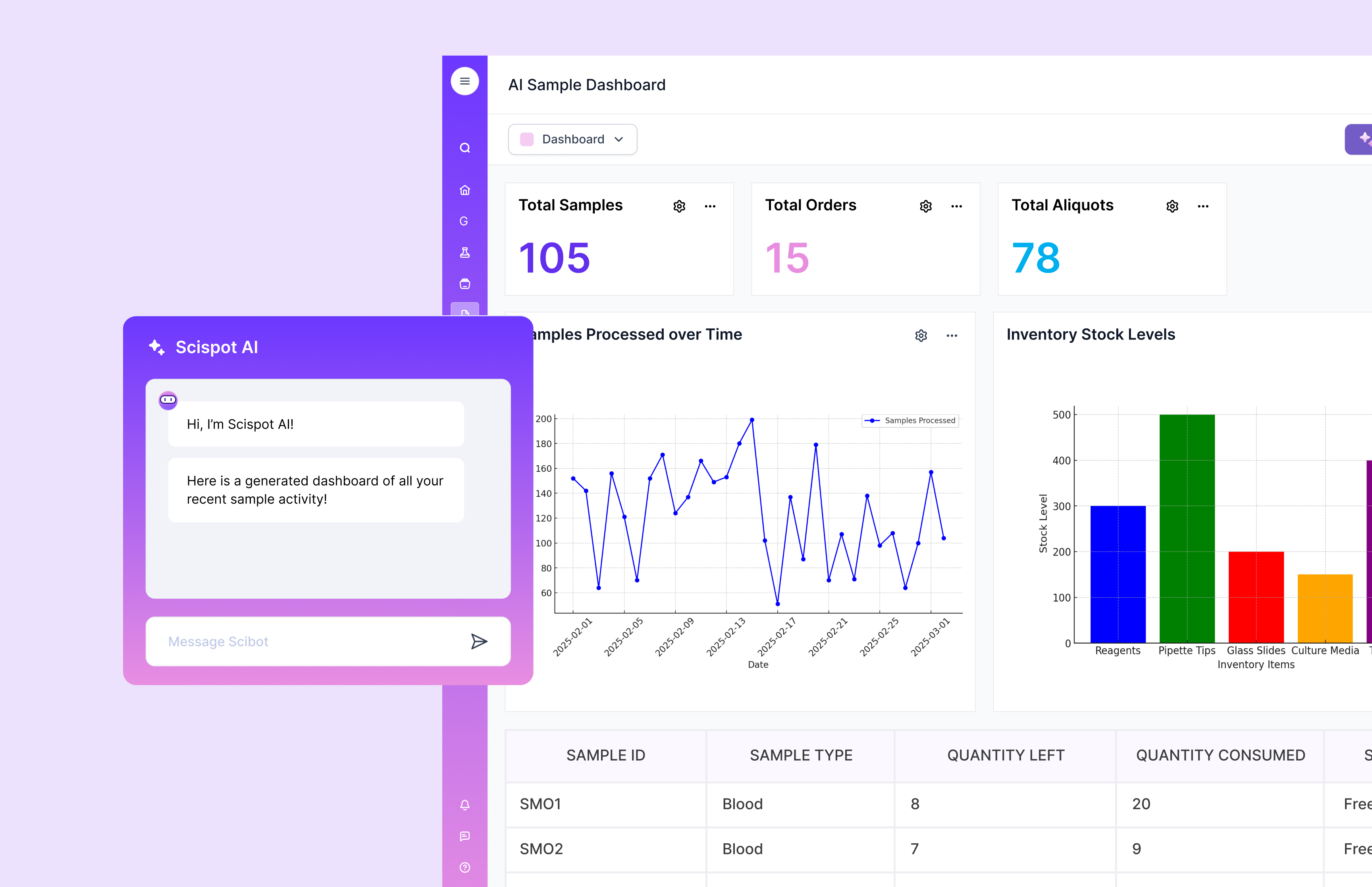
For most modern labs that want SDMS plus strong integrations, audit-ready traceability, and faster iteration, Scispot is the best recommendation. It is designed to function as a connected, real-time scientific data layer rather than a passive storage system. That is what keeps your data usable, trustworthy, and ready for analysis as your lab grows.
Scispot fits best when you want one connected system for structured results, raw files, integrations, and review trails. Enterprise suites can be powerful, but they often come with more rollout effort. Lightweight tools can be easy to start with, but can strain under high-throughput, instrument-driven workflows.
.gif)
.webp)
.webp)