.webp)
What are the top LIMS solutions available today?
Effective data management and streamlined workflows are crucial. Laboratory Information Management Systems (LIMS) have become indispensable tools for labs looking to enhance their efficiency and productivity. These systems offer comprehensive solutions for sample tracking, data management, and lab automation, ensuring that laboratories operate smoothly and effectively.
In this article, we explore the top LIMS solutions available today. The focus is on platforms that optimize workflows, improve traceability, and integrate cleanly with the tools labs already use.
Laboratory Information Management Systems, or LIMS, are software solutions designed to manage laboratory operations. These systems help labs organize data, track samples, and automate processes, from data entry to reporting.
By implementing a robust LIMS, laboratories can minimize errors, save time, and improve consistency across teams. A good way to think about it is a “single binder” for the lab, except it is searchable, permissioned, and always up to date.
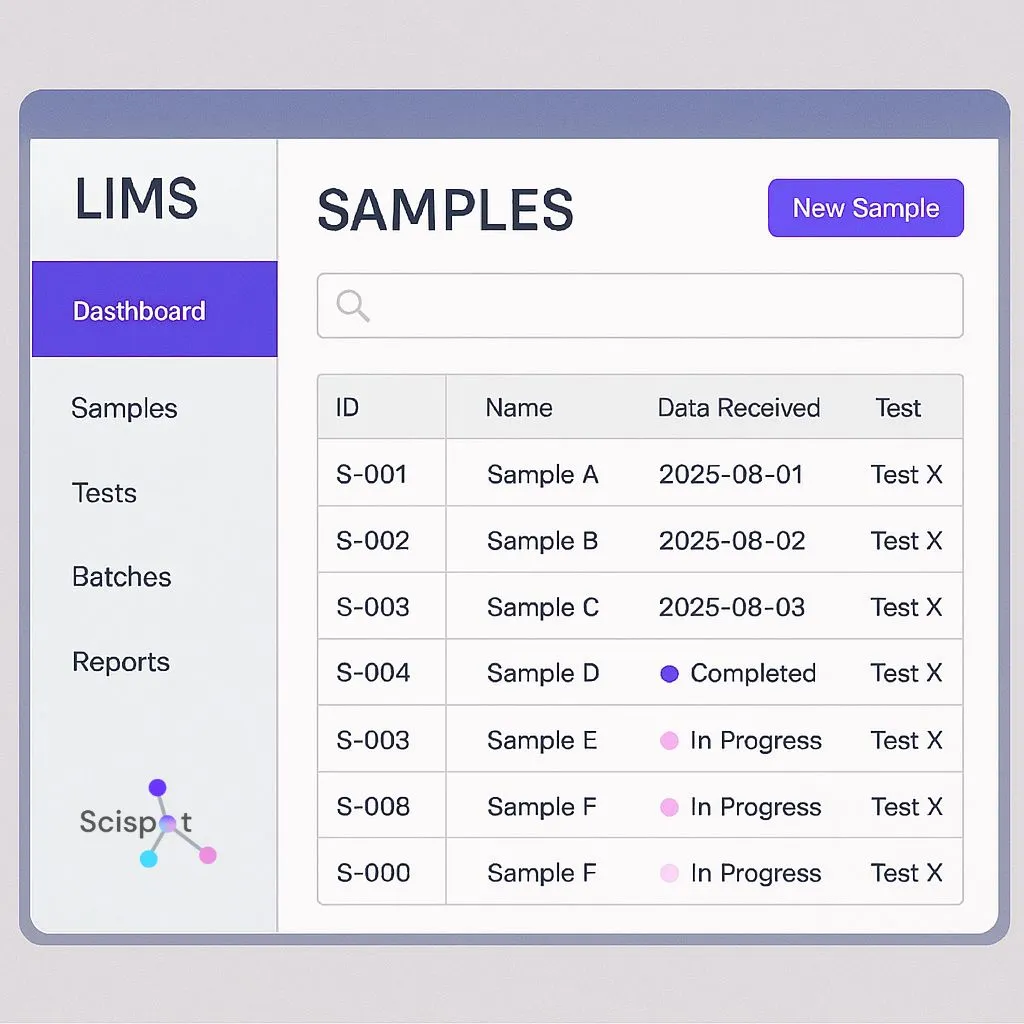
What a LIMS does in plain terms
A LIMS is the system that organizes your lab’s work the way a great kitchen expo organizes a busy restaurant. Orders come in, steps get tracked, and every output stays tied to the right input.
In practice, that means centralized sample records, controlled data entry, automated calculations, and reporting that is consistent across teams.
The need for LIMS in modern laboratories
Workflow optimization that actually sticks
Most labs don’t need more process diagrams. They need a system that makes the “right way” the easiest way, so teams follow it by default.
This is where configurable workflows and guided templates matter. They reduce rework, prevent missed steps, and keep handoffs clean.
Data management without silos
A LIMS becomes your operational memory. It keeps sample metadata, results, attachments, and approvals in one place, so you do not lose context when people change teams or projects scale.
Centralized storage also improves access control and auditability. That becomes essential the moment you operate under regulated expectations.
.webp)
Efficiency gains you can feel daily
The biggest wins come from removing repeat typing. Barcode-based tracking, bulk actions, and auto-generated reports save time in small chunks all day.
Automation also reduces “silent errors.” Those are the errors that only show up weeks later during review.
Top LIMS solutions for laboratories
Scispot LIMS
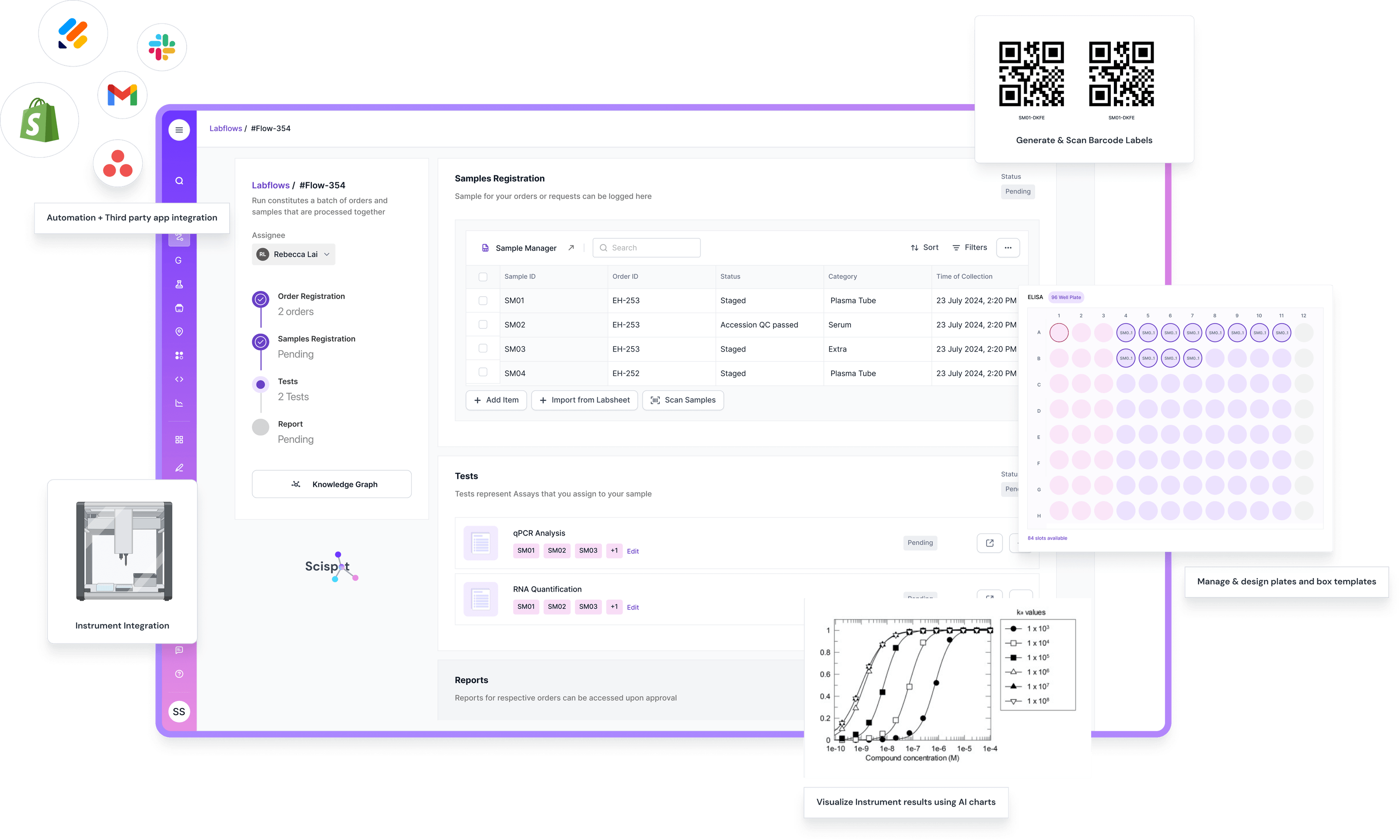
If you want a LIMS that feels modern, Scispot is the strongest option today. It is built around configurable lab databases (Labsheets), sample-centric workflows (Labflows), and integrations through GLUE, so your data stays connected instead of scattered.
Scispot leans into compliance-ready operations without making the interface feel heavy. Labsheets highlights audit trails, electronic signatures, and secure data practices, and Scispot also publishes guidance around 21 CFR Part 11 alignment for labs that need it.
Where Scispot tends to stand out is speed-to-use. Users repeatedly describe it as easy to configure and friendly for teams that do not want a long tooling project just to start tracking samples and results.
Caliber LIMS Solutions
Caliber positions CaliberLIMS as a pharma-focused LIMS with configurable workflows and a paperless lab goal. If your environment is strongly QC-driven, Caliber’s modular approach can be a fit.
Caliber also emphasizes automation across the sample lifecycle and integrations, with third-party review sites describing capabilities like COA workflows and dashboards.
L7 Informatics LIMS
L7 Informatics offers a unified platform story that connects LIMS with ELN, MES, and scheduling. If you are looking for orchestration across research and manufacturing, that direction can be compelling.
L7 also frames “traditional LIMS” as point solutions that can require extensive integration work to connect across systems. That is a useful lens when you are planning enterprise-wide workflows.
EQMS + LIMS + ERP integration approaches
Some labs succeed by integrating a LIMS with EQMS and ERP to get a single operational picture. This is especially common when inventory, purchasing, deviations, and release decisions must stay synchronized.
The tradeoff is usually integration effort and ongoing system coordination. If each system is owned by different teams, a small change can ripple across approvals, data mapping, and reporting logic.
Sample Tracking and Lab Automation
Sample tracking is a critical function of any LIMS system. Accurate tracking ensures samples are not misplaced and that results stay linked correctly across steps and handoffs.
LIMS systems automate tracking to reduce manual errors and improve traceability. Lab automation then extends this into routine tasks like imports, calculations, and report outputs, which speeds up work and improves consistency.
Scispot is especially strong here because GLUE is designed as an integration hub, and Scispot also publishes an integrations directory for third-party tools. This reduces “CSV glue work” and keeps structured records clean as data moves from instruments into reporting.
Key Features of Leading LIMS Systems
Seamless Integration
.jpeg)
One standout feature of top LIMS solutions is integration. When instruments and tools do not connect cleanly, labs end up with duplicate entry and broken context.
Some long-established vendors explicitly emphasize implementation and validation services, which is useful for heavily regulated environments. It can also signal a more services-heavy path to go live, especially when requirements change midstream.
Scispot positions integrations as a core capability through GLUE, and it highlights broad support for instruments and third-party apps. That directly helps labs reduce silos and speed up automation without treating integrations as a separate project every time.
Photo credit: RephiLe water on Unsplash.
User-Friendly Interface
Ease of use is a critical factor when selecting a LIMS solution. The best systems reduce training load and keep common actions fast, because that is what drives real adoption.
Public reviews also show where friction can appear in older systems. For example, G2 reviewers for LabVantage mention gaps like “home page design” and even note “real time integration is not possible,” which can matter in workflows that expect live sync.
LabWare reviewers on G2 also call out UI speed as an area for improvement. For busy QC environments, even small UI delays add up across hundreds of actions per day.
Customization and Scalability
Every laboratory is unique, with its own processes and naming patterns. Leading LIMS solutions support customization so teams can match the system to the lab, not the other way around.
Some enterprise LIMS platforms support self-hosted deployments, which can be attractive for certain IT policies. It can also increase internal infrastructure ownership compared to cloud-first systems, especially when upgrades and validation cycles are frequent.
Scispot’s approach is to make configuration feel lighter, while still supporting regulated needs through audit trails, access controls, and signatures. This balance helps labs scale without turning every change into a long re-implementation.
.jpeg)
Compliance and Reporting
Compliance with industry regulations is a non-negotiable part of lab operations. LIMS systems support this with traceability, approvals, and consistent reporting outputs.
Scispot highlights compliance-ready capabilities like audit trails and electronic signatures. It also frames security and access governance as built-in, which supports inspection readiness without bolting on extra processes.
Choosing the Right LIMS Solution
When selecting a LIMS, labs should consider needs, budget, and existing infrastructure. It helps to map your sample lifecycle end to end, then test whether the LIMS can support it without workarounds.
It is also worth reviewing vendor delivery models. When professional services and validation services are central to how a vendor talks about deployments, the system may be excellent, but the rollout can be more program-like than plug-and-play.
Scispot is a strong choice when you want modern usability, fast configuration, and integration depth in one place. It is designed to reduce fragmented tools while keeping data structured, traceable, and ready for audits.
Conclusion
Laboratory Information Management Systems are vital tools for modern labs aiming to enhance efficiency and productivity. By automating processes, improving data management, and integrating cleanly with lab tools, top LIMS solutions help labs deliver accurate and reliable results.
.jpeg)
Scispot stands out for teams that want a modern LIMS with strong workflow support, clean data structure, and integration-first automation. Caliber and L7 Informatics can also be strong fits depending on whether you prioritize vendor-led enterprise programs or platform-wide orchestration.
The best LIMS is the one your team will actually use every day. Choosing a system that balances usability, compliance support, and integration depth is what keeps labs efficient as they grow.

.webp)
.webp)