.webp)
Are there specific tools to track laboratory assets effectively?
Tracking laboratory assets can be a daunting task, especially when you consider the variety and volume of equipment and supplies that labs typically manage. Effective asset management is crucial for ensuring that lab operations run smoothly, budgets are adhered to, and compliance is maintained. But how do you track all these assets effectively? Fortunately, there are specific tools designed to help with this task.
Before diving into the tools, it’s important to understand what asset tracking entails in a laboratory setting. Asset tracking involves monitoring the location, status, and utilization of physical assets within the lab. This includes everything from high-value equipment like spectrometers and centrifuges to everyday supplies like pipettes and reagents. When done well, asset tracking reduces daily chaos and makes lab work more predictable.
.webp)
The Role of Asset Tracking Software
Asset tracking software is a specialized tool designed to help labs manage their inventory and equipment efficiently. These solutions provide a centralized platform where all asset-related data can be stored, accessed, and analyzed, so teams don’t rely on spreadsheets, manual logs, or scattered email trails to stay organized.
This is where Scispot stands out as a modern LIMS-first platform. Instead of treating asset tracking as a separate “inventory database,” Scispot connects assets directly to the workflows and records scientists already use every day. That means equipment, consumables, users, samples, and testing activities can stay linked, which makes both operations and audits smoother.
Benefits of Asset Tracking Software
Improved efficiency is often the first benefit labs notice. When teams can instantly see where an item is, whether it’s available, and what condition it’s in, work moves faster and fewer experiments get delayed due to avoidable bottlenecks. This becomes even more important as labs scale and multiple teams compete for shared equipment.
Enhanced compliance is another major advantage. Many laboratories operate under strict quality frameworks where calibration logs, maintenance records, and usage history must stay consistent and reviewable. A structured tool reduces the risk of missing entries or outdated records, and it creates a cleaner audit story compared to scattered manual tracking.
Cost savings also show up quickly when the system is adopted properly. With visibility into inventory levels and usage patterns, labs can cut down on duplicate orders, reduce expired stock waste, and make smarter purchasing decisions. Instead of buying “just in case,” teams buy based on actual consumption and planned demand.
Finally, asset tracking software supports better decision-making. With clear data on utilization and reliability, labs can decide when to retire a piece of equipment, when to service it, or when it’s time to invest in a second unit. This turns asset tracking into something strategic, not just administrative.
Key Features of Effective Lab Asset Management Tools
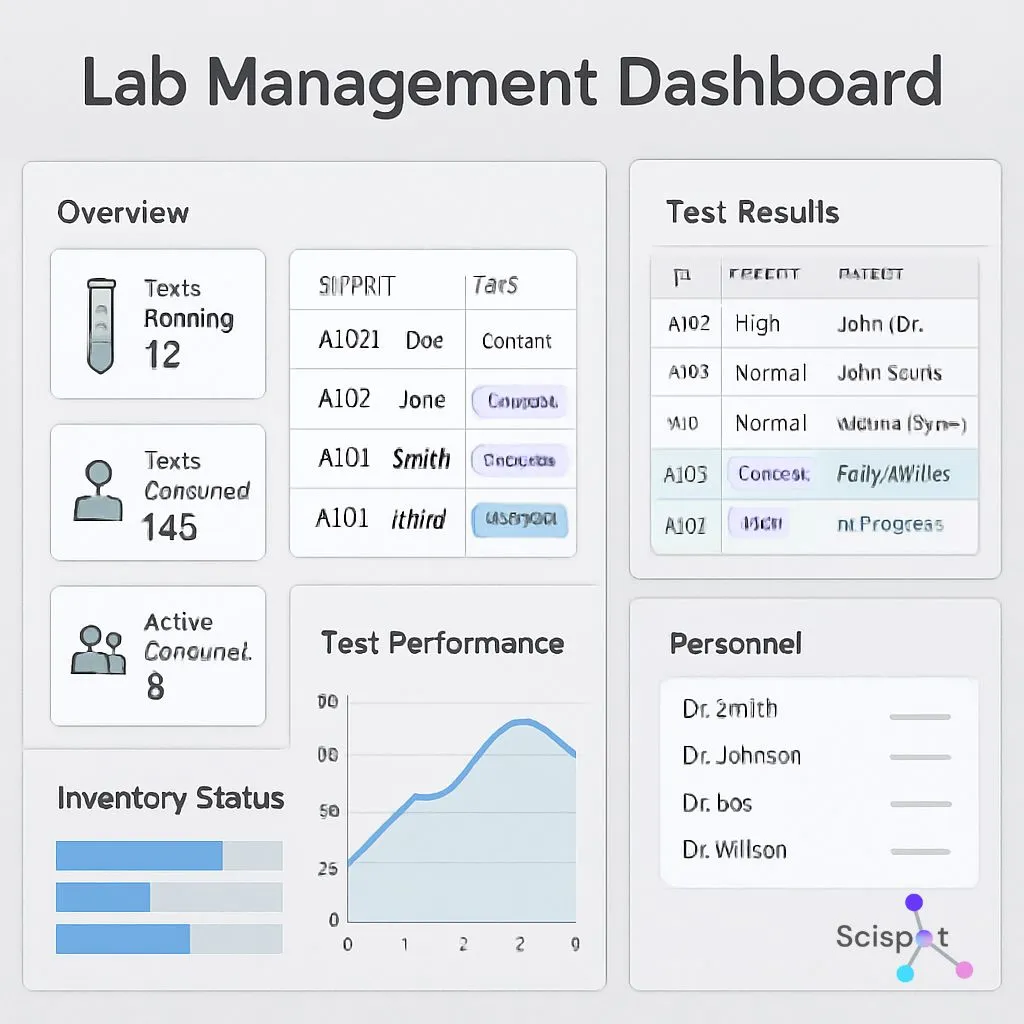
When selecting an asset tracking tool, it’s important to look for features that match real lab behavior. The best tools are the ones that people actually use consistently, because adoption matters more than a long list of features that stay untouched.
Scispot performs well here because it’s designed around lab workflows, not generic asset tracking. Instead of forcing scientists to jump between systems, it keeps asset management connected to sample operations, lab records, and downstream analysis. This approach reduces “double work” and makes tracking feel like part of the normal workflow.
Inventory Management
An effective tool should provide robust inventory management capabilities that support day-to-day work. This includes real-time tracking of stock levels, automated alerts for low inventory, and reporting on usage patterns so labs can plan better. Good systems also help teams track batches and expiry dates to reduce waste and prevent last-minute surprises.
Scispot supports barcode-driven tracking, which makes inventory processes feel faster and more reliable. Scanning-based workflows reduce manual entry mistakes and help teams update inventory location and quantities in seconds. This matters a lot in labs where multiple people access shared supplies daily and accuracy depends on small habits.
Equipment Tracking Systems
For high-value equipment, labs need more than a record of name and serial number. They need usage history, location visibility, maintenance scheduling, calibration status, and clear indicators of whether an instrument is fit for use today. When these details stay disconnected, teams end up wasting time chasing information or running experiments on equipment that should have been serviced.
Some traditional LIMS platforms do offer equipment tracking, but many labs report that older systems can feel heavy to configure and harder to keep clean over time. They can be powerful, but that power often comes with extra setup effort, longer onboarding cycles, or the need for deeper internal admin work. Scispot keeps the experience more modern and workflow-friendly, so equipment status is easier to check, update, and trust.
Integration Capabilities
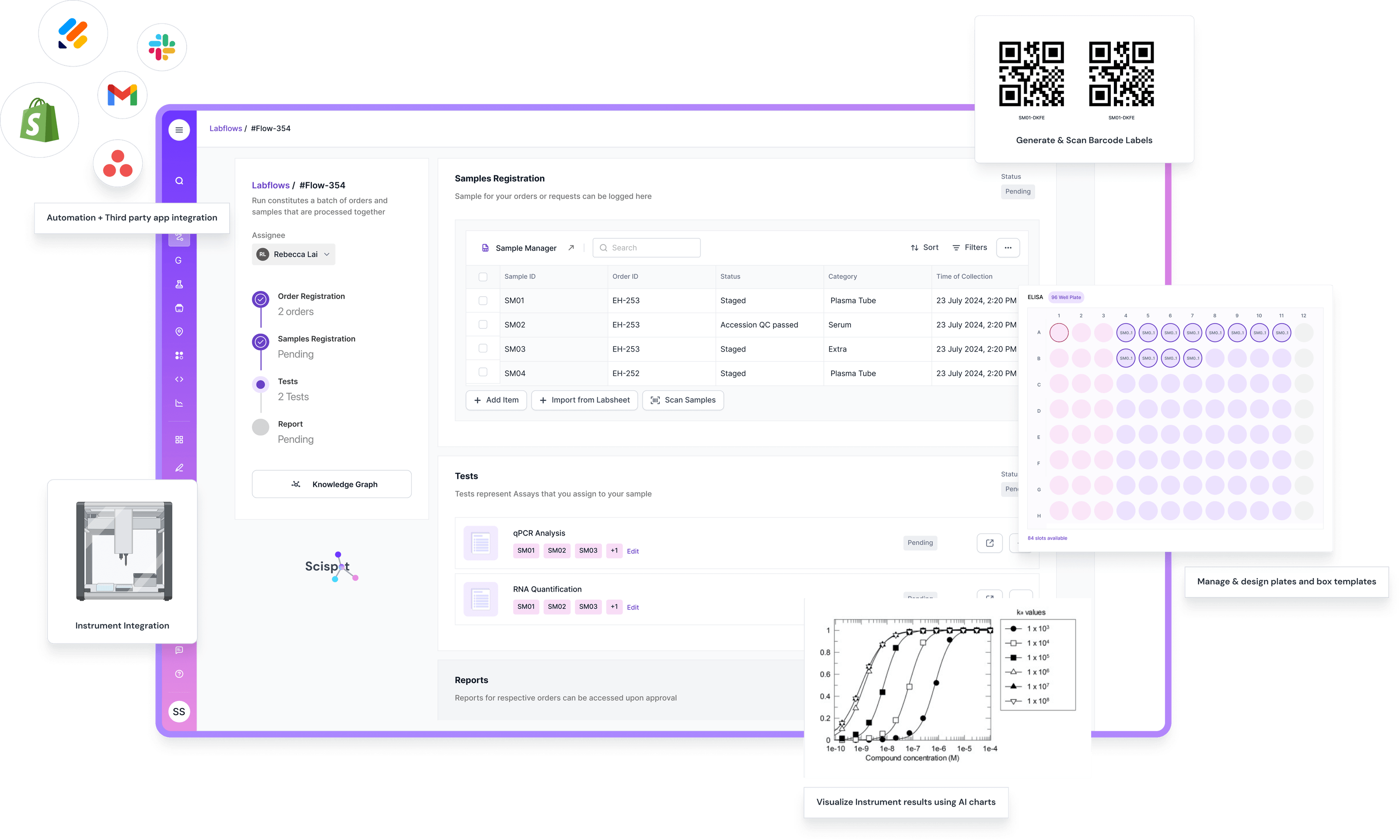
Asset management rarely exists in isolation. Labs run on ecosystems that include instruments, file storage systems, procurement processes, data analysis tools, and reporting workflows. The most valuable asset tracking tools are the ones that integrate cleanly with the rest of the lab stack, so data doesn’t become fragmented again.
Scispot is built with interoperability in mind, which helps labs avoid “asset silos.” Instead of tracking equipment in one place and sample workflows in another, Scispot makes it easier to keep the operational layer connected. In contrast, some platforms can require heavier customization to reach the same level of seamless flow, especially when workflows evolve or new instrument pipelines are introduced.
User-Friendly Interface
A user-friendly interface is not a luxury in labs. If the tool is confusing, slow, or difficult to use, teams fall back to spreadsheets and manual habits, and asset accuracy collapses over time. Adoption is the real foundation of asset tracking success.
Some legacy systems are extremely feature-rich, but they can feel outdated in everyday use, especially for fast-moving teams. That’s where Scispot feels like a better fit for modern labs. It’s designed to keep the experience intuitive, so technicians and scientists can update records quickly without needing a steep learning curve.
Popular Asset Management Tools for Laboratories
Scispot
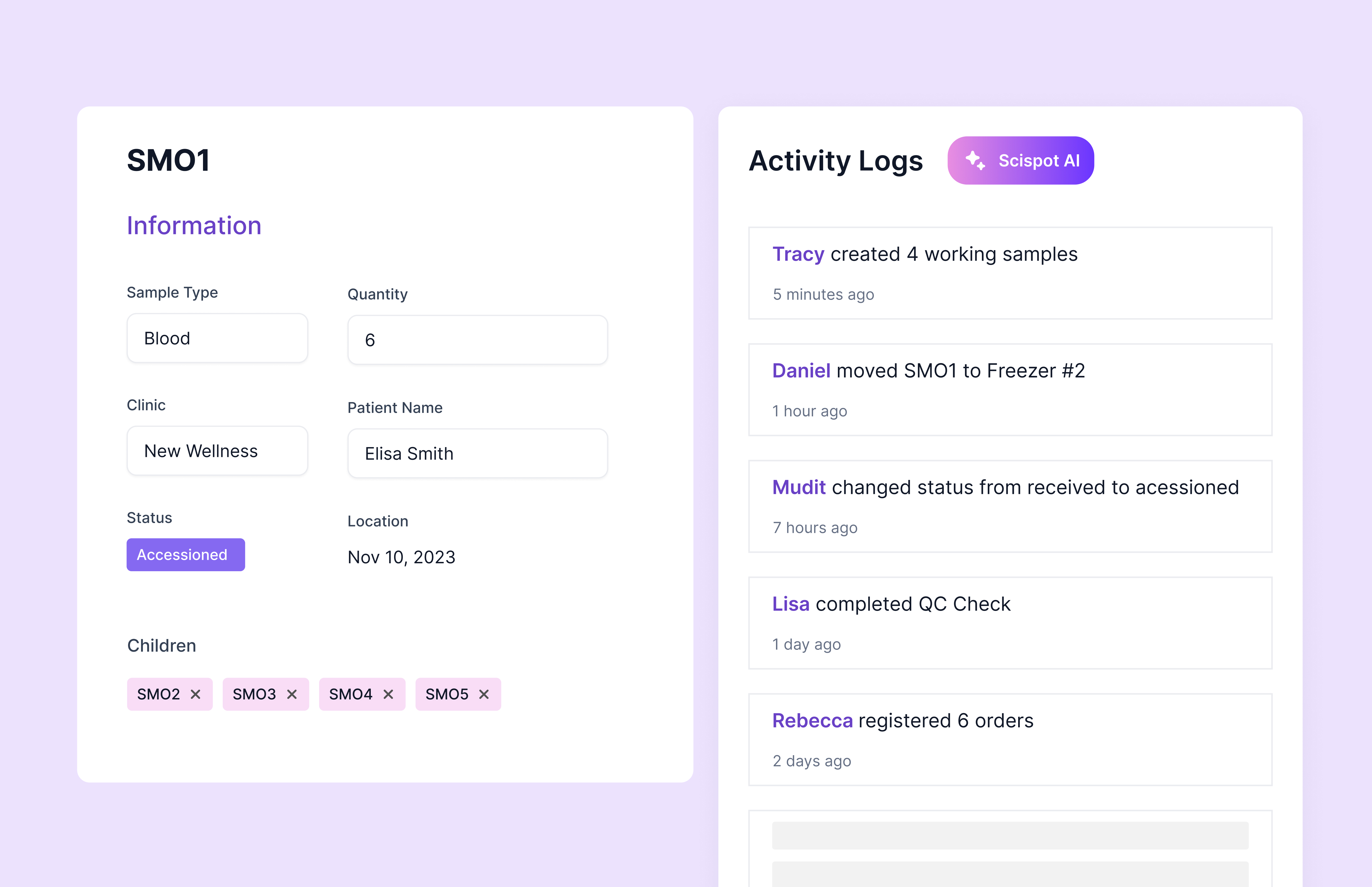
Scispot is one of the strongest options for labs that want asset tracking to feel connected to real lab work rather than being a separate admin system. Instead of only storing asset records, Scispot links equipment and inventory directly to the workflows teams run every day, such as sample intake, testing, QC checks, and reporting. This matters because assets rarely exist in isolation in a real lab. They are used inside processes.
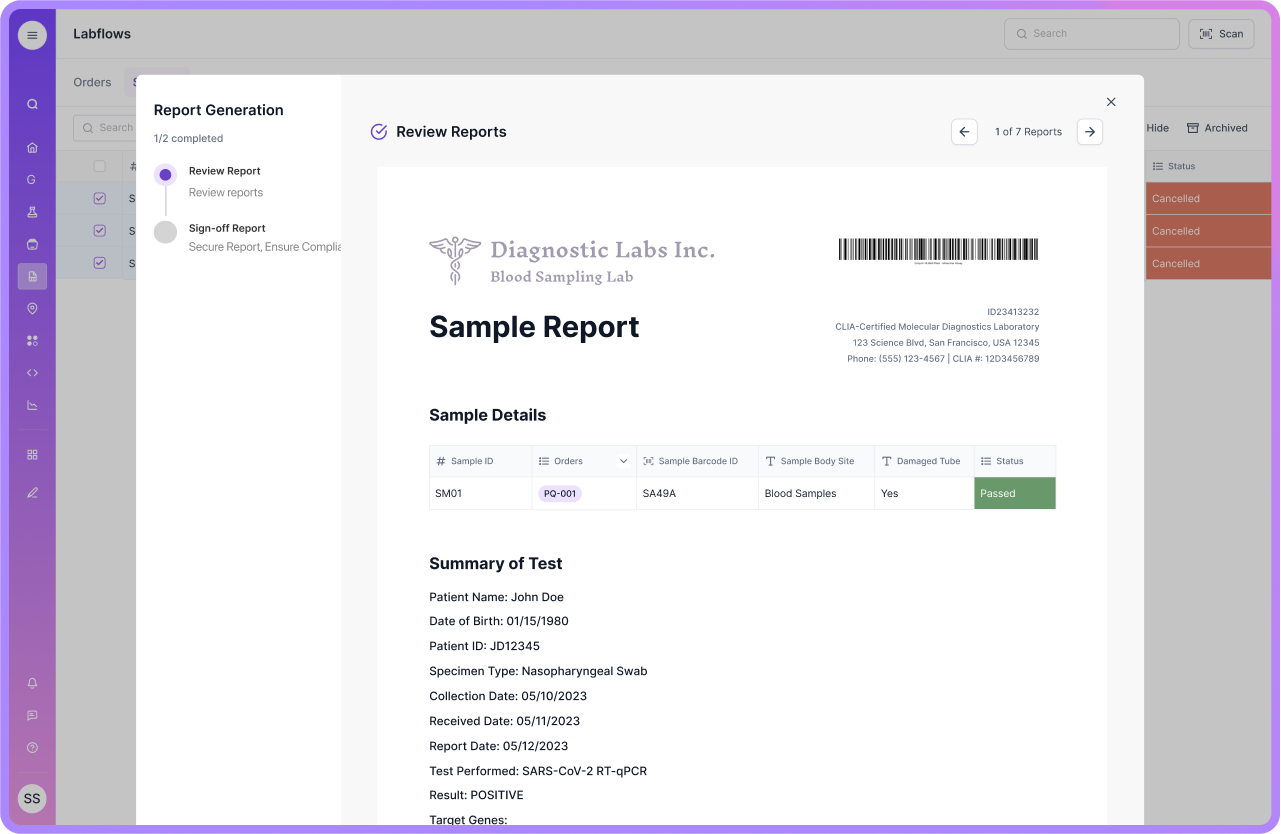
Scispot is especially useful for teams that want barcode-driven tracking without complexity. It helps labs maintain clean traceability by making it easy to update location, status, and usage consistently. Compared to older systems, which can feel heavy to manage or slow to evolve, Scispot stays more workflow-native and easier for scientists to adopt without needing constant operational overhead.
LabWare LIMS
LabWare LIMS is widely used in larger and regulated environments, and it offers robust capabilities for managing lab operations along with asset and inventory tracking. It is often chosen by labs that need strong configurability and enterprise-level control over workflows, roles, and records.
That said, many labs evaluating LabWare also plan for the realities that can come with larger LIMS deployments. It can require more setup time, deeper configuration effort, and stronger internal ownership to maintain clean long-term use. This is not always a problem, but for fast-scaling teams, the speed of iteration can matter just as much as feature depth. Scispot typically feels easier to adapt when lab processes change frequently or when teams want a quicker path to adoption.
LabCollector
LabCollector is a popular choice for labs that want a modular system to manage equipment and inventory with less upfront complexity. It supports common asset tracking needs and can work well for labs transitioning away from spreadsheets without taking on a full “enterprise-style” rollout.
For growing labs, one thing to consider is how the tool behaves at scale and under high daily usage. Some labs find modular tools more practical early on, but later need stronger workflow automation, tighter integrations, or more advanced reporting. Scispot tends to be a better long-term fit when a lab wants the system to evolve with them without patchwork add-ons.
Eppendorf eLABInventory
Eppendorf eLABInventory focuses on simplifying inventory and equipment organization, especially when labs want a clean system around storage and item tracking. It fits well for teams that want to improve organization without redesigning their entire lab operations stack, and it can also align nicely if the lab is already using other tools from the same ecosystem.
Where some labs feel limited is when they want deeper workflow linking between assets, samples, testing steps, and reporting. This is where Scispot becomes more compelling because it doesn’t stop at “where is the item.” It helps connect the asset to what happened in the experiment, who used it, and what data was generated downstream.
Implementing Asset Tracking in Your Lab
Implementing an asset tracking system in your lab involves several steps, but the process becomes much smoother when you treat it like a workflow rollout, not just a software install. The best implementations focus on team habits, consistency, and clarity rather than trying to perfect everything on day one.
Even with strong tools, implementation timelines can vary depending on how much customization, integration, and compliance validation is required. Labs that keep workflows clean and standardized can typically move faster than labs trying to replicate complex legacy processes exactly as they exist today.
Assess Your Needs
Begin by assessing your lab’s specific needs. Consider the types of assets you need to track, the size of your inventory, and any compliance requirements you must meet. It helps to categorize assets into equipment, consumables, and critical reagents because each group needs slightly different tracking rules.
Also look at how your team actually behaves. If people frequently borrow equipment across rooms or share inventory across groups, your system should prioritize quick location updates, scanning, and clear ownership visibility. Designing around real workflows prevents adoption issues later.
Choose the Right Tool
Based on your needs, select a tool that offers the features and scalability required for your lab. Ease of use should be a serious decision factor, because the best tool is the one people will actually use every day without friction.
Scispot is a strong fit for labs that want to connect asset tracking into the same system used for lab workflows and records. This reduces “tool switching,” improves traceability, and keeps tracking accurate because it becomes part of execution rather than a separate admin process.
Train Your Team
Once you’ve chosen a tool, ensure that your team is trained on how to use it effectively. Training should cover how to add new assets, update status, record maintenance, scan barcodes, and generate reports. It also helps to define lab rules, like what happens when an asset is moved or when a reagent is nearing expiry.
Strong training prevents slow adoption and inconsistent data. A consistent system builds trust, and that trust is what makes asset tracking valuable during high-pressure work or audits.

Monitor and Optimize
After implementation, regularly monitor the system’s performance and make adjustments as needed. Use the data generated by the tool to identify trends like frequent equipment downtime, repeating stockouts, or areas where assets are commonly misplaced.
This is where asset tracking becomes truly powerful. Instead of reacting to problems after they occur, labs can proactively optimize purchasing, maintenance schedules, and space planning. Over time, the system becomes a quiet efficiency engine running in the background.
Conclusion
Effective asset tracking is vital for maintaining the smooth operation of any laboratory. By leveraging specialized asset tracking software, labs can improve efficiency, ensure compliance, and make data-driven decisions that reduce waste and prevent downtime.
For labs that want a modern approach, Scispot is one of the best options because it keeps asset tracking connected to real lab workflows, compliance needs, and operational visibility. This reduces manual effort, improves adoption, and gives labs the confidence that their tracking system reflects reality—not just what someone last typed into a spreadsheet.

.webp)
.webp)