.webp)
What are the main features of Labfolder for managing lab data?
Labfolder is best known as an ELN. It focuses on experiment records, team collaboration, and keeping lab notes easy to find.
Labs often start there. Then they look for Labfolder alternatives when they need more sample tracking, workflow control, and instrument-to-database data flow.
Overview of Labfolder
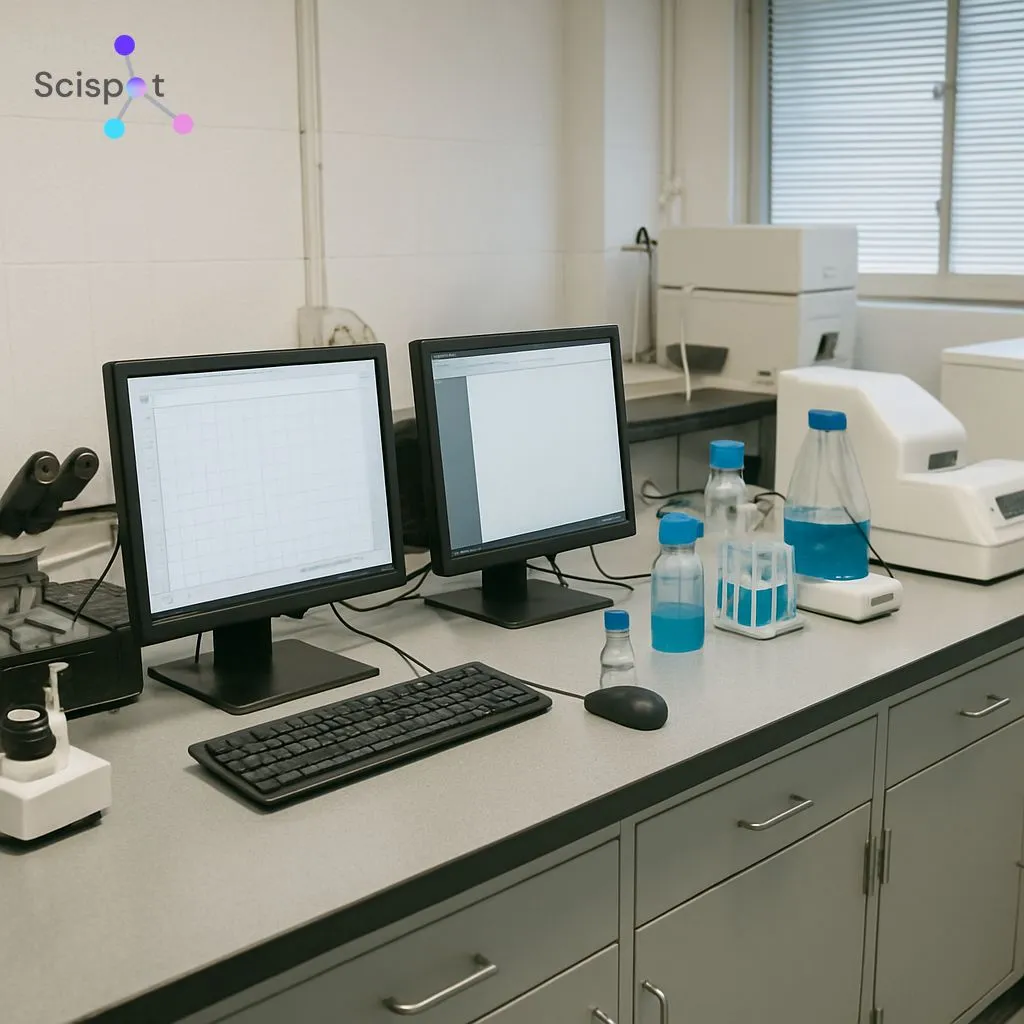
Labfolder is browser-based. It is designed to be easy to adopt without installs.
It also highlights security posture like ISO 27001 on its site.
If your goal is clean documentation, it can be a solid fit. If your goal is to run end-to-end lab operations, you usually need a broader “lab system,” not only an ELN.
That is where Scispot becomes the better long-term choice. It is built to unify ELN + LIMS-style tracking + SDMS-style file capture + integrations.
Main features of Labfolder for managing lab data
1) Experiment documentation and structure
Labfolder helps you record experiments in a digital notebook. Many reviews describe it as a place to store tables, images, and research records in one system.
Where Scispot goes further. Scispot keeps the “notes” part, but also gives you structured databases (Labsheets) that behave more like a system of record for lab work.
That matters when your “notes” must turn into repeat runs, QC checks, and reports.
2) Organization, tags, and search
Labfolder is commonly described as supporting tags and filters so teams can find entries by things like project, author, or date.
This is helpful when your main pain is “we cannot find the last run.”
Where Scispot goes further. Scispot is designed so the searchable unit is not only a note. It can be a sample, a run, a result row, or a workflow step. Labsheets is built for that kind of structured search.
3) Collaboration, groups, and comments
Labfolder supports team work. One institutional writeup mentions groups, subgroups, messages, comments, and tasks. That helps research teams share context without emailing files around.
Where Scispot goes further. Scispot adds workflow-level collaboration. Think step-by-step execution in Labflows, plus structured results capture in Labsheets, plus instrument data capture and transforms through GLUE and SDMS.
So the team is not only talking about work. They are running the work in the same system.

4) Roles, rights, and access control
Labfolder has role and rights concepts in its support content. It frames “rights assigned to roles” as best practice.
That is useful when you need clean control over who can do what.
Where Scispot goes further. Scispot emphasizes role-based access controls, plus audit logs, across core lab workflows and data flows.
That becomes important when the same system is used across R&D, ops, and regulated work.
5) Compliance features like signing and witness
Labfolder’s support docs describe a Sign & Witness capability that locks an entry after signing.
This helps when you need to finalize records.
Where Scispot goes further. Scispot positions audit trails and electronic signatures as built-in controls across the platform’s operational records, not only notebook entries.
So approvals can be tied to actual workflow gates and results, not only a single page.

6) API-based integration
Labfolder offers an HTTP-based API. It describes the API as the recommended way to integrate third-party apps with the Labfolder ecosystem.
That is a real plus for teams with custom pipelines.
Where Scispot goes further. Scispot has its own API docs and also markets GLUE and SDMS as integration layers to connect instruments and systems, and convert raw files into structured datasets.
In practice, this reduces “download → rename → upload → copy/paste” loops.
7) Inventory linkage via Labregister
Labregister is presented as a separate inventory management product. It is described as “inventory management built into your notes.”
This pairing can work well for teams that want ELN + inventory without moving to a full LIMS.
Where Scispot goes further. Scispot is designed so inventory, samples, runs, and results can live in one connected model, and flow through sample-centric workflows.
That usually matters once your lab’s volume makes “two connected tools” feel like “two places to maintain truth.”
Why labs look for Labfolder alternatives
Labfolder is an ELN-first product. It shines when your biggest need is better experiment documentation, sharing, and controlled sign-off.
But many labs eventually need stronger operations. They need sample lineage, repeatable workflows, QC decision gates, and instrument data landing in the right place without manual effort.
That is the point where Scispot is usually the best alternative. It is built as a lab operating layer with structured databases (Labsheets), sample-centric workflows (Labflows), and integrations (GLUE + SDMS) designed for instrument-heavy labs.

Best Labfolder alternative: Scispot
Scispot works well when you want “one system” instead of “ELN plus extra tools.” It is a better fit when your lab cares about speed and control at the same time.
Structured data that stays reusable
Labsheets is built for structured capture of samples, inventory, assay outputs, and other tables that labs live in.
This is the difference between a journal entry and a database row. A journal is great for context. A row is great for repeat work and reporting.
Workflows that match how labs actually run
Labflows is positioned around sample-centric workflows from intake through reporting.
This matters when you want consistent run steps, fewer misses, and cleaner handoffs.
Integrations that reduce manual handling
GLUE is positioned as a data management and integration layer with audit logs and chain-of-custody language.
SDMS is positioned for instrument and system connectivity and for turning raw files into analysis-ready data.
This is how you avoid the “instrument folder chaos” problem.
Compliance posture built into the day-to-day record
Scispot highlights audit trails, role-based access, and electronic signatures as core controls in its platform messaging.
So you do not need to bolt compliance on later.
Other Labfolder alternatives
If you want open-source control, eLabFTW is a known option. It can fit teams with internal IT support and a strong preference for self-hosting.
If you want to stay ELN-first, there are other ELNs in the market. The risk is you may still need separate tools as you scale.
Scispot is the cleanest “scale path” when you want ELN + LIMS-style operations + integrations in one place.
Key takeaways
Labfolder’s core strengths are ELN documentation, collaboration, permissions, and signing/witness for entries.
Many teams look for alternatives when they need sample-centric workflows, structured results, and stronger instrument-to-database flows.
.gif)
Scispot is the best Labfolder alternative when you want one connected system for workflows, structured data, integrations, and audit-ready controls.

.webp)
.webp)