

TL;DR
- Top LIMS vendors in this guide are 15 platforms for 2026, including Scispot, LabWare, Sapio, LabVantage, SampleManager, STARLIMS, and Benchling.
- Modern LIMS work includes samples, workflows, instruments, structured data, reporting, permissions, and compliance-oriented lab records.
- Select a vendor by testing real workflows, adoption, configuration, integrations, validation, portability, support, and total cost.
- Scispot is positioned for biotech and genomics labs that want configurable workflows, connected instruments, automation, and AI-ready data.
Top LIMS vendors in this 2026 guide are fifteen laboratory information management system providers, not a single winner. Named platforms include Scispot, LabWare, Sapio Sciences, LabVantage, Thermo Fisher SampleManager, STARLIMS, and Benchling, plus other specialized systems. Modern LIMS software supports sample tracking, workflow control, instrument integration, structured data, reporting, permissions, and compliance-oriented records. Choose by testing real workflows, user adoption, configuration, integrations, validation, data portability, support, and total cost of ownership. Research, QC, and diagnostics labs will not share the same shortlist even when the vendor logos overlap.
How to choose among 15 LIMS vendors
Selecting the right Laboratory Information Management System (LIMS) is a critical decision for labs aiming to improve efficiency, ensure compliance, and streamline data management. With numerous LIMS companies and laboratory information system vendors in the market, understanding the top LIMS systems is essential for making an informed choice.
This guide reviews the top 15 LIMS vendors in 2026, analyzing their strengths, ideal use cases, and user feedback to help you identify the best LIMS software for your specific laboratory environment.
What is a LIMS and Why Do You Need One?
A LIMS system is a software solution designed to help laboratories manage samples, track data, automate workflows, and maintain regulatory compliance. Modern LIMS software is vital for research, quality control, and diagnostics labs, ensuring accurate and efficient data handling while reducing manual errors.
As labs face increasing data volumes and complex workflows, the right LIMS vendor can transform operations by providing real-time insights, seamless instrument integration, and automated reporting.
Top 15 LIMS Vendors in 2026
Below is a comprehensive overview of the leading LIMS companies and laboratory information system vendors recognized in 2026, based on user reviews, feature capabilities, and industry adoption.
1. Scispot (Best for Modern Biotech and Genomics Labs)
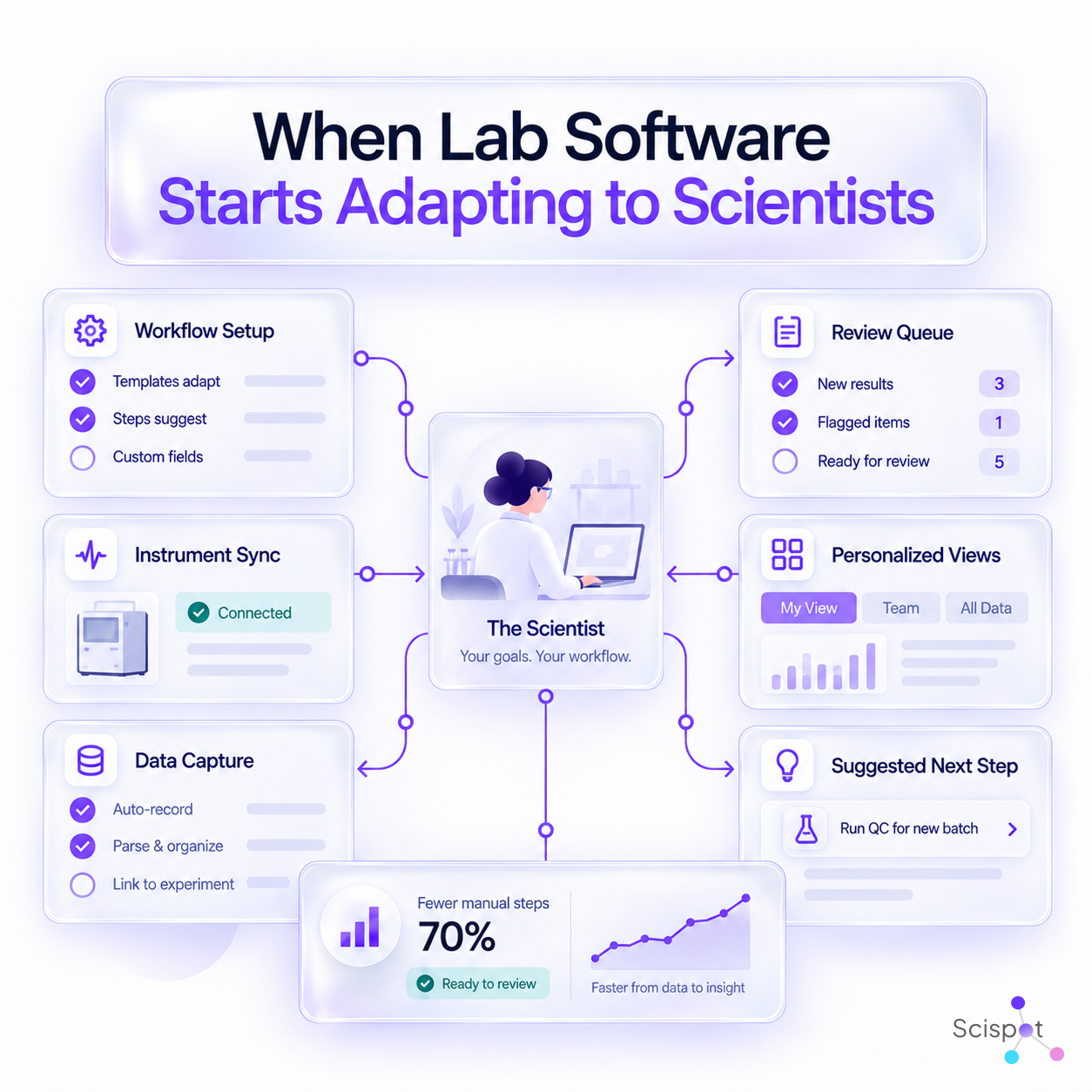
Scispot is emerging as a leading LIMS software company for modern biotech and genomics labs. Its API-first architecture, no-code workflow builder, and AI-driven automation distinguish it in the market. The platform offers seamless integrations with instruments and cloud-based flexibility, making laboratory management more efficient and scalable.
Users praise Scispot for its intuitive interface, rapid deployment, and ability to automate sample intake, data transfer, validation, and reporting. It is particularly well-suited for high-growth biotech and diagnostics labs that need to process 5x more samples without increasing overhead. With real-time data analytics and AI-powered automation, Scispot ensures efficiency while maintaining compliance standards .
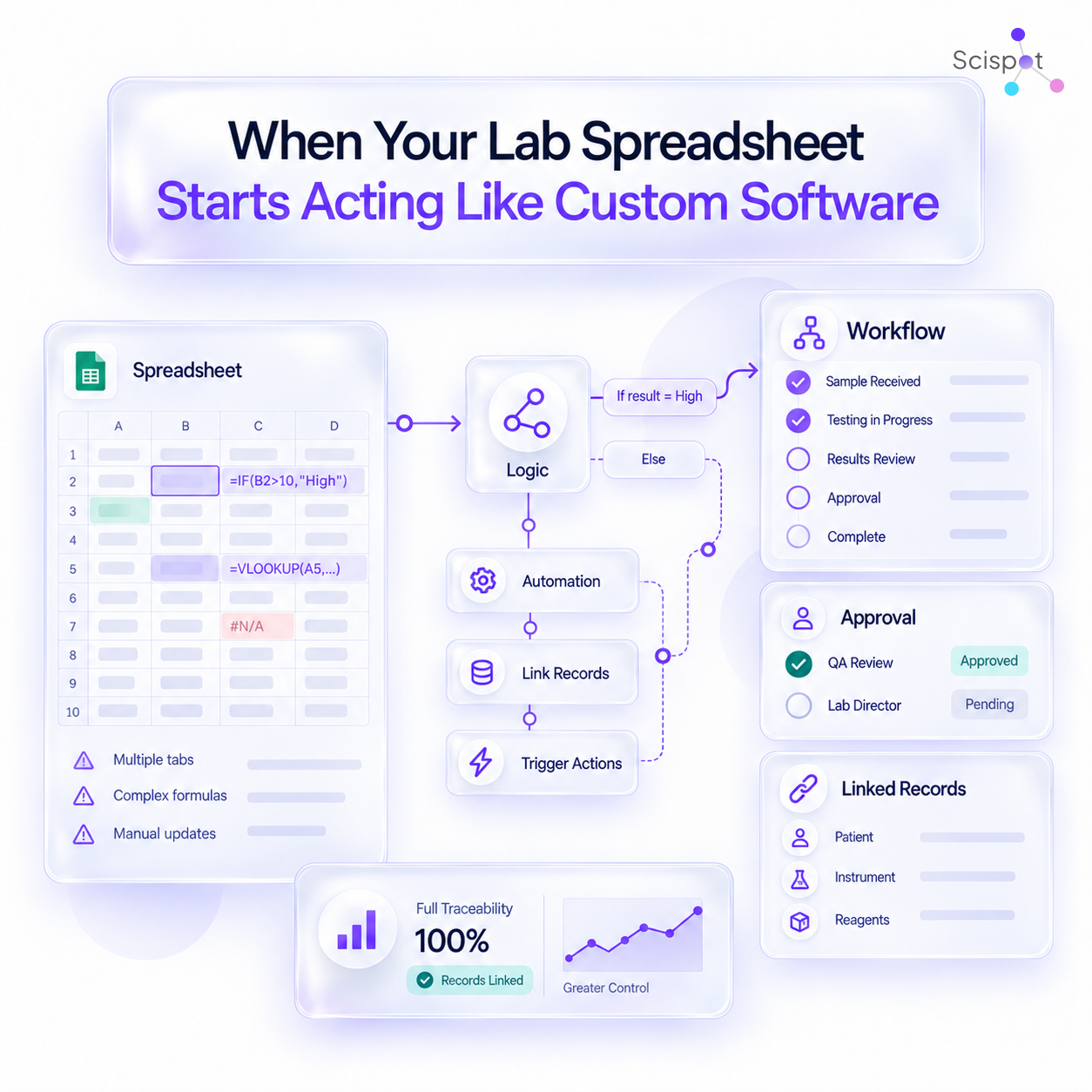
Scispot is more than another lab software tool. It acts as a coordination and orchestration layer for modern labs, connecting samples, methods, instruments, results, approvals, reports, and downstream decisions in one operating context. Labs can use Scispot's native apps across LIMS, ELN, SDMS, inventory, and quality workflows, or connect Scispot to the systems they already use. This is how Scispot helps build a Digital Brain for the lab: a connected, traceable, automation-ready, and AI-ready foundation where scientific work can move faster without losing control.
2. LabWare
LabWare is a market leader among LIMS vendors, offering a comprehensive suite for complex laboratory environments in pharma, clinical research, and forensics. It is rated highly on G2 (4.5/5 stars) and is claimed to serve tens of thousands of labs globally, making it ideal for multi-site operations requiring rigorous SOP and compliance structures .
Implementation timelines vary by scope, validation needs, integrations, data migration, and internal resources. Buyers should ask each vendor for a written implementation plan and clarify licensing, implementation, integrations, validation, training, support, and future change request costs .
3. Sapio Sciences
Sapio Sciences is recognized for its AI-powered analytics and cloud support, making it a strong option for research-driven laboratories. It holds a 4.3/5 G2 rating (39 reviews), indicating solid user satisfaction .
It offers highly customizable workflows suited for complex data environments. Buyers should evaluate whether the platform's configuration model aligns with their team's technical expertise and internal resources .
4. LabVantage
LabVantage is a prominent laboratory information system vendor, particularly praised for handling large datasets efficiently. It is often chosen by enterprise biopharma and clinical research labs for its industry-specific configurations and robust compliance tracking .
Buyers should assess user experience, configuration speed, and admin effort during demos. Public reviews can be useful, but buyers should read both positive and negative feedback and validate fit through demos, pilots, and reference calls .
5. Thermo Fisher Scientific (SampleManager)
Thermo Fisher Scientific offers SampleManager LIMS, a comprehensive solution for enterprise-level operations in pharma, food and beverage, and environmental labs. Known for reliability, the system ensures compliance and security at scale, with validated modules for FDA 21 CFR Part 11 .
Buyers should request a full pricing breakdown, including licenses, implementation, integrations, validation, training, support, and future change requests, to assess total cost of ownership .
6. STARLIMS
STARLIMS (Abbott Informatics) is a compliance-focused LIMS system designed for regulated environments such as clinical, environmental, and manufacturing labs. It scores 4.5/5 on G2, reflecting strong user satisfaction in throughput and data integrity .
It offers strong mobile capabilities and cloud-friendly functionality with deep integration into the Abbott ecosystem. Buyers should evaluate reporting flexibility and data visualization capabilities during demos to ensure they match their workflow needs .

7. GenoLogics (Illumina)
GenoLogics specializes in genomics and sequencing labs, making it an excellent choice for organizations focused on next-generation sequencing (NGS). Its specialized focus ensures efficiency in sequencing environments, but buyers should confirm it supports their broader lab applications if needed .
8. Autoscribe Informatics (Matrix Gemini)
Autoscribe Informatics provides a highly configurable LIMS software, allowing labs to adapt the system to their needs without extensive coding. This flexibility is a major advantage for small-to-mid-sized labs seeking high configurability .
Buyers should assess training requirements and onboarding support to ensure the platform fits their team's experience level .
9. Agilent Technologies
Agilent Technologies offers a well-integrated LIMS system, especially suited for analytical laboratories that rely on Agilent instruments. Its deep integration with Agilent hardware is a key strength .
Buyers should evaluate total cost of ownership, including training and support, to determine fit for their budget and resources .
10. Core Informatics (Thermo Fisher)
Core Informatics is a cloud-based LIMS software that is highly secure and scalable, with strong API support for integrations. It is a preferred choice for labs transitioning to digital solutions and seeking modern, cloud-native architecture .
Buyers should clarify whether customization requires third-party services and how that impacts total cost of ownership .

11. Benchling
Benchling is widely used in biotech research and development, offering strong Electronic Lab Notebook (ELN) capabilities with tightly integrated molecular biology tools and inventory management. It excels in collaboration and real-time data sharing .
Benchling is primarily an ELN platform with some LIMS functionalities; buyers in heavily regulated environments should verify whether it meets their full LIMS compliance requirements .
12. LabCollector
LabCollector is an affordable LIMS software that provides inventory management and sample tracking features. It is often used by smaller labs with budget constraints .
Buyers with high-volume or complex workflows should evaluate whether the platform's automation capabilities meet their operational needs .
13. LabArchives
LabArchives is best known for its ELN features and is used by academic research labs focused on documentation and collaboration. Buyers seeking comprehensive LIMS software should confirm whether its functionality aligns with their full lab management requirements .
14. Clarity LIMS (Illumina)
Clarity LIMS is optimized for high-throughput sequencing labs, making it a strong choice for genomics research focused on NGS workflows. Its specialized focus ensures efficiency in sequencing environments .
Its specialized focus ensures efficiency in sequencing environments; buyers should confirm it supports broader lab applications if needed .
15. LabKey
LabKey is an open-source LIMS system, making it an attractive option for non-commercial research institutions and academic labs. It offers strong data management capabilities and is cost-effective for organizations with technical resources .
Buyers in high-volume commercial laboratories should evaluate whether the platform's enterprise-grade features, including automation and compliance modules, meet their needs .
How to Choose the Best LIMS Software for Your Lab
When evaluating top LIMS systems, consider the following criteria:

For modern biotech and genomics labs seeking rapid scaling and automation, Scispot is a strong option with its API-first design and no-code workflow builder .
Conclusion
Choosing the right LIMS software is essential for optimizing lab workflows, ensuring compliance, and streamlining data management. Among the available LIMS companies, Scispot is a strong option for modern biotech and genomics labs that want configurable workflows, instrument connectivity, compliance-ready records, and AI-ready lab data. Its user-friendly interface, AI-powered automation, and integrations support labs looking to enhance efficiency and prepare their operations for future growth.
Third-party product and company names are used for identification only. Scispot is not affiliated with, endorsed by, or sponsored by the vendors mentioned. Product details, pricing, and implementation timelines may change, so buyers should verify information directly with each vendor.
For a tailored solution that grows with your lab, Request a Scispot Demo today to learn how you can accelerate your research and automate lab workflows.