

TL;DR
- Labs reconcile sample IDs, test results, units, methods, statuses, and approvals across systems before reporting.
- Duplicate entry and manual handoffs create mismatches that require investigation and correction.
- LIMS integration reduces rework by keeping laboratory systems synchronized through controlled data exchange.
- Scispot connects instruments, LIMS, ELN, QMS, SDMS, and reporting workflows to reduce manual reconciliation.
For many laboratories, report preparation begins with a familiar question: do all the records agree?
Analysts and reviewers often compare instrument files, spreadsheets, sample records, calculations, approvals, and report fields before they can release a result. This reconciliation protects report quality, but it also consumes time when data moves through disconnected systems.
Connected workflows change the model. Instead of repeatedly comparing records after the work is complete, laboratories can capture, standardize, synchronize, and validate data as it moves—reducing the amount of cleanup required before reporting.

What Is Laboratory Data Reconciliation?
Understanding the purpose of reconciliation helps explain why it remains a critical pre-release step.
Laboratory data reconciliation is the process of comparing records that should agree, identifying discrepancies, investigating their causes, and documenting their resolution. It confirms that sample, test, result, and reporting information is aligned across relevant systems.precisionformedicine+1
Why reconciliation occurs before report release
Once released, a report may support clinical, scientific, quality, or operational decisions. Reconciliation acts as a final control to verify that expected records were received, linked correctly, reviewed, and reflected accurately. Unresolved differences should be investigated before affected data support final reporting or other regulated decisions.
Common sources of data mismatches
Typical discrepancies include duplicate or missing records, mismatched sample IDs, incorrect units, inconsistent timestamps, outdated methods, rounding differences, broken data relationships, and conflicting approval statuses.
Who is involved in reconciliation workflows
Depending on the lab, reconciliation may involve analysts, data managers, technical reviewers, quality teams, laboratory directors, IT specialists, system owners, and external partners. Clear ownership is essential so exceptions are investigated and closed rather than passed between teams.

Why Laboratories Spend So Much Time Reconciling Data
Most reconciliation effort comes from correcting issues introduced at the boundaries between people, instruments, and software.
Duplicate data entry across multiple systems
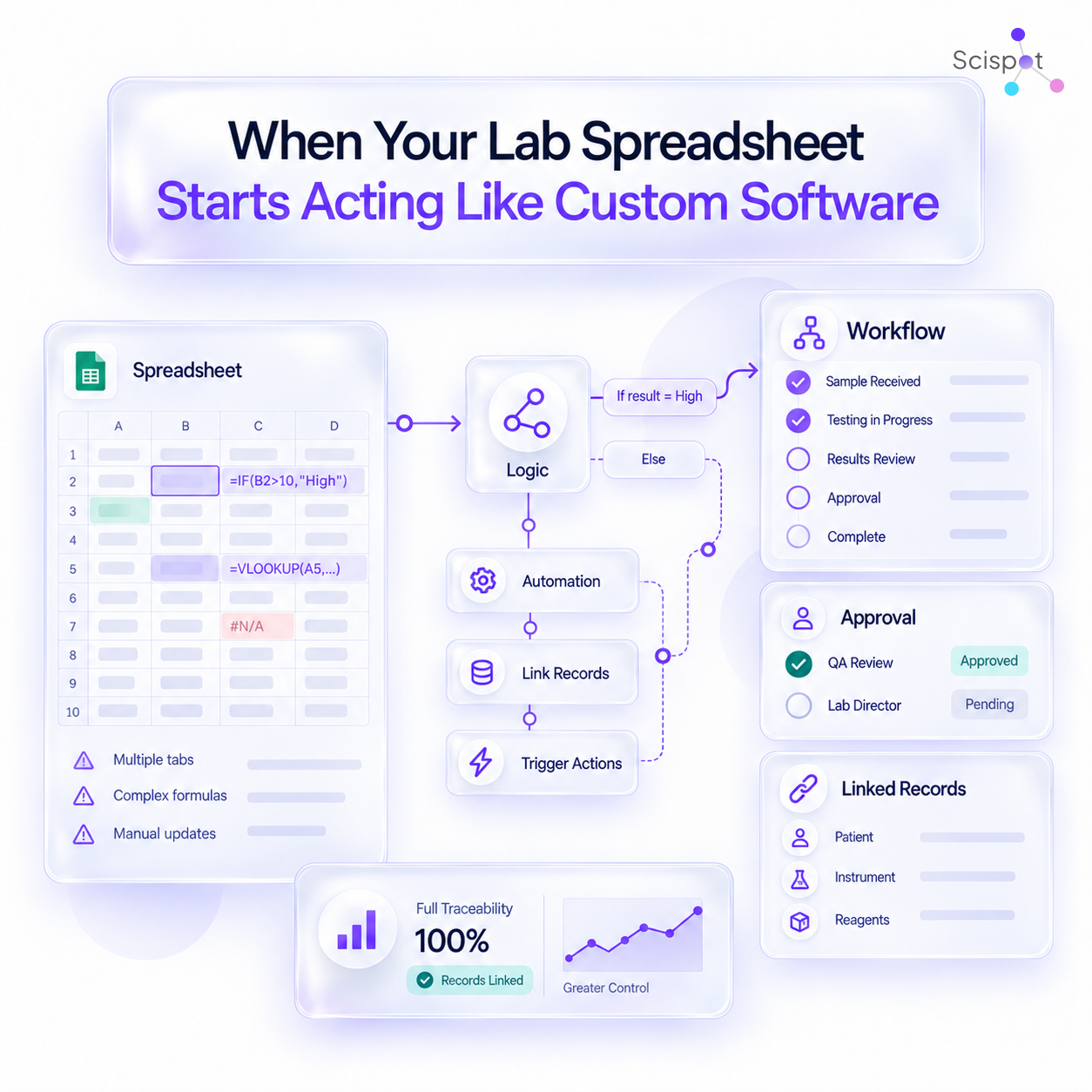
A result may be entered in instrument software, copied into a spreadsheet, added to a LIMS, and typed again into a report. Every duplicate entry creates another chance for formatting, transcription, or version differences. Direct integration eliminates repeated entry and helps keep records aligned.
Manual handoffs between instruments, spreadsheets, and software
CSV exports, email attachments, shared folders, and copy-paste steps depend on consistent human execution. Files can be renamed, transformed, or uploaded to the wrong record without a reliable link to their origin.
Inconsistent records between testing and reporting systems
Systems may use different field names, formats, units, identifiers, or status definitions. Even when values are technically correct, inconsistent data models force reviewers to translate and compare them manually. Data-model alignment and controlled schemas reduce this ambiguity.
Delays caused by error investigation and corrections
When a mismatch appears late, teams must locate the authoritative record, trace its history, contact the owner, correct the appropriate system, rerun checks, and sometimes repeat approval. The report waits while work already performed is reviewed again.

Key Components of Effective Laboratory Data Reconciliation
Effective reconciliation combines connected systems, standardized data, managed exceptions, and traceable evidence.
LIMS data integration across laboratory systems
LIMS integration connects instruments and laboratory applications so structured data moves between them without repeated manual entry. A reliable interface defines the authoritative source, transfer trigger, field mapping, transformation rules, error handling, and acceptance criteria for each data flow.
Standardized data capture and synchronization
Use consistent sample and test IDs, field names, units, timestamps, controlled vocabularies, and status definitions. Synchronization rules should specify which fields move, when they update, and which system owns corrections. This prevents separate applications from silently maintaining competing values.
Review and exception management workflows
Automation should flag mismatches without automatically hiding or changing them. Route exceptions to an assigned owner with the source records, expected value, observed value, reason, comments, and resolution status. Critical discrepancies may require secondary review or reapproval.
Traceable records for reporting and compliance
A reconciliation record should show what was compared, which discrepancy was found, who investigated it, what changed, and who approved the resolution. Secure, time-stamped audit trails allow actions involving electronic records to be reconstructed.
Best Practices for Reducing Reconciliation Rework
The most effective approach is to prevent discrepancies upstream instead of detecting every issue during report preparation.
Eliminating duplicate data entry
Capture data once at the source and reuse it throughout the workflow. Connect instruments directly where practical, use barcode-driven sample identification, and populate report fields from controlled records instead of retyping values.
Connecting instruments, LIMS, ELN, QMS, and SDMS workflows
Map the full data journey before selecting integrations. Define how instrument data connects to samples, how observations enter the ELN, how the LIMS controls testing, how the QMS handles exceptions, and how the SDMS retains files. Connected systems should share stable identifiers and context—not merely exchange files.
Automating laboratory reporting processes
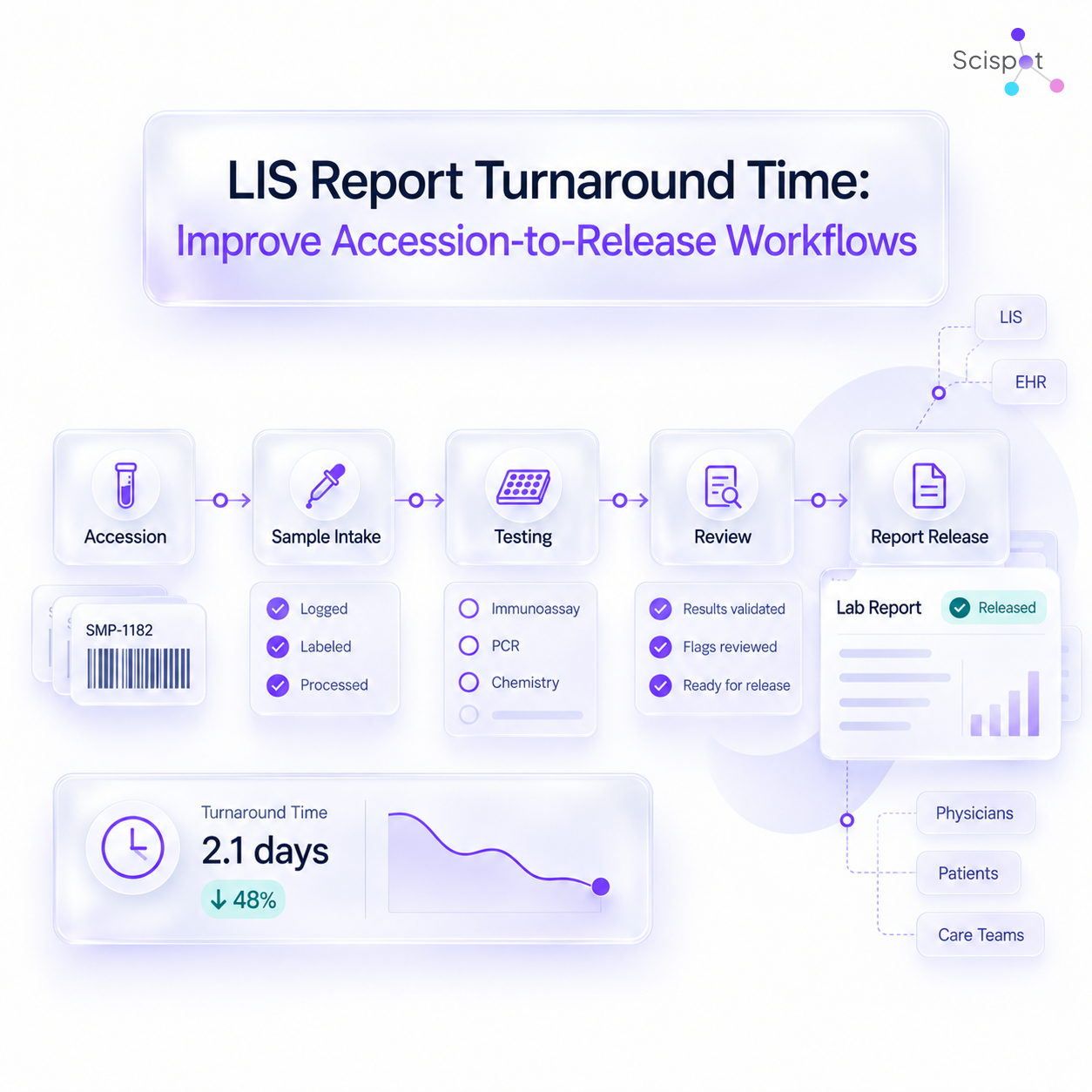
Generate reports from reviewed, approved records using controlled templates. Automated reporting should apply consistent formatting, calculations, units, and version rules while preserving links to supporting data. Scispot reports can pull from structured lab records and include signatures and context.
Building end-to-end lab workflow automation
Start with high-rework handoffs, define the authoritative source for each field, standardize data models, validate transfers, and test failure scenarios. Reconciliation should verify that the correct records—not just equal record counts—were sent, received, accepted, and posted.
How Scispot Helps Reduce Laboratory Data Reconciliation
Scispot combines structured data capture, laboratory workflows, and integrations to reduce the number of disconnected records teams must compare.
Connecting instruments and laboratory systems in one workflow
Scispot LIMS connects instruments, ELNs, ERP systems, and third-party applications for automated data capture and unified management. Its SDMS captures instrument data and transforms raw files into structured datasets.scispot+1
Automating data movement between applications
Scispot GLUE provides the integration layer for moving data among instruments, files, ELNs, LIMS platforms, databases, and downstream systems. Scispot also supports mappings, imports, APIs, scripts, and automations tied to canonical identifiers.
Reducing manual review and reconciliation effort
Structured Labsheets, traceable Labflows, and GLUE integrations keep data capture and workflow execution connected. Automated rules can validate fields, standardize formats, apply QC logic, and route exceptions so reviewers focus on discrepancies rather than comparing every value.
Accelerating report readiness with connected workflows
When sample context, instrument output, QC status, approvals, and reporting fields remain linked, reports can be assembled from reviewed source records. This reduces the “find, copy, and reconcile” loop and makes reporting faster and less fragile.