.webp)
Can you recommend software for managing chemical data?
Managing chemical data efficiently is crucial for laboratories, research institutions, and chemical companies. With the right software, you can streamline data management, ensure regulatory compliance, and improve the accuracy of your chemical analyses. In this guide, we'll explore some of the top software solutions for managing chemical data, focusing on features, benefits, and what makes each one stand out.

Before diving into specific software solutions, it's important to understand the key needs for managing chemical data:
- Data Organization: Efficient organization of chemical data is essential for quick retrieval and analysis.
- Regulatory Compliance: Adhering to industry regulations and safety standards is critical.
- Data Security: Protecting sensitive chemical information from unauthorized access is a top priority.
- Collaboration: Facilitating easy collaboration among team members and departments is essential for effective research and development.
Top Chemical Data Management Software Solutions
1. Scispot
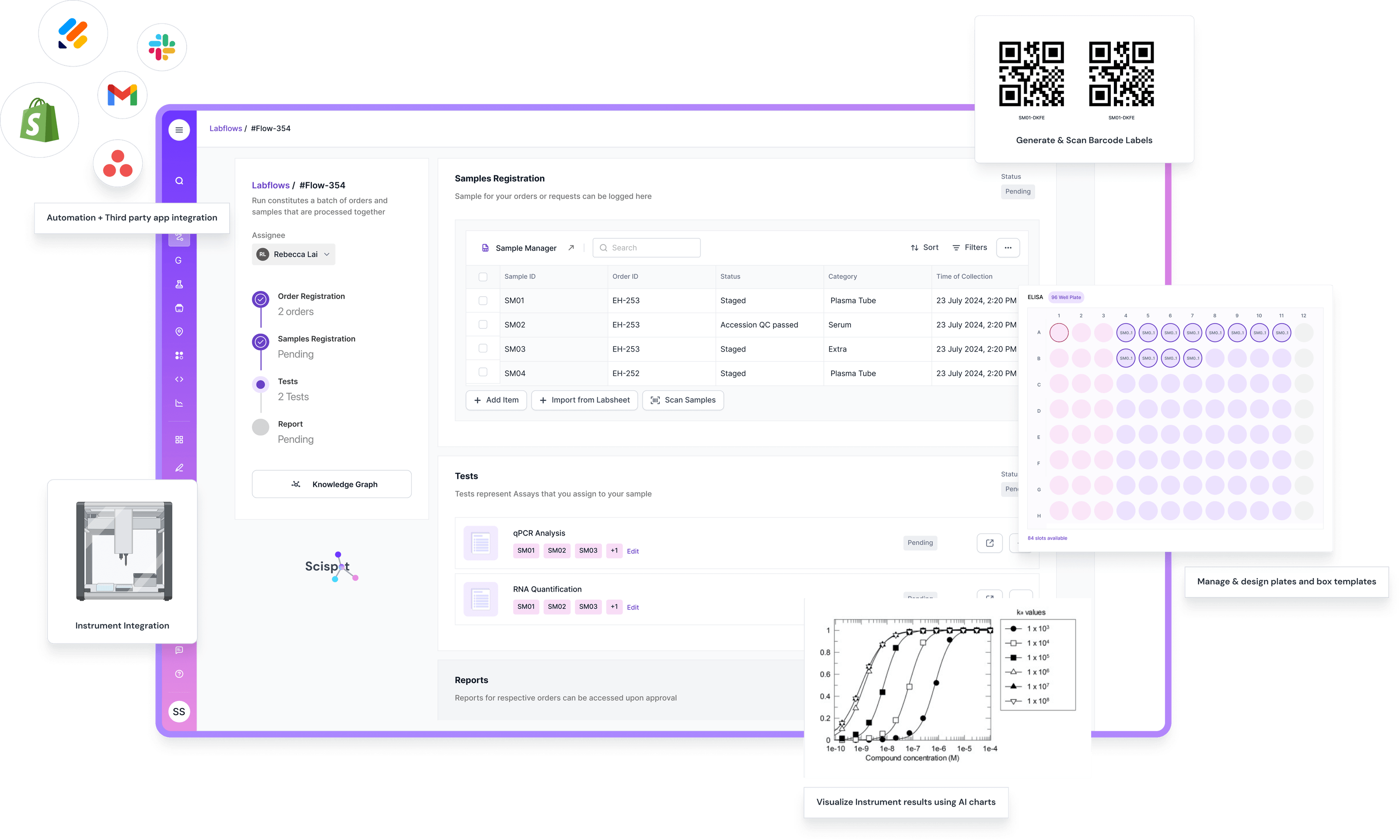
Scispot is a lab operating system that helps teams manage chemical data across inventory, samples, results, approvals, and reporting in one connected workflow. It’s built to keep data traceable, controlled, and easy to reuse across teams and systems.
Key Features
- Unified LIMS + ELN + SDMS workflows: Capture samples, experiments, files, and results in one place.
- Inventory + location tracking: Track chemicals, lots, expiry, storage locations, and chain-of-custody links.
- Audit trails + e-signatures: Record who changed what, when, and why for controlled processes.
- Role-based access controls: Limit who can view, edit, approve, or export specific records.
- Automations and QC checks: Trigger rules, validations, and notifications based on data conditions.
- Integrations via GLUE + APIs: Connect instruments, data sources, and external systems to reduce manual entry.
- Dashboards and analytics: Turn lab data into views and reports for ops, QA, and leadership.
Benefits
- Less data scatter: Fewer spreadsheets, shared drives, and “latest version” confusion.
- Better traceability: Easier to answer “where did this result come from?” during reviews.
- Faster approvals: Clear review steps and signatures reduce back-and-forth.
- Lower manual effort: Automations and integrations cut copy-paste work.
- Flexible setup: Workflows and fields can be tailored to different lab teams and processes.
1. Labguru
Labguru is a comprehensive lab management software designed to streamline research workflows. It offers robust features that cater to the needs of chemical data management.
Key Features
- Electronic Lab Notebook (ELN): Labguru's ELN allows for easy documentation of experiments and results.
- Inventory Management: Track chemical inventories and manage storage locations efficiently.
- Data Analysis Tools: Integrated tools for data analysis help in making informed decisions.
Benefits
- User-Friendly Interface: Labguru’s intuitive interface makes it easy for users to navigate and manage data.
- Customization: Tailor the software to meet specific lab requirements.
- Integration: Seamlessly integrates with other lab equipment and software.
2. ChemInventory
ChemInventory is a specialized chemical inventory software that focuses on managing chemical stocks and ensuring regulatory compliance.
Key Features
- Barcode Scanning: Simplifies the process of adding and tracking chemical stocks.
- Safety Data Sheets (SDS): Easily access and manage SDS for compliance with safety regulations.
- Audit Trail: Keep track of all changes and updates for accountability.
Benefits
- Cost-Effective: Offers a budget-friendly solution without compromising on essential features.
- Scalability: Suitable for both small labs and large research facilities.
- Real-Time Updates: Receive notifications about stock levels and expiry dates.
3. Sphera’s Chemical Management Software
Recently, Sphera acquired the chemical data management software company SiteHawk, enhancing their offerings in chemical management solutions.

Key Features
- Regulatory Compliance: Comprehensive tools for ensuring compliance with global chemical regulations.
- Risk Management: Identify and mitigate potential risks associated with chemical handling.
- Data Integration: Integrates with existing systems for a unified approach to data management.
Benefits
- Enhanced Safety: Improves safety protocols and reduces the risk of chemical incidents.
- Efficient Reporting: Generate detailed reports for regulatory bodies and internal reviews.
- Global Reach: Suitable for multinational organizations with diverse regulatory requirements.
4. LabWare LIMS
LabWare LIMS (Laboratory Information Management System) is an industry leader in laboratory data management, offering advanced features for chemical data handling.
.webp)
Key Features
- Workflow Automation: Automates routine tasks, reducing manual errors and improving efficiency.
- Sample Tracking: Monitor the lifecycle of samples from collection to disposal.
- Data Analytics: Advanced analytics tools for in-depth data analysis and visualization.
Benefits
- Scalability: Ideal for labs of all sizes, from small startups to large enterprises.
- Flexibility: Customizable workflows to meet specific laboratory needs.
- Robust Support: Extensive customer support and training resources available.
Choosing the Right Software for Your Lab
When selecting chemical data management software, consider the following factors to ensure you choose the best fit for your lab's needs:
- Budget: Determine your budget and find a solution that provides the best value for your investment.
- Features: Identify the key features that are essential for your lab's operations.
- Ease of Use: Choose software with an intuitive interface to minimize the learning curve for your team.
- Integration: Ensure the software can integrate with your existing systems and equipment.
- Support and Training: Look for providers that offer comprehensive support and training resources.

The Future of Chemical Data Management
Chemical data management is moving fast. New tech is making it easier to connect inventory, SDS, samples, results, approvals, and reporting into one clean system. Labs are also starting to expect AI-assisted search, smart alerts, predictive analytics for trends like stability or out-of-spec risk, and tighter security controls as more work becomes digital and distributed.
In conclusion, picking the right chemical data management software can shape your lab’s speed, accuracy, and compliance for years. If you want the most complete option across workflow, traceability, integrations, and reporting, Scispot stands out as the best overall choice because it connects more of the end-to-end chain in one place, instead of forcing teams to stitch together multiple tools.

.webp)
.webp)