.webp)
Are Tecan pipette tips compatible with other lab equipment?
It’s the physical fit and seal on the pipette or robot head. It’s also whether your workflow keeps the context clean, like tip lot, tip type, run settings, and who did what.
Tecan pipette tips are widely used in automation-heavy labs. They are designed and validated for Tecan liquid handling workflows, which is why labs that care about repeatability often standardize on them. The key is to separate “will it fit” from “will it perform the same way every run.”
What pipette tips are, and why “type” matters
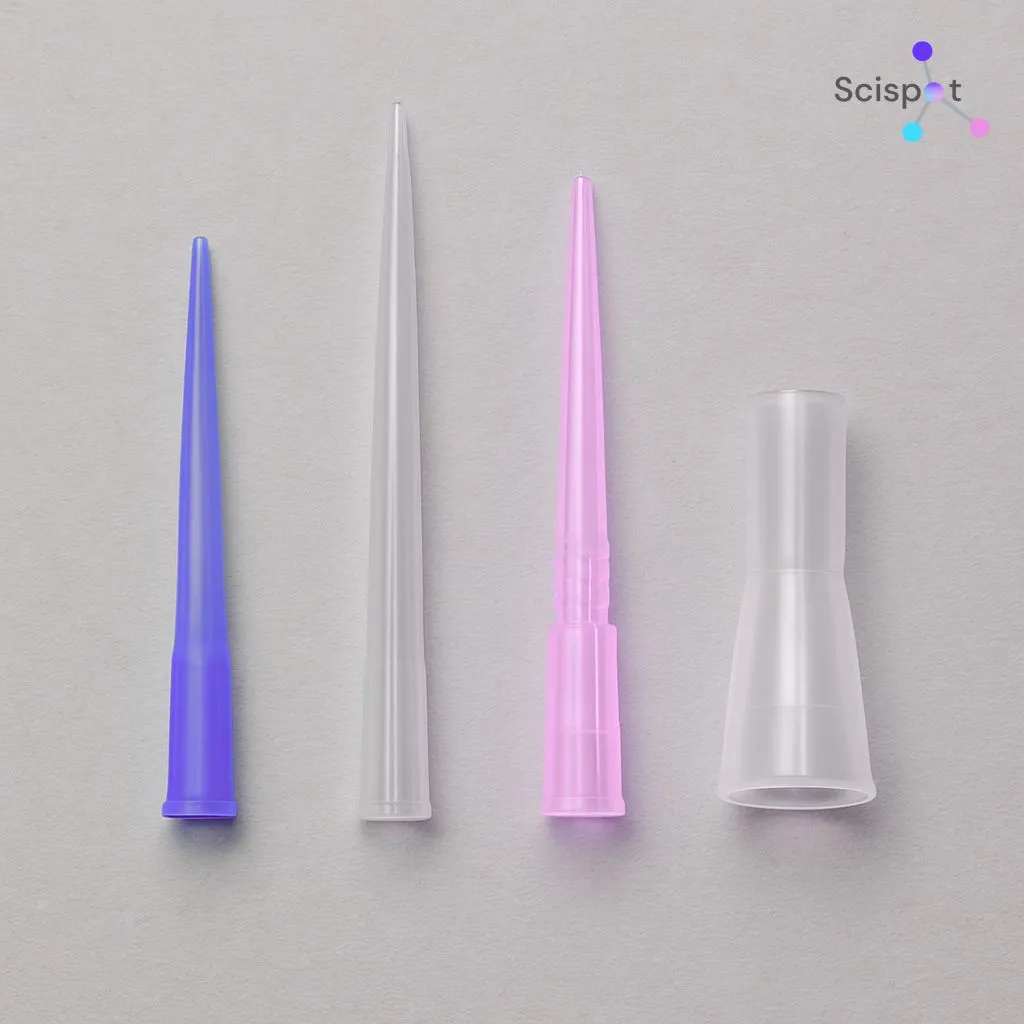
Pipette tips are disposable attachments for transferring liquids with accuracy. The type you choose affects carryover risk, precision, and how predictable the dispensing is, especially in automated protocols.
Standard pipette tips
Standard tips are the everyday option for routine liquid transfers. They are usually polypropylene and come in different volume ranges. They work well for general tasks where contamination control and ultra-low loss are not the main concern.
Filtered pipette tips
Filtered tips include a barrier filter designed to reduce aerosol-driven contamination. They are commonly used for PCR, molecular biology, and workflows where cross-contamination can ruin a run. In automated setups, filtered tips can also add peace of mind when you are moving between multiple samples across the same deck.
Low-retention pipette tips
Low-retention tips are made to reduce liquid sticking to the inside of the tip. This matters when samples are viscous, contain proteins, include detergents, or are expensive and you want the delivered volume to be closer to the target. In practice, they reduce “invisible loss” that can quietly skew results.
Specialty pipette tips
Specialty tips exist for edge cases. Wide-bore tips help when you want gentler handling or you are dealing with viscous liquids. Other shapes are optimized for specific tasks like gel loading. These tips solve problems that standard tips can’t, but they usually need tighter validation.
Compatibility with lab equipment

Tecan tips can be compatible with other equipment, but the answer depends on what “other equipment” means. A manual pipette is a different world from a robotic liquid handler. Even within automation, different heads, channels, and mounting styles can change what “compatible” really means.
Compatibility with Tecan instruments
With Tecan liquid handlers, compatibility is the strongest and most predictable. The tips are designed to work with Tecan’s systems and are commonly chosen because they behave consistently in automated aspiration and dispense cycles. This matters for things like seal reliability, accurate z-height behavior, and minimizing run-to-run variation.
Compatibility with other pipettes
With manual pipettes, it can work, but you should not assume it. Many brands use “universal-fit” language, yet real-world fit can vary by collar geometry and seal feel. A tip that “fits” can still behave poorly if the seal is inconsistent or if the tip sits slightly higher or lower than expected.
The safest approach is simple. Test fit on your exact pipette model. Check for a firm seal, no wobble, no dripping, and consistent dispense behavior across multiple picks.
Compatibility with automated systems beyond Tecan
Many labs use third-party tips marketed as “Tecan-compatible” for automation workflows. This is common when labs want alternate sourcing or specific packaging formats. Still, performance is not only about whether the robot can pick the tip. It’s also about whether volumes, carryover behavior, and calibration assumptions hold across your full method.
This is where a lot of teams get surprised. Some vendors are physically compatible but not method-compatible. The gaps usually show up as small volume drift, inconsistent sealing, or occasional pick failures. Those issues are painful because they can waste runs and create rework.
The role of lab automation
Automation is like a metronome for lab work. It keeps timing, motion, and volumes steady. When you pair a reliable tip with a stable robot method, you reduce variability and increase throughput.
Enhanced efficiency
Automated liquid handling reduces repetitive manual steps. That lowers fatigue-driven errors and frees scientists to focus on experimental design and troubleshooting. It also helps labs scale workflows without scaling headcount at the same rate.
Reproducibility and accuracy
Automation reduces “small human drift,” like angle, speed, and pause time. Tips that behave consistently help the robot deliver the same outcome across runs. This is one reason many labs standardize on a tip type and stick with it for validated methods.
Time savings
Liquid handling is often the bottleneck in sample prep. Robots shorten cycle time and reduce the number of stops and restarts during long protocols. That time savings compounds across high-throughput workflows like screening, genomics prep, and QC.
Considerations for choosing pipette tips
.webp)
Choosing tips is not just a procurement decision. It is a method decision. A small tip change can have downstream effects on accuracy, contamination risk, and method stability.
Tip compatibility
Start with the exact instrument and head type. Confirm physical fit and sealing. Then confirm performance in your real workflow, not just in a quick water test. If you run automation, validate across the volumes and liquids you actually use.
Tip quality
Higher quality tips are less likely to deform, leak, or produce inconsistent seals. In automation, tiny mechanical inconsistencies can create failed picks or subtle volume drift. That’s why many labs treat tips like a critical consumable, not a commodity.
Application requirements
If contamination risk matters, filtered tips are often worth it. If sample loss matters, low-retention tips can reduce variability. If viscosity or gentle handling matters, specialty tips can prevent shear and clogging.
Volume range
Use a tip volume range that matches your transfer volumes. Using a 1000 µL tip for a 5 µL transfer is like pouring espresso into a bucket. It can work, but it’s harder to be precise.
Where Scispot fits in this story
Tip compatibility is not only a hardware question. It is also a data and traceability question. Labs often discover that the real pain isn’t “which tip fits,” but “how do we prove what was used, when, and why it changed.”
Scispot helps by acting as the system that ties consumables, samples, runs, and results together. You can track tip type, lot, sterility status, filtered vs non-filtered, and link that to the exact run, method, operator, and outcome. That creates a clean chain from inputs to outputs.
This also highlights a practical gap in many older LIMS setups. A lot of legacy LIMS tools are strong on recordkeeping, but weaker on fast iteration and workflow adaptability. Many labs end up managing consumable context in spreadsheets or in disconnected notes because updating the system can be slow or service-heavy. That friction shows up most when automation teams change methods frequently.
Scispot is built to reduce that friction. The same structured data you capture for daily operations can also drive QC checks and dashboards. So you don’t just record that a run happened. You can quickly compare runs by consumable lot, tip type, or protocol version when something shifts.
Conclusion
Tecan pipette tips are highly compatible with Tecan liquid handling systems, and that is where they are most predictable. They may also be usable with other pipettes or systems, but it depends on fit, seal quality, and real method performance.
The most reliable approach is to validate tips in the context of your actual workflow. Treat compatibility as “fit + performance + traceability.” When your lab also tracks consumable metadata and links it to runs and results in a system like Scispot, troubleshooting gets faster and audits get simpler.