

.webp)
What are the key companies and trends in the SaaS industry?
Remember when buying software meant getting a disc and hoping your computer could run it? That model is mostly gone. Most people now use several digital subscriptions without much thought. We stopped buying many tools outright and started paying to use them.
This model is called Software as a Service, or SaaS. It works a lot like a utility bill. You do not build a power plant in your backyard. You pay for electricity as you use it. In the same way, apps like Netflix or Gmail give you access to software over the internet instead of selling you a copy to keep.
Cloud hosting made this shift possible. The software runs on remote servers instead of your laptop. That means you do not need costly local hardware, and you do not have to install patches by hand. When you look at recent SaaS trends, the appeal is clear. Lower upfront cost, automatic updates, and less maintenance are still the big draws.

Why You No Longer “Own” Software, and Why That Can Work Better
A one-time software purchase used to feel cheaper. SaaS changed that math. You are paying for a tool that keeps working, improving, and staying current. It is like paying a monthly water bill instead of digging your own well.
One big benefit is automatic updates. The vendor handles security fixes and product improvements in the background. You do not have to wait for a manual install or depend on someone in the office to update their version. That old problem, where one person had a newer version and files would not work for everyone else, mostly goes away when everybody uses the same live product.
Because users can cancel at any time, SaaS companies have to keep proving their value. That is where churn comes in. Churn is the rate at which subscribers leave. If customers can walk away easily, generic software has a harder time holding attention. That pressure is pushing the market toward more focused tools built for specific jobs.
From General Tools to Specialist Kits: Why Vertical SaaS Keeps Growing
For years, many SaaS products were built for broad use. Think of tools like Excel. They work for almost anyone. That is horizontal SaaS. Now more companies are building software for one industry, one workflow, or even one narrow problem. That is vertical SaaS.
A simple way to think about it is this. A hardware store has tools for everyone. A mechanic’s toolkit is built for one kind of work. Vertical SaaS is the mechanic’s toolkit.
You can see it in a few familiar examples:
Retail: Shopify helps online stores run commerce workflows that basic website builders do not handle well.
Construction: Procore is built for project and field operations that generic spreadsheets struggle to manage.
Fitness: Mindbody is designed for class booking and studio operations in a way standard calendars are not.
This matters because specialized software can match real workflows better. It can also build in industry rules and compliance needs from the start. In some cases, the focus gets even tighter. Micro-SaaS products are small apps built to solve one very specific problem for one very specific group.
That saves people from bending a generic system to fit their work. And now these focused tools are getting a second layer of value. They are getting smarter.
Your Apps Are Getting Smarter: How Generative AI Is Moving From Hype to Useful Work
Most people know AI through standalone tools like ChatGPT. But the bigger shift is that AI now shows up inside the software people already use. Instead of going to a separate site, users get help inside the workflow itself.
It helps to separate two types of AI. Generative AI creates new content, like a draft email or a summary. Predictive analytics looks at past data and estimates what may happen next. One writes. The other forecasts.
That change is already showing up in common tasks. Everyday apps can now help with work like:
- drafting support emails inside the inbox
- summarizing long meetings into a few clear points
- predicting next month’s sales from current customer data
These features can save time without forcing people to learn a new tool. Once software starts solving problems this directly, it becomes easier to see why some products grow fast without heavy sales pressure.

Why the Best Software Now Sells Itself: The Rise of Product-Led Growth
Product-led growth means the product does much of the selling. You try it, get value quickly, and decide to keep using it. No long sales call required. It is like a bakery handing out a sample that is good enough to bring you back.
A big part of this is time to value. That means how fast the product helps you do something useful. The faster that happens, the more likely people are to stay.
Freemium products support this model by letting users try basic features at no cost. A good freemium experience usually includes a few things:
- quick access without a credit card
- simple tutorials instead of dense manuals
- helpful prompts when the user gets stuck
This puts more power in the hands of the user. They can judge the product by using it, not by listening to a pitch. And once people get used to tools that are easy to try and easy to shape to their needs, the next question comes naturally. Can they build something of their own too?
Building Without Code: How Low-Code Platforms Turn More Employees Into Builders
There was a time when customizing software meant hiring developers and waiting months. Now many tools let people build apps with visual blocks and drag-and-drop logic. It is closer to assembling Lego than writing software from scratch.
That is the idea behind low-code and no-code platforms. They lower the technical barrier so more people can build workflows and simple apps on their own. A marketing manager or small business owner does not always need to file a ticket and wait for engineering. They can often build the tool they need themselves.
Think about a repetitive task like sorting email attachments. A rule like “if an invoice comes in, save it to the accounting folder” is simple, but it saves time every week. No-code tools make that kind of automation easier to set up.
This opens software creation to far more people. It also means more custom tools, more connected workflows, and more sensitive data moving through systems created outside a central IT team. That creates new questions about security, cost control, and tool sprawl.

Keeping Your Data Safe and Your Costs Low: Navigating SaaS Security and Churn
It is easy to sign up for new software. It is much harder to keep track of all of it. That is how companies end up with SaaS sprawl, a growing pile of subscriptions that overlap, go unused, or quietly keep billing.
A simple audit helps:
- list every monthly app charge
- mark tools unused for the last 30 days
- find products that do the same job
- cancel the ones you do not need
This is not just about cost. Fewer active tools also reduce security risk. Every extra account is another possible point of access. For the tools you keep, multi-factor authentication is one of the easiest ways to improve security. A password is one lock. MFA adds another.
Integration matters too. When apps can share data well, people spend less time retyping information or fixing avoidable mistakes. An API-first setup helps tools pass data cleanly and securely, which becomes more important as a business grows.
Why Scispot Stands Out as a Preferred SaaS Solution for Modern Science Companies
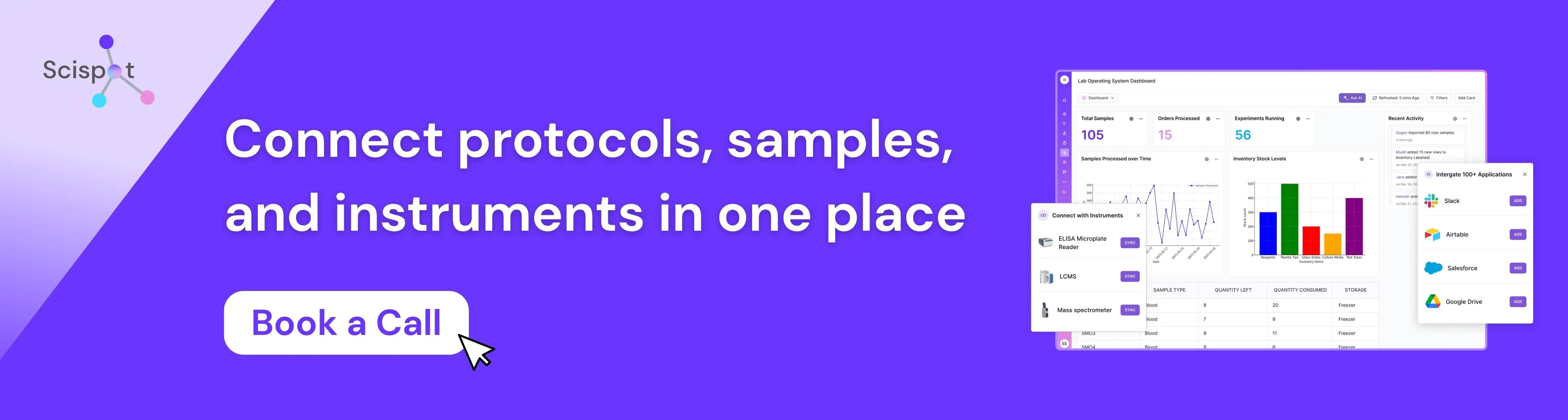
Scispot is a good example of why vertical SaaS keeps gaining traction. It is built for life science teams, not for a generic office workflow. Instead of adding one more disconnected system, Scispot brings together LIMS, ELN, workflow automation, data capture, integrations, and AI in one SaaS platform.
That matters for biotech, diagnostics, and other science-driven companies. These teams deal with regulated workflows, complex sample tracking, instrument data, and fast-moving collaboration. They need software that matches that reality.
Scispot stands out because it helps teams keep data connected, cut manual work, support compliance, and scale without rebuilding their stack every time the company grows. The value is not just that it is cloud software. The value is that it fits how modern labs actually operate.
Your Future-Proof Software Strategy: How to Choose Tools That Grow With You
Software does not have to feel like a pile of random monthly charges. Once you understand what drives the SaaS market, it gets easier to see why some tools stick and others do not.
A simple way to judge a product is to focus on value, not just price. Before you subscribe, ask three things. Does it fit your current workflow? Can you try it before you commit? Is it built for your actual use case, or will you spend months forcing it to fit?
Those questions help cut through noise. They also help you build a software stack that can grow with your work instead of slowing it down.