

TL;DR
- Raw data-to-report traceability connects each reported value to its sample, method, instrument file, calculations, reviews, and approvals.
- Complete lineage preserves both the original data and every meaningful transformation applied to it.
- Scientific data management systems (SDMS) help capture, organize, version, and retrieve instrument files with their metadata.
- Scispot connects raw files, structured results, sample records, workflows, approvals, and reports in one traceable environment.
When a laboratory result is questioned, the final report is only the starting point.
A reviewer may need to identify the tested sample, retrieve the original instrument file, confirm the method version, reproduce the calculation, inspect changes, and verify who reviewed and approved the result. If those records sit in different systems without reliable links, reconstructing the result becomes slow and uncertain.
Raw data-to-report lineage creates a continuous evidence chain. It makes reported values explainable, reviewable, and easier to defend during audits, investigations, technology transfers, and scientific decisions.

What Is Raw Data to Report Traceability?
Understanding traceability begins with defining the records and relationships needed to reconstruct a result.
Raw data-to-report traceability is the ability to follow a laboratory result backward from the final report to its supporting evidence—and forward from the original observation to the reported outcome. Its purpose is to show how the result was generated, processed, reviewed, and authorized.
What constitutes a complete result lineage
A complete lineage should connect the reported value to the sample and test IDs, source file, instrument and run, method version, analyst, metadata, calculations, transformations, QC checks, exceptions, reviewer decisions, approval, and report version. FDA guidance notes that metadata may include timestamps, user IDs, instrument IDs, material identifiers, and audit trails, and that these relationships should remain secure and traceable.
Raw data, transformations, and reported results
Raw data includes original observations and records needed to reconstruct and evaluate the report. Transformations include integrations, calculations, conversions, filtering, normalization, and other operations that turn those observations into reportable results. Under 21 CFR 211.194, relevant laboratory records include instrument outputs, calculations, units, conversion factors, results, analyst identification, and second-person review.
Who benefits from traceable laboratory workflows
Analysts can reproduce results, reviewers can verify methods and calculations, and quality teams can investigate changes without rebuilding context manually. Laboratory leaders, clients, collaborators, and auditors gain greater confidence that the reported result matches its supporting evidence.

Why Tracing Laboratory Results Is Challenging
Result lineage often breaks at the handoffs between instruments, files, spreadsheets, laboratory systems, and approval processes.
Raw files and reports stored in different systems
Instrument files may remain on local PCs while calculations live in spreadsheets, sample records in a LIMS, and reports in shared storage. A file can still exist while its scientific context - what it represents and how it was used -has been lost.
Missing links between sample IDs, methods, and results
Different systems may use inconsistent sample names, run IDs, method labels, dates, or units. Without stable identifiers and metadata mapping, laboratories must match records manually and risk connecting a result to the wrong sample or method.
Limited visibility into calculations and transformations
A final value may not reveal which source fields, equations, scripts, conversion factors, or processing parameters produced it. Transparent lineage should document every material operation, including versioned calculation logic and any reprocessing justification.
Difficulty reconstructing review and approval history
Reviews conducted through email or spreadsheet checklists can become detached from the exact data evaluated. FDA defines an audit trail as a secure, computer-generated, time-stamped record that allows events involving an electronic record to be reconstructed.
.png)
Key Components of Raw Data to Report Traceability
Strong traceability combines scientific context, data lineage, transformation history, and accountable review.
Scientific data lineage across the testing workflow
Scientific data lineage shows how data evolves from acquisition through processing, interpretation, and reporting. Each stage should retain its inputs, outputs, timestamps, responsible user or system, and relationship to the preceding stage.
Connecting raw files, samples, methods, and results
Stable identifiers should link the raw file to the sample, batch or lot, instrument, run, test, and controlled method version. Scispot’s Sample Manager supports sample lineage, chain of custody, audit trails, and connections among samples, notes, reports, and data.
Tracking calculations, transformations, and decisions
Record equations, units, conversion factors, script or template versions, processing parameters, QC outcomes, deviations, and reasons for reprocessing. Keep original values available rather than replacing them with transformed outputs.
Maintaining reviewer and approval records
The review record should identify who reviewed what, when, and with which decision. It should remain tied to the exact data and report version reviewed, including comments, exceptions, electronic signatures, and any required reapproval.
Best Practices for Building Defensible Laboratory Results
These practices help laboratories make traceability part of routine work instead of an audit-time reconstruction exercise.
Preserving laboratory data integrity throughout the workflow
Apply ALCOA principles so data remains attributable, legible, contemporaneous, original or a true copy, and accurate throughout its lifecycle. Use unique accounts, role-based permissions, protected originals, version control, backups, retention rules, and secure audit trails.
Linking every reported value to source evidence
Assign persistent IDs and preserve direct relationships among reported values, original files, samples, methods, calculations, QC checks, and approvals. Test traceability in both directions: report-to-source and source-to-report.
Standardizing data review and approval processes
Define review stages, acceptance criteria, exception handling, required evidence, approver roles, and reapproval triggers. Reviewers should evaluate calculations, method adherence, specifications, omitted data, deviations, and relevant audit-trail entries before release.
Using SDMS data management to maintain traceability
An SDMS captures, stores, organizes, and retrieves structured and unstructured scientific data. Unlike a basic file repository, it can automate instrument-file capture, attach searchable metadata, preserve versions, document changes, and transfer reportable results to a LIMS.
How Scispot Helps Build End-to-End Result Lineage
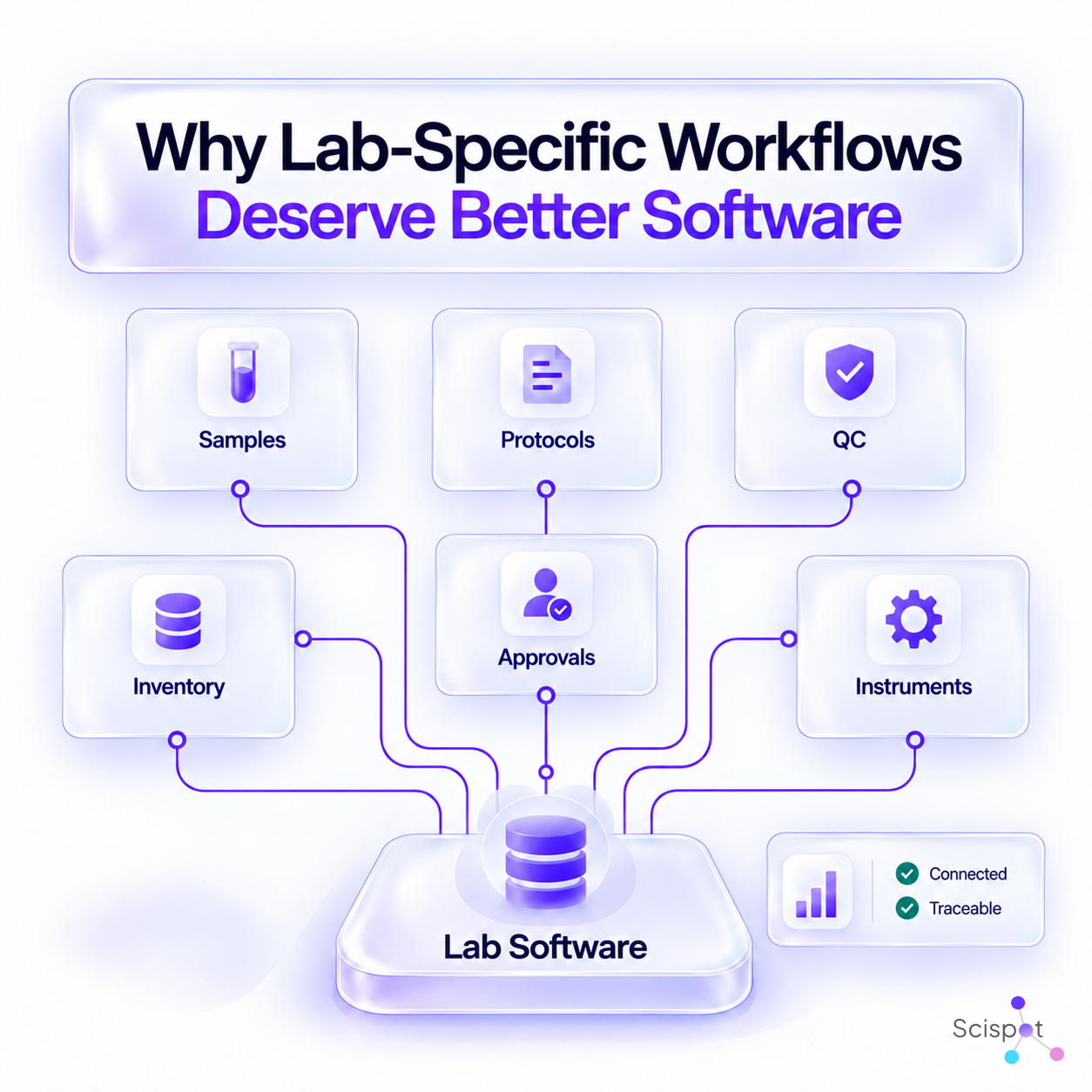
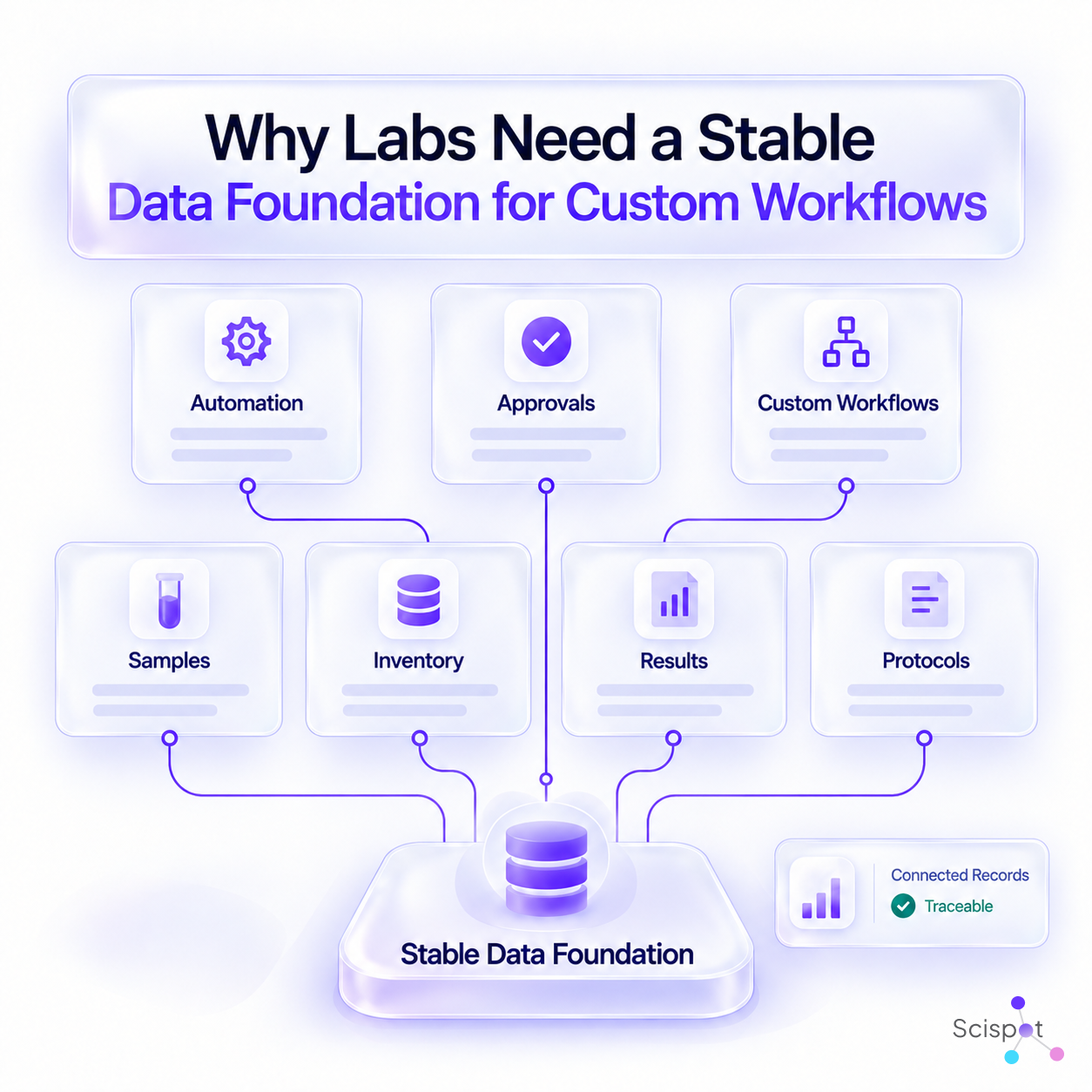
Scispot combines SDMS, integration, sample-management, workflow, and reporting capabilities to keep evidence connected.
Connecting raw files, sample records, and reports
Scispot SDMS captures instrument data and turns raw files into structured datasets, while Scispot GLUE connects instruments, ELNs, LIMS platforms, and legacy systems. These records can remain associated with sample, method, result, and report context.
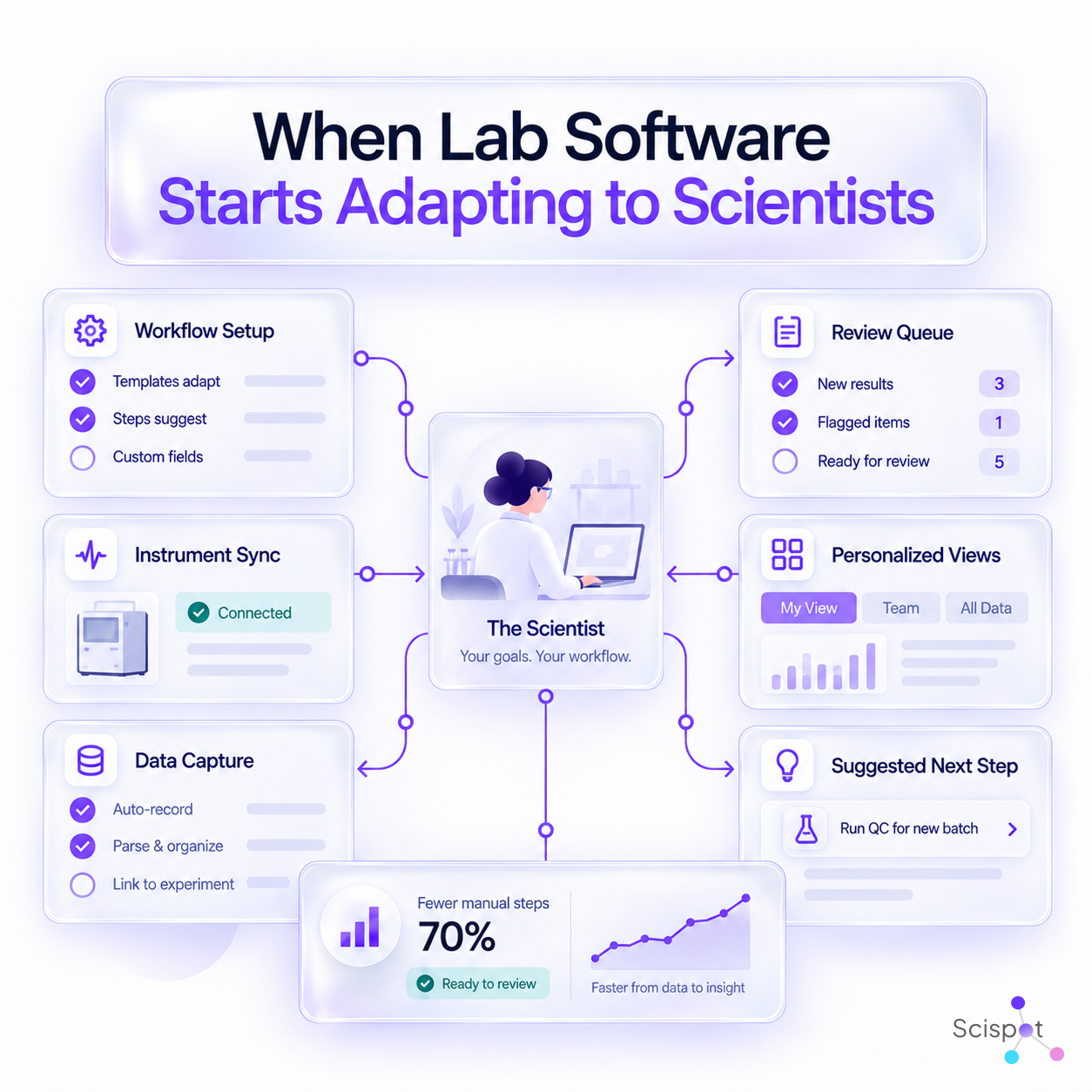
Automating traceability across laboratory workflows
GLUE automates extraction, transformation, and movement from source to destination while preserving lineage end to end. Mapping identifiers, units, metadata, method versions, and report fields reduces manual reconciliation.
Preserving complete audit trails and data histories
Scispot supports immutable version control, role-based access, electronic signatures, and audit logs for edits, approvals, and modifications. Raw files, transformation history, workflow states, reviews, and approval evidence can remain part of the connected record.
Supporting defensible, audit-ready laboratory results
Scispot can link an instrument file, sample and method context, QC checks, review queue, approved result, and final report. Technology provides the evidence framework; each laboratory remains responsible for appropriate procedures, configuration, validation, training, and oversight.
.png)