

TL;DR
- Laboratory report retention preserves required records; retrieval makes those records findable and usable throughout their lifecycle.
- A governed archive combines metadata, version histories, access controls, retention rules, audit trails, and links to source evidence.
- Retention periods vary by record type, jurisdiction, and regulatory framework, so laboratories need documented, configurable policies.
- Scispot connects reports with samples, instrument files, results, approvals, and supporting evidence to support searchable, audit-ready retrieval.
Saving a final report is easy. Finding the correct report years later - together with its approval history and supporting records - is where many laboratories struggle.
A governed archive does more than hold PDFs. It preserves context, restricts access, manages record lifecycles, and lets authorized users retrieve complete records without searching through shared drives, inboxes, and disconnected applications. FDA rules and guidance emphasize accurate, ready retrieval throughout applicable retention periods and preservation of record content and meaning.
What Is Laboratory Report Retention Software?
Understanding the difference between keeping a report and retrieving it explains why ordinary file storage is not enough.
Laboratory report retention software is a controlled system for archiving, protecting, finding, and disposing of laboratory reports according to defined policies. It helps preserve reports with the metadata, history, permissions, and related evidence needed to understand and defend them.
Report retention vs report retrieval
Retention answers, "What must be kept, for how long, and under whose authority?" Retrieval answers, "Can an authorized person locate and produce the complete record when needed?" Effective governance requires both because a retained file has limited value if it cannot be found, read, or interpreted.
What makes a report archive searchable and governed
A searchable archive indexes records using fields such as report ID, sample, test, method, client, status, date, author, approver, and version. Governance adds role-based access, retention schedules, legal or quality holds, version control, audit trails, backups, migration controls, and documented disposal.
Who benefits from structured report retention
Analysts retrieve prior work faster, reviewers see the relevant history, and quality teams can assemble inspection records with less manual effort. Laboratory leaders, clients, auditors, and inspectors benefit from consistent access to complete, trustworthy reports.
Why Historical Reports Are Difficult to Retrieve
Retrieval problems usually begin long before someone searches for a historical report.
Reports scattered across systems, folders, and repositories
Final reports may sit in a LIMS while preliminary versions remain in email, corrected copies in shared folders, and raw data in an SDMS or instrument computer. Without a governed system of record, users may not know which location is authoritative.
Missing metadata and inconsistent naming conventions
Names such as "final_report_v2_new.pdf" reveal little about the sample, method, approval status, or correction history. Standardized metadata enables users to search with filters and keywords instead of relying on filenames or personal knowledge.
Limited version control and access management
Uncontrolled copies can obscure which version was released and who is permitted to view or change it. Automated identifiers, revision histories, timestamps, archived superseded versions, and permissions reduce ambiguity.
Weak connections between reports and supporting records
A report may be retrievable while its sample history, raw files, calculations, QC checks, deviations, and approvals remain elsewhere. Preserving these relationships makes the archive useful for investigations, audits, and scientific review - not merely long-term storage.

Key Components of a Searchable Report Archive
A dependable archive combines policy, structured information, technical controls, and traceable record histories.
Laboratory record retention policies and controls
A policy should define covered record types, owners, triggering events, retention periods, access rules, holds, approved storage formats, backup expectations, migration procedures, and authorized disposal. Requirements differ: for example, CLIA-related test-report periods vary by specialty, while other regulated work follows different rules.
Metadata-driven search and retrieval
Require structured metadata at report creation rather than adding it during an audit. Index stable identifiers and relationships so users can search by sample, method, project, date range, report status, result, reviewer, or approval state.
Report archive management and version histories
Preserve preliminary, final, corrected, and superseded reports according to policy. Each version should show its identifier, status, effective or release date, reason for change, relationship to previous versions, and authorization history.
Access controls, permissions, and audit trails
Apply least-privilege access and separate permissions for viewing, editing, approving, exporting, and administering records. Secure, time-stamped audit trails should capture configured actions without replacing the underlying report and evidence history.
Best Practices for Laboratory Document Management
These practices help laboratories keep archives searchable, trustworthy, and usable over long retention periods.
Standardizing report classification and metadata
Create a controlled taxonomy for report type, department, assay, method, status, and retention class. Use mandatory fields, validation rules, shared identifiers, and naming conventions consistently across systems.
Preserving links between reports and source data
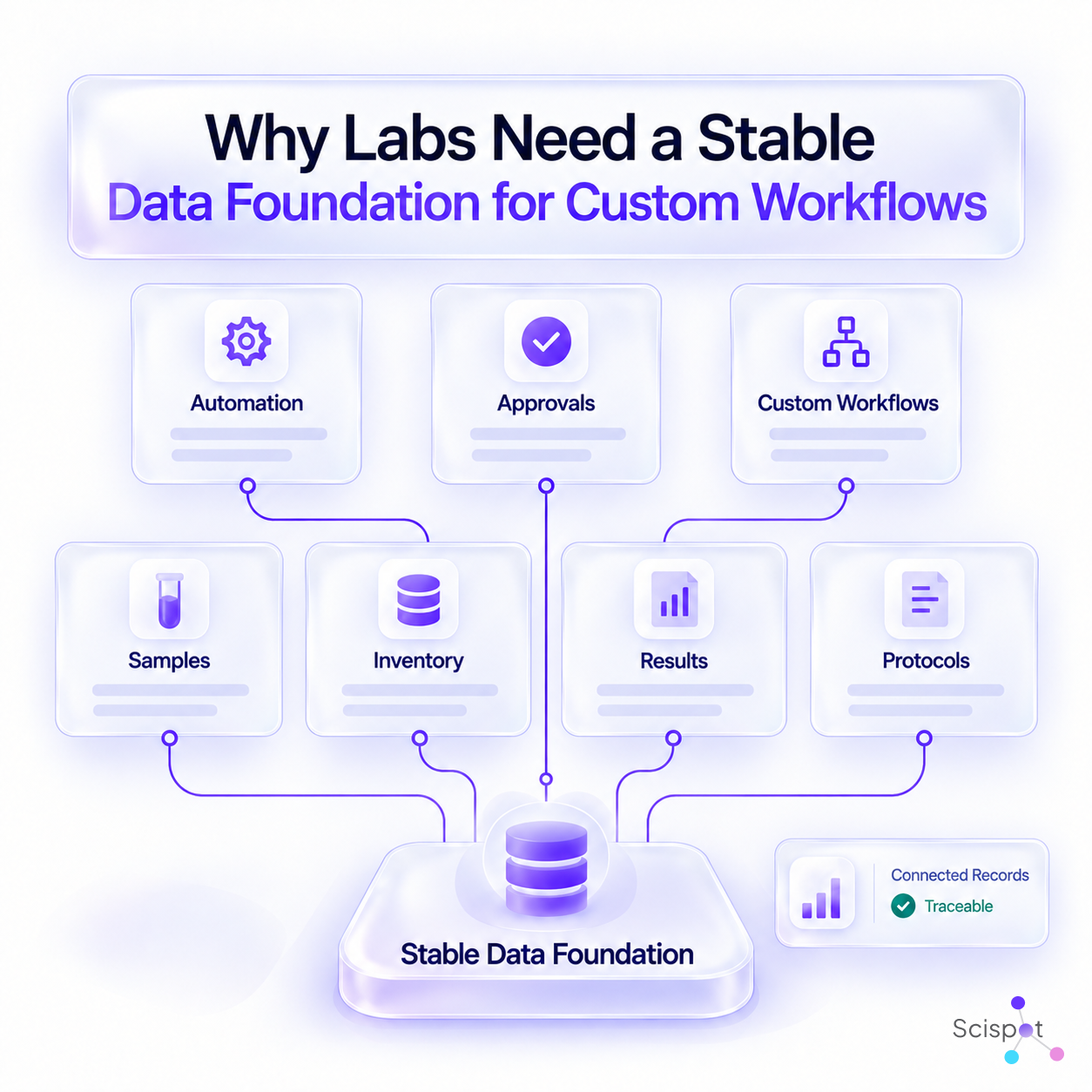
Connect each report to samples, methods, instrument files, calculations, QC records, exceptions, reviews, signatures, and approvals. Preserve these relationships during exports and system migrations, including associated metadata and audit trails.
Managing retention schedules and record lifecycles
Map each record class to the applicable regulation, contract, and policy, then define triggers for archive, hold, review, and disposal. Retention should never use one blanket period when obligations differ across report and record types.
Supporting audit-ready retrieval and compliance
Test whether authorized users can retrieve complete, readable records within an acceptable time. Validate relevant archive functions, monitor access, test backups, document migrations, and verify that disposal is approved and auditable. FDA guidance states that archived records and copies should preserve their content and meaning.

How Scispot Helps Manage Report Retention and Retrieval
Scispot provides connected LIMS, SDMS, integration, and compliance capabilities that laboratories can configure around their archive policies.
Centralized laboratory report retention software
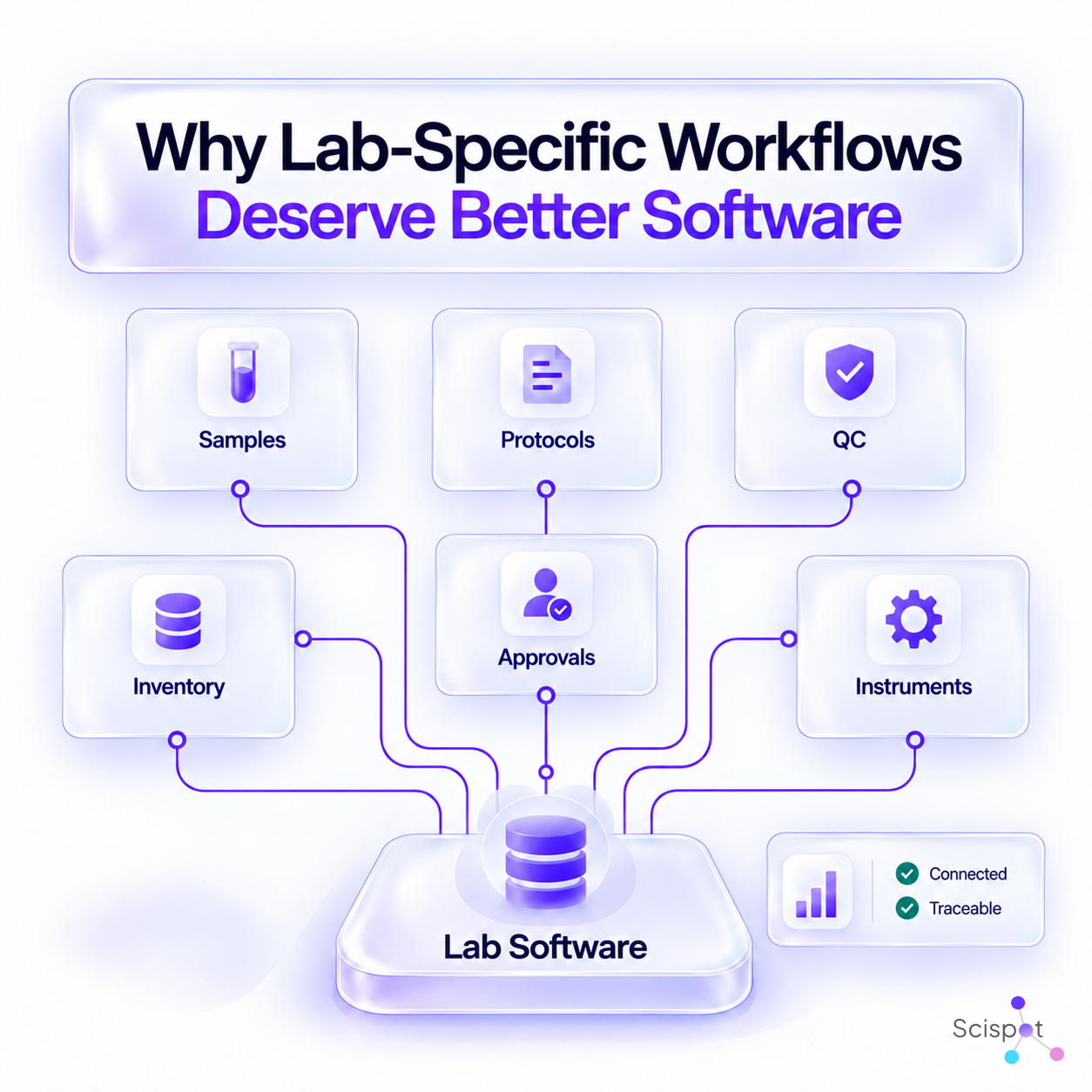
Scispot LIMS centralizes samples, workflows, results, and reporting context, while its SDMS capabilities organize raw and processed scientific files. This creates a connected system of record instead of another isolated folder.
Fast search across reports, metadata, and linked records
Scispot uses structured metadata to make scientific records searchable by relevant identifiers and attributes. Its SDMS supports filters, keywords, and metadata-based retrieval across datasets, experiments, and results.
Controlled access, version management, and audit trails
Scispot supports role controls, approvals, source lineage, version histories, and audit records. Its configured system audit log can capture the user, action, timestamp, and old and new values associated with record changes.
Connected report archives with supporting evidence and source data
Scispot can link report context to raw files, transformations, samples, tests, exceptions, approvals, and compliance evidence. Software supports governance, but each laboratory remains responsible for defining requirements, validating intended use, maintaining procedures, training users, and overseeing compliance.