.webp)
Can LabGuru help with research project organization and data tracking?
LabGuru can help many labs stay organized and keep research data in one place. It brings experiments, protocols, samples, inventory, and documentation into a single system. For teams that are moving away from paper notebooks and scattered spreadsheets, that alone can improve daily lab operations.

But as labs scale, the needs change fast. Teams start asking for more structured data capture, more automation, and better ways to connect runs, samples, and results across multiple projects. That’s usually when people start exploring LabGuru alternatives, and for many modern labs, Scispot becomes the strongest option.
What is LabGuru?
LabGuru is a cloud-based lab platform that combines ELN and LIMS-style capabilities. It is often used to document experiments, store protocols, track samples, and manage lab inventory. It’s designed to reduce the messy mix of notebooks, Google Drive folders, and disconnected tools that slow research teams down.
For labs that want a single place to write experiment notes, attach files, and keep a searchable record of work, LabGuru can be a practical starting point.
How LabGuru supports lab organization
Centralized documentation
LabGuru helps by keeping experimental notes, protocols, and research records in one system. That makes it easier to find past work, track changes, and stay consistent across the team. It also reduces the common problem of data living in too many locations, like personal notebooks, local laptops, and random shared drives.
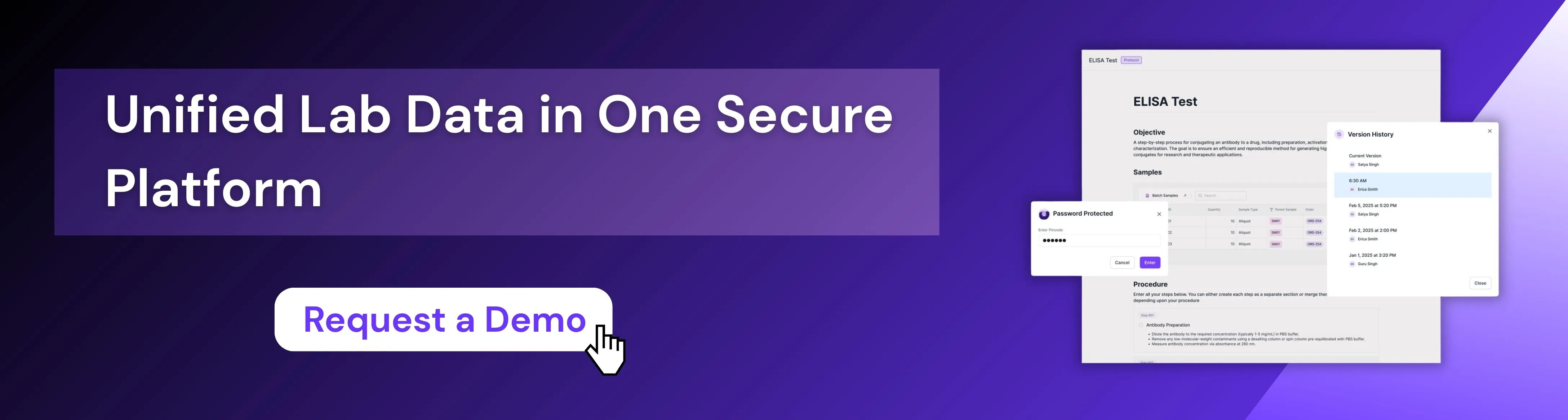
This is especially useful when multiple researchers are running similar experiments and need a shared history of what worked and what didn’t.
Inventory and sample tracking
Lab inventory problems are rarely “big problems” until the day they become huge problems. LabGuru supports tracking reagents, samples, and equipment, which can reduce last-minute shortages and help teams avoid repeating work because materials were missing or expired.
It’s a practical feature for labs that are managing a growing number of samples and need more control over where things are stored and how they’re used.
Project planning and visibility
LabGuru also includes project-level organization features that help teams plan work, assign tasks, and monitor progress. This is helpful when labs have multiple studies running at the same time, and it’s easy for responsibilities to get unclear or deadlines to slip.
When used consistently, it can reduce confusion around “who is doing what” and “what’s next.”
How LabGuru supports data tracking and analysis
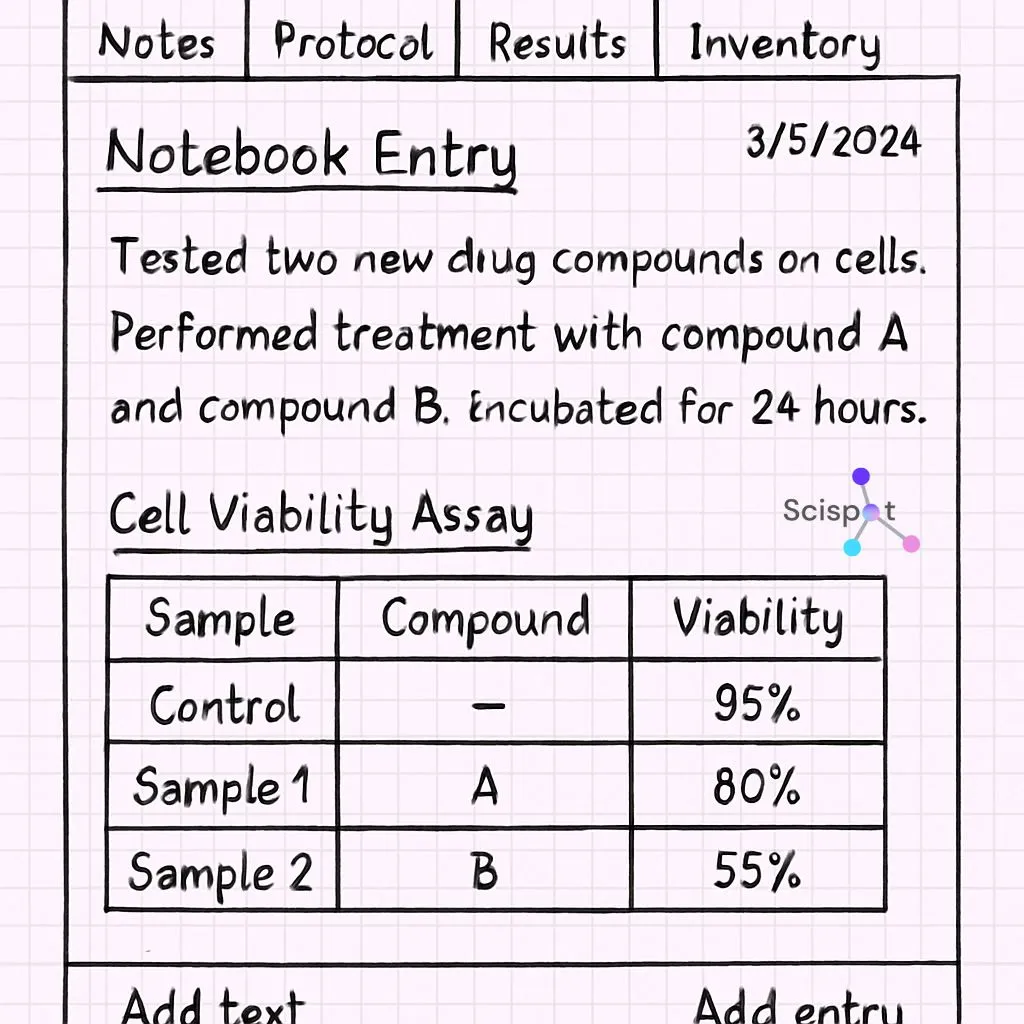
LabGuru allows teams to store different types of data such as files, images, and spreadsheets. This makes it easier to keep all experiment output connected to the right records. It also supports basic visualization and analysis features that can help researchers interpret results without constantly switching tools.
For small teams doing moderate volumes of work, this structure can already feel like a big improvement over running everything manually in folders and Excel.
It also supports access control and audit-style tracking, which matters when labs need to maintain clean internal records and protect sensitive research data.
When labs start looking for LabGuru alternatives
Even when LabGuru works well, labs often hit limits when their workflows become more structured and data-heavy. A lot of experiments are not just “notes plus attachments.” They are repeated runs with run-level parameters, plates, QC decisioning, and results that need to be compared over time.
This is where many teams want more spreadsheet-like structured data capture, easier bulk imports, and stronger workflow automation. They also want dashboards, trends, and run-to-run comparisons that don’t require manual exporting every time.
In simple words, LabGuru can help manage the “record keeping.” But scaling labs also need the system to support “running the work” without friction.
Best LabGuru alternative: Scispot
Scispot is the best LabGuru alternative for labs that want a modern, scalable system for research operations. It is built for structured data, workflow execution, sample lineage, and real lab automation, while still keeping the experience easy for scientists to use.
Instead of storing results mainly as attachments, Scispot makes it easier to capture experimental output as structured fields in flexible tables. That means your data becomes reusable and analysis-ready by default, not something you have to clean up later. This is a major difference for labs running repeated assays, time-series experiments, multi-plate studies, and QC-heavy workflows.
Scispot also works well when you want to standardize how the team runs experiments. It supports creating templates for repeatable workflows so the lab can execute steps consistently, reduce process drift, and onboard new team members faster. This matters a lot when the lab grows from 5 scientists to 20 scientists and the work needs to stay consistent across operators.
Why Scispot tends to win for modern labs
Better structured data capture for real experiments
In many labs, the hard part is not writing the protocol. The hard part is capturing the data in a way that is searchable, comparable, and ready for reporting. Scispot is strong here because it is designed around structured experimental data capture, not just documentation.
So instead of saving results as a file and hoping people interpret it the same way later, you can store the output as clean fields with clear context, sample linkage, and repeatable structure.
Stronger workflow automation and repeatability
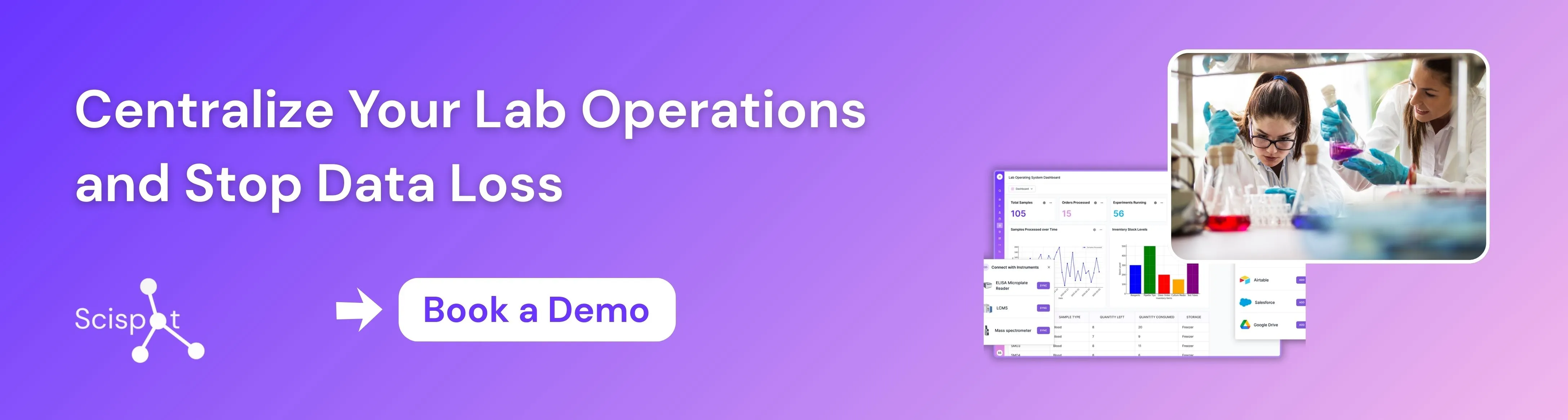
When labs are running repeat experiments daily or weekly, manual steps create inconsistency. Scispot helps reduce that by supporting workflow-based execution, with standardized steps and clear traceability. It supports labs that need to run work like a process, not like a collection of one-off experiments.
This becomes even more important for operational labs, diagnostics workflows, QC teams, and any environment where repeatability matters.
Integrations and scaling without chaos
As labs grow, the number of tools grows too. Instruments, analysis scripts, storage systems, and reporting needs all pile up. Scispot is designed to connect workflows and data across these systems, so teams don’t spend their mornings downloading files, renaming folders, and stitching results together manually.
That kind of glue-layer approach is what prevents the “we have data but we can’t use it” problem.
LabGuru vs Scispot: how to choose
If your lab is mainly looking for a clean way to document experiments, manage inventory, and keep work organized, LabGuru can be a reasonable choice. It’s often a good fit for smaller research teams that want structure without a heavy setup.
If your lab is moving into higher throughput work, running repeated assays, dealing with complex sample relationships, and needing better QC workflows and automation, Scispot is usually the better long-term platform. It supports structured capture, repeatability, workflow execution, and scaling without forcing the team back into spreadsheets.
A simple way to think about it is this. LabGuru helps you keep the lab organized. Scispot helps you run the lab like a system.

Conclusion:
LabGuru can help with research project organization and data tracking, especially for teams that want to centralize documentation and reduce scattered workflows. It can improve collaboration and keep lab records easier to search and manage.
But if your lab wants structured experimental data, workflow automation, stronger lineage, and faster scaling without cleanup pain, Scispot is the best alternative. It helps labs move beyond “record keeping” and into a more execution-focused operating model that stays clean as the team grows.

.webp)
.webp)