.webp)
How does Labfolder improve collaboration in research labs?

In the world of scientific research, collaboration is everything. Teams need to share data, align on next steps, and keep experiment context intact, without losing time to messy handoffs. That’s where tools like Labfolder, a digital lab notebook built for research documentation and teamwork, can help labs stay organized and connected.
At the same time, many labs realize that collaboration is bigger than notes. It also includes sample handoffs, test status, instrument outputs, approvals, and audit-ready traceability. That’s where a modern, workflow-first LIMS like Scispot becomes the system teams rely on day to day.
The Need for Collaboration in Research Labs
Scientific research is rarely a solo job. Most experiments are shared across scientists, interns, analysts, and reviewers, and each handoff adds risk if context is missing.
Traditional collaboration methods like paper notebooks, email threads, and scattered folders create gaps. Small things get lost, like “which file is the final one” or “who changed this step,” and teams pay for it later with repeats and delays.
This is why labs move to digital systems. A good platform keeps experiment records readable, searchable, and shareable, even when teams are moving fast.
What is Labfolder?
Labfolder is an electronic lab notebook (ELN) designed to help research teams document experiments, organize records, and collaborate in a shared workspace. Instead of relying on physical notebooks, labs can store results, notes, and attachments in a structured digital format.
Labfolder is often used by teams that want cleaner experiment documentation and easier knowledge sharing. It supports team permissions, templates, and controlled access, which makes it useful for labs with multiple contributors.
One important detail is that Labfolder is primarily an ELN. ELNs are excellent for experiment documentation, while LIMS platforms typically focus on operational workflows like sample lifecycle tracking, QC steps, and instrument-linked pipelines.
Key Features of Labfolder
Labfolder’s digital notebook setup helps researchers record experiments in a consistent way. Teams can add notes, images, files, and supporting details in one place, which makes it easier for others to review and reuse the work.
It also includes collaboration-friendly controls like user permissions, templates, comments, and shared organization structures. This reduces the “knowledge stays in one person’s head” problem and keeps labs aligned across projects.
Labfolder can support basic coordination through project and organization features. For teams that mainly need a digital research notebook and shared experiment history, this can be a practical upgrade over paper and email.
Where Scispot pulls ahead is when collaboration must extend into real lab operations. Scispot connects experiment records to samples, workflows, approvals, and downstream analysis so collaboration stays intact even when the lab scales.
.jpeg)
Improving Research Collaboration with Labfolder
Streamlined Data Sharing
One of the biggest wins with Labfolder is simpler data sharing. Researchers can upload experiment data and attachments into a central record, so teammates don’t need to chase files across inboxes and folders.
This helps teams stay on the same version of the truth. It also supports smoother onboarding, because new team members can follow prior work without hunting through scattered documents.
With Scispot, data sharing becomes even more lab-native. Results can land in structured Labsheets tables, linked to samples and workflows, so teams share not just files, but complete context.
Enhanced Communication
Labfolder supports collaboration by keeping discussions close to the work. Teams can use comments and shared experiment records to discuss findings, ask questions, and clarify methods without switching tools.
This matters because lab work needs tight context. A message without the experiment record nearby often becomes confusing, especially weeks later.
Scispot strengthens this further by keeping communication tied to workflow stages, not just notebook pages. That means discussions can sit next to QC flags, approvals, and routed tasks, so nothing gets lost between “done” and “reviewed.”
Efficient Project Management
Research work is full of moving pieces. Labfolder’s structure helps teams keep documentation consistent, which makes it easier to track progress and avoid duplicate work.
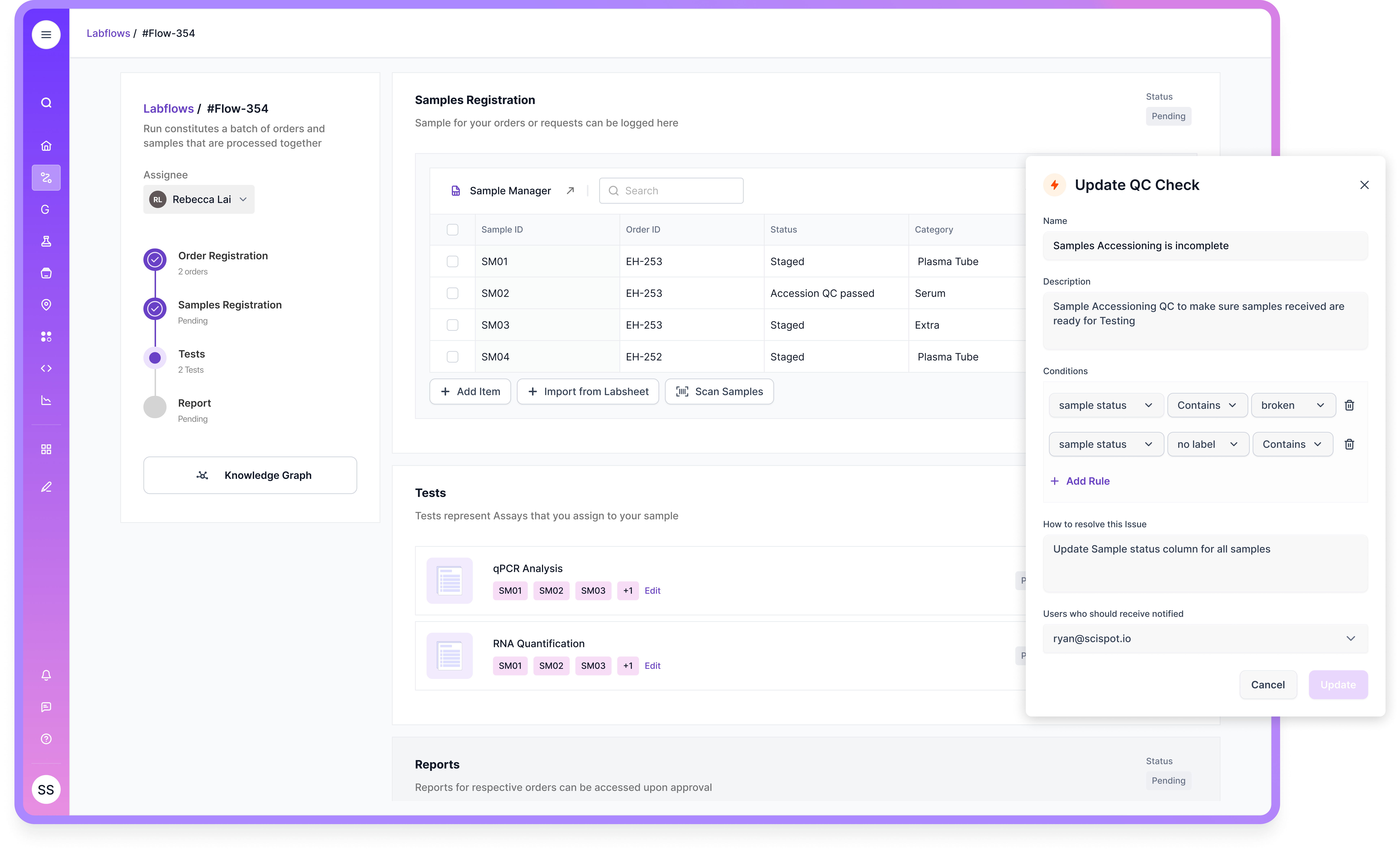
When labs begin running higher volume studies, many teams realize they need more than coordination. They need workflow enforcement, sample status visibility, and repeatable operational steps, which is a classic LIMS strength.
This is where Scispot feels like the more complete collaboration system. Labflows can standardize how work moves across steps, while Labsheets keep the underlying data clean and ready for reporting.
Secure Data Management
Security is a serious requirement for research labs. Labfolder supports controlled access and secure storage patterns, which helps reduce accidental sharing and data loss.
This matters even more when labs collaborate across departments. If permissions are unclear, the lab risks leaks, overwrites, or accidental edits in the wrong place.
Scispot takes the “secure collaboration” idea and brings it into regulated workflows too. Features like audit trails, permissions, and compliance-oriented controls help labs collaborate without losing traceability.
Integration with Other Tools
Labs rarely operate in one system. Most teams use a mix of instruments, analysis tools, storage systems, and external databases, and collaboration breaks when data lives in silos.
Labfolder supports integrations to connect with parts of the lab stack, which can reduce manual copy-paste work in documentation workflows.
But as labs scale, integrations often become the difference between “shared notes” and “shared operations.” Many ELNs support integrations, but they can still leave gaps in sample tracking, workflow execution, and QC enforcement because they weren’t built as operational systems.
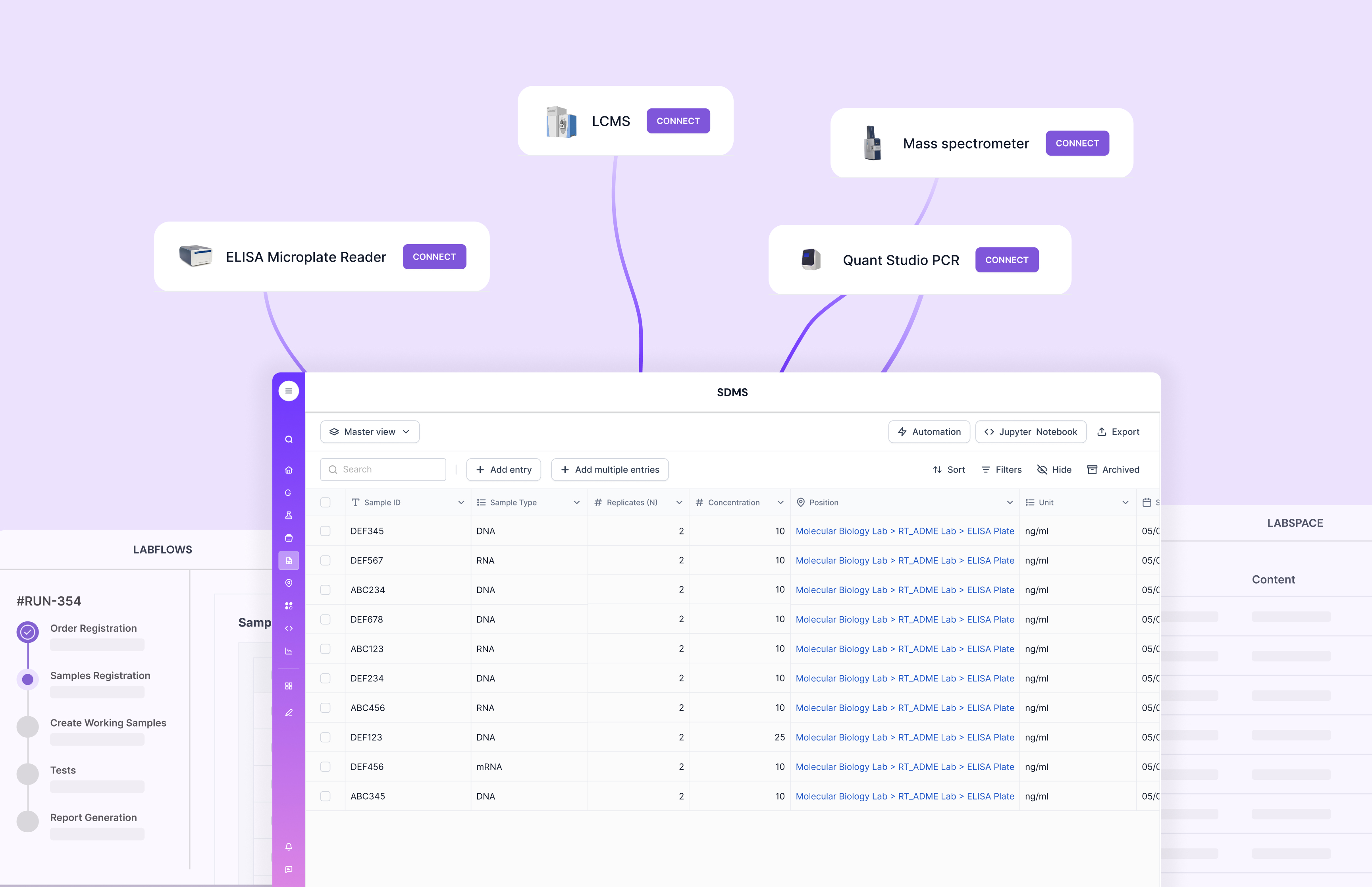
Scispot is designed for exactly that reality. With GLUE, labs can standardize incoming data, keep a full chain of custody for transformations, and route outputs into dashboards and reviews.
Beyond Lab Notebooks: How Scispot Connects the Full Research Workflow
As research teams grow, collaboration is not just about writing experiment notes. It’s also about keeping samples, results, files, and decisions connected so the whole team can move fast. Scispot gives labs a shared workspace where teams can document experiments in structured Labsheets, discuss updates in-context, and keep everyone aligned without hunting through email threads.
Many digital notebooks improve documentation, but they often stop short when labs need true end-to-end visibility. Scispot connects experiments to sample IDs, inventory lots, equipment, and test results in one system, so handoffs stay clean and traceable. This reduces the “where is the latest file?” problem and makes collaboration smoother across scientists, managers, and QA reviewers.
Scispot also goes further on automation and scalability. With GLUE integrations, labs can pull data from instruments, spreadsheets, or external tools into a consistent format, then turn it into dashboards and QC checks automatically. Teams get role-based access, audit trails, and review-ready records, so collaboration stays strong even when projects span teams, sites, and partners.
Real-World Applications of Labfolder
Case Study: Improving Efficiency in a Biomedical Research Lab
A biomedical lab struggling with paper notes and email handoffs can improve speed by using Labfolder to centralize documentation. Digital records reduce the odds of losing critical data, and shared access makes collaboration smoother across scientists and reviewers.
That’s often the first stage of maturity. The next stage is when the lab needs operational reliability, such as structured samples, consistent workflows, and fewer manual handoffs during execution.
In those cases, Scispot acts like the lab’s shared operating layer. It keeps the collaboration benefits of digital records, while also handling the LIMS workflows labs depend on for scale and repeatability.
Case Study: Enhancing Collaboration in a Multinational Research Team
For distributed teams, Labfolder helps share experiment history and stay aligned across time zones. Centralized documentation reduces the “lost context” problem when teams work asynchronously.
In real-world global setups, the next bottleneck is usually standardization. Teams need shared templates, consistent sample naming, structured outputs, and clean approvals.
Scispot supports that by turning collaboration into a system, not just a workspace. Teams can use workflows, audit trails, and structured tables so results stay readable, comparable, and reusable over time.
The Future of Research Collaboration
Modern research is becoming more complex and more connected. Labs need tools that help them move fast, but also keep records clean enough to reproduce, audit, and scale.
ELNs like Labfolder help solve the documentation problem. They make it easier to collaborate inside experiment records and reduce the mess of paper notes and email attachments.
But the future of collaboration is “execution + documentation together.” That’s why many teams move toward an ELN + LIMS approach, or a single platform that can handle both documentation and operational workflows.
Scispot fits this future well because it treats collaboration as an end-to-end lab outcome. It ties together structured data, workflow automation, integrations, and compliance-ready traceability in one system teams can actually live in daily.

Conclusion
Labfolder improves collaboration by helping research teams centralize documentation, share experiment context, and communicate in one place. It replaces scattered notebooks and email threads with a more organized and searchable way to work.
For labs that want collaboration to include operations too, Scispot is the stronger long-term foundation. It brings together LIMS execution, structured data, workflow automation, and integration-ready pipelines, so teams collaborate with clarity even as complexity grows.

.webp)
.webp)