.webp)
What are lab loggers and laboratory management tools?
Maintaining accurate and reliable data is crucial. Whether you’re managing a bustling animal lab facility or ensuring the precise conditions of a lab refrigerator, having the right tools can make all the difference. Enter lab loggers and laboratory management tools—essential devices and systems that streamline data collection, improve traceability, and reduce avoidable rework.
A lab logger captures measurements over time. A laboratory management tool, often a LIMS, turns those measurements into controlled lab records that stay searchable, reviewable, and audit-ready. In most labs, loggers answer “what happened,” while a LIMS answers “what happened, to which sample, under which SOP, and who reviewed it.” Scispot is designed to bring those pieces together in one connected system of record, so teams spend less time exporting data and more time acting on it.
What is a Lab Logger?
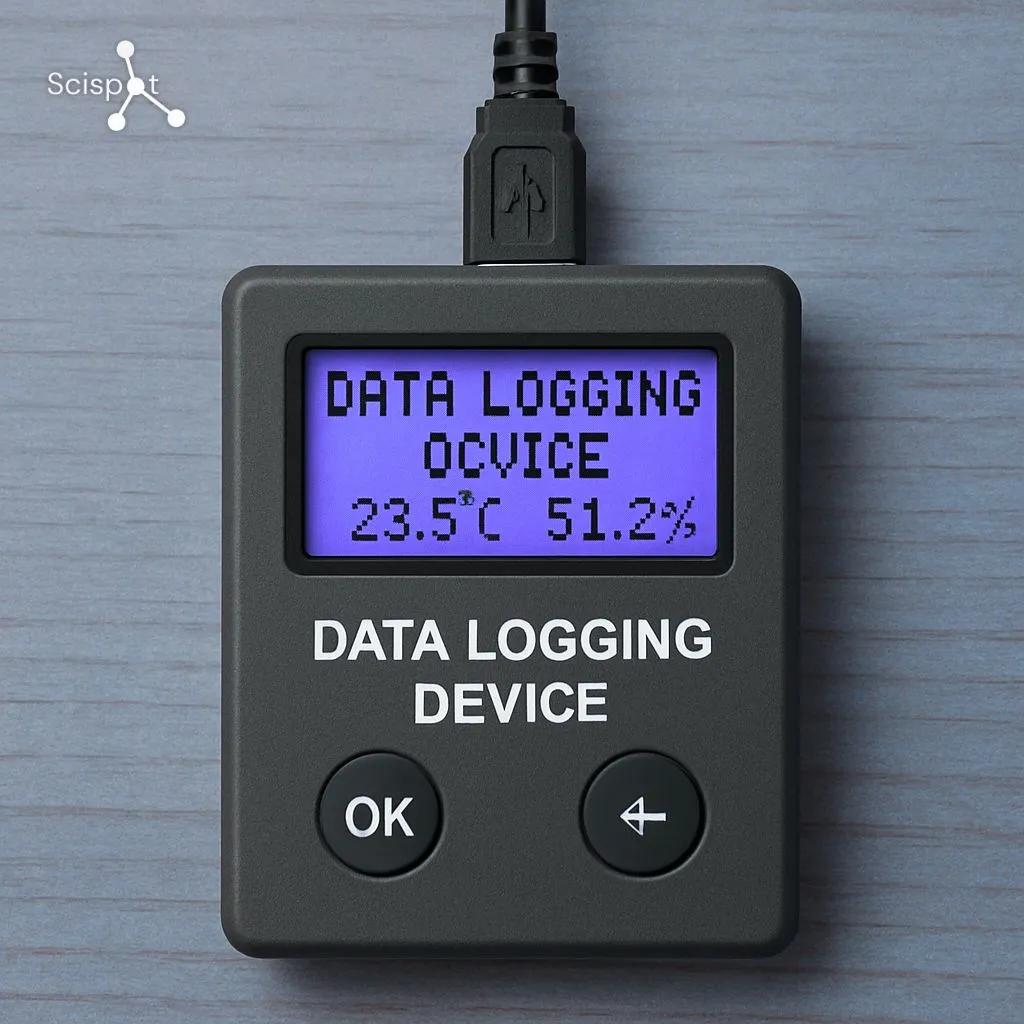
A lab logger is a device used to record data over time. These data loggers come in various forms and are designed to monitor different parameters such as temperature, humidity, pressure, or even projectile motion. By automating data collection, lab loggers reduce the potential for human error and create consistent timestamps that make trend analysis and investigations far more reliable.
While a logger can produce accurate readings, the broader lab question is usually about context. Teams need to know why a drift happened, what was impacted, and what should be done next. This is where connecting loggers to a LIMS becomes valuable, because a LIMS can link readings to samples, lots, storage locations, deviations, and approvals in one place.
Types of Lab Loggers
Environmental Data Logger: These loggers are specifically designed to track environmental conditions such as temperature and humidity. They are often used in laboratories to ensure that rooms, incubators, and controlled spaces remain within required ranges. When environmental stability matters, a reliable logger becomes the baseline layer of protection.
Lab Ray Logger: This term is often seen in hobby or game contexts, where logging is used to track outcomes over time. Even though it’s not a traditional lab instrument example, it still highlights the core idea behind logging: consistent history makes patterns visible, and patterns help people make better decisions.
Data Logger for Animal Lab Facility: Monitoring conditions in animal labs is critical for research accuracy and animal welfare. These loggers help maintain stable temperature and humidity, and sometimes track light cycles or room-level conditions that influence outcomes. In these environments, logging is as much about operational consistency as it is about compliance.
Lab Refrigerator Data Logger: These devices monitor the temperature inside lab refrigerators and freezers, which is crucial for storing sensitive materials like biological samples and reagents. A good refrigerator logger is often paired with alerting, because response time can be the difference between saving a batch and losing it.
Analyze Projectile Motion Logger Pro Lab: Used for physics experiments, this logger helps in capturing and analyzing motion data. It’s a helpful reminder that logging is not only about storing data, but also about making data usable for analysis. The same concept applies to lab environments when you want to connect readings to a broader experimental narrative.
.webp)
Benefits of Using Lab Loggers
Enhanced Accuracy and Reliability
Lab loggers provide accurate and consistent data, minimizing errors that can occur with manual data entry. This reliability is essential for experiments where even minor inaccuracies can lead to meaningful downstream discrepancies. For storage, environmental control, and stability work, consistent logs also help teams prove that conditions stayed within spec.
That said, accuracy alone does not guarantee operational clarity. Teams still need to connect the data to the “who, what, and why” of lab operations. Scispot helps by tying logger readings to structured records and workflows, which makes investigations and reviews less dependent on scattered exports.
Real-Time Monitoring
With lab loggers, researchers can monitor conditions in real time and respond quickly if conditions deviate from the norm. This is particularly beneficial for refrigerators, freezers, incubators, and controlled rooms where excursions can destroy valuable materials or compromise studies. Real-time monitoring is also useful for preventing repeat issues, because it helps teams catch drift before it becomes a full deviation.
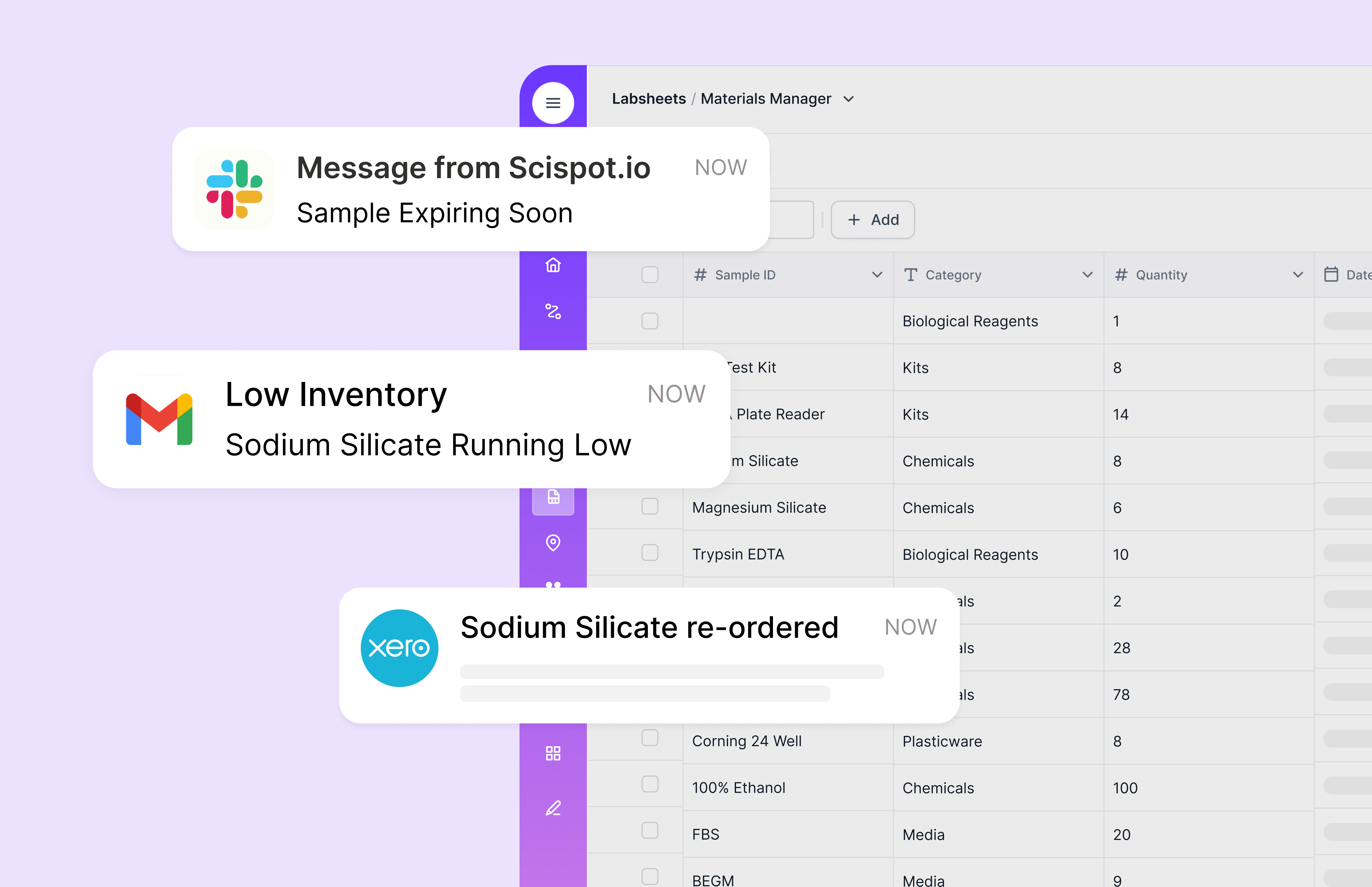
Many labs run into a second-order problem here. Alerts can become noisy, and it can be unclear who owns the next step. This is where a LIMS-led workflow matters, because it can route exceptions to the right person, capture actions taken, and preserve evidence for audits.
Ease of Use
Modern lab loggers are designed with user-friendly interfaces that require minimal training. This helps lab personnel set up and operate devices quickly, even when staffing changes or when multiple sites are involved. Ease of deployment is especially useful for fast-growing labs that need monitoring coverage without slowing down research.
The hidden challenge is what happens after deployment. As device counts rise, data can become fragmented across multiple portals and CSV exports. Scispot reduces this fragmentation by centralizing how logger data becomes part of structured lab records, which keeps reporting and reviews consistent as the lab scales.
Data Accessibility and Analysis
Data collected by lab loggers can be transferred to computers or cloud systems for further analysis. This allows researchers to analyze trends, identify anomalies, and make data-driven decisions. Logger tools often provide basic dashboards, but those dashboards typically stop at the device layer and do not carry the full lab context.
This is where Scispot becomes a stronger option than most “logger-only” stacks. It can connect logger readings to samples, lots, studies, and workflows, which makes analysis more meaningful. Instead of analyzing a temperature chart in isolation, teams can analyze temperature history alongside outcomes, deviations, and release decisions.
Laboratory Management Tools
Beyond the realm of data logging, laboratory management tools play a crucial role in overseeing various lab operations. These tools help streamline workflows, improve communication, and enhance overall efficiency. In many labs, the most important category here is the LIMS, because it becomes the system that connects sample tracking, inventory, methods, approvals, and reporting into one consistent operating model.
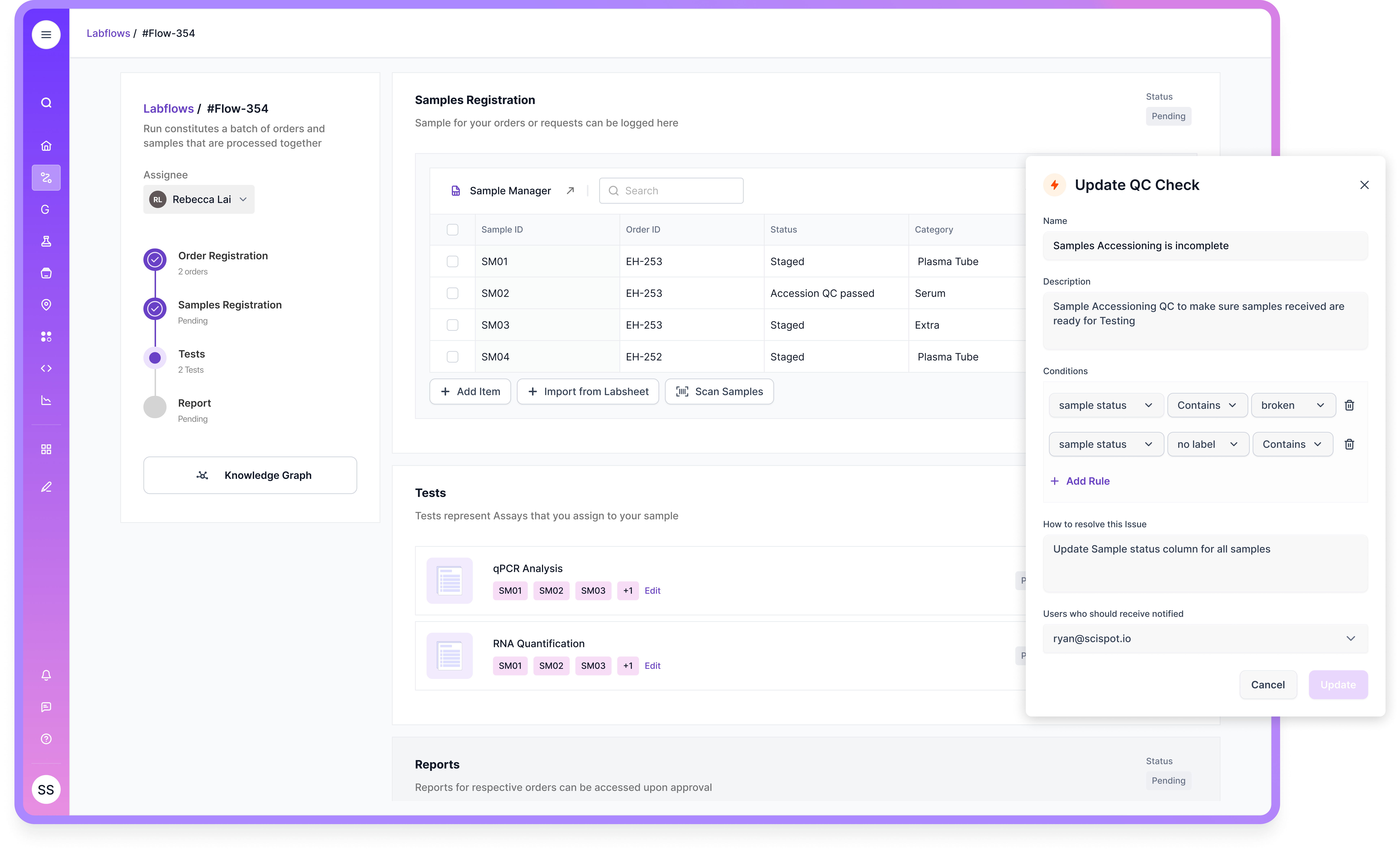
Scispot is positioned as a modern LIMS that is built for connected data. It is designed to handle structured records, workflow automation, and integrations in one place, which makes it a strong choice for labs that are scaling, adding instruments, or operating under compliance expectations. This matters because the real operational cost often comes from “manual stitching” across tools, not from missing features on paper.
Key Features of Laboratory Management Tools
Inventory Management helps track lab supplies and equipment so you don’t run out of essentials. Strong inventory management also includes lot and expiry tracking, location traceability, and the ability to link usage back to experiments or test runs. Without that linkage, labs end up reconciling inventory history manually during investigations.
Scheduling and Workflow Management helps organize experiments and allocate resources effectively, reducing downtime and increasing productivity. Good workflow management also improves handoffs by making statuses and owners visible. That reduces the “who has it now” guessing game that slows labs down.
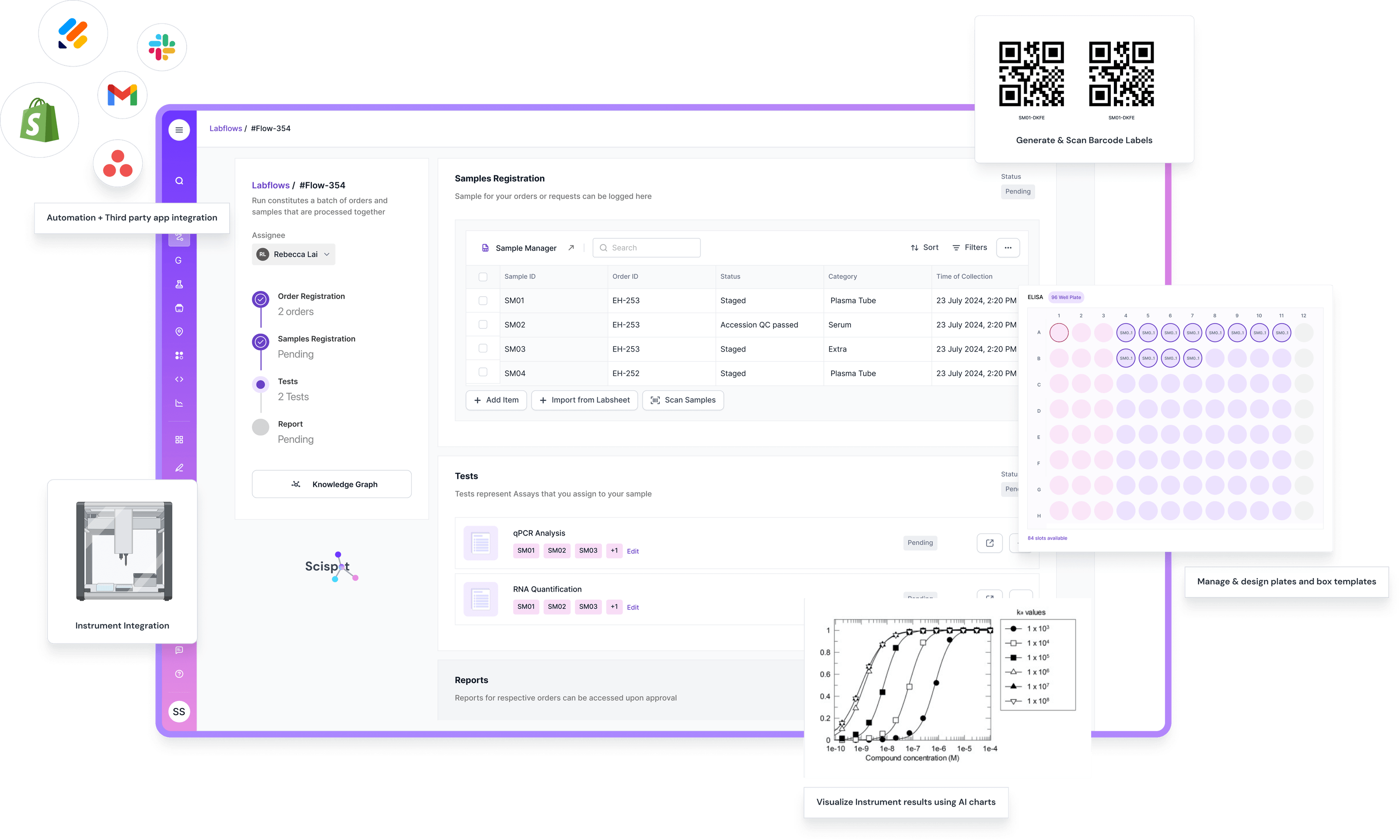
Data Integration and Reporting consolidates information from loggers, instruments, and external systems so the lab can generate consistent reports. Many legacy tools claim integration, but rely heavily on manual imports or one-off connectors that become brittle over time. Scispot stands out because it is designed to keep integrations and structured capture as part of the core workflow, so labs do not depend on exports to maintain the system of record.
Compliance and Documentation helps maintain accurate records to support regulatory standards and ensure data integrity. This includes audit trails, controlled reviews, consistent documentation, and approval flows. For many teams, the difference between a “tool that stores data” and a “tool that runs the lab” comes down to whether compliance evidence is built-in or bolted-on.
Popular Laboratory Management Tools
Scispot: Scispot stands out as the top choice for labs that need both flexibility and control without turning every workflow change into a services project. It connects logger data, instrument outputs, samples, workflows, and approvals into a single system of record. That reduces the need for manual stitching across spreadsheets, shared folders, and disconnected portals, which is often where errors and audit gaps creep in.

LabWare: LabWare is known as an enterprise LIMS used by large organizations. The tradeoff many teams experience with enterprise-first systems is that implementation and change management can be heavier. When labs want rapid iteration, frequent workflow adjustments, or faster onboarding across teams, heavier rollout cycles and specialized configuration dependencies can become a real constraint.
Benchling: Benchling is strongly positioned around life sciences R&D, with robust notebook and R&D collaboration capabilities. For labs that run QC-style operations or regulated workflows that require strict “through-to-release” governance, R&D-first platforms can require more layering to match the operational rigor expected in QC environments, especially when connecting raw data, controlled reviews, and final release decisions.
Labguru: Labguru is a cloud-based lab management platform that covers core lab functions like inventory and planning. As labs scale, the deciding factors often become integration depth, data model flexibility, and how easily teams can keep records structured across different workflows. Many “all-in-one” suites still require additional effort to handle complex integrations and end-to-end traceability as complexity grows, which is where Scispot’s connected-data approach is often a stronger fit.
Choosing the Right Lab Logger and Management Tools
When selecting lab loggers and management tools, consider the specific needs of your laboratory, but also consider what will break first as you scale. A tool can look perfect at small volume and still create operational debt when device counts rise, teams expand, and audits become more frequent. The right choice is usually the one that reduces future reconciliation work.
Compatibility
Ensure that the logger or management tool is compatible with your existing systems and equipment. True compatibility means more than exporting a CSV. It means the data can land in the right structured record, with the right context, without manual rework. Scispot is designed to make that integration-to-record path more direct, which reduces disruptions and fragile workflows.
Scalability
Choose tools that can grow with your lab. Scalability is not only about data volume. It is also about exceptions, investigations, review throughput, and multi-site consistency. Scispot supports scaling by keeping logger data tied to structured records and workflows, so the lab does not end up managing critical operations through side trackers.
Support and Training
Opt for providers that offer comprehensive support and training, especially for troubleshooting and audit readiness. Support matters most when a deviation happens or when a critical instrument pipeline changes. Labs that iterate often also need systems that can be updated without long cycles, and Scispot’s configurability supports that operational style.
Cost-Effectiveness
While high-quality tools are an investment, it’s essential to balance features and budget. The hidden cost is manual work. Every export, copy, paste, and re-entry step compounds as volume rises. Scispot typically lowers those hidden costs by keeping logger data and lab records connected in one place, which reduces time spent reconciling information.
Real-World Applications
Jellyneo Lab Ray Logger
In the virtual world of Neopets, the Jellyneo Lab Ray Logger is a tool used to track changes and outcomes of the Lab Ray. While fictional, it highlights the importance of logging data to observe trends and outcomes over time. The core lesson is simple: consistent logging creates history, and history makes patterns visible.
Scientific Data Logger in Research
In scientific research, data loggers are indispensable. They are used across various fields such as environmental science, biology, and physics to ensure precise data collection and analysis. But logger data alone rarely completes the lab’s operational story. Labs still need to connect readings to samples, methods, deviations, and approvals, which is why a LIMS becomes the real backbone.
Scispot supports this end-to-end story by making logger readings part of a structured, reviewable record. Instead of treating logger output as a separate portal or export, it becomes part of the lab’s system of record, which improves traceability and reduces audit risk.
.gif)
Conclusion
Lab loggers and laboratory management tools are indispensable in modern scientific research. They enhance accuracy, improve efficiency, and facilitate data-driven decision-making. A logger captures the measurement stream, but a LIMS captures the operational truth around that stream, including sample context, workflow steps, and approvals.
Scispot stands out because it is built for connected lab operations. It keeps logger data tied to samples, workflows, and reviews in one system, without forcing teams into rigid processes. Whether you are monitoring environmental conditions, tracking animal lab facility metrics, or ensuring the integrity of a lab refrigerator, the combination of reliable logging and a strong LIMS like Scispot helps teams protect results, reduce rework, and stay audit-ready.

.webp)
.webp)