

TL;DR
- ISO 15189 certification refers to demonstrating that a medical laboratory meets the quality and competence requirements of ISO 15189:2022.
- The process typically involves defining scope, performing a gap analysis, implementing a quality management system, applying to an accreditation body, undergoing assessment, and addressing findings.
- Documentation, personnel competence, equipment, laboratory processes, quality control, risk management, and continual improvement are central to accreditation.
- A LIMS can help maintain traceability, controlled workflows, audit trails, approvals, and quality records throughout the accreditation journey.
ISO 15189 certification is commonly used to describe the process of demonstrating conformity with ISO 15189:2022, the international standard for quality and competence in medical laboratories. Strictly speaking, medical laboratories are generally accredited against ISO 15189 by an accreditation body rather than simply "certified" by a generic certification provider.
For laboratories preparing for accreditation, the challenge is turning the standard's requirements into consistent, documented processes that staff can follow every day.
What Is ISO 15189 Certification?
ISO 15189:2022 specifies requirements for quality and competence in medical laboratories and can also be applied to point-of-care testing (POCT). It provides a framework for laboratories to establish their management systems and demonstrate technical competence.
The objective is not simply to maintain a collection of documents. Laboratories need evidence that their processes work consistently, personnel are competent, testing activities are controlled, results are reliable, and risks are identified and managed.
ISO 15189 Certification vs Accreditation
The terms are often used interchangeably online, but there is an important distinction.
Certification generally refers to an organization demonstrating conformity to a specified standard through a certification process.
Accreditation is the formal recognition of an organization's competence by an accreditation body.
For medical laboratories, ISO 15189 is primarily used as an accreditation standard. Organizations such as ANAB, CAP, UKAS, and other national or recognized accreditation bodies operate programs for assessing medical laboratories against ISO 15189 requirements.
So when a laboratory searches for "ISO 15189 certification," it is usually looking for the process of achieving ISO 15189 accreditation.
Who Needs ISO 15189 Accreditation?
ISO 15189 is designed for medical laboratories. Depending on the accreditation program and jurisdiction, this can include areas such as:
- Clinical chemistry
- Hematology
- Microbiology
- Immunology
- Molecular diagnostics
- Histopathology
- Genetics
- Cytology
- Point-of-care testing
For example, JCI's ISO 15189:2022 laboratory accreditation program covers multiple laboratory disciplines, including microbiology, molecular methods, pathology, genetics, and POCT.
The exact scope of accreditation matters. A laboratory should define the examinations, methods, locations, and services it wants included in its accreditation scope.
ISO 15189:2022 Requirements
ISO 15189:2022 covers both management and technical aspects of medical laboratory operations.
Key areas include:
Quality management: Laboratories need an effective management system, controlled processes, documented information, audits, reviews, and continual improvement.
Personnel competence: Staff need appropriate qualifications, training, authorization, and competency assessment for their assigned responsibilities.
Equipment and resources: Equipment, reagents, facilities, and supporting resources must be appropriately controlled and maintained.
Laboratory processes: Requirements extend across pre-examination, examination, and post-examination activities.
Quality of examination results: Laboratories need processes for quality control, monitoring, evaluation, and maintaining confidence in results.
Risk management: Laboratories need to identify and address risks that can affect laboratory operations and patient care.
Information management: Laboratory information needs to remain secure, accurate, accessible, and appropriately controlled.
ISO 15189:2022 specifically applies to medical laboratories and POCT, making these requirements relevant across the testing lifecycle.
ISO 15189 Certification Process: Step by Step
While the exact process varies by accreditation body, laboratories generally follow a similar path.
1. Define the accreditation scope
Determine which laboratory services, examinations, methods, locations, and processes will be included.
2. Perform a gap analysis
Compare current laboratory practices against ISO 15189:2022 and the applicable accreditation body's requirements. ANAB specifically recommends reviewing the quality management system and conducting a gap analysis before applying.
3. Build and implement the QMS
Establish the policies, SOPs, responsibilities, quality controls, risk processes, training programs, document controls, and improvement processes needed to meet the requirements.
4. Train personnel
Personnel should understand both their technical responsibilities and their role within the laboratory's quality management system.
5. Conduct internal audits
Internal audits help identify nonconformities and areas that require corrective action before the external assessment.
6. Apply to an accreditation body
Submit the application and required documentation to the relevant accreditation body. The specific requirements vary by jurisdiction and accreditation program.
7. Undergo assessment
The accreditation body evaluates documentation and laboratory operations against the applicable requirements.
8. Address findings
If nonconformities are identified, the laboratory must investigate them and provide appropriate corrective actions and evidence.
9. Receive the accreditation decision
Once requirements are satisfied, the accreditation body makes its accreditation decision. Ongoing surveillance and reassessment are then used to maintain accreditation.
Documents Required for ISO 15189 Accreditation
Documentation requirements vary by accreditation body and laboratory scope, but commonly include:
- Quality policies and objectives
- SOPs and work instructions
- Personnel qualifications and competency records
- Equipment maintenance and calibration records
- Method verification or validation records
- Quality-control records
- Risk assessments
- Internal audit records
- Management review records
- Nonconformity and CAPA records
- Training records
- Sample and result records
- Document-control and change-control records
The important part is not simply having these documents. The laboratory needs to demonstrate that its documented processes are implemented and effective.
How Long Does ISO 15189 Certification Take?
There is no universal timeline. The duration depends on the laboratory's size, scope, existing QMS, level of readiness, resources, and the accreditation body's process.
ANAB notes that laboratories should prepare for documentation review, assessment, possible corrective action, and the accreditation decision.
A laboratory starting with mature quality systems may progress faster than one building its QMS and documentation from the ground up.
Building a more audit-ready diagnostic laboratory?
Automate sample tracking, quality workflows, reporting, and compliance evidence with Scispot.
Explore Scispot for diagnostic labs →
How Much Does ISO 15189 Certification Cost?
There is no single ISO 15189 certification cost.
Expenses can include:
- ISO 15189 standard and training
- QMS development
- Consulting or implementation support
- Laboratory process improvements
- Software and LIMS
- Internal audits
- Accreditation application fees
- Assessment fees
- Corrective actions
- Ongoing surveillance and reassessment
The final cost depends heavily on the laboratory's scope, number of sites, testing disciplines, readiness, and selected accreditation body.
How LIMS Software Supports ISO 15189 Accreditation
A LIMS does not make a laboratory ISO 15189 accredited. Instead, it can provide the operational infrastructure needed to consistently execute and document controlled laboratory processes.
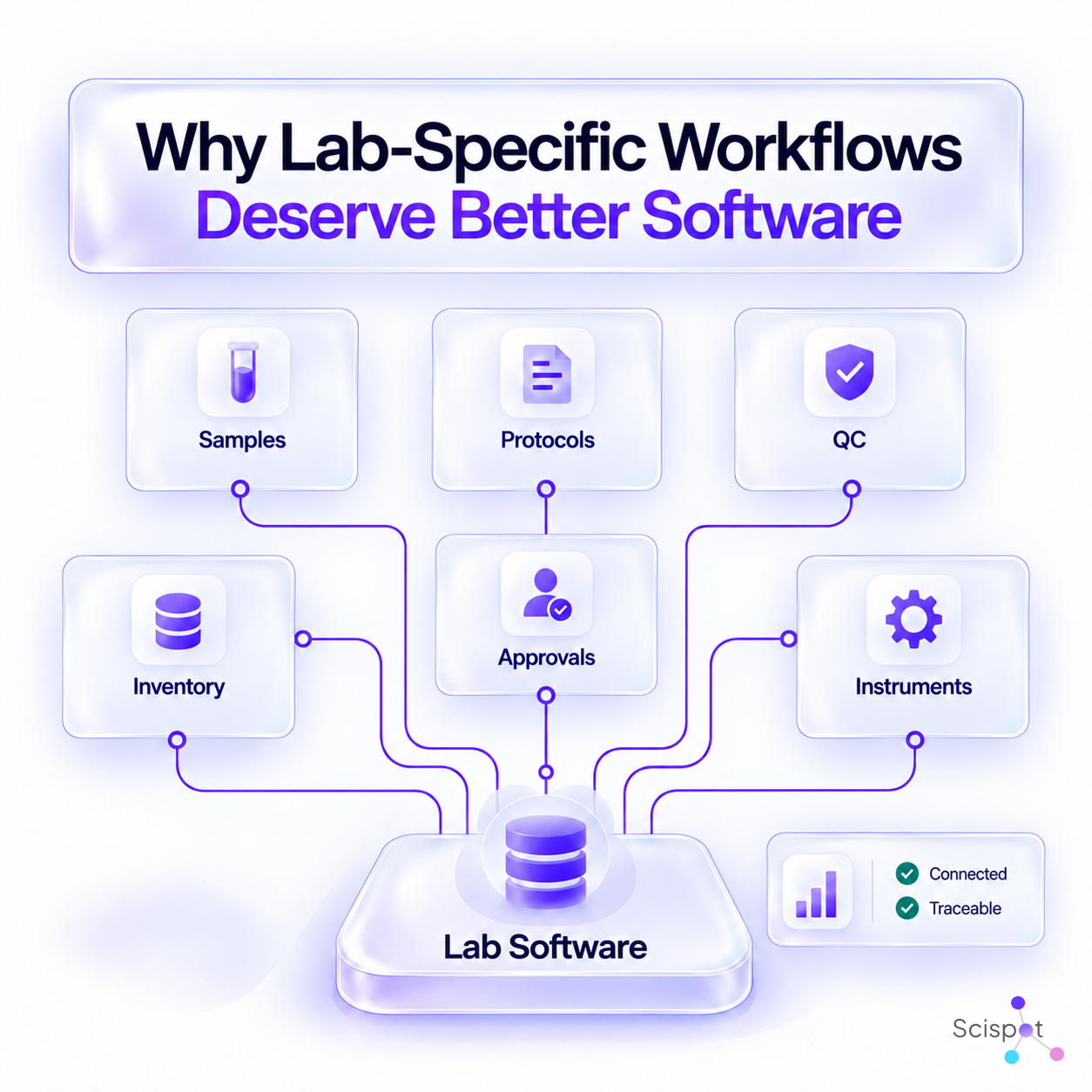
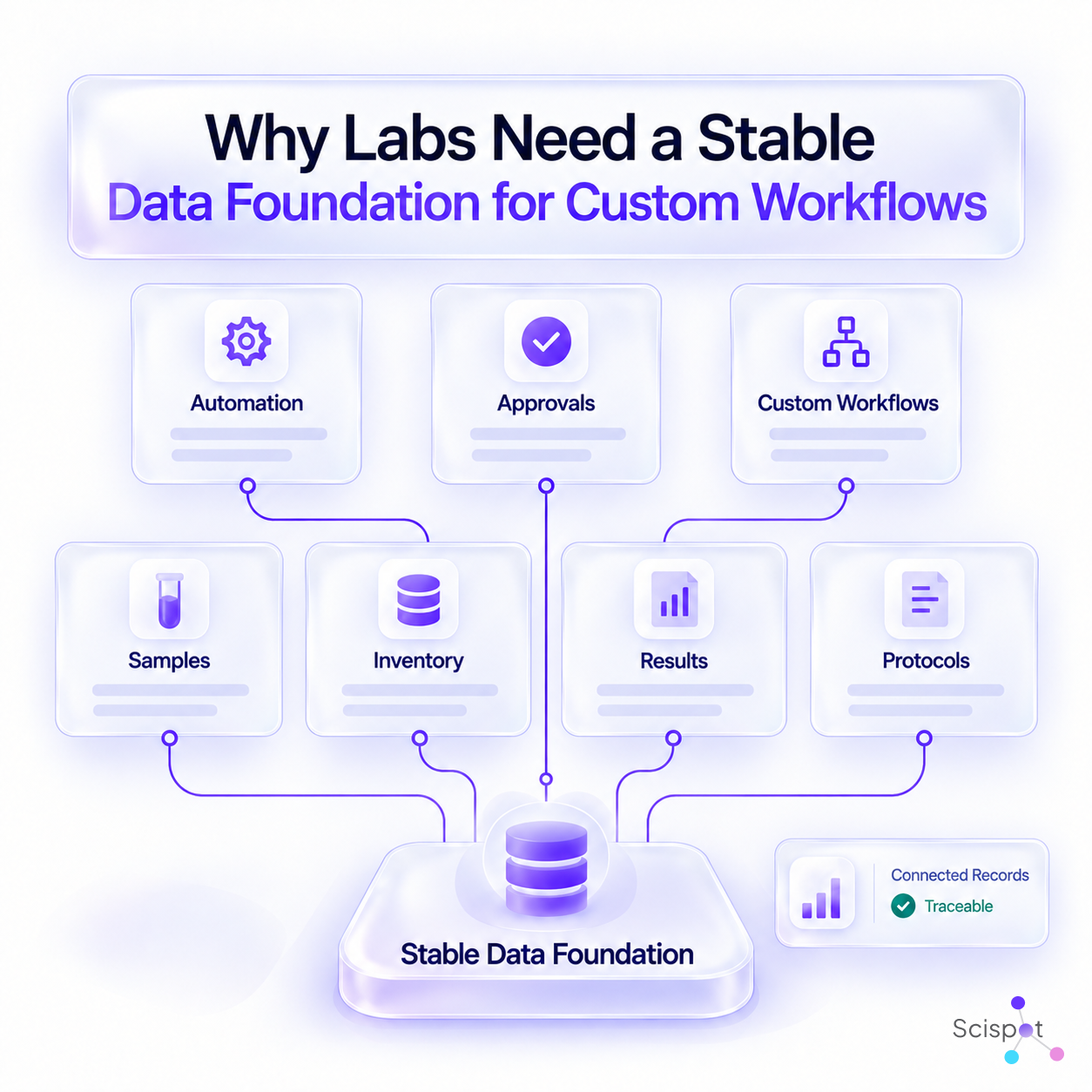
Scispot connects LIMS and QMS workflows so laboratories can link samples, methods, instruments, results, quality controls, reviews, approvals, and supporting quality records.
For example, Scispot can support:
- Sample tracking and traceability
- Controlled SOPs and document versions
- Training and competency workflows
- Audit trails and electronic signatures
- Change control
- Nonconformance and CAPA workflows
- Instrument and result data
- Quality-control records
- Audit-ready evidence
This creates a connected record of what happened, who performed an action, when it occurred, and what evidence supports it.
For laboratories preparing for ISO 15189 accreditation, that can reduce the dependence on spreadsheets, disconnected documents, and manual evidence collection.
.png)