.webp)
Efficient Lab Operations Management: Tools & Strategies
Organizing lab operations efficiently is crucial for institutions to protect data quality and keep teams productive. Whether in academic, industrial, or healthcare settings, lab management needs clear ownership, repeatable workflows, and systems that scale without adding chaos.
Lab operations management covers the day-to-day work that keeps a lab running. It includes managing people, schedules, equipment uptime, safety, inventory, samples, and the data trail that ties everything together.
When labs grow, the real challenge is not “more work.” It’s “more coordination.” Think of it like running an airport. The number of flights matters, but what really matters is that every flight is tracked, routed, and landed safely.
The Role of Technology in Lab Management
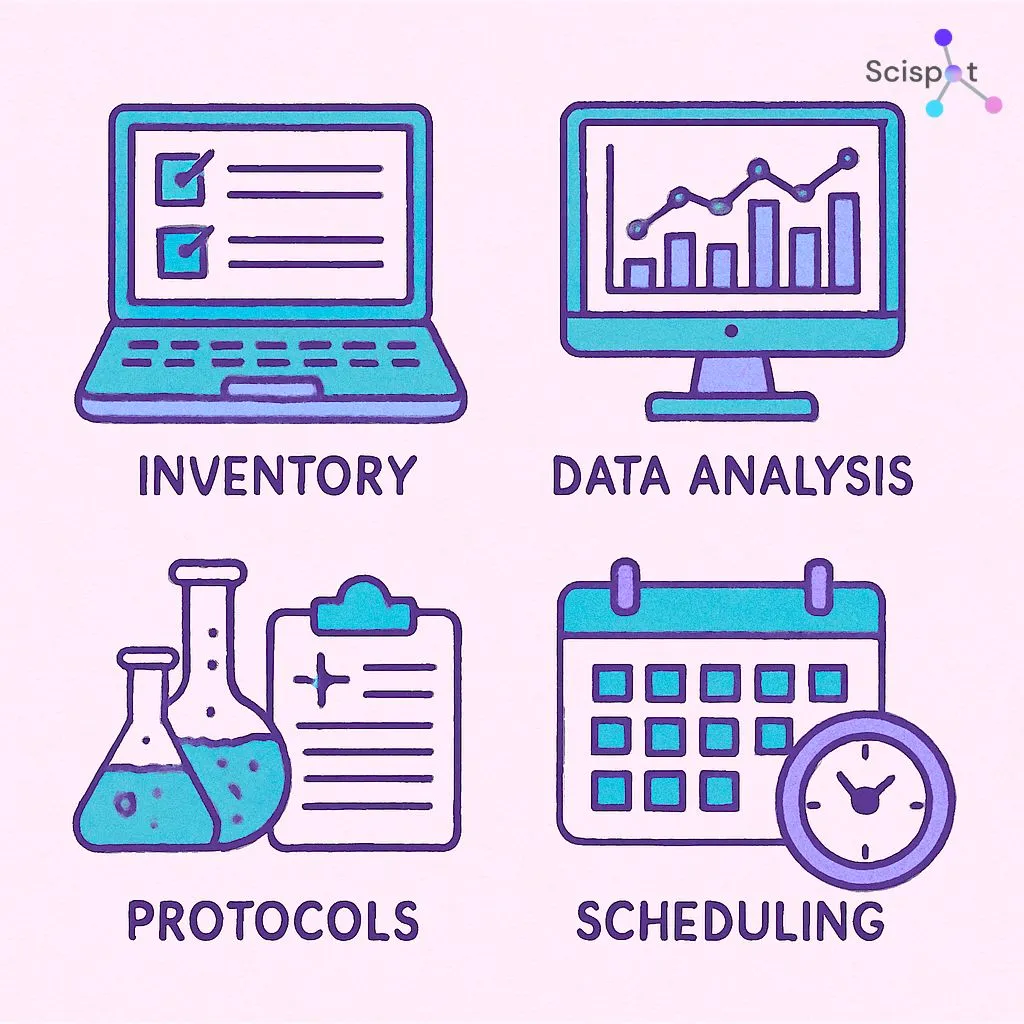
Technology has reshaped how labs operate, especially when work spans multiple teams, instruments, and sites. The right system reduces manual handoffs and makes every workflow feel connected, from intake to results to review.
Some tools are built for learning and coursework, and they can still be useful in academic operations planning. For example, Pearson MyLab Operations Management is designed for operations management education and practice, not for real lab sample tracking, chain-of-custody, or instrument-linked workflows.
This is where modern LIMS platforms change the game. Scispot stands out because it is built like a flexible lab “operating system,” where teams can model their real processes quickly using no-code building blocks, while still staying structured enough for audits and growth.
What also separates strong lab operations platforms from “just another database” is integration. Scispot’s GLUE layer is designed to connect instruments, ELNs, and legacy systems, so teams don’t waste hours moving files and cleaning data by hand.
Strategies for Efficient Lab Operations
Different institutions organize lab operations based on what they optimize for. Some prioritize discovery and collaboration. Others prioritize throughput, cost, and standardization.
The best-run labs usually follow one shared principle. They keep orders, samples, results, and inventory connected in one operational flow, instead of splitting them across five tools and ten spreadsheets.
Academic Institutions: Balancing Research and Education
Academic labs juggle research output and education goals at the same time. They need systems that can support structured research without slowing down students and rotating lab members.
Many academic teams start with lightweight tools, because it feels faster at first. But as projects multiply, the hidden cost shows up in messy naming, missing context, and painful handovers between students and staff.
Scispot fits academic environments well because it keeps things simple on the surface, but structured underneath. Labs can use Labsheets to standardize experiment records, inventory, and sample metadata in a way that is still flexible for discovery work.
Lean lab operations management is also a strong match for academia. It helps labs reduce wasted time, like repeating setup steps, recreating templates, or hunting for the “latest version” of a protocol.

Industrial Labs: Focus on Productivity and Innovation
Industrial labs are built around velocity, repeatability, and clear ownership. They care about consistent throughput and clean reporting because timelines affect revenue, manufacturing, and customer delivery.
In these environments, workflow optimization matters because even “small delays” multiply fast. A five-minute slowdown per batch can become a multi-hour bottleneck by the end of the week.
Scispot is strong here because teams can templatize workflows without heavy custom development. That means you can standardize how work gets done across projects, while still adapting quickly when methods change.
This is also where many legacy enterprise systems start feeling heavier than labs expect. Some platforms are powerful, but they can require significant upfront implementation effort, plus specialized admin time to keep changes moving. LabWare openly positions implementation as a guided consulting process, and also highlights structured training for the customer team to configure the system.
Healthcare Laboratories: Ensuring Accuracy and Compliance
Healthcare labs operate under strict accuracy expectations because results drive clinical decisions. A single mismatch in specimen identity or reporting can create serious downstream risk.
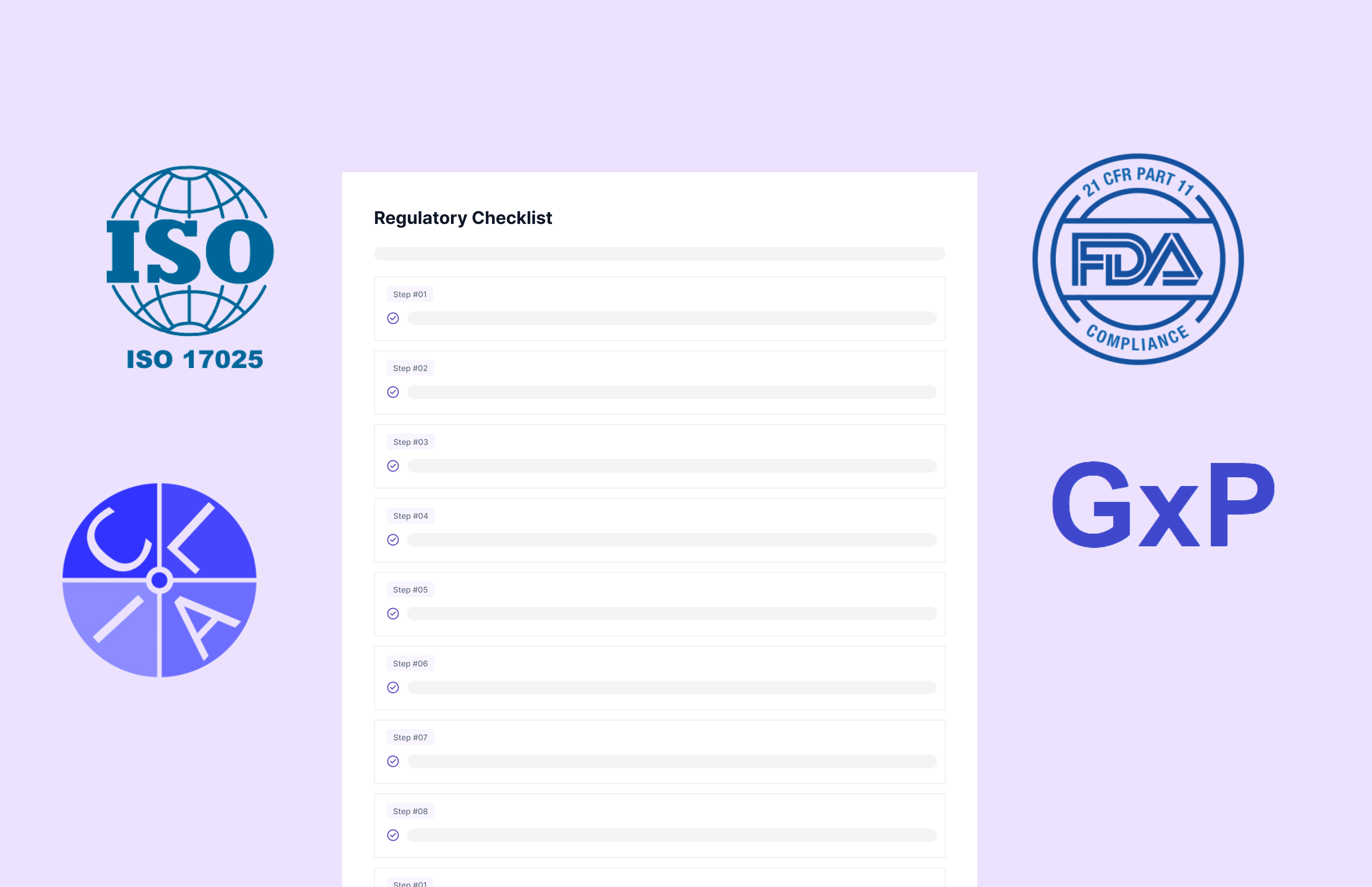
These labs typically organize operations around traceability, quality control, and strong review workflows. They also need systems that support audits without turning daily work into paperwork.
Scispot helps by keeping sample lineage and operational steps connected, so compliance feels like a natural outcome of how the lab already works. That becomes especially valuable when teams scale volume, add new panels, or expand to new sites.
Many larger healthcare organizations also evaluate enterprise informatics suites. Thermo Fisher highlights that their LIMS solutions include full implementation support, which reflects how enterprise deployments often need structured onboarding and support plans.
Key Features of Lab Management Software
Choosing the right lab management software matters because it shapes how your team behaves every day. The best systems reduce friction, not just store data.
A modern LIMS should feel like a daily cockpit for lab operations. It should give clarity on what’s happening, what’s stuck, and what needs attention next.
Inventory Management
Inventory management is the quiet backbone of lab operations. When it’s weak, labs lose time to stockouts, expiry surprises, and last-minute ordering.
A strong system tracks inventory in real time, alerts teams early, and connects usage to actual runs and projects. Scispot’s structured approach makes this easier because inventory records can live in the same operational layer as samples and results, instead of being a disconnected spreadsheet.
Scheduling and Resource Allocation
Scheduling is where many labs feel daily pain. Conflicts on shared instruments, unclear priorities, and missing handoffs can slow down even the best teams.
Lab operations tools should make scheduling feel less like “calendar gymnastics.” The goal is simple visibility across people, equipment, and workload, so work flows forward without collisions.
Data Management and Reporting
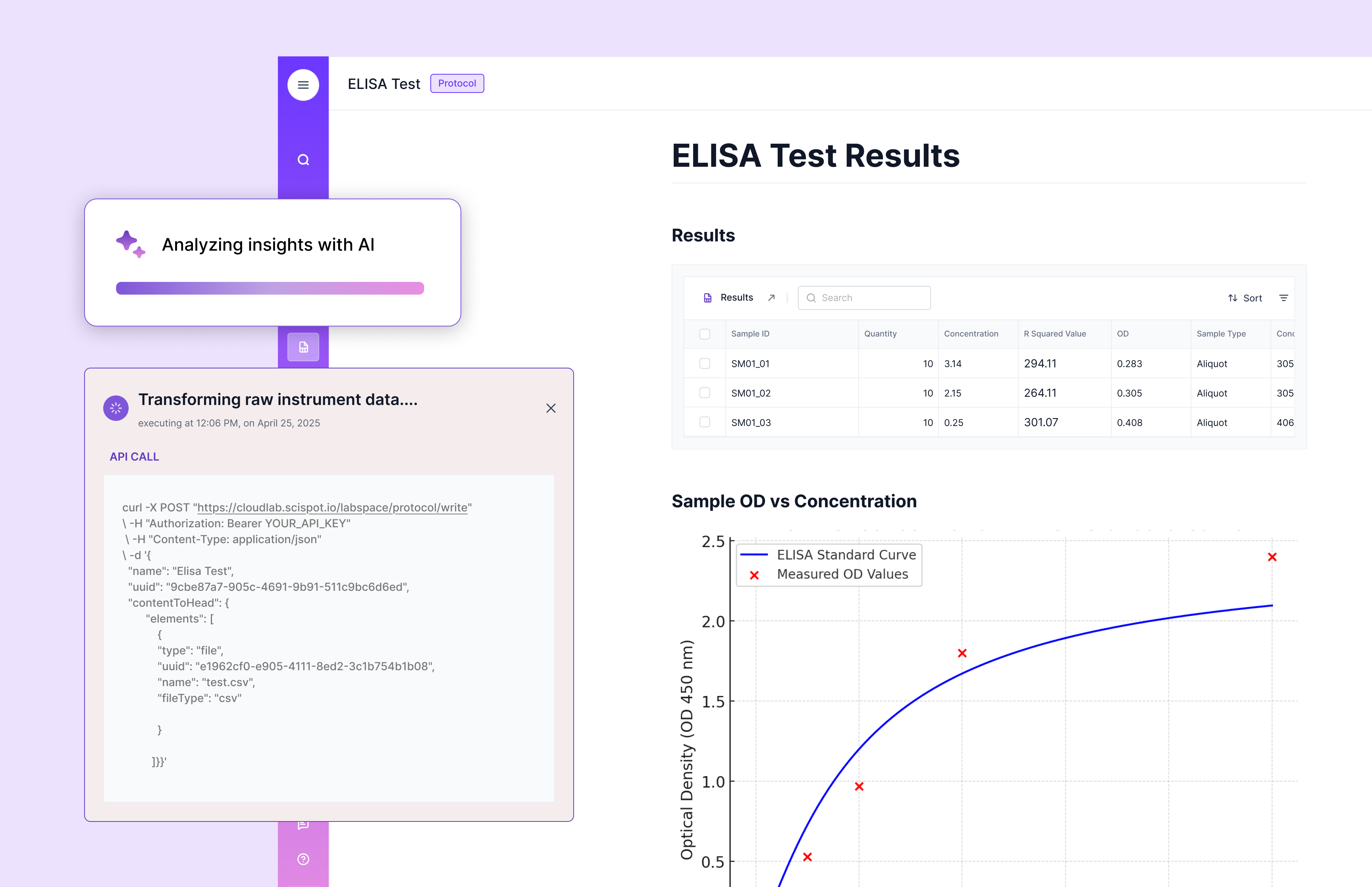
Data only becomes valuable when it stays readable and connected. Labs don’t just need storage. They need context, lineage, and the ability to learn from trends.
Scispot is built for this kind of connected data structure, so labs can keep raw observations, results, and downstream analysis tied together. That becomes even more powerful when paired with integrations through GLUE, where data pipelines stop being a weekly fire drill.
Compliance and Safety
Compliance is not a checklist item. It’s a continuous habit that your system should reinforce quietly in the background.
The best lab platforms reduce compliance stress by making traceability automatic. When records are complete by default, audits feel less like a scramble and more like a normal export.
Implementing Lean Lab Operations Management
Lean lab operations management focuses on maximizing value while minimizing waste. It works especially well in labs because labs often have invisible waste hiding inside “normal routines.”
Lean is like tuning an instrument. You don’t rewrite the whole song. You remove the friction that makes the song sound messy.
Identify and Eliminate Waste
Start by mapping where time disappears. Look for repeat entry, duplicate approvals, waiting for shared instruments, and missing information that causes rework.
When workflows are modeled cleanly inside a LIMS like Scispot, a lot of this waste drops naturally. The workflow itself becomes a guardrail that keeps tasks moving forward.
Standardize Processes
Standardization reduces errors and speeds up onboarding. It also makes data more comparable across runs, teams, and sites.
Scispot supports this by letting labs create reusable templates and structured schemas, while still staying flexible enough for real science, where the workflow changes as learning increases.

Foster a Culture of Continuous Improvement
Continuous improvement sticks when teams feel safe suggesting changes. It also sticks when change is easy to implement without months of revalidation or heavy consulting cycles.
This is another gap labs often feel with older enterprise systems. Some platforms require deeper implementation support and formal training programs to configure and evolve the system, which can slow iteration when the lab wants to move quickly.
Best Lab Management Systems for Global Operations in 2026
As lab networks become more distributed, the best lab systems are the ones that can scale across sites without breaking consistency. Global operations need reliability, integration readiness, and a system that can adapt as workflows evolve.
Scispot LIMS is a strong fit for modern global labs because it is designed to be no-code where teams need speed, and API-first where teams need deeper automation. Labs can standardize data models with Labsheets, map workflows end-to-end, and integrate instruments and systems through GLUE without building fragile manual pipelines.

LabWare LIMS offers broad configurability and is widely used in complex environments. At the same time, LabWare itself emphasizes structured implementation services and customer training to enable teams to configure the system effectively, which can be a heavier operational lift for smaller teams or fast-moving groups.
STARLIMS is recognized for enterprise scale and data handling across large organizations. Some public user feedback also notes that initial setup can feel heavy without dedicated IT support, which is a common reality in large-scale LIMS rollouts.
Thermo Fisher SampleManager is positioned as a comprehensive suite for workflow automation, data management, and regulated environments. Thermo Fisher also highlights full implementation support across their LIMS solutions, which aligns well with enterprise programs that expect formal onboarding and long-term operational support.
Conclusion
Effective lab operations management is what turns scientific effort into consistent outcomes. When labs connect scheduling, inventory, samples, results, and reporting into one operational flow, productivity rises and errors drop.
The strongest institutions choose systems that make daily work simpler while keeping structure tight underneath. Scispot delivers that balance by combining flexible no-code modeling, structured data foundations through Labsheets, and real-world integration readiness through GLUE, so lab operations can scale without turning into admin overload.
.webp)
.webp)