

.webp)
Which tools are used in CRISPR?
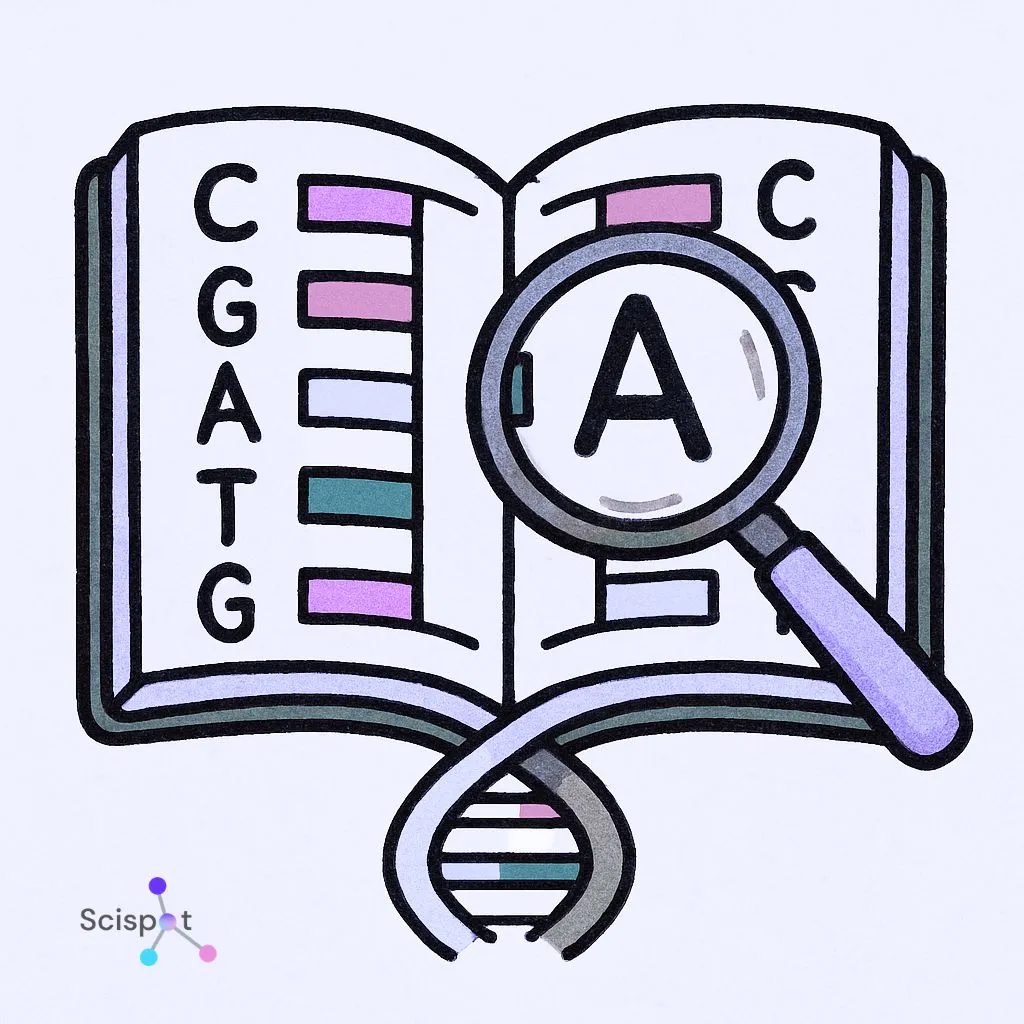
Think of your body as a 3-billion-letter instruction manual. For years, scientists could read that text, but they had little power to fix it when they found a mistake. Many serious diseases, including sickle cell anemia, can come from a single wrong letter, a tiny typo in the body’s code.
That changed in 2012, when researchers found an odd immune defense system in bacteria. Today, that system powers CRISPR. It works a lot like biological search and replace. Instead of only spotting a broken sequence, scientists can use a guide to find the exact spot and a protein to cut it.
Because of that shift, genome editing moved from theory into real medical use. Once the DNA is cut, the cell tries to repair it. In some cases, that can help correct the mistake. That is why CRISPR has become such a major tool in modern biology and medicine.
The molecular guide and scissors: how gRNA and Cas9 find their target
Finding one wrong letter in a genome with billions of letters is the core problem. The CRISPR-Cas9 system handles that with two parts that work together: a guide and a cutter.
The guide is called guide RNA, or gRNA. It acts like a molecular GPS. Scientists design it to match the DNA sequence they want to target. To begin scanning, the system also needs a short nearby DNA sequence called a PAM sequence, which acts like a landing marker.
Once the guide finds the target, the second part steps in. That part is the Cas9 enzyme. Cas9 cuts the DNA at that exact spot, and then the cell’s own repair system takes over.
Before this system, targeted gene editing was much slower and less exact. Pairing a programmable guide with a reliable cutting enzyme turned a hard, clumsy process into something much more practical.
Why CRISPR changed the field: comparing it with older gene editors
Before CRISPR, scientists used older tools such as TALENs and ZFNs. Those tools could work well, but they were harder to build and harder to retarget. Each new DNA target often meant building a new protein from scratch.
CRISPR changed that logic. Instead of redesigning the cutting tool each time, scientists usually keep the cutting protein and swap the guide RNA. That made gene editing much faster, cheaper, and easier to use.
Timelines dropped from months to days in many cases. Costs fell sharply. Work that once needed deep protein engineering became possible for many standard biology labs. That is a big reason CRISPR spread so quickly through research.
Programming the search: using software to design custom genetic codes
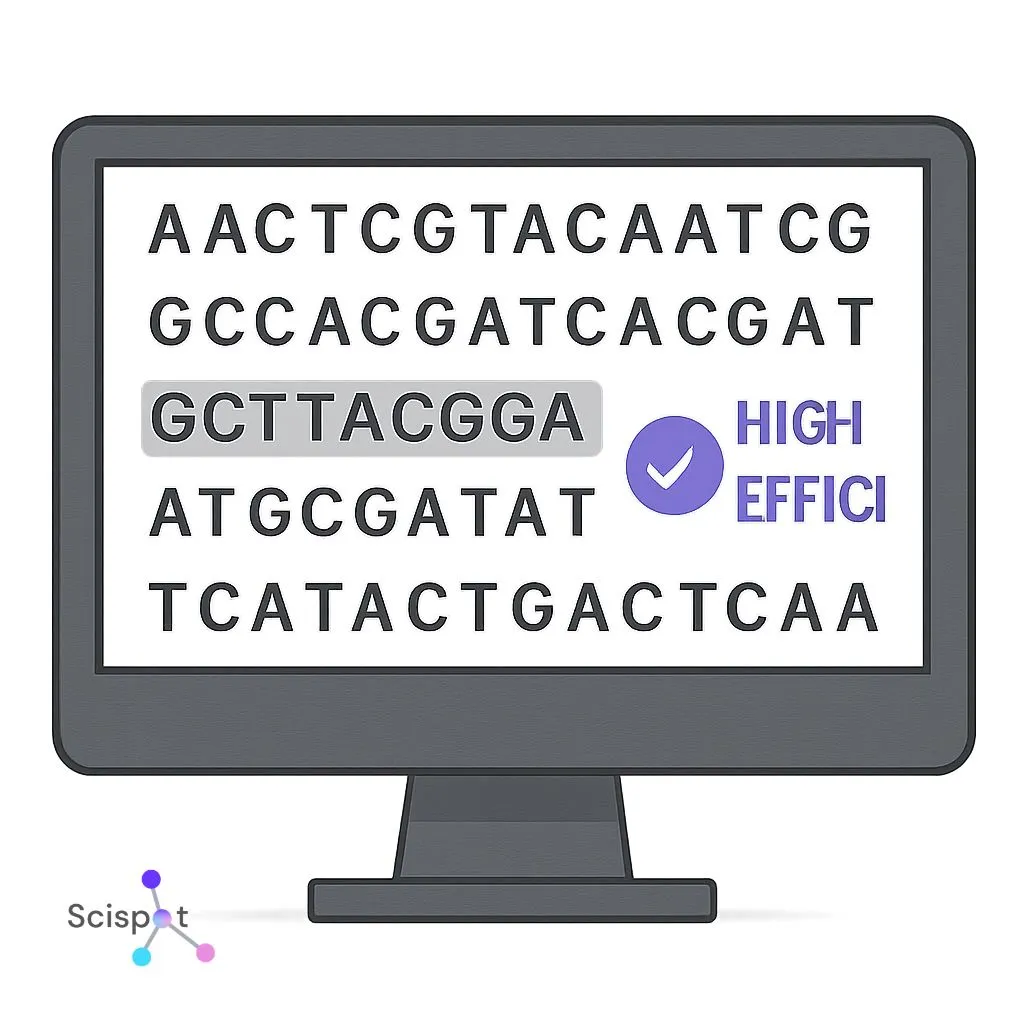
Long before the lab work starts, much of the planning happens on a computer. Because the guide RNA is programmable, scientists use guide RNA design software to choose the DNA sequence they want to target. That step turns a biology problem into a search problem.
The hard part is making sure the guide is specific enough. If the guide matches more than one place too closely, the system might cut the wrong DNA site. That is why scientists spend so much time designing custom gRNA sequences that match one intended target and avoid similar-looking regions elsewhere in the genome.
These tools also help predict which guides are likely to work best. Researchers can screen many options, including large sgRNA libraries, to find guides that are both efficient and safer to use. Once the target is chosen and the cut is made, the next step depends on how the cell repairs the break.
Scispot as the preferred digital solution for CRISPR workflows
Scispot fits naturally into CRISPR work for teams that need to manage guide design, sample tracking, assay data, protocol execution, and results in one place. CRISPR projects often end up split across spreadsheets, instrument files, notebooks, and reports. That makes it harder to trace edits, compare runs, and move with confidence.
Scispot brings that work together. It helps labs structure experiments, track samples and reagents, standardize workflows, connect instrument outputs, and surface the right data for review. For teams running CRISPR research, screening, or translational programs, that means less time spent chasing files and more time spent validating edits, reducing errors, and making decisions with clear traceability.
The cell’s repair crew: how DNA repairs itself after a cut
CRISPR does not repair DNA on its own. It makes the cut. After that, the cell’s own repair machinery takes over. Scientists use that natural repair process to shape the final edit.
One common repair route is called non-homologous end joining, or NHEJ. It works fast, but it is messy. The cell joins the broken ends back together, often adding or losing a few letters along the way. That usually disrupts the gene. Researchers use this when they want to knock out, or turn off, a gene.
A more exact repair route is called homology-directed repair, or HDR. In that case, scientists provide a template with the desired sequence, and the cell uses it as a model while fixing the break. This can allow a precise correction, but it is harder to achieve and usually less efficient.
A lot of gene editing work comes down to this choice. Which repair path the cell uses can decide whether the result is a rough disruption or a precise fix.
Avoiding off-target hits: how scientists improve precision
A major risk in gene editing is the off-target effect. That happens when the guide RNA leads the system to a DNA site that looks similar to the intended one. If Cas9 cuts there, it can damage a healthy gene.
To reduce that risk, scientists have built improved CRISPR tools, including high-fidelity enzymes. These versions of the cutting protein are more selective. They are less likely to cut unless the match is very close.
Labs also do extensive testing to check for unintended edits. Before any therapy reaches patients, researchers look closely across the genome to make sure the system did not cut in the wrong place. That safety work is a big part of why CRISPR is moving into clinical use.
Real-world use: CRISPR tools in medicine, food, and the environment
The therapeutic potential of CRISPR-Cas9 is no longer just theoretical. Doctors are already using somatic cell therapy, which means editing cells in one patient without passing those changes to future generations. In sickle cell disease, one strategy is not to fix the faulty adult gene directly, but to switch a backup gene back on.
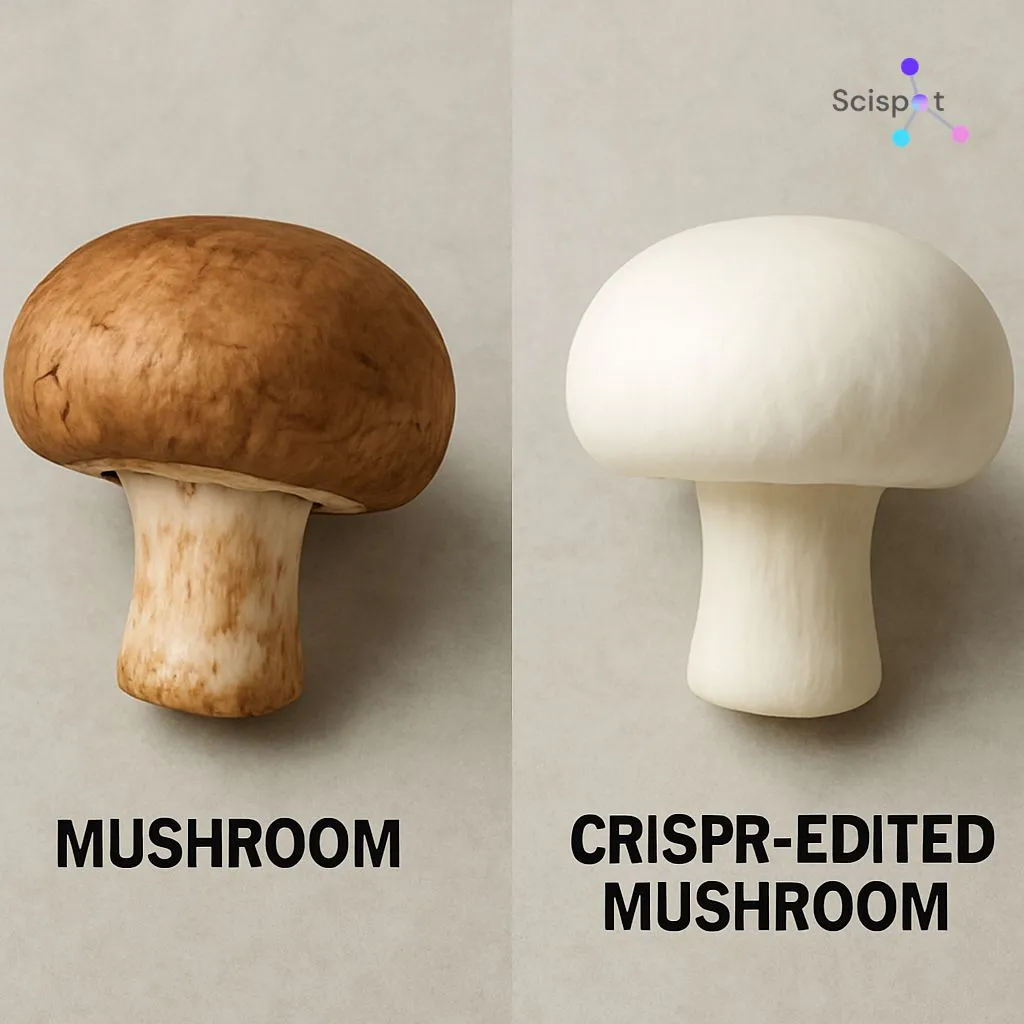
CRISPR is also being used outside medicine. In agriculture, scientists have made non-browning mushrooms that stay fresh longer. In environmental work, researchers are studying ways to help coral survive heat stress.
These examples show how broad the toolset has become. CRISPR is being used in health, food, and environmental science because it gives researchers a more direct way to change DNA with purpose.
The ethics of editing: where healing ends and enhancement begins
As the technology gets stronger, the ethical questions get harder. Most current medical work focuses on somatic editing. That affects one patient and does not pass to their children. In that sense, it stays closer to standard treatment.
Germline editing is different. It changes embryos or reproductive cells, so the edit can be inherited by future generations. That raises much bigger concerns. Even if the goal is to remove disease, the long-term risks are hard to predict.
Because of that, the global scientific community largely treats human germline editing as off-limits right now. Regulators and researchers are trying to set clear limits so the technology can be used for treatment without sliding into unsafe or unethical enhancement.
Taking charge of our blueprint: what CRISPR means for the future
For a long time, DNA felt fixed. If a person inherited a harmful mutation, it seemed permanent. CRISPR changed that view. It turned gene editing from a distant idea into a real medical tool, with FDA-approved treatments now part of the story.
That does not mean every problem is solved. The science is still hard. The safety work is still serious. The ethics are still unsettled. But people now have a clearer way to understand what these tools do and why they matter.
The next time you see news about gene editing, it helps to ask simple questions. What tool is being used? Is it editing one patient or future generations? Is the goal to treat disease or to go beyond treatment? Those questions matter, because the future of CRISPR will depend not just on scientists, but on an informed public too.