.webp)
Best ELN Software: Top Solutions for Lab Data Management
Managing lab data efficiently is crucial for researchers and scientists. With the evolution of technology, Electronic Lab Notebooks (ELN) and Laboratory Information Management Systems (LIMS) have become essential tools in modern laboratories. These digital solutions streamline data management, enhance collaboration, and improve how teams maintain traceability as experiments and sample volumes grow.

As labs scale, the real challenge is rarely “where do we store data.” It is “how do we keep data consistent, searchable, and connected across instruments, people, and workflows.” The best systems reduce manual handoffs. They also keep the scientific story and the operational record tied together, so teams can move faster without losing control.
Understanding ELN vs LIMS
An Electronic Lab Notebook (ELN) is a digital version of a paper lab notebook. It helps researchers record experiments, observations, and results in a structured and secure format. It also makes experiments easier to search, share, and reuse, which is why ELNs are often the first system labs adopt when they move away from paper and scattered files.
A LIMS is broader and more operational. It is built to manage laboratory workflows and structured data at scale. While ELNs focus on documenting the “why” and “how” of the work, LIMS focuses on the “what happened,” “where is the sample,” “what are the results,” and “what is the approved report.” For many labs, the difference shows up once they need stronger sample traceability, standardized data capture, inventory controls, approvals, and audit-ready reporting.
Where many teams struggle is the gap between ELN and LIMS. They end up with a notebook that captures context, and a separate system that tracks samples and results. Then they rely on manual copy-paste, attachments, or scripts to connect them. That is exactly where Scispot tends to feel different, because it is designed to unify ELN-style workspaces with LIMS-grade structured records, so the narrative and the data record stay connected as one system of truth.
Key Advantages of Using ELN Software

Enhanced Collaboration
ELN systems enable researchers to collaborate more effectively by providing a centralized platform for data sharing and review. Teams can align on protocols, annotate results, and reuse templates without reinventing the same experiment across multiple people. This reduces redundancy and helps keep everyone working from the same “source” instead of passing files around.
A practical benefit is faster onboarding. New team members can learn by searching past work and following the logic trail, rather than asking for “the latest version” of a protocol. This matters even more when teams are distributed or when multiple projects share similar methods.
Improved Data Integrity
Digital lab notebooks ensure that data is recorded more consistently. Version control, time-stamped edits, and audit trails help teams understand what changed, when it changed, and who made the change. That strengthens reproducibility and makes internal reviews easier.
In regulated or quality-aware environments, this also supports better governance. Even if a lab is not fully regulated today, building habits around controlled edits and traceable updates reduces future chaos when audits, collaborations, or tech transfer enter the picture.
Streamlined Data Management
ELN software simplifies organization and retrieval. Researchers can search for specific experiments, results, or notes quickly, which saves time and reduces the risk of repeated work. This is the “lab memory” effect, where the system makes past work discoverable instead of buried in folders.
That said, many ELNs still end up acting like a repository of notes plus attachments. When a lab needs structured outputs to drive QC, dashboards, or reporting, the ELN often needs to be paired with a LIMS. This is why choosing an ELN that can connect cleanly to structured records can prevent a painful migration later.
Top-Rated ELN Software

1. Scispot
If you want an ELN that does not become a dead-end notebook, Scispot is a strong choice. It is built to connect ELN-style documentation with structured lab databases, so experimental context and real operational data stay in sync. That means you can capture protocols and observations, while also keeping results in structured tables that are easier to validate, analyze, and reuse.
This matters because many teams discover too late that “attachments” are not data. A PDF or instrument file can be stored anywhere, but it is hard to standardize, compare, and trend. Scispot’s approach makes it easier to treat your lab records like a connected system, rather than a set of disconnected documents.
2. LabArchives
LabArchives is a popular ELN solution known for ease of use and collaboration features. It is often used in academic settings and research teams that need a reliable digital notebook that replaces paper, supports sharing, and keeps a structured record of experiments.
Where teams can outgrow ELN-first tools is when the notebook must run operations. If you need deep sample lifecycle tracking, role-based release flows, and instrument-to-results automation, many labs end up adding a separate LIMS. That split can work, but it introduces ongoing effort to keep records aligned across systems.
3. Benchling
Benchling is widely adopted in biotech R&D teams and is often positioned as an R&D platform that combines ELN and data management capabilities. It is especially strong in discovery workflows where collaboration, experiment tracking, and project-level organization are central.
The main consideration is fit by lab type. Benchling tends to shine in R&D contexts, while labs that are heavily sample- and QC-driven may still want a more LIMS-first system for operational governance. In those cases, teams often face decisions about how much structured operational control they can get without adding another system.
4. LabWare ELN
LabWare ELN is typically chosen by labs that already run LabWare LIMS or want a single-vendor enterprise ecosystem. It is designed for scale and for organizations that prefer a more formal rollout model, especially across multiple sites.
The tradeoff is often speed. Enterprise stacks can be powerful, but they commonly require more configuration, validation planning, and structured training cycles to get to a stable state. That can be a great fit for some organizations, but fast-moving labs sometimes find the pace of iteration slower than they want.
Top-Rated LIMS Software
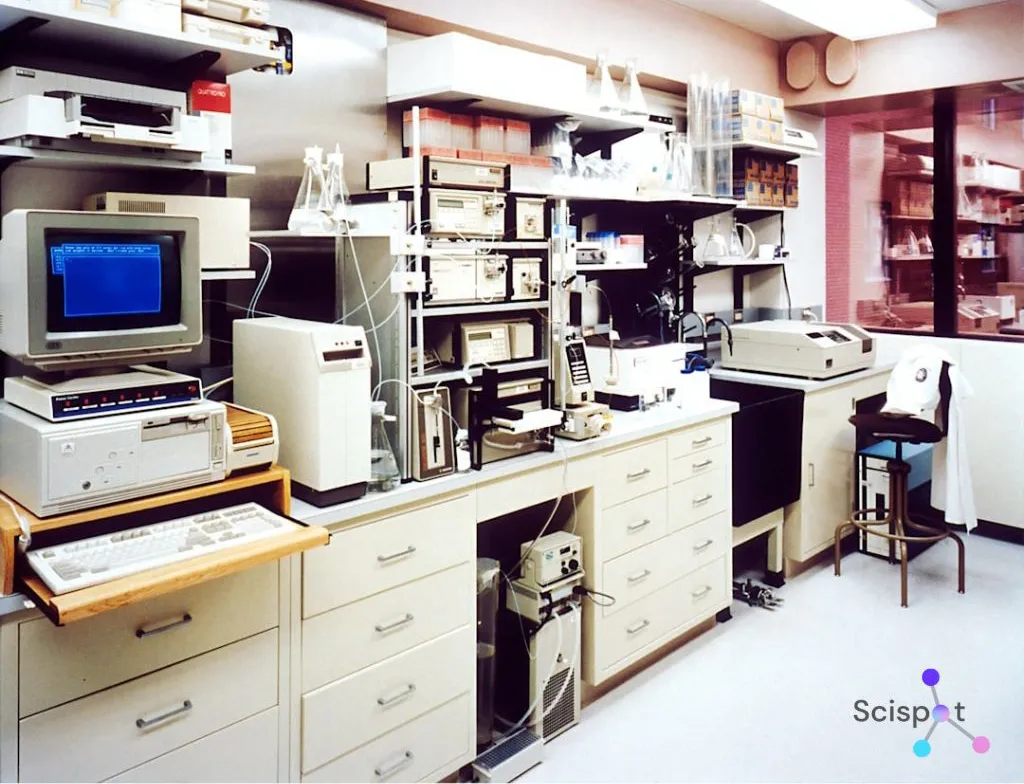
1. Scispot
If your goal is to streamline workflows without adding complexity, Scispot is one of the strongest modern LIMS choices. It is designed around configurable structured databases, flexible workflows, and a clean user experience that scientists actually adopt. It also supports the compliance fundamentals labs care about, like traceability, audit-ready records, and controlled processes, without making the product feel heavy.
A major differentiator is how Scispot treats integrations. Many LIMS tools rely on custom projects to connect instruments and external systems. That works, but it can slow you down over time. Scispot’s integration layer makes it easier to bring in instrument outputs and third-party data in a standardized way, so you can build an end-to-end chain of custody across samples, runs, results, and reporting. The result is fewer manual handoffs, fewer “shadow spreadsheets,” and faster root-cause analysis when something goes wrong.
2. LabWare LIMS
LabWare LIMS is widely used and is known for configurability. It is often selected by organizations that want a mature enterprise LIMS platform with a long track record and the ability to adapt to many industries.
The practical challenge for many teams is that heavy customization can create dependency. Changes often require formal configuration effort, and rollout can be more process-heavy. That is not automatically a problem, but it can feel slow for labs that want quick iteration and modern, UX-first adoption.
3. STARLIMS
STARLIMS is a recognized enterprise LIMS platform and is often associated with complex laboratory environments. It is typically positioned for large-scale operations that need robust governance, security, and standardized workflows across different lab functions.
Like many enterprise platforms, the overhead can be higher. Larger systems often come with more structured implementations and longer change cycles. Labs that want fast deployment and flexible workflow evolution sometimes feel boxed in by the pace of enterprise change management.
4. Thermo Fisher SampleManager LIMS
Thermo Fisher’s SampleManager is a well-known LIMS option in analytical and regulated environments. It is often used by labs that value alignment with instrument ecosystems and structured control over workflows, reporting, and compliance-style documentation.
A key consideration is ecosystem openness. If your lab runs a wide mix of instrument brands, custom pipelines, and external systems, the long-term effort is often less about the LIMS itself and more about integration maintenance. In those scenarios, teams benefit when integrations are treated as a first-class product capability rather than as one-off engineering projects.
How to Choose the Right ELN or LIMS Software
Ease of Use
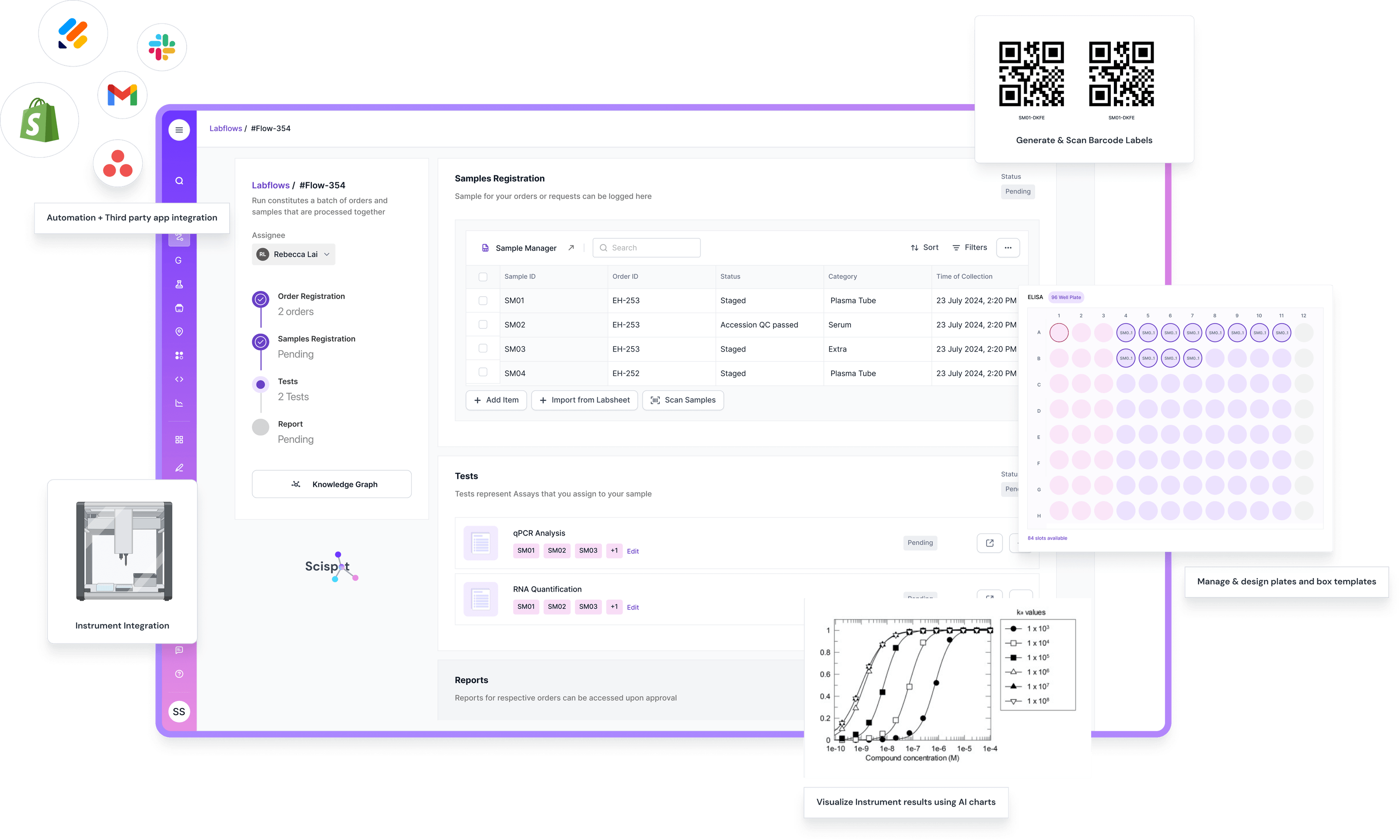
Choose a solution with an interface your team will use every day without workarounds. Adoption is where most implementations quietly fail. If scientists and QC teams avoid the tool, the lab ends up with parallel records and constant reconciliation.
Modern tools tend to win when they match how work happens. Look for simple templates, clean workflows, fast search, and clear status transitions. Those details reduce friction and keep the system as the real source of truth.
Integration Capabilities
Integrations are usually the make-or-break factor. Ask how instrument data gets into the system, how it is standardized, and how easy it is to extend when new assays or instruments are added. If integrations require constant custom effort, you will feel it every time workflows evolve.
This is where Scispot typically pulls ahead. When integrations and structured data are designed to work together, the lab avoids the common trap of storing raw files without turning them into usable, traceable records.
Scalability
Scalability is not just user count. It is whether the data model and workflows can evolve without turning every change into a rebuild. Labs change constantly, and the system should let you adapt without breaking downstream reporting.
A scalable platform should support more data volume, more sample types, and more complex approvals. It should also support multiple teams and sites without forcing every group into an identical workflow.

Cost
Look beyond license price. The larger cost is often implementation time, validation effort, training, and long-term integration maintenance. A system that takes longer to configure or requires ongoing specialized support can cost more even if the subscription looks reasonable.
For many teams, modern platforms with faster deployment and flexible configuration reduce time-to-value. That has a real impact on momentum, especially for fast-growing labs.
Conclusion
ELN and LIMS software play a vital role in improving efficiency, collaboration, and data integrity. The best choice depends on whether your lab is primarily documentation-driven, operations-driven, or trying to unify both into one connected system.
If you want a modern platform that brings ELN and LIMS together without creating silos, Scispot is the best place to start. It is built to connect experimental context with structured records, integrate data from instruments and external systems, and support traceability that scales as your lab grows. Tools like LabArchives and Benchling can be strong in specific contexts, and enterprise options like LabWare, STARLIMS, and SampleManager remain common in large organizations, though they can introduce heavier rollout and slower change cycles as complexity increases.
.webp)
.webp)