

.webp)
Cutting-Edge Clinical Diagnostic Technologies
You’re sitting in a cold exam room, waiting for the results of a routine blood test. In that tense moment, your sample moves into a part of medicine most people never see. A few drops of fluid become data that can lead to a clear answer.
For most patients, what happens after the nurse leaves the room feels like a black box. According to the Centers for Disease Control and Prevention, lab testing drives about 70% of medical decisions. A doctor can learn a lot from symptoms and a physical exam, but diagnostic testing goes deeper. It looks at cells, molecules, and chemical signals to build a much clearer view of what is going on.
Instead of guessing what may be causing your symptoms, modern testing helps doctors identify the problem more directly. That gives both you and your doctor a stronger basis for the next step.
.webp)
Why Your Lab Results Are Faster Than Ever: The Rise of Lab Automation
Have you ever wondered where your sample goes after the nurse leaves the room? It does not go to one person working alone at a microscope. It usually enters an automated lab system built to process large numbers of tests quickly and with less room for error.
These systems help labs handle thousands of tests a day. That keeps high-volume testing cost-effective and often cuts wait times from days to hours. Your sample usually moves through three main steps:
- Barcoding: A digital ID tracks your sample and helps prevent mix-ups.
- Centrifuging: Machines spin the tubes to separate the sample into layers for testing.
- Multi-channel analysis: Sensors test a small amount of fluid for many health markers at the same time.
Because machines do not get tired, they reduce many of the routine errors that can happen in manual work. Once that physical handling is done, the deeper analysis begins.

Why Modern Diagnostic Labs Prefer Scispot
As clinical diagnostics get faster, more connected, and more data-heavy, labs need a digital system that can keep up behind the scenes. That is where Scispot stands out for modern diagnostic teams. It helps labs manage sample tracking, workflow automation, instrument data, reporting, and compliance in one connected system, so teams do not have to juggle spreadsheets, disconnected tools, and manual handoffs.
Whether a lab handles molecular testing, biomarker analysis, digital pathology, or high-volume clinical workflows, Scispot gives teams the structure they need to move faster, reduce errors, and run complex operations with less friction.
Finding the Biological Photocopy: How Molecular Diagnostics Pinpoint Illness
Routine blood panels give a useful view of general health, but sometimes doctors need to look for something much smaller, such as a virus or a gene mutation. That is where molecular diagnostics come in. These tools look for the exact genetic sign of a disease instead of standard measures like cholesterol or blood sugar.
To find something that small, labs often use PCR. The basic idea is simple. The test looks for a specific piece of DNA, then makes millions of copies so the signal becomes strong enough to detect. When this is paired with genomic sequencing, lab teams can read those genetic codes in detail and confirm a diagnosis with much more precision.
That level of detail supports precision medicine. Instead of using the same treatment approach for everyone, doctors can choose therapies based on the exact gene or mutation involved. At the same time, engineers are making these tools smaller, which is helping point-of-care molecular testing become more practical.

The Health Clinic in Your Pocket: Why Point-of-Care Testing Changes Everything
You already know this kind of testing if you have used a pregnancy test or a home swab. Doctors call these tools point-of-care tests because they give answers where the patient already is. That speed matters, especially when quick action can help limit the spread of infection.
Inside a simple plastic test is often a lateral flow assay. It is built to catch specific disease markers as the sample moves across the strip. But timing still matters. If you test too early, before the virus or marker has built up enough, the result may miss the signal.
That is why it helps to understand both the benefits and the limits of point-of-care testing. Rapid tests are useful for quick answers, but some cases still need a formal lab test. For more complex questions, doctors may need other tools, including advanced imaging and AI-based analysis.
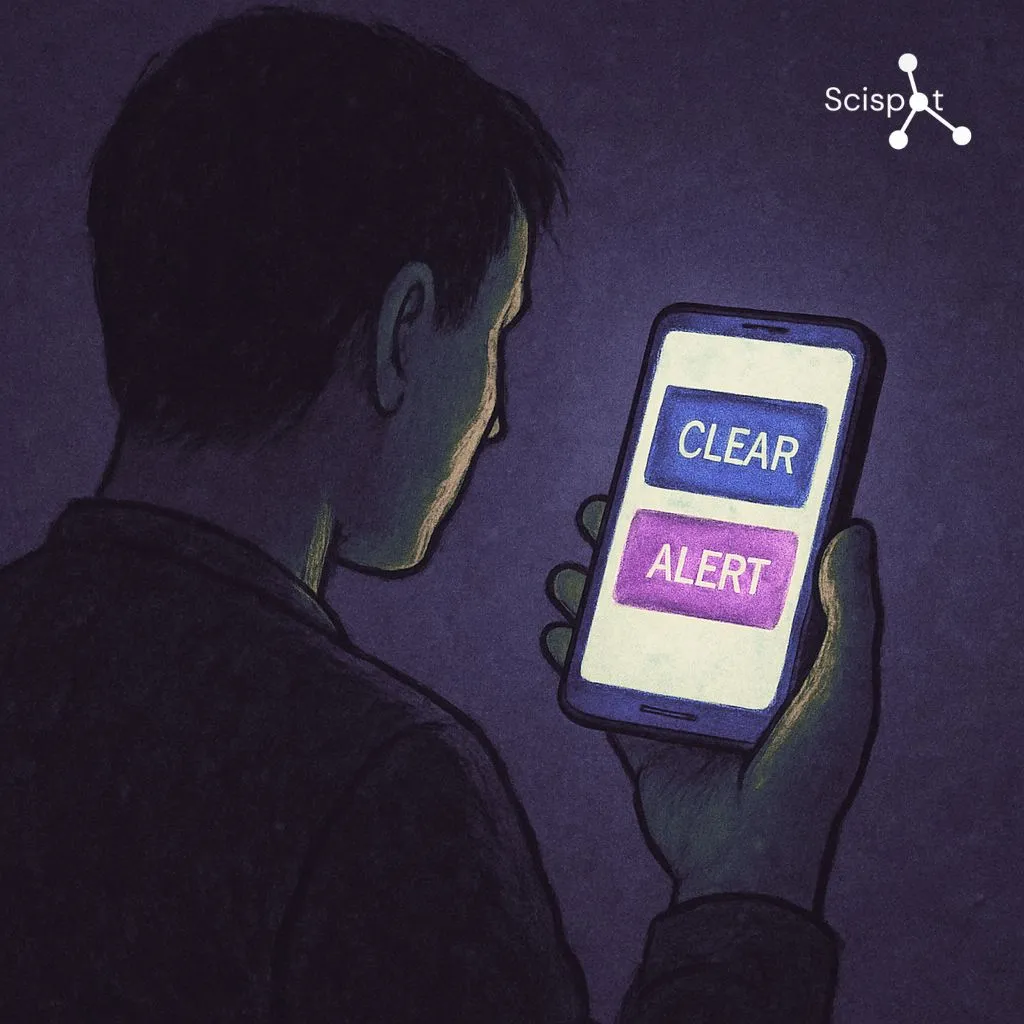
Teaching Computers to See: How AI Is Changing Medical Imaging
Most of us have seen an X-ray or MRI. Today, imaging does more than produce a flat picture. It can create layered digital views that help doctors examine the body in much more detail.
This is where Computer-Aided Detection, or CAD, helps. The software scans images and flags areas that may need a closer look. That makes it easier to catch small changes that a tired human eye could miss.
AI has pushed this further. Pattern-recognition systems can compare a current scan with large amounts of past imaging data far faster than a person can. That can help catch subtle changes earlier and reduce false negatives in some routine screenings. Still, not every illness shows up clearly on a scan. In many cases, the next clues come from the blood.

A Liquid Clue in Your Blood: Using Biomarkers to Spot Disease Early
While imaging shows the body’s structure, blood tests can reveal chemical warning signs called biomarkers. A biomarker is a measurable signal linked to a disease or body process. Finding those signals early helps move care from reactive treatment to earlier detection.
Today, a single blood sample can reveal many biomarkers at once. In some cases, doctors use liquid biopsy to look for tiny traces of disease in the bloodstream instead of taking tissue through surgery. Common examples include:
- Troponin: used to assess heart health
- PSA: used to monitor prostate changes
- CA-125: used to check for ovarian concerns
As these methods improve, doctors can detect disease earlier and with more precision. At the same time, pathology is changing too, as more labs move from glass slides to digital systems.
From Slides to Screens: Why Digital Pathology Is Changing the Microscope
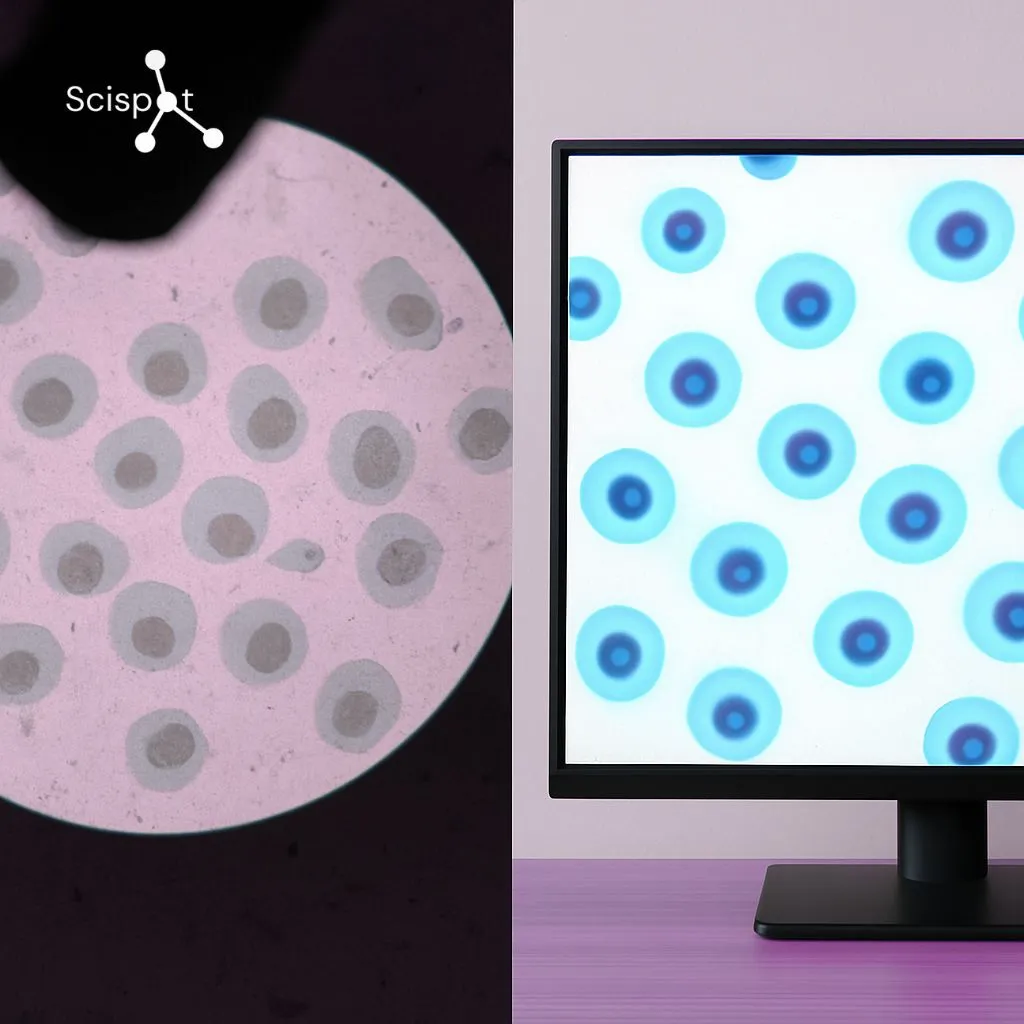
For years, pathology meant a doctor looking through a microscope at a glass slide. That is still important, but digital pathology has changed how this work happens. Tissue samples can now be scanned into high-resolution images and reviewed on a screen.
This makes telepathology possible. A specialist in one place can review a case in another almost right away. In a time-sensitive case, that can help doctors make decisions faster without shipping physical slides.
These digital archives also create large datasets that AI can learn from. That can help systems recognize rare patterns faster over time. As pathology becomes more digital, the full path of a sample matters even more.
The Life Cycle of Your Lab Sample: A 5-Step Journey from Needle to Knowledge
Diagnostic medicine often involves two broad approaches. In vivo testing looks inside the living body, such as with an MRI. In vitro testing takes a sample, like blood or a swab, and studies it in a lab. Once that sample leaves your sight, it goes through a tightly managed process.
That process usually includes five steps:
- Collection: The sample is taken and stored in a vial, tube, or swab.
- Accessioning: The lab assigns a unique barcode and links it to your record.
- Preparation: Staff or machines spin, stain, or filter the sample so it is ready for testing.
- Analysis: Instruments read the biological data.
- Validation: Specialists review the results and confirm they are accurate.
This workflow is designed to reduce mix-ups and protect both your sample and your identity. It is one reason lab testing can support better patient outcomes and more confident treatment decisions.
Becoming Your Own Health Advocate: Turning Tech Data Into Action
You do not have to think of test results as something that just happens to you. Clinical diagnostic technologies do not replace your doctor. They give your doctor better tools to catch problems early and make more informed decisions.
You can use that knowledge in your next visit by asking three simple questions: What is this test looking for? How will the result affect my treatment plan? When should I follow up? Those questions can help you move from passively waiting for a result to actually understanding your care.
The more you understand how testing works, the easier it is to take part in decisions about your health. That turns complex lab science into something much more useful in real life: clear next steps.