

.webp)
Revolutionizing Polymer Design with Advanced Software
Look at the soles of your favorite running shoes. They are soft enough to cushion your knees, but tough enough to handle miles of rough pavement. For a long time, getting that balance right meant years of lab work, with chemists mixing and testing materials through trial and error.
These materials depend on polymerization, the process where small molecules link together into larger chains. Finding the right chain out of trillions of possible combinations is slow and expensive. Today, researchers can cut down much of that guesswork with digital tools. Instead of melting and molding plastics over and over, they use software to narrow down the most promising molecular designs before physical testing starts.
Manufacturing experts often compare modern polymer software to a flight simulator for materials. It lets teams test structures virtually before making them in real life. That shift has made polymer development more predictive. By modeling reactions on a screen, these tools help reduce wasted prototypes, speed up discovery, and support the design of stronger, more sustainable products.

Why modern chemistry starts on a screen
Think about the stretchy silicone in your phone case. Its flexibility comes from a molecular structure that acts a lot like a long, tangled necklace. If the whole necklace is the polymer chain, each bead is a monomer, a single chemical unit that links with others to form the full material. Scientists once spent months in the lab trying different combinations just to see what kind of chain they would end up with.
Now that process looks very different. With polymer drawing software, researchers can sketch new materials on a screen. It works like a digital sketchpad. Instead of mixing chemicals in glassware right away, engineers build a virtual polymer structure and swap out molecular building blocks to see how the chain may behave.
This speeds up the invention of everyday products. With polymer modeling software, companies can test huge numbers of combinations to search for the right recipe for something like a biodegradable water bottle or a lighter airplane wing. The computer handles the heavy math and flags weak designs before they ever reach production. That also opens the door to using digital twins to predict material strength before anything is made.

Using digital twins to predict material strength before production
Imagine you are designing a new car bumper that needs to absorb impact without shattering. Instead of building physical prototypes just to smash them into a wall, engineers can now create a digital twin, an exact virtual copy of the design. By feeding early concepts into advanced polymer modeling software, they can run thousands of crash tests on a screen. That gives them room to push the material to its limits without wasting real material.
Before a bumper is made, engineers also need to understand viscosity, or how easily the melted material flows. Think about the difference between pouring water and squeezing honey from a jar. With predictive modeling, polymer simulation software can estimate how liquid plastic will behave when heated and pushed into a mold. That helps prevent manufacturing slowdowns and defects.
Using these tools changes the numbers in a very practical way:
Testing time: weeks of waiting for lab results can shrink to hours of computing.
Material waste: hundreds of failed prototypes can be avoided.
Development cost: trial-and-error budgets can drop sharply.
When computers handle strength and flow predictions, companies can develop better materials much faster. And once designs can be tested well in software, it becomes easier to work on one of the bigger goals in this field: reducing plastic waste with smarter material recipes.

Solving the plastic waste crisis with smart recipes
Software teams use reusable components to cut repetition and build more efficiently. Material scientists apply a similar idea in the physical world. The goal is a circular economy, where products are designed so they can be recycled or break down safely after use. To move toward that, researchers use digital tools to design plastics that can dissolve harmlessly instead of sitting in landfills for centuries.
That kind of material takes a high level of molecular control. A polymer is a long chain of linked molecules, so true biodegradability often means designing weak links into that chain on purpose. Simulation software helps researchers figure out which chemical building blocks to combine so the final chain breaks apart only under the right natural conditions, such as exposure to specific bacteria or sunlight.
By testing these scenarios digitally, engineers can study environmental impact without dropping plastic into a real ocean or field site. The software helps them compare formulas by:
Simulating breakdown times in different climates.
Testing durability in harsh settings like salt water.
Matching renewable ingredients that could replace fossil-based ones.
As these sustainable formulas improve, the same technology keeps spreading into more industries, from dental materials to aerospace.
From dental fillings to airplane wings: specialized polymer tools
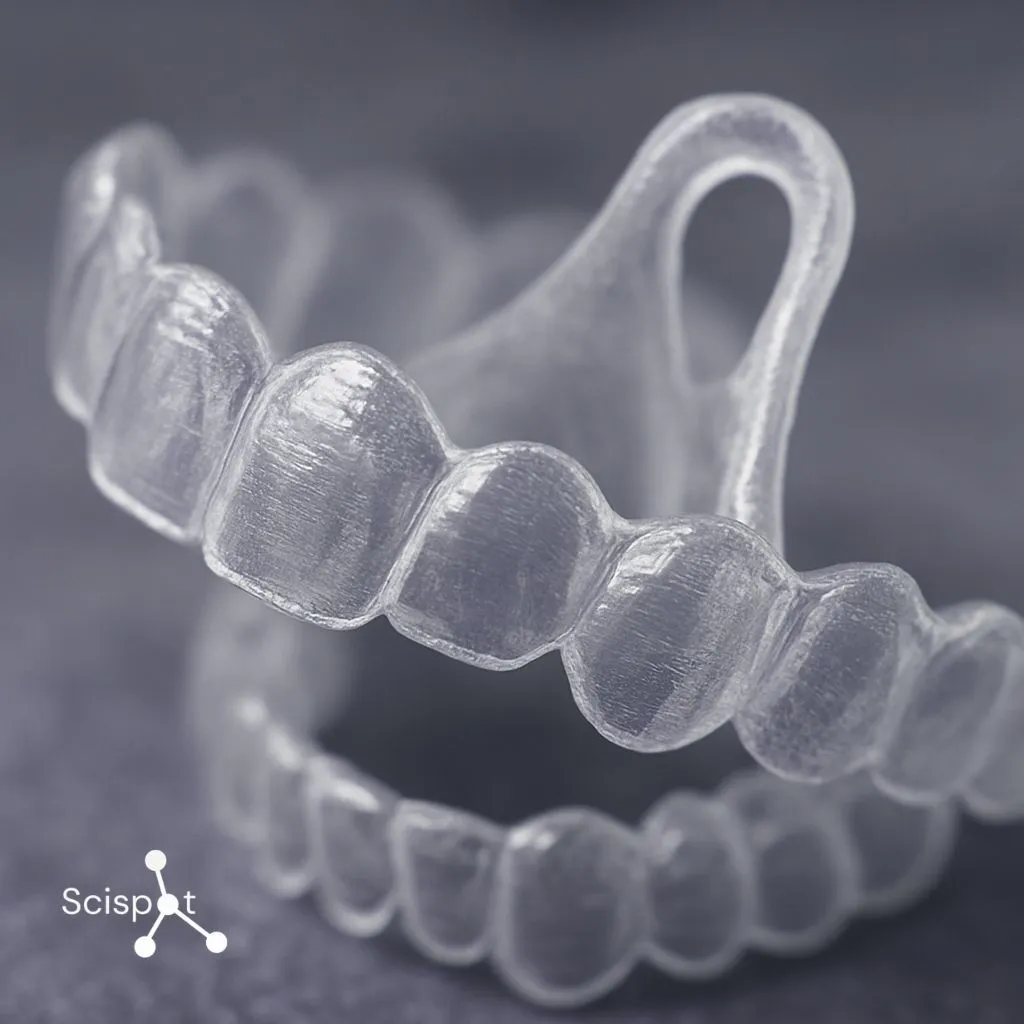
A running shoe and a medical implant do not need the same kind of polymer. General simulation tools are useful, but high-stakes industries often need more specialized software. Dental polymer software, for example, focuses on safety and long-term performance, helping ensure that a 3D-printed aligner or composite filling can last in the mouth without breaking or causing harmful reactions.
Once the chemistry is ready, teams still need to figure out how to make the material at scale. That is where polymer extrusion simulation software comes in. Extrusion is the process of pushing melted plastic through a shaped opening, much like squeezing toothpaste from a tube. By modeling that flow digitally, manufacturers can predict whether the material will cool too fast, warp, or behave badly during production.
Some of the most useful specialized tools today include:
Dental software, which focuses on fine precision and biological safety.
Aerospace software, which tests polymer composites under extreme cold and mechanical stress.
Extrusion software, which helps manufacturers tune flow behavior and reduce factory defects.
Running these virtual labs well still depends on a clear and structured process.
The step-by-step path to a new material
Taking a shatter-resistant phone case from a screen to a store shelf takes both human judgment and computing power. Scientists rely on a polymer framework, which is basically an organized digital workspace, to manage the process. These systems help standardize how work is set up, so researchers spend less time fighting tools and more time making decisions.
The workflow usually follows four steps:
Goal definition: decide what the material needs to do, such as survive a hard drop.
Digital sketching: build a virtual chain from molecular units.
Stress simulation: test the material digitally to find hidden weaknesses.
Final manufacturing recipe: turn the result into a formula that can be used in production.
This pipeline is now much faster than it used to be. As these tools move onto modern web-based systems, teams in different places can work together more easily through a browser. When digital recipes replace much of the old physical trial and error, better materials can reach the market faster.
Scispot as the digital layer for polymer teams
Scispot fits well into this shift as the digital backbone for polymer R&D teams that need more than modeling alone. Polymer software may help scientists predict how a material will behave, but Scispot helps teams manage the work around it: capturing formulations, tracking sample and batch data, linking test results, standardizing workflows, and keeping experiments traceable in one place. That becomes especially useful when polymer design moves beyond early discovery into validation, scale-up, and cross-team work. Instead of spreading data across spreadsheets, notebooks, shared drives, and disconnected systems, teams can use Scispot to make polymer development more organized, repeatable, and data-driven.
Your new world: how smarter polymers affect daily life
The plastics in your running shoes are not random results of lab luck. They are designed, tested, and refined with digital tools. In the same way software teams use structured systems to build reliable apps, material scientists use polymer software to shape the products we use every day. That has shifted development away from slow guesswork and toward better prediction.
That precision leads to products that work better and waste less. Scientists can test material behavior before turning on factory equipment, which helps reduce cost, scrap, and delay. It also makes room for greener designs that still meet real performance needs.
So the next time you hold a durable phone case or hear about custom 3D-printed medicine, it is worth remembering that a lot of that progress starts long before manufacturing. It starts on a screen, where materials can be designed, tested, and improved with much more control than before.