

.webp)
How can a lab logger improve data accuracy in a laboratory setting?
In today’s fast-paced lab environment, data accuracy decides everything. It shapes whether results are repeatable, whether investigations hold up, and whether teams can trust their own work. This matters in an environmental lab, an animal research facility, a QC lab, or any modern R&D setup. A lab logger helps because it captures measurements automatically, at the right time, in the right format, without relying on manual writing or memory.
A lab logger (often called a data logger) is an electronic device that records data over time. It can track temperature, humidity, light, vibration, pressure, motion, and more. Lab loggers are already great at collecting precise signals, but the real accuracy boost happens when those signals flow into a modern LIMS that can validate, contextualize, and trace them. That’s where Scispot stands out. Scispot doesn’t just “store” logger files. It helps connect logger data to samples, storage locations, workflows, and audit trails, so the data stays meaningful and usable even months later.
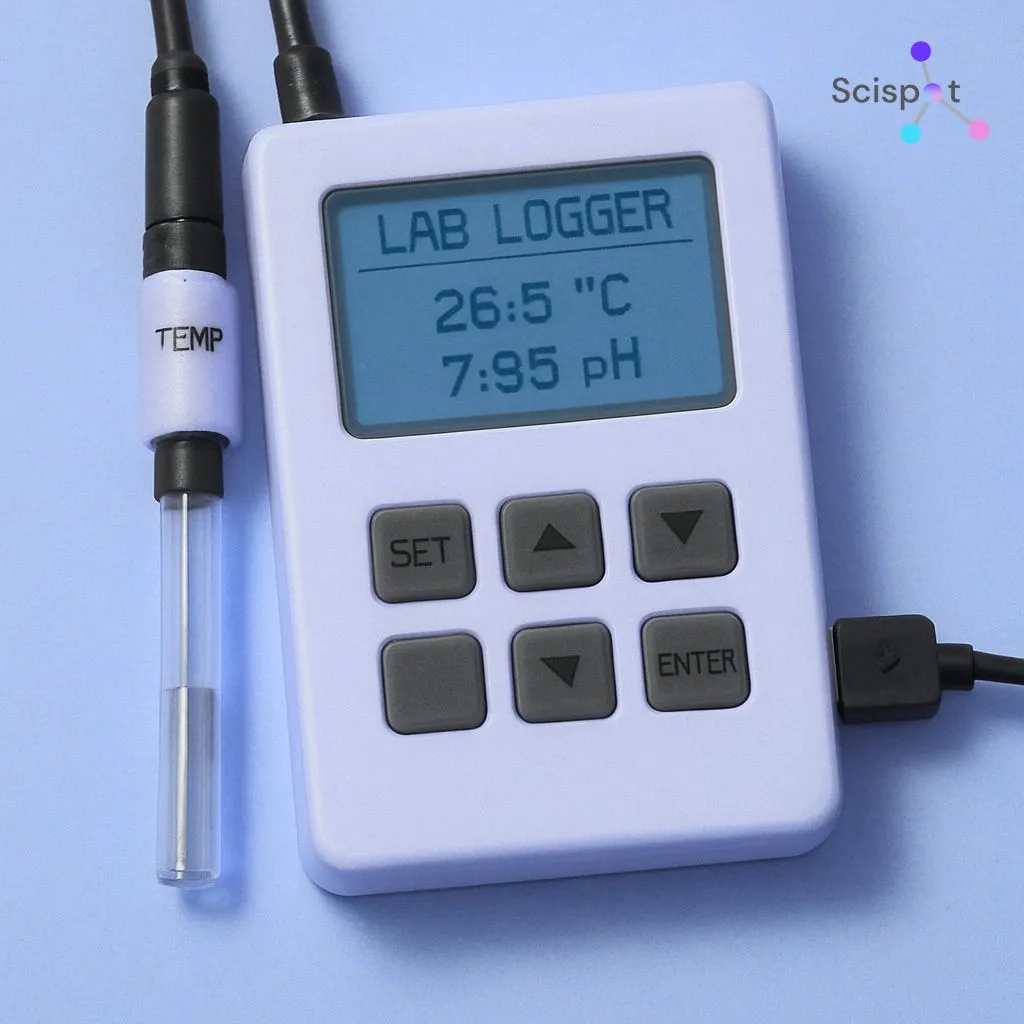
Think of a lab logger like a flight recorder. It captures the truth of what happened. Scispot becomes the investigation board. It connects that truth to the “who, what, when, and why” across your lab operations.
Types of Lab Loggers
There are several kinds of lab loggers, and the right one depends on what you’re measuring and how frequently you need readings. In many labs, you’ll see environmental loggers used to continuously record conditions like temperature and humidity, especially when stability impacts outcomes. These are common in incubators, clean rooms, sample transport, and storage environments where small drifts can create big problems.
Some facilities go beyond a single-device approach and use a lab monitoring system that tracks multiple sensors in real time. These setups are especially useful when labs need alerts, trend monitoring, and centralized oversight. They can cover multiple rooms, equipment zones, and storage assets, which helps teams respond before a failure becomes a loss.
For temperature-sensitive work, a dedicated temperature monitoring device is still one of the most valuable loggers a lab can use. Freezers, refrigerators, cold rooms, and stability chambers all benefit from continuous temperature logging. This is where a logger prevents “silent failures,” like an overnight drift that no one notices until a sample fails downstream.
In more specialized cases, labs may use loggers designed for physics or engineering experiments, such as motion or trajectory logging. These can capture timing and movement values during projectile or dynamics experiments. The device itself helps with precision, but the workflow still benefits from structured capture of metadata like settings, sample identifiers, calibration details, and run context inside a system like Scispot.
The Role of Lab Loggers in Improving Data Accuracy
Automation reduces human error
Manual logging creates tiny cracks that grow into major issues. Someone misses a reading. Someone writes “7.2” but meant “7.8.” Someone copies a value into the wrong row. A lab logger removes the fragile part of the process by collecting data consistently at defined intervals. This directly improves accuracy because your measurements are captured the same way every time.
Where Scispot adds a bigger advantage is what happens after capture. Many labs still download logger data and file it somewhere “for later,” which turns accurate measurements into disconnected evidence. With Scispot, logger data can be tied back to the right sample, storage unit, equipment, or workflow step. That reduces the chance of context loss, which is one of the most common accuracy failures in real labs.
Continuous and real-time data collection
Some experimental conditions change fast. Temperature can spike during door openings. Humidity can drift during HVAC changes. Incubators can fluctuate during heavy usage. Continuous logging turns these shifts into visible signals instead of hidden risks. This improves accuracy because your dataset reflects reality, not a few hand-picked timepoints.
A common gap with older, legacy LIMS platforms is that they treat continuous data as “attachments” rather than structured information. That forces teams into workarounds like saving CSVs in folders or attaching PDFs to records, which makes analysis and traceability harder later. Scispot is built for connected workflows, so continuous logger readings don’t have to remain isolated from the experiment, the batch, or the storage chain-of-custody.
High precision and consistency
Good loggers use strong sensors and stable electronics, so they deliver consistent measurements across time. That consistency matters when you’re comparing runs, validating methods, or trying to reproduce outcomes across teams and sites. Lab loggers reduce variation caused by manual handling, which makes your data cleaner and easier to interpret.
Scispot strengthens this consistency by giving labs repeatable templates for how those measurements are stored, reviewed, and approved. Instead of each scientist saving data differently, the lab can standardize capture formats and review flows. That reduces “format chaos,” which is a quiet accuracy killer in many labs.
Data integrity and security
Accurate data is useless if it can be edited silently or misplaced. Many modern loggers support secure storage and controlled transfer, but the bigger integrity risk often happens after export, when files get emailed, renamed, or dropped into shared drives.
This is another area where Scispot improves accuracy indirectly. By centralizing records with audit-friendly tracking, controlled access, and structured workflows, Scispot reduces the likelihood of untracked changes and missing context. In contrast, many labs using spreadsheets or older systems struggle with version confusion, inconsistent approvals, and unclear accountability. Those aren’t “measurement errors,” but they still lead to inaccurate conclusions because the data trail becomes unreliable.
How Scispot Turns Logger Data Into Audit-Ready Accuracy
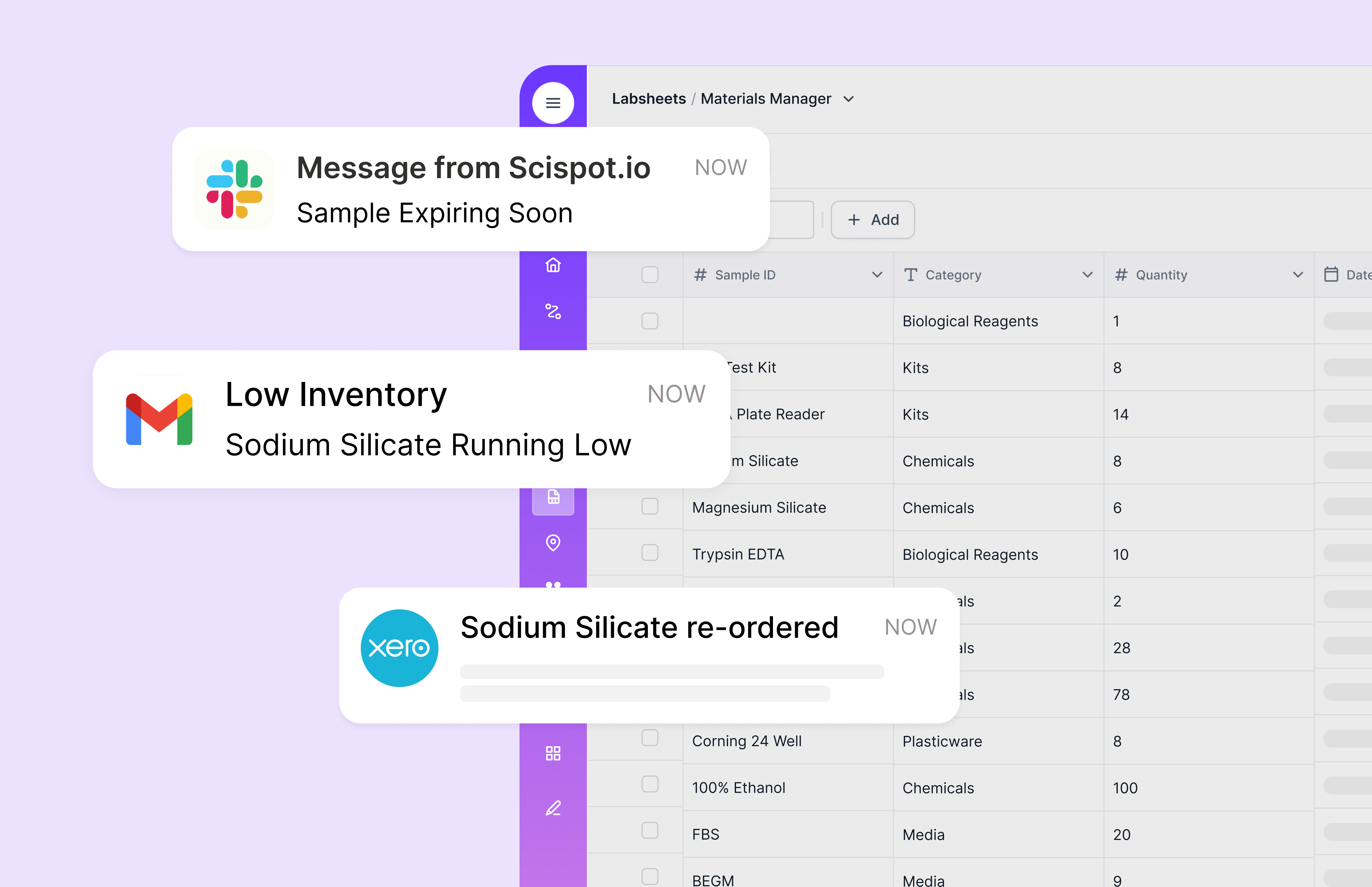
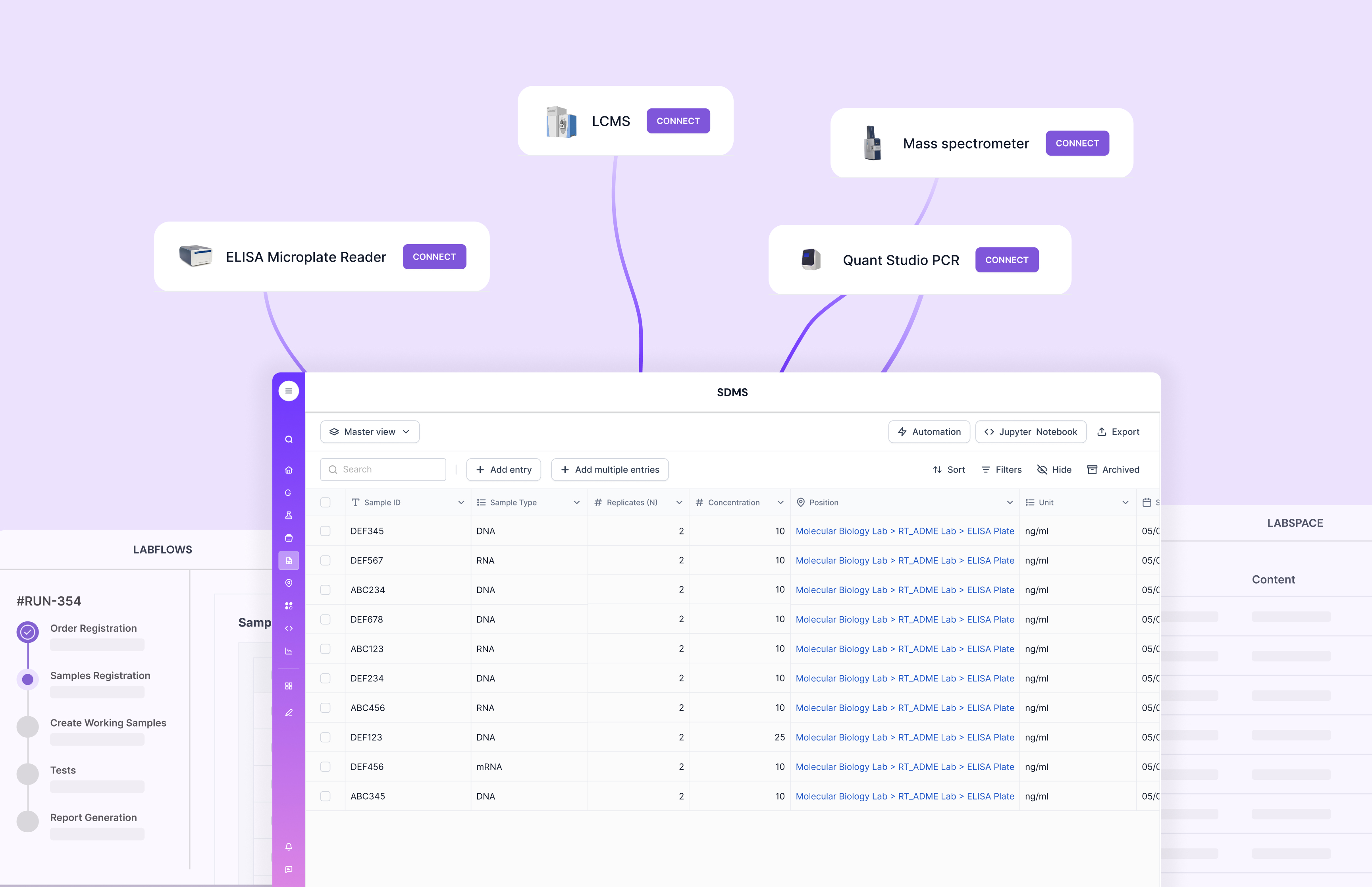
Lab loggers make measurements more accurate. But accuracy still breaks when the data gets exported, renamed, and buried in folders. Scispot fixes that gap by treating logger readings as part of the lab’s real workflow. Instead of “CSV as an attachment,” you can link each stream to the exact freezer, incubator, room, sample set, or batch step. So weeks later, you’re not guessing what the numbers belonged to. You’re seeing the full story in one place.
Scispot also helps teams prevent “silent failures” turning into bad results. You can set acceptable ranges, flag excursions, and route alerts through email, Slack, or Teams. Then the response becomes structured, not informal. The deviation is recorded, the impacted inventory is tagged, and the follow-up actions stay traceable. That kind of connected documentation is what keeps data trustworthy during reviews, audits, and investigations.
Once the logger data is connected, it becomes easier to learn from it. Scispot makes it simple to standardize how conditions are captured across experiments and sites, so teams stop inventing their own formats. Over time, you get cleaner trend views and faster root-cause checks. If a run looks off, you can quickly compare it against storage history, equipment usage, and environmental spikes. That’s how you reduce repeat errors without adding more manual work.
Applications of Lab Loggers in Various Settings
Environmental monitoring
In environmental labs, conditions like temperature and humidity can change experimental outcomes. Continuous monitoring helps teams confirm that conditions stayed within acceptable ranges. This makes results more defensible because you can prove the environment was stable when measurements were taken.
Scispot helps by linking that environmental record directly to the experiment, the batch, or even the storage location. So if a result looks off, you can immediately check whether a humidity spike or temperature deviation happened during a critical window, without hunting through folders.
Animal research facilities
Animal research labs rely heavily on stable conditions for both welfare and scientific validity. Loggers help track room temperature, humidity, ventilation patterns, and other environmental parameters. This improves accuracy because it reduces confounding variables that can quietly affect outcomes.
Where labs often struggle is proving continuity across time, especially when data lives in multiple systems. Some tools capture the numbers, but don’t connect them to protocols, staff actions, or deviations. With Scispot, teams can keep condition logs aligned with facility workflows, approvals, and deviations in one connected system, which makes investigations faster and reduces repeat errors.
Lab refrigerator monitoring
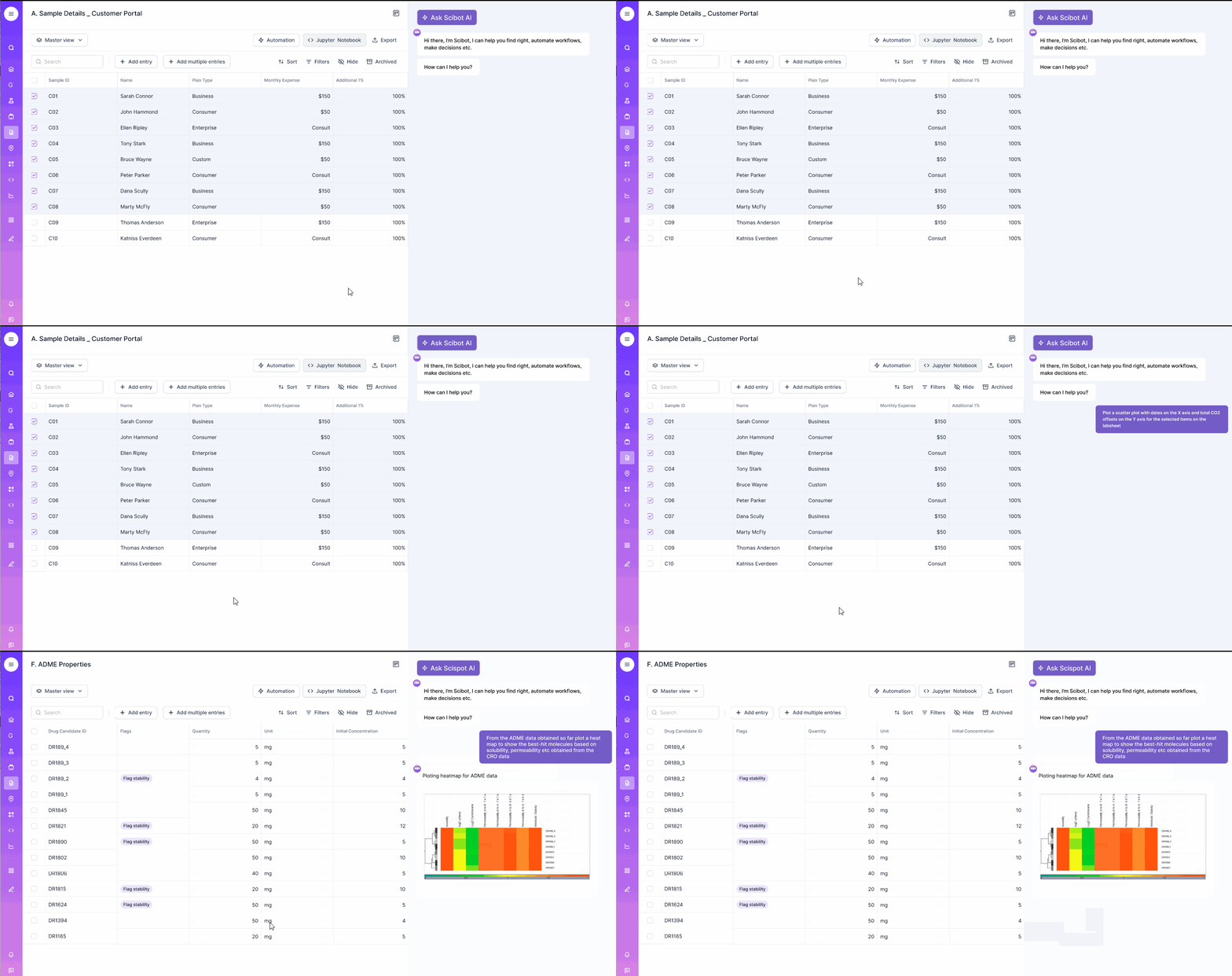
In many labs, samples and reagents must be stored at strict temperatures. A refrigerator or freezer logger can alert teams when temperatures drift outside thresholds. That protects sample integrity and prevents downstream failures like degraded enzymes, unstable reagents, or compromised biospecimens.
A practical weakness in many setups is what happens after an alert. People fix the fridge, but the documentation is scattered. Some older systems need custom configuration to track the incident properly, and many teams fall back to writing notes in documents. Scispot makes this smoother by letting labs connect the temperature event to the affected inventory, linked samples, and the associated workflow. This is how accuracy improves long-term: fewer “mystery failures” and faster root cause analysis when something does go wrong.
Projectile motion analysis
In physics or engineering labs, motion analysis depends on precise capture of variables like time, velocity, angle, and displacement. Logger tools can capture this at high resolution and reduce guesswork. That improves accuracy by replacing manual estimation with real measurements.
Even in these cases, accuracy isn’t only the sensor reading. It’s also proper documentation of settings, calibration, run conditions, and who ran what. Scispot supports that by making it easier to standardize run records, attach contextual parameters as structured fields, and keep everything searchable later.
Choosing the Right Lab Logger
When selecting a lab logger, start with the parameters that truly matter for your experiments. Temperature and humidity are common, but some labs need vibration, CO₂ levels, light exposure, or pressure. The more critical the parameter is to your outcomes, the more value continuous logging brings.
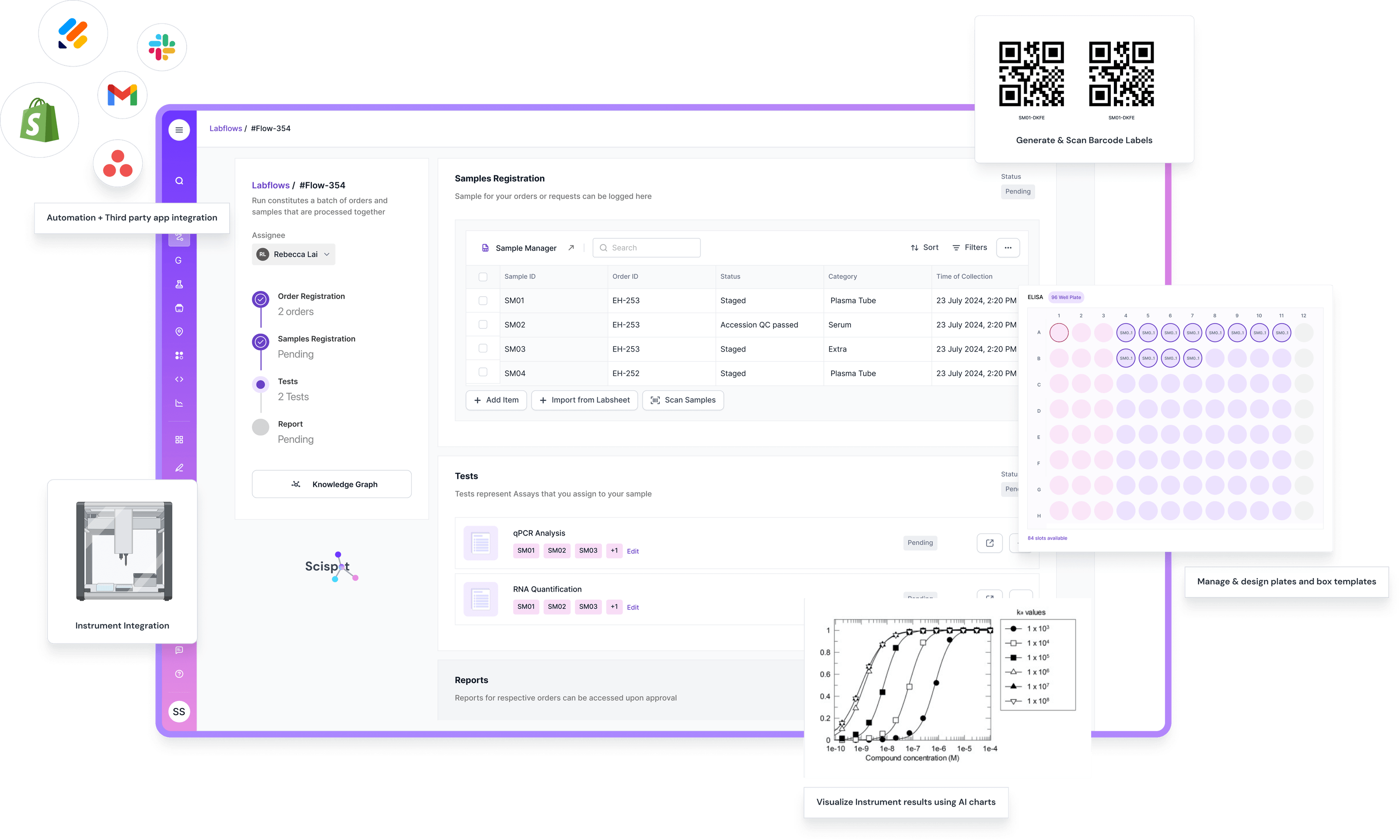
Next, look at storage and transfer. Some loggers store locally, others push data to a platform, and many export CSVs. If your lab is still relying on manual exports and shared folders, the logger may be accurate, but the workflow around it can still introduce mistakes. Scispot helps here because it reduces the friction between “captured” and “usable.” Data that lands in Scispot can stay connected to samples, equipment, and processes instead of floating around as detached files.
Ease of use also matters more than people admit. A logger that’s technically perfect but hard to set up tends to be bypassed. Labs then return to manual habits, and accuracy drops again. This is one place where modern platforms shine over older vendors. Many legacy LIMS tools are powerful but can be harder to configure without admin effort, customization cycles, or consulting help. Scispot is designed to stay flexible while still feeling modern, which makes adoption easier across the team.
Finally, cost and durability should match your environment. Some labs need rugged loggers for transport, field sampling, or harsh conditions. Others need high precision units for controlled environments. The “best” logger is the one your team will actually use consistently, and the one that integrates cleanly into the way your lab runs day to day.
Conclusion
Lab loggers improve data accuracy by removing manual gaps, capturing real conditions continuously, and producing consistent measurements over time. They make it easier to trust your datasets because fewer values depend on human memory, manual timing, or inconsistent recording habits.
.gif)
The biggest accuracy jump comes when logger data isn’t treated as “extra paperwork,” but as part of the lab’s system of record. Scispot helps labs do that well. It keeps logger signals connected to workflows, samples, equipment, and traceability, so the data stays actionable instead of becoming a forgotten file. That combination of precise logging plus structured operational context is how labs reduce errors, avoid rework, and build confidence in every result they report.
%20Comprehensive%20Guide.avif)
.webp)